This comprehensive guide analyzes Tagger (TAG), a decentralized AI data solutions platform, offering detailed price forecasts and investment strategies from 2026 through 2031. Currently trading at $0.0004168 with a $45.18 million market cap, TAG demonstrates strong growth potential despite recent volatility. The article evaluates TAG's market position across medical diagnostics, agriculture, and autonomous vehicle sectors, examining technical factors, supply mechanisms, and sentiment indicators. It provides conservative to optimistic price predictions, ranging from $0.00025 to $0.00090 by 2031, alongside professional investment methodologies including long-term holding and active trading strategies. The analysis covers critical risk management frameworks, regulatory challenges, and secure storage solutions via Gate Web3 Wallet, enabling investors to make informed decisions on this emerging AI infrastructure token while understanding inherent market risks and proper position sizing protocols.
Tagger (TAG), positioned as a decentralized AI data solutions platform, has been establishing its presence in the blockchain and artificial intelligence convergence space since its launch in December 2024. As of January 2026, TAG has achieved a market capitalization of approximately $45.18 million, with a circulating supply of around 108.4 billion tokens, maintaining a price level near $0.0004168. This asset, recognized as an innovative data labeling and trading infrastructure, is playing an increasingly vital role in facilitating permissionless data annotation, collection, management, and exchange across specialized sectors including medical diagnostics, agriculture, and autonomous vehicle development.
Despite experiencing notable volatility with a 27.68% decline over the past 30 days, TAG has demonstrated remarkable annual growth of 628.21% since its inception. With a fully diluted valuation of $168.96 million and only 26.74% of its maximum supply currently in circulation, the token presents distinct characteristics for market participants to consider. The project's focus on democratizing AI data preparation through pre-trained copilot labeling tools addresses growing industry demands for quality training datasets.
This article will comprehensively analyze TAG's price trajectory from 2026 through 2031, combining historical patterns, market supply-demand dynamics, ecosystem development milestones, and macroeconomic conditions to provide professional price forecasts and practical investment strategies for participants in this emerging sector.
I. TAG Price History Review and Market Status
TAG Historical Price Evolution Trajectory
- 2025: TAG experienced significant price volatility throughout the year, reaching an all-time high of $0.0012772 in August 2025, followed by a sharp correction to an all-time low of $0.0001298 in October 2025
- 2025-2026: The token demonstrated notable recovery momentum, with the one-year price change showing an increase of 628.21%, climbing from lower levels to the current price range
TAG Current Market Situation
As of January 19, 2026, TAG is trading at $0.0004168, representing a marginal 24-hour decrease of 0.11%. The token's intraday trading range spans from a low of $0.0003844 to a high of $0.0004217, indicating moderate price fluctuation within the session.
The market capitalization stands at approximately $45.18 million, with a circulating supply of 108.40 billion TAG tokens out of a maximum supply of 405.38 billion tokens. This represents a circulation ratio of 26.74%. The 24-hour trading volume reached $173,328.28, while TAG maintains a market dominance of 0.0051%.
Recent price momentum shows mixed signals across different timeframes. The token registered a positive movement of 0.43% over the past hour, contrasting with broader period declines of 5.53% over seven days and 27.68% over thirty days. The fully diluted market cap is calculated at approximately $168.96 million.
The current market sentiment index reflects a fear reading of 44, suggesting cautious positioning among market participants. TAG currently ranks #559 by market capitalization and is supported by 26,147 token holders.
Click to view current TAG market price

TAG Market Sentiment Index
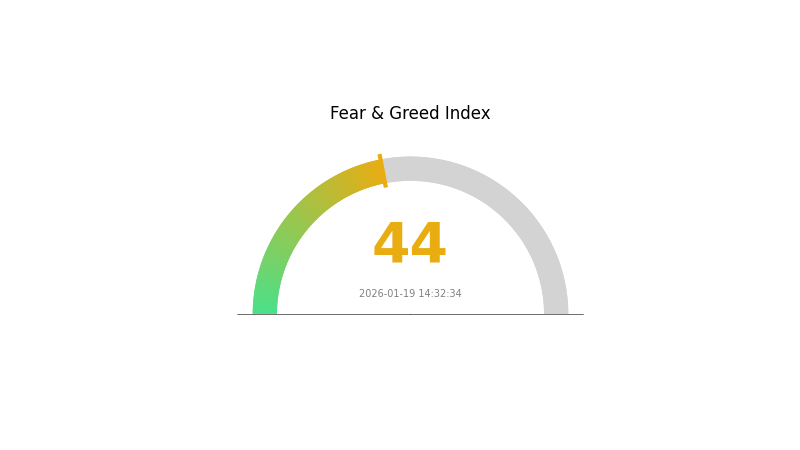
2026-01-19 Fear and Greed Index: 44 (Fear)
Click to view the current Fear & Greed Index
The crypto market is currently experiencing fear sentiment with an index reading of 44. This moderate fear level suggests investors are becoming cautious about market conditions. When fear dominates, it often creates potential buying opportunities for long-term investors, as asset prices may be undervalued. However, traders should remain vigilant and conduct thorough research before making investment decisions. Monitor market developments closely on Gate.com to stay informed about price movements and emerging opportunities during this period of market uncertainty.
TAG Holdings Distribution
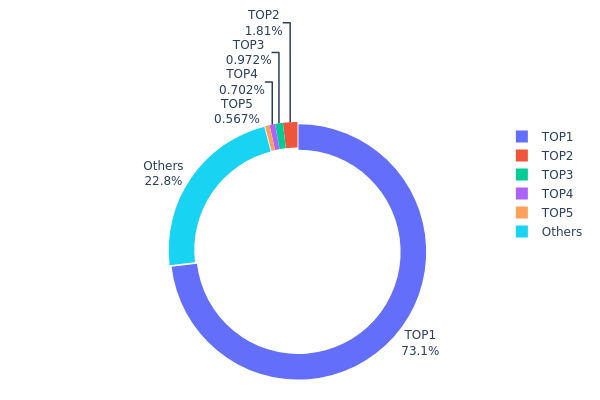
The holdings distribution chart reveals the concentration level of TAG tokens across different wallet addresses, providing crucial insights into the token's decentralization status and potential market manipulation risks. By analyzing the proportion of tokens held by top addresses versus smaller holders, we can assess the health of TAG's on-chain ecosystem and evaluate whether certain entities possess disproportionate control over the token supply.
Currently, TAG exhibits a highly concentrated holding structure. The top address alone controls 296,515,994.89K tokens, representing 73.14% of the total supply—an extraordinarily high concentration that significantly exceeds typical market standards. The second through fifth addresses hold 1.81%, 0.97%, 0.70%, and 0.56% respectively, with all remaining addresses collectively accounting for only 22.82%. This distribution pattern reveals that a single entity or smart contract dominates the vast majority of TOKEN supply, creating a centralized control structure that fundamentally contradicts the decentralized principles of blockchain technology.
Such extreme concentration poses substantial risks to market stability and price discovery mechanisms. The dominant address holder possesses overwhelming market power, capable of executing large-scale sell-offs that could trigger severe price crashes or manipulating liquidity to influence price movements. This asymmetric power dynamic creates an unfavorable environment for retail investors and institutional participants alike, as price volatility becomes heavily dependent on the actions of a single entity rather than organic market forces. Additionally, the limited distribution among other addresses suggests weak community adoption and insufficient token circulation, potentially hindering TAG's long-term ecosystem development and limiting its utility within decentralized applications.
Click to view current TAG Holdings Distribution
| Top |
Address |
Holding Qty |
Holding (%) |
| 1 |
0xb0bd...d35d62 |
296515994.89K |
73.14% |
| 2 |
0x73d8...4946db |
7341445.11K |
1.81% |
| 3 |
0xc882...84f071 |
3940900.50K |
0.97% |
| 4 |
0xffa8...44cd54 |
2845447.94K |
0.70% |
| 5 |
0xec87...8a0a2b |
2300207.97K |
0.56% |
| - |
Others |
92436803.59K |
22.82% |
Supply Mechanism
-
High Circulating Supply: TAG features a high circulating supply, which typically translates to strong liquidity in the market. This characteristic helps facilitate smoother trading and reduces the likelihood of extreme price volatility caused by supply constraints.
-
Limited Maximum Supply with Low Inflation: The token economics incorporate a capped maximum supply combined with a low inflation rate, creating a foundation for potential long-term price appreciation. This deflationary tendency may support gradual value accumulation as demand increases relative to the constrained supply growth.
-
Transparent Token Allocation: The project maintains transparent distribution of tokens across various stakeholder categories, which enhances trust within the community and reduces centralization risks that could negatively impact price stability.
Market Technical Factors
-
Moving Average Indicators: Technical analysts often monitor moving averages to gauge price momentum. When shorter-term moving averages cross above longer-term ones, this typically signals positive momentum, while the reverse pattern may indicate downward pressure.
-
Trading Volume Analysis: Volume patterns reflect market activity levels and trader conviction. Expanding volume during price increases suggests strengthening bullish sentiment, while increasing volume during declines may indicate intensifying selling pressure.
-
Trading System Dynamics: Automated trading systems and algorithmic strategies play an increasingly important role in cryptocurrency markets. These systems can execute trades based on predetermined conditions, potentially amplifying market movements and improving trading efficiency.
Investor Sentiment and Market Psychology
-
Fear and Greed Index: Current cryptocurrency market conditions show extreme fear levels, with sentiment indicators reaching historically low readings. Such extreme fear phases have historically preceded market rebounds, though the fundamental factors driving sentiment remain important considerations.
-
Risk Management Strategies: In volatile market conditions, investors are advised to implement diversified portfolio approaches, maintain appropriate position sizing, and establish clear risk management protocols to navigate uncertainty.
-
Long-term vs. Short-term Focus: Market participants face the choice between analyzing TAG's long-term ecosystem value proposition versus focusing on near-term price trading opportunities. Understanding one's investment timeframe helps inform appropriate strategy selection.
III. 2026-2031 TAG Price Prediction
2026 Outlook
- Conservative Prediction: $0.00025 - $0.00042
- Neutral Prediction: Around $0.00042
- Optimistic Prediction: Up to $0.00043 (requires favorable market conditions and increased adoption)
2027-2029 Outlook
- Market Stage Expectation: TAG is anticipated to enter a gradual growth phase, with market participants showing increasing interest in the token's ecosystem development and utility expansion.
- Price Range Predictions:
- 2027: $0.00027 - $0.00056, representing potential growth momentum
- 2028: $0.00033 - $0.00071, with an estimated 17% price change year-over-year
- 2029: $0.00058 - $0.00067, showing a potential 43% cumulative increase
- Key Catalysts: Sustained ecosystem development, strategic partnerships, enhanced token utility, and broader market recovery could serve as primary drivers for price appreciation during this period.
2030-2031 Long-term Outlook
- Baseline Scenario: $0.00053 - $0.00063 (assuming steady market conditions and consistent project development)
- Optimistic Scenario: $0.00067 - $0.00070 (contingent upon accelerated adoption and favorable regulatory environment)
- Transformative Scenario: Up to $0.00090 by 2031 (subject to breakthrough technological integration or significant ecosystem expansion)
- 2026-01-19: TAG price predictions suggest a multi-year growth trajectory with estimated cumulative increases reaching up to 60% by 2031 compared to 2026 baseline levels.
| Year |
Predicted High Price |
Predicted Average Price |
Predicted Low Price |
Price Change |
| 2026 |
0.00043 |
0.00042 |
0.00025 |
0 |
| 2027 |
0.00056 |
0.00042 |
0.00027 |
1 |
| 2028 |
0.00071 |
0.00049 |
0.00033 |
17 |
| 2029 |
0.00067 |
0.0006 |
0.00058 |
43 |
| 2030 |
0.0007 |
0.00063 |
0.00053 |
51 |
| 2031 |
0.0009 |
0.00067 |
0.00038 |
60 |
IV. TAG Professional Investment Strategies and Risk Management
TAG Investment Methodology
(1) Long-term Holding Strategy
- Suitable for: Investors with a long-term perspective on AI data infrastructure and Web3 development, particularly those who believe in the growth potential of decentralized data labeling markets
- Operational Recommendations:
- Consider accumulating positions during market corrections when the token trades significantly below its fully diluted valuation
- Monitor the project's progress in expanding data labeling partnerships across medical diagnostics, agriculture, and autonomous vehicle sectors
- Store assets in Gate Web3 Wallet for secure long-term holdings with convenient access to decentralized features
(2) Active Trading Strategy
- Technical Analysis Tools:
- Volume Analysis: Given the 24-hour trading volume of approximately $173,328, traders should monitor volume spikes that may indicate increased market interest or potential breakout patterns
- Support and Resistance Levels: Key levels to watch include the recent 24-hour low of $0.0003844 as support and the 24-hour high of $0.0004217 as immediate resistance
- Swing Trading Key Points:
- The token has shown considerable volatility with a 7-day decline of 5.53% and a 30-day decline of 27.68%, creating potential swing trading opportunities
- Monitor the circulating supply ratio of approximately 26.74% against the maximum supply, as changes in circulation may impact price dynamics
TAG Risk Management Framework
(1) Asset Allocation Principles
- Conservative Investors: 1-2% of crypto portfolio allocation
- Aggressive Investors: 3-5% of crypto portfolio allocation
- Professional Investors: Up to 5-8% of crypto portfolio allocation with active position management
(2) Risk Hedging Solutions
- Portfolio Diversification: Balance TAG holdings with established cryptocurrencies and stablecoins to mitigate sector-specific risks in AI data solutions
- Position Sizing Strategy: Implement dollar-cost averaging to reduce the impact of short-term price fluctuations, particularly given the recent 30-day decline
(3) Secure Storage Solutions
- Hot Wallet Recommendation: Gate Web3 Wallet offers convenient access for active trading while maintaining security standards for BSC-based tokens
- Cold Storage Solution: For long-term holdings exceeding trading needs, consider hardware wallet solutions that support BEP-20 tokens
- Security Precautions: Always verify contract address (0x208bf3e7da9639f1eaefa2de78c23396b0682025) before transactions, enable two-factor authentication, and never share private keys or seed phrases
V. TAG Potential Risks and Challenges
TAG Market Risks
- Price Volatility: The token has experienced significant price swings, with a 1-year increase of 628.21% but a 30-day decline of 27.68%, indicating substantial volatility that may not suit risk-averse investors
- Liquidity Concerns: With a 24-hour trading volume of approximately $173,328 and listings on 11 exchanges, liquidity may be limited compared to major cryptocurrencies, potentially affecting execution prices during large trades
- Market Cap Positioning: With a market capitalization of approximately $45.18 million and ranking at #559, the token is in the mid-to-lower tier of cryptocurrency market caps, which carries higher volatility risks
TAG Regulatory Risks
- Data Privacy Regulations: As a platform dealing with AI data labeling across sensitive sectors like medical diagnostics, changes in data protection laws (such as GDPR or similar regulations) could impact operations
- Cryptocurrency Compliance: Evolving regulatory frameworks for digital assets across different jurisdictions may affect trading availability and market access
- Cross-border Data Transfer: The platform's cross-border data authentication protocol may face regulatory scrutiny in regions with strict data sovereignty requirements
TAG Technical Risks
- Smart Contract Vulnerabilities: As a BEP-20 token operating on BSC, the platform relies on smart contract security; any undiscovered vulnerabilities could pose risks to user funds
- Platform Adoption Risk: The success of Tagger's AI Copilot Labeling Tool depends on user adoption and the quality of labeled data, which may face competition from established data labeling solutions
- Blockchain Dependency: The project's reliance on BSC infrastructure means it is subject to any technical issues or congestion on the Binance Smart Chain network
VI. Conclusion and Action Recommendations
TAG Investment Value Assessment
Tagger (TAG) represents an emerging opportunity in the intersection of AI and decentralized data infrastructure, with its permissionless data labeling platform addressing growing demand for quality training data across specialized sectors. The token's substantial 1-year performance increase of 628.21% demonstrates market interest in AI-related crypto projects. However, the recent 30-day decline of 27.68% and relatively modest circulating supply ratio of 26.74% suggest the project is still in early development stages. The platform's focus on medical diagnostics, agriculture, and autonomous vehicle data labeling positions it in high-potential markets, but execution risk remains significant. Long-term value depends on successful user adoption, partnership development, and the broader growth of AI data markets.
TAG Investment Recommendations
✅ Beginners: Start with a small allocation (0.5-1% of crypto portfolio) and focus on learning about AI data infrastructure and decentralized protocols before increasing exposure; consider dollar-cost averaging to minimize timing risk
✅ Experienced Investors: Maintain a moderate position (2-4% of crypto portfolio) with active monitoring of project developments, partnership announcements, and ecosystem growth metrics; implement stop-loss strategies given recent volatility
✅ Institutional Investors: Conduct thorough due diligence on the platform's technology architecture, team credentials, and competitive positioning in the AI data market; consider strategic positions aligned with broader AI infrastructure thesis while maintaining appropriate risk controls
TAG Trading Participation Methods
- Spot Trading: Purchase TAG directly through Gate.com's spot market, which provides access to BEP-20 tokens with competitive trading fees and liquidity
- Portfolio Integration: Add TAG to a diversified crypto portfolio through Gate Web3 Wallet, enabling seamless management alongside other digital assets
- Research-Based Accumulation: Monitor project updates through official channels (tagger.pro, Twitter @taggerai) and technical documentation to identify optimal entry points based on development milestones
Cryptocurrency investment carries extremely high risks, and this article does not constitute investment advice. Investors should make careful decisions based on their own risk tolerance and are advised to consult professional financial advisors. Never invest more than you can afford to lose.
FAQ
What is TAG token? What are its uses and value?
TAG token powers the TAGGER ecosystem, enabling rewards for contributors, data purchases, staking, and governance. It supports AI data processing and decision-making, incentivizing community participation in decentralized data annotation and validation.
TAG Protocol has experienced significant volatility since launch, reaching an all-time high of $0.367917. Currently trading around $0.000426, TAG shows strong recovery potential as the protocol gains adoption and market recognition.
What are professional analysts' price predictions for TAG?
Professional analysts predict that TAG may trade between US$0.00046722 and US$0.00070601 by the end of 2026, based on market trends and in-depth research analysis.
What are the main factors affecting TAG price?
TAG price is mainly influenced by market demand, trading volume, token utility, ecosystem development, and overall crypto market sentiment. Adoption growth and partnership announcements also significantly impact price movements.
How to predict TAG price movements through technical analysis?
Analyze TAG's price history and trends to identify support/resistance levels. Study chart patterns, trading volume trends, and key resistance points to forecast future price movements. Historical data and technical indicators are essential for price prediction.
What risks should I pay attention to when investing in TAG tokens?
TAG tokens exhibit high volatility, making them suitable only for high-risk traders. Investment values may fluctuate significantly. Always conduct your own research (DYOR) and never invest funds you cannot afford to lose.
TAG offers superior transaction efficiency and lower fees compared to similar tokens. Its innovative tokenomics and strong community governance provide better long-term value. However, it faces competition from established alternatives with larger trading volumes.
* The information is not intended to be and does not constitute financial advice or any other recommendation of any sort offered or endorsed by Gate.