This comprehensive guide analyzes USDP's market position as the world's first regulated stablecoin, maintaining a $1.00 peg backed by full USD reserves in FDIC-insured U.S. banks. The article examines USDP's current market status with a capitalization of approximately $47.57 million and evaluates key factors influencing its price dynamics, including supply mechanisms, institutional adoption, macroeconomic conditions, and DeFi ecosystem integration. From 2026 through 2031, USDP maintains consistent price stability at $1.00 across all scenarios, reflecting its core design as a dollar-pegged stablecoin rather than a speculative asset. The guide provides professional investment strategies tailored for conservative, experienced, and institutional investors, emphasizing portfolio allocation principles and secure storage solutions through Gate. Risk management frameworks address liquidity constraints, regulatory evolution, and technical vulnerabilities, while detailed recommendations guide investors in leveraging US
Introduction: USDP's Market Position and Investment Value
Paxos (USDP), as the world's first regulated stablecoin, has established itself as a compliant digital dollar alternative since its launch in 2018. Issued by blockchain startup Paxos and regulated by the New York State Department of Financial Services, USDP (formerly known as PAX or Paxos Standard) provides a 1:1 USD-backed stablecoin designed to offer liquidity for crypto asset trading and instant settlement across all asset classes. As of 2026, USDP maintains a market capitalization of approximately $47.57 million, with a circulating supply of around 47.57 million tokens, and its price remains anchored near $1.00. This asset, recognized as a "trusted digital cash alternative," is playing an increasingly vital role in decentralized finance, cross-border payments, and institutional trading infrastructure.
Built on Ethereum's ERC-20 standard, USDP combines the benefits of blockchain technology—such as immutability and decentralized accounting—with the stability of full USD collateralization. As a trust company, Paxos serves as the fiduciary and qualified custodian of client funds, storing USD deposits in segregated accounts at multiple FDIC-insured U.S. banks. This regulatory framework and reserve structure provide users with transparency and asset protection that distinguish USDP in the stablecoin landscape.
This article will comprehensively analyze USDP's price dynamics from 2026 to 2031, examining historical patterns, market supply and demand, ecosystem development, and macroeconomic factors. By integrating these perspectives, we aim to provide investors with professional price insights and practical investment strategies for navigating the stablecoin market.
I. USDP Price History Review and Market Status
Historical Price Evolution of USDP
- 2018: USDP (formerly PAX) launched in September as a regulated stablecoin, maintaining a stable price around $1
- 2021: Rebranded from Paxos Standard (PAX) to Pax Dollar (USDP) in August, continuing its 1:1 USD peg
- 2024: Price fluctuated between a low of $0.9824 in January and a high of $1.502 in April, demonstrating some deviation from the intended peg
Current Market Status of USDP
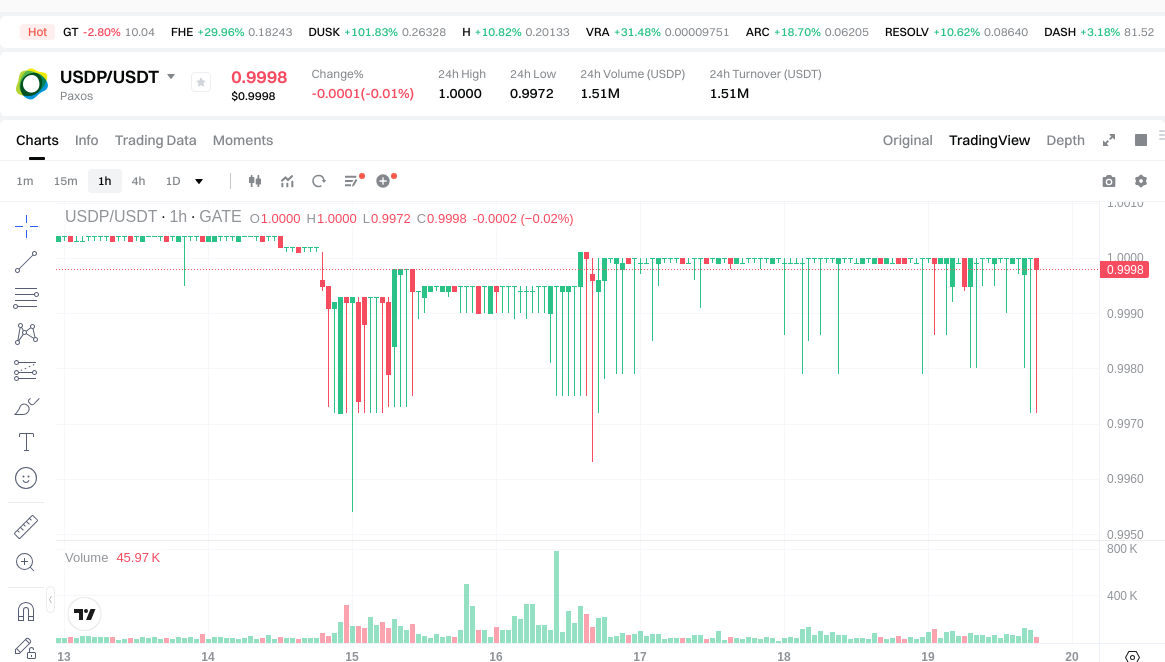
As of January 19, 2026, USDP is trading at approximately $1, reflecting its stablecoin design. The token has experienced a slight decrease of 0.24% over the past hour and 0.03% over the past week. Over the past 30 days, it has shown a modest increase of 0.09%, while the one-year performance indicates a decline of 0.11%.
The 24-hour trading volume stands at approximately $1.51 million, with a market capitalization of around $47.57 million, ranking it at position 542 in the cryptocurrency market. USDP maintains a market dominance of 0.0014%. The circulating supply equals the total supply at approximately 47.57 million tokens, with the fully diluted valuation matching the current market cap at 100%.
Within the past 24 hours, USDP has traded between $0.9972 and $1, demonstrating relatively stable price action characteristic of stablecoins. The token is held by approximately 109,963 addresses and is available on 4 exchanges.
Click to view current USDP market price
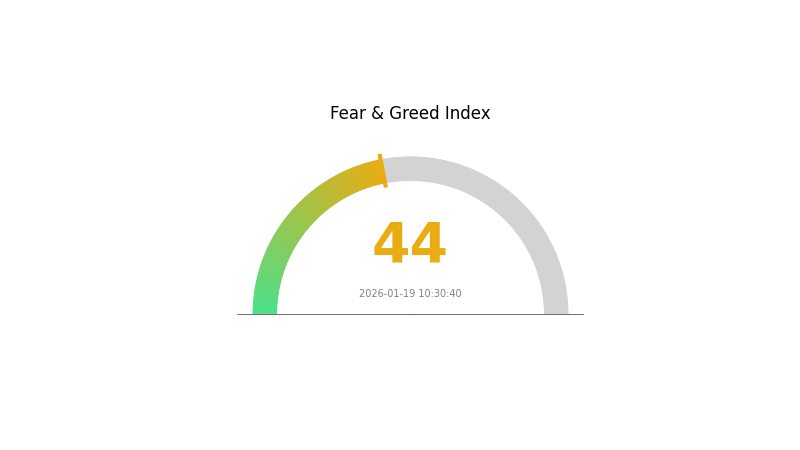
USDP Market Sentiment Index
2026-01-19 Fear and Greed Index: 44 (Fear)
Click to view the current Fear & Greed Index
The crypto market is currently experiencing a fear sentiment with an index reading of 44. This indicates heightened market anxiety and cautious investor behavior. During periods of fear, market participants tend to adopt defensive strategies and reduce risk exposure. Such conditions often present opportunities for long-term investors to accumulate assets at relatively lower valuations. It's advisable to monitor market developments closely and maintain a balanced portfolio strategy while sentiment remains in the fear zone.
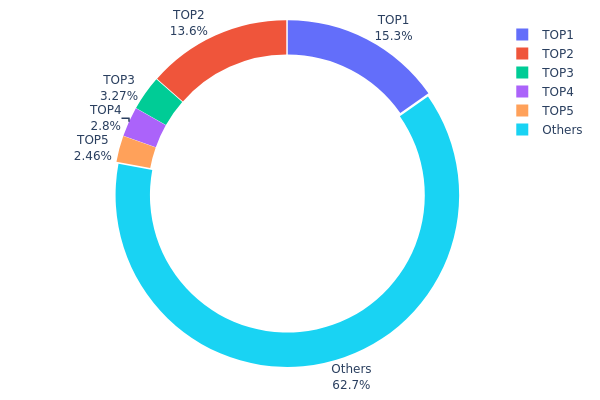
USDP Holdings Distribution
The holdings distribution chart reveals the concentration of token ownership across different wallet addresses, serving as a critical metric for assessing decentralization levels and potential market manipulation risks. Based on the current data, USDP exhibits a relatively concentrated distribution pattern. The top address holds approximately 6.95 million tokens, accounting for 15.26% of the total supply, while the second-largest holder possesses 6.17 million tokens, representing 13.55%. Combined, the top two addresses control nearly 29% of the circulating supply, indicating significant centralization among major holders.
The top five addresses collectively hold 16.01 million USDP, comprising 37.31% of total supply, with the remaining 62.69% distributed among other addresses. This concentration level suggests a moderate to high degree of centralization, which could potentially impact market liquidity and price stability. Large holders possess sufficient tokens to influence market dynamics through substantial buy or sell orders, potentially leading to increased volatility during periods of significant movement.
From an on-chain structure perspective, this distribution pattern reflects a typical stablecoin arrangement where major institutional holders or treasury addresses maintain substantial reserves. However, the presence of over 60% holdings across smaller addresses demonstrates reasonable retail participation and basic decentralization characteristics. Market participants should remain aware that concentrated holdings may result in asymmetric information advantages and heightened sensitivity to large-scale transactions initiated by top holders.
Click to view current USDP Holdings Distribution
| Top |
Address |
Holding Qty |
Holding (%) |
| 1 |
0xf840...61ab62 |
6953.17K |
15.26% |
| 2 |
0x091d...2fb90c |
6173.59K |
13.55% |
| 3 |
0x47ac...a6d503 |
1489.07K |
3.26% |
| 4 |
0x264b...5997b5 |
1274.69K |
2.79% |
| 5 |
0x0d07...b492fe |
1118.75K |
2.45% |
| - |
Others |
28548.16K |
62.69% |
II. Core Factors Influencing USDP's Future Price
Supply Mechanism
- Peg Stability Module (PSM): USDP utilizes the PSM mechanism, which allows users to exchange other tokens for stablecoins at a fixed exchange rate rather than through auctions. This mechanism helps maintain price stability by enabling direct conversion at predetermined rates.
- Historical Pattern: During the USDC de-pegging crisis in March 2023, USDP demonstrated resilience as it was not directly affected by banking liquidity issues. The PSM mechanism allowed for arbitrage opportunities when USDC and DAI experienced discounting, with the price mechanism of 1 USDC = 1 USDP facilitating market stabilization.
- Current Impact: The supply mechanism continues to support USDP's stability through its collateral-backed model. MakerDAO's emergency parameter changes increased the PSM-USDP-A maximum debt ceiling from 450 million DAI to 1 billion DAI, while reducing USDP to DAI exchange fees to 0%, enhancing USDP's role in maintaining ecosystem stability.
Institutional and Large Holder Dynamics
- Institutional Holdings: USDP is issued by Paxos, a regulated financial institution, which provides institutional-grade trust and compliance. The stablecoin maintains full collateralization with underlying assets held in reserve.
- Enterprise Adoption: USDP has been integrated into various DeFi protocols, particularly within the MakerDAO ecosystem where it serves as a key component of the Peg Stability Module. The stablecoin has also been recognized in mainstream financial discussions alongside other major stablecoins like USDC.
- National Policy: As a Paxos-issued stablecoin, USDP operates under regulatory frameworks in the United States. The broader policy environment, including the Trump administration's support for private enterprise-led stablecoin development and opposition to CBDCs, may create favorable conditions for regulated stablecoins like USDP.
Macroeconomic Environment
- Monetary Policy Impact: The global macroeconomic environment significantly influences stablecoin demand. In regions experiencing high inflation, such as Argentina, Turkey, Nigeria, and Venezuela, dollar-pegged stablecoins serve as value preservation tools. USDP, as a dollar-backed stablecoin, benefits from this trend as users seek to maintain purchasing power.
- Inflation Hedging Attributes: In high-inflation economies, stablecoins have become essential for daily transactions and savings. The practical utility of dollar-backed stablecoins extends beyond speculation to provide genuine financial services in environments with currency devaluation concerns.
- Geopolitical Factors: The evolving landscape of digital finance, including debates over CBDCs versus private stablecoins, shapes the competitive environment. USDP's position as a compliant, regulated stablecoin provides advantages in an increasingly scrutinized regulatory environment.
Technology Development and Ecosystem Building
- Integration with DeFi Protocols: USDP has been integrated into major DeFi platforms, particularly MakerDAO's PSM system. This integration allows for seamless conversion between different stablecoins and enhances liquidity across the ecosystem.
- Cross-Platform Compatibility: The stablecoin operates across multiple blockchain networks, enabling interoperability and expanding its utility in various decentralized applications and financial services.
- Ecosystem Applications: USDP serves as collateral in lending protocols and participates in liquidity provision across DeFi platforms. Its role in maintaining stability during market volatility events, such as the USDC de-pegging incident, demonstrates its importance in the broader stablecoin ecosystem.
III. 2026-2031 USDP Price Forecast
2026 Outlook
- Conservative forecast: $1.00
- Neutral forecast: $1.00
- Optimistic forecast: $1.00
Based on the available data, USDP is expected to maintain its price stability throughout 2026, with projected high, average, and low prices all converging at $1.00. As a stablecoin pegged to the US dollar, USDP's primary function is to preserve value parity rather than generate speculative returns. The zero price change indicates the token's commitment to maintaining its peg stability.
2027-2029 Outlook
- Market stage expectation: Continued stability phase with focus on maintaining dollar parity
- Price range forecast:
- 2027: $1.00
- 2028: $1.00
- 2029: $1.00
- Key catalysts: Reserve transparency, regulatory compliance, and adoption in decentralized finance ecosystems
Throughout the mid-term period, USDP is projected to maintain its $1.00 peg consistently. The stablecoin's performance will depend primarily on the backing reserves' integrity, regulatory developments affecting stablecoins, and its utility within the broader cryptocurrency market. Market participants should focus on the token's stability mechanisms rather than price appreciation potential.
2030-2031 Long-term Outlook
- Baseline scenario: $1.00 (assuming continued reserve backing and regulatory compliance)
- Optimistic scenario: $1.00 (with enhanced adoption across payment networks)
- Transformative scenario: $1.00 (under favorable regulatory frameworks and widespread institutional integration)
The long-term forecast for USDP remains anchored at $1.00 across all scenarios, reflecting its fundamental nature as a dollar-pegged stablecoin. The token's success should be measured by its ability to maintain peg stability, transaction volume growth, and integration into various payment and DeFi protocols rather than price appreciation. Investors seeking price volatility or speculative gains should consider that USDP is designed for stability and liquidity provision within the cryptocurrency ecosystem.
| Year |
Predicted High Price |
Predicted Average Price |
Predicted Low Price |
Price Change |
| 2026 |
1 |
1 |
1 |
0 |
| 2027 |
1 |
1 |
1 |
0 |
| 2028 |
1 |
1 |
1 |
0 |
| 2029 |
1 |
1 |
1 |
0 |
| 2030 |
1 |
1 |
1 |
0 |
| 2031 |
1 |
1 |
1 |
0 |
IV. USDP Professional Investment Strategies and Risk Management
USDP Investment Methodology
(1) Long-Term Holding Strategy
- Target Investors: Conservative investors seeking stable dollar-pegged assets and those looking for liquidity solutions in cryptocurrency markets
- Operational Recommendations:
- Maintain USDP as a stable value reserve during periods of cryptocurrency market volatility
- Utilize USDP for instant settlement across asset classes while preserving capital
- Storage Solution: Use Gate Web3 Wallet for secure custody with multi-signature protection and cold storage options
(2) Active Trading Strategy
- Technical Analysis Tools:
- Price Stability Monitor: Track USDP's peg maintenance around $1.00 USD to identify arbitrage opportunities during minor deviations
- Volume Analysis: Monitor the 24-hour trading volume (currently $1.51M) to assess market liquidity and optimal entry/exit timing
- Swing Trading Key Points:
- Capitalize on temporary price deviations from the $1.00 peg, though movements are typically minimal
- Use USDP as a stable trading pair base for executing positions in other cryptocurrencies
USDP Risk Management Framework
(1) Asset Allocation Principles
- Conservative Investors: 30-50% allocation as stable reserve
- Active Investors: 15-25% allocation for liquidity management
- Professional Investors: 10-20% allocation for arbitrage and settlement operations
(2) Risk Hedging Solutions
- Diversification Strategy: Distribute holdings across multiple regulated stablecoins to mitigate single-issuer risk
- Custodial Distribution: Store reserves across different wallet types to reduce concentration risk
(3) Secure Storage Solutions
- Hot Wallet Recommendation: Gate Web3 Wallet for daily trading and instant transfers on Ethereum network
- Cold Storage Solution: Hardware wallets for long-term holdings exceeding immediate liquidity needs
- Security Considerations: Always verify contract address (0x8E870D67F660D95d5be530380D0eC0bd388289E1) before transactions, enable two-factor authentication, and maintain backup recovery phrases in secure offline locations
V. USDP Potential Risks and Challenges
USDP Market Risks
- Liquidity Risk: With a market cap of approximately $47.57M and relatively limited exchange listings (4 exchanges), USDP may face liquidity constraints compared to larger stablecoins during periods of high market stress
- Market Share Concern: Holding only 0.0014% of the total cryptocurrency market, USDP faces competitive pressure from larger stablecoin alternatives
- Trading Volume Volatility: Daily trading volumes may fluctuate significantly, potentially impacting execution prices during large transactions
USDP Regulatory Risks
- Regulatory Oversight Evolution: As a New York Financial Services Department-regulated stablecoin, changes in regulatory framework could impact operational structure and reserve requirements
- Compliance Requirements: Stricter compliance standards may affect accessibility for certain user groups or geographic regions
- Trust Company Status: While Paxos operates as a trust company providing enhanced protection, regulatory changes affecting trust companies could impact USDP's operational model
USDP Technical Risks
- Smart Contract Vulnerabilities: Despite being open-source and auditable on GitHub, smart contract risks remain inherent in the ERC-20 token structure
- Ethereum Network Dependencies: As an ERC-20 token, USDP is subject to Ethereum network congestion, gas fee volatility, and potential network upgrades
- Centralized Control Points: The supply controller address mechanism for minting and burning tokens represents a centralized element that requires trust in Paxos's operational security
VI. Conclusion and Action Recommendations
USDP Investment Value Assessment
USDP presents a regulated stablecoin option backed by full USD reserves held in FDIC-insured U.S. banks, offering institutional-grade protection through Paxos's trust company structure. The 1:1 USD peg provides stability for investors seeking digital cash alternatives. However, its relatively small market capitalization and limited exchange presence compared to dominant stablecoins suggest it serves better as a specialized tool rather than a primary stablecoin holding. Long-term value proposition centers on regulatory compliance and institutional-grade custody, while short-term risks include liquidity constraints and limited adoption momentum.
USDP Investment Recommendations
✅ Beginners: Consider USDP as a secondary stablecoin option after understanding its regulatory framework, allocating no more than 10-15% of stablecoin holdings while prioritizing education on proper wallet security
✅ Experienced Investors: Utilize USDP for specific use cases requiring regulated stablecoin exposure, maintaining 15-25% allocation for arbitrage opportunities and instant settlement needs
✅ Institutional Investors: Evaluate USDP for compliance-focused portfolios requiring New York-regulated digital assets, considering 20-30% allocation within stablecoin diversification strategies
USDP Trading Participation Methods
- Spot Trading: Purchase USDP directly on Gate.com and other supported exchanges using fiat currency or other cryptocurrencies
- Peer-to-Peer Exchange: Acquire USDP through verified Paxos customer accounts on the company website with direct redemption capabilities
- DeFi Integration: Utilize USDP in decentralized finance protocols on Ethereum network for lending, liquidity provision, and yield generation activities
Cryptocurrency investment carries extreme risks, and this article does not constitute investment advice. Investors should make cautious decisions based on their own risk tolerance and are recommended to consult professional financial advisors. Never invest more than you can afford to lose.
FAQ
What is USDP? How does it differ from other stablecoins like USDC and USDT?
USDP is not a widely recognized stablecoin in the market. USDC and USDT are dominant stablecoins pegged to USD. USDC, backed by regulated banks with transparent reserves and monthly audits, offers greater security. USDT relies on Tether's reserve system. USDC is generally considered more reliable due to superior transparency and institutional oversight.
Why should USDP's price always remain at 1 USD? What happens if it depegs?
USDP maintains its 1 USD peg through collateral backing and redemption mechanisms. If depegged, the stablecoin loses its price stability, eroding user trust and utility in the ecosystem.
What are the main factors affecting USDP price?
USDP price is primarily influenced by market sentiment, trading volume, supply and demand dynamics, and technical market conditions. Broader cryptocurrency market trends and regulatory developments also play significant roles in price movements.
USDP在2024-2025年的价格走势预测如何?
USDP在2024-2025年期间面临财务挑战,价格承压。2025年初与Summit Next Gen达成协议后,基本面可能改善,但走势仍需密切关注市场动态。
What are the risks and advantages of trading or holding USDP?
USDP offers stability and direct USD parity as key advantages. Risks include regulatory uncertainty and dependence on Paxos. Its transparency and reserve verification provide investor confidence for transactions and long-term holding.
* The information is not intended to be and does not constitute financial advice or any other recommendation of any sort offered or endorsed by Gate.