This comprehensive guide analyzes USUAL token's market position and provides expert price forecasts from 2026 to 2031 for the next bull cycle. USUAL, a decentralized fiat-backed stablecoin issuer, currently trades at $0.02829 with a market cap of $45.66 million as of January 2026. The article examines historical price evolution, current market sentiment, and core influencing factors including supply mechanisms, institutional adoption, and macroeconomic conditions. Professional price predictions range from $0.02517 to $0.03524 in 2026, potentially reaching $0.05502 by 2031 under favorable conditions. Detailed investment strategies and risk management frameworks help both conservative and aggressive investors navigate this emerging DeFi infrastructure token. Comprehensive risk analysis covers volatility, regulatory challenges, and technical vulnerabilities essential for informed decision-making on Gate exchange.
Introduction: USUAL's Market Position and Investment Value
Usual (USUAL), as a secure decentralized fiat-backed stablecoin issuer that redistributes ownership and value through its token mechanism, has been making strides in the cryptocurrency ecosystem since its launch in 2024. As of January 2026, USUAL maintains a market capitalization of approximately 45.66 million USD, with a circulating supply of around 1.61 billion tokens and a current price hovering around 0.02829 USD. This asset, positioned as an innovative player in the stablecoin infrastructure space, is playing an increasingly important role in decentralized finance applications.
This article will comprehensively analyze USUAL's price trends from 2026 to 2031, combining historical patterns, market supply and demand dynamics, ecosystem development, and macroeconomic conditions to provide investors with professional price forecasts and practical investment strategies.
I. USUAL Price History Review and Market Status
Historical Price Evolution of USUAL
- December 2024: USUAL token launched on December 17, 2024, marking its entry into the cryptocurrency market
- December 2024: The token reached its all-time high of $1.6555 on December 20, 2024, just three days after launch, demonstrating strong initial market interest
- October 2025: Price experienced significant correction, dropping to its all-time low of $0.00851 on October 10, 2025
Current Market Status of USUAL
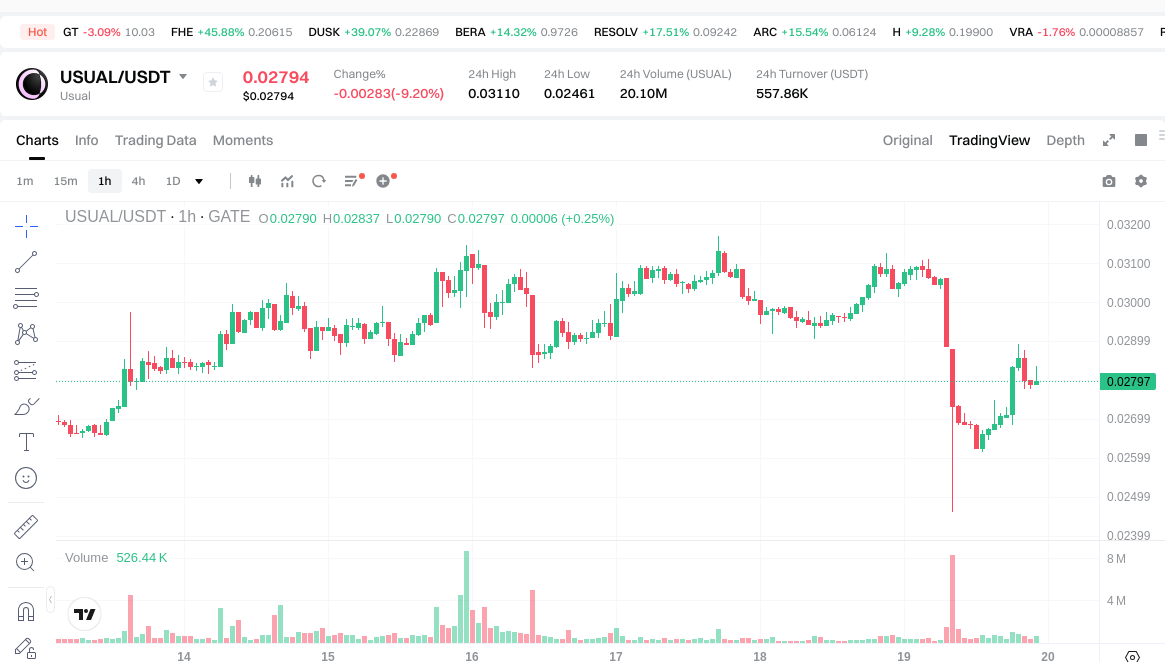
As of January 19, 2026, USUAL is trading at $0.02829, reflecting a complex market position. The token has shown mixed performance across different timeframes. In the short term, USUAL demonstrated a 1.44% increase over the past hour and an 8.69% gain over the past seven days, indicating some positive momentum. The 30-day performance shows a 16.58% increase, suggesting gradual recovery trends.
However, the broader picture reveals challenges. The token has experienced an 8.09% decline in the past 24 hours and a substantial 94.86% decrease over the past year from its peak levels. The current price remains significantly below its all-time high, with the 24-hour trading range spanning from $0.02461 to $0.0311.
USUAL maintains a market capitalization of approximately $45.66 million, with a circulating supply of 1.61 billion tokens representing 40.35% of the total supply. The 24-hour trading volume stands at $551,562.80. The token currently ranks 554th in the cryptocurrency market with a market dominance of 0.00077%. With 23,260 holders and listings on 25 exchanges, USUAL maintains a moderate level of distribution and accessibility within the crypto ecosystem.
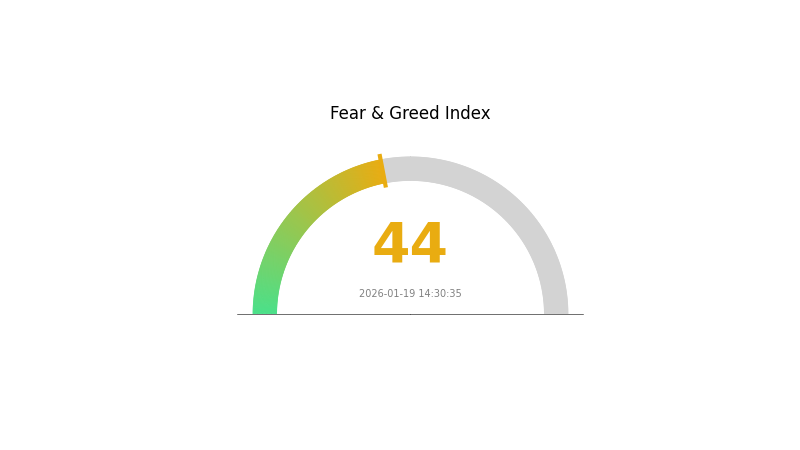
The Crypto Fear & Greed Index currently registers at 44, indicating a "Fear" sentiment in the broader market, which may be influencing USUAL's price movements alongside other digital assets.
Click to view the current USUAL market price
USUAL Market Sentiment Index
2026-01-19 Fear and Greed Index: 44 (Fear)
Click to view the current Fear & Greed Index
The cryptocurrency market is currently experiencing fear sentiment with an index reading of 44. This indicates heightened market anxiety and conservative investor behavior. During fear periods, market participants tend to adopt defensive strategies, reducing risk exposure and selling positions. This environment often presents opportunities for long-term investors to accumulate assets at lower valuations. However, caution is warranted as market volatility may persist. Traders should maintain proper risk management and avoid emotional decision-making during such uncertain market conditions.
USUAL Holdings Distribution
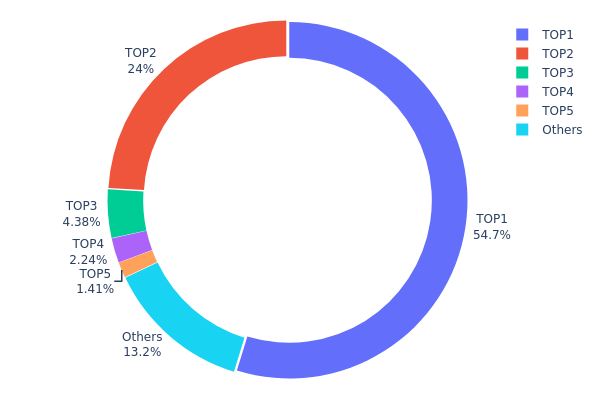
The holdings distribution chart represents the concentration of token supply across different wallet addresses, providing insights into the decentralization level and potential market manipulation risks. By analyzing the percentage of total supply held by top addresses versus smaller holders, we can assess the token's distribution structure and its implications for market stability.
Based on the current data, USUAL exhibits a highly concentrated holdings pattern. The top address controls 54.74% of the total supply (885.03M tokens), while the second-largest holder possesses 24.03% (388.50M tokens). Together, these two addresses command nearly 79% of the entire token supply. The top five addresses collectively hold 86.78% of USUAL tokens, with remaining addresses accounting for only 13.22%. This distribution indicates significant centralization, where a small number of entities control the vast majority of circulating supply.
Such extreme concentration poses considerable risks to market structure and price dynamics. Large holders possess substantial influence over price movements and can trigger significant volatility through coordinated selling or buying activities. The limited distribution among retail participants suggests reduced liquidity depth and heightened susceptibility to price manipulation. Additionally, this concentration pattern may deter institutional adoption and raise concerns about the project's commitment to decentralization principles. From a risk management perspective, the current holdings structure reflects a fragile market ecosystem where decision-making power and economic control rest predominantly with a handful of major stakeholders, potentially undermining long-term stability and community-driven governance.
Click to view current USUAL Holdings Distribution
| Top |
Address |
Holding Qty |
Holding (%) |
| 1 |
0x06b9...4d4b8e |
885029.19K |
54.74% |
| 2 |
0xf977...41acec |
388497.71K |
24.03% |
| 3 |
0xe3fd...e5a03f |
70789.47K |
4.37% |
| 4 |
0x4368...26f042 |
36270.85K |
2.24% |
| 5 |
0x28c6...f21d60 |
22736.42K |
1.40% |
| - |
Others |
213226.50K |
13.22% |
II. Core Factors Influencing USUAL's Future Price
Supply Mechanism
- Staking-Based Distribution: USUAL employs a progressive inflation model where new tokens are distributed through staking mechanisms. Users can participate in network governance and earn rewards by staking assets, with reward distribution based on TVL (Total Value Locked) and liquidity contributions to maintain ecosystem balance.
- Historical Patterns: The protocol's design encourages long-term holding through its staking incentives, which helps avoid excessive inflation. The total supply cap is set at 4,000,000,000 USUAL tokens, with approximately 90% allocated to community rewards and the remaining 10% to the team and early investors with extended lock-up periods.
- Current Impact: The gradual release strategy includes a 4-year linear unlock period for team tokens with complete lock-up in the first year. This controlled distribution mechanism aims to prevent market shock and maintain price stability as the ecosystem develops.
Institutional and Major Holder Dynamics
- Institutional Holdings: USUAL has garnered support from major centralized exchanges including Coinbase, Kraken, and multiple other leading platforms. These partnerships provided significant market confidence during the TGE (Token Generation Event) and established a solid foundation for USD0 and USUAL's ecosystem applications.
- Ecosystem Adoption: USD0 stablecoin has potential applications as futures collateral or contract margin on supporting exchanges, which could drive increased demand for USUAL tokens. The protocol's dual-token model combines USD0 stablecoin with USUAL governance token to create utility across multiple use cases.
- Governance Structure: Token holders exercise governance rights with voting weight related to token quantity and staking duration. Long-term stakers receive higher governance weight, encouraging stable participation. Major decisions require support from over 51% of governance tokens to pass.
Macroeconomic Environment
- RWA Yield Dynamics: USUAL's value proposition is significantly tied to Real World Asset yields, particularly from U.S. Treasury bonds and similar high-quality assets. Under current USD interest rate conditions, RWA yields in stablecoins generate approximately 4% annually. While this yield may appear modest, the substantial fund pool can produce considerable returns.
- Inflation Hedge Characteristics: The protocol's backing by traditional financial assets provides a degree of stability during inflationary periods. The RWA-based collateral mechanism helps maintain USD0's peg while generating real yield for participants.
- Interest Rate Sensitivity: To address potential USD interest rate changes, the project team plans to expand asset pools to include various stablecoin types, encompassing decentralized stablecoins and non-RWA stablecoins, thereby diversifying value support and ecosystem attractiveness.
Technical Development and Ecosystem Building
- USD0++ Vault Development: Following recent market challenges, USUAL announced plans to develop USD0++ vaults. The first vault will focus on sUSDe, allowing users to deposit USD0++ and simultaneously earn both USD0++ yields and sUSDe yields, unlocking new farming opportunities.
- Layer 2 Infrastructure Plans: Long-term roadmap includes creating synthetic assets like ETH0 and BTC0, alongside developing a dedicated Layer 2 specifically for USUAL use cases. The team envisions promoting USD0 as a payment tool, potentially using USUAL as on-chain gas, which could provide system fuel value similar to ETH or BNB.
- ve(3,3) Model Integration: USUAL may introduce a Velodrome/Aerodrome-style ve(3,3) model, requiring stablecoin issuers or asset providers to purchase and lock USUAL tokens to obtain voting rights or incentive distribution rights within the protocol. This mechanism could attract major stablecoin issuers as potential large buyers, driving increased USUAL demand.
- Yield Optimization System: The protocol roadmap includes a more sophisticated yield-sharing system with an upcoming yield optimizer and a series of fixed-rate and fixed-term products for USD0, USD0++, and USUAL tokens.
III. 2026-2031 USUAL Price Prediction
2026 Outlook
- Conservative Forecast: $0.02517 - $0.02797
- Neutral Forecast: Around $0.02797
- Optimistic Forecast: Up to $0.03524 (requiring favorable market conditions and increased adoption)
Based on the predictive data, USUAL may experience a relatively stable performance in 2026, with the average price expected to hover around $0.02797. The token could face certain downward pressure in the short term, with price movements potentially ranging between $0.02517 and $0.03524.
2027-2029 Mid-term Outlook
- Market Stage Expectation: Gradual recovery and growth phase, with potential for steady upward momentum
- Price Range Predictions:
- 2027: $0.02434 - $0.03698, average around $0.03161
- 2028: $0.03018 - $0.05075, average around $0.03429
- 2029: $0.03189 - $0.05358, average around $0.04252
- Key Catalysts: Enhanced ecosystem development, expanding user base, potential strategic partnerships, and broader market recovery trends
During this mid-term period, USUAL shows progressive growth potential, with the average price potentially increasing from $0.03161 in 2027 to $0.04252 by 2029. This represents a cumulative growth trajectory, though investors should remain aware of market volatility and fundamental developments.
2030-2031 Long-term Outlook
- Baseline Scenario: $0.04805 - $0.06199 in 2030 (assuming steady ecosystem growth and stable market conditions)
- Optimistic Scenario: $0.05502 - $0.06877 by 2031 (requiring sustained adoption growth and favorable regulatory environment)
- Transformative Scenario: Potential to approach upper range targets if breakthrough developments occur in technology implementation or mainstream adoption
Looking toward the longer horizon, predictive models suggest USUAL could experience significant appreciation, with 2031 average price potentially reaching $0.05502, representing substantial growth from current levels. However, these projections remain subject to numerous variables including overall cryptocurrency market dynamics, project execution, and macroeconomic factors. As of 2026-01-19, investors should conduct thorough research and consider multiple scenarios when evaluating USUAL's long-term potential.
| Year |
Predicted High Price |
Predicted Average Price |
Predicted Low Price |
Price Change |
| 2026 |
0.03524 |
0.02797 |
0.02517 |
-1 |
| 2027 |
0.03698 |
0.03161 |
0.02434 |
11 |
| 2028 |
0.05075 |
0.03429 |
0.03018 |
21 |
| 2029 |
0.05358 |
0.04252 |
0.03189 |
50 |
| 2030 |
0.06199 |
0.04805 |
0.02451 |
69 |
| 2031 |
0.06877 |
0.05502 |
0.03521 |
94 |
IV. USUAL Professional Investment Strategies and Risk Management
USUAL Investment Methodology
(1) Long-term Holding Strategy
- Target Investors: Investors seeking exposure to decentralized stablecoin infrastructure with moderate risk tolerance
- Operational Recommendations:
- Consider dollar-cost averaging to mitigate volatility, given USUAL's significant price fluctuation history
- Monitor the project's governance developments and stablecoin adoption metrics
- Storage Solution: Utilize Gate Web3 Wallet for secure self-custody with ERC-20 token support
(2) Active Trading Strategy
- Technical Analysis Tools:
- Moving Averages: Track 20-day and 50-day moving averages to identify trend reversals, particularly relevant given USUAL's 8.69% weekly price increase
- Volume Analysis: Monitor the 24-hour trading volume of approximately $551,563 to gauge market liquidity and potential breakout signals
- Swing Trading Considerations:
- Identify support levels near the recent 24-hour low of $0.02461 and resistance around $0.0311
- Set stop-loss orders to limit downside exposure, especially given the 8.09% daily decline
USUAL Risk Management Framework
(1) Asset Allocation Principles
- Conservative Investors: 1-3% of crypto portfolio allocation
- Aggressive Investors: 5-8% of crypto portfolio allocation
- Professional Investors: Up to 10% with active hedging strategies
(2) Risk Hedging Solutions
- Portfolio Diversification: Balance USUAL holdings with established cryptocurrencies and stablecoins to reduce concentration risk
- Position Sizing: Limit individual trade exposure to 2-3% of total portfolio value
(3) Secure Storage Solutions
- Hot Wallet Recommendation: Gate Web3 Wallet for convenient trading and staking access
- Cold Storage Solution: Transfer long-term holdings to hardware wallets for enhanced security against cyber threats
- Security Precautions: Enable two-factor authentication, regularly update wallet software, and never share private keys or seed phrases
V. USUAL Potential Risks and Challenges
USUAL Market Risks
- High Volatility: USUAL experienced a 94.86% decline over the past year, indicating substantial price instability
- Liquidity Concerns: With a market cap of approximately $45.66 million and circulating supply of 1.61 billion tokens, sudden large transactions could significantly impact price
- Low Market Dominance: Holding only 0.00077% market share, USUAL remains susceptible to broader market sentiment shifts
USUAL Regulatory Risks
- Stablecoin Oversight: As a fiat-backed stablecoin issuer, USUAL may face evolving regulatory requirements regarding reserve transparency and compliance
- Jurisdictional Uncertainty: Decentralized governance structures could encounter legal challenges in various regulatory environments
- KYC/AML Requirements: Potential future compliance mandates may affect platform accessibility and user adoption
USUAL Technical Risks
- Smart Contract Vulnerabilities: As an ERC-20 token, USUAL is exposed to potential smart contract exploits or coding errors
- Network Dependency: Reliance on Ethereum network exposes users to gas fee volatility and potential network congestion
- Governance Centralization: With only 40.35% of tokens in circulation, significant token concentration could impact decentralization claims
VI. Conclusion and Action Recommendations
USUAL Investment Value Assessment
USUAL presents an innovative approach to decentralized stablecoin issuance through its ownership redistribution model. However, the token's performance history shows significant challenges, including a 94.86% yearly decline from its all-time high of $1.66 in December 2024 to current levels around $0.028. The project's relatively low market cap of $45.66 million and limited market dominance of 0.00077% suggest it remains in early development stages. While short-term trading opportunities may exist, evidenced by recent 7-day gains of 8.69%, investors should carefully weigh the high volatility and execution risks. The project's long-term value proposition depends on successful adoption of its stablecoin infrastructure and effective governance implementation.
USUAL Investment Recommendations
✅ Beginners: Consider allocating no more than 1-2% of your crypto portfolio to USUAL, focusing on understanding stablecoin mechanisms before larger commitments
✅ Experienced Investors: Monitor technical indicators and project developments closely, maintaining strict stop-loss disciplines and position sizing limits
✅ Institutional Investors: Conduct thorough due diligence on governance structures, reserve mechanisms, and regulatory compliance before considering strategic allocations
USUAL Trading Participation Methods
- Spot Trading: Execute direct purchases through Gate.com with access to USUAL/USDT trading pairs
- Portfolio Integration: Include USUAL as part of a diversified DeFi infrastructure investment thesis alongside complementary protocols
- Active Monitoring: Track the project's whitepaper updates, community governance proposals, and stablecoin adoption metrics through official channels
Cryptocurrency investments carry extreme risks. This article does not constitute investment advice. Investors should make prudent decisions based on their own risk tolerance and are advised to consult professional financial advisors. Never invest more than you can afford to lose.
FAQ
What is the USUAL token, and what are its main use cases and value propositions?
USUAL token is the core of Usual Protocol, primarily used for governance and economic incentives. Its value derives from governance rights and real yield generated from stablecoin collateral backing.
What are the main factors affecting USUAL price?
USUAL price is influenced by market fundamentals, supply and demand dynamics, technical indicators, market sentiment, trading volume, regulatory developments, and broader crypto market trends. Token economics and adoption growth also play significant roles in price movements.
USUAL的历史价格表现如何,未来价格预测趋势是什么?
USUAL in 2024 surged from $0.2 to $1.3, delivering over 500% returns. By 2030, predictions range from $0.0260 to $0.0800 based on market adoption and regulatory conditions. Current momentum suggests continued recovery potential.
What risks should I be aware of when investing in USUAL?
USUAL investments face regulatory risks due to evolving global policies. Market volatility and technical risks are also significant factors. Conduct thorough due diligence before investing.
USUAL Advantages and Disadvantages Compared to Similar Tokens?
USUAL is backed by U.S. Treasury bonds, providing stability and yield generation unlike centralized stablecoins. It offers governance rights, enhancing decentralization and community participation. Main advantage: transparent, secure, and income-generating. Potential limitation: newer protocol with less market adoption than established alternatives like USDT or USDC.
* The information is not intended to be and does not constitute financial advice or any other recommendation of any sort offered or endorsed by Gate.