This comprehensive analysis examines YFII's market position and price trajectory through 2031, providing investors with data-driven forecasts for DeFi yield farming tokens. The article reviews YFII's historical performance since its 2020 launch, current market status at $43.4 with extreme fear sentiment, and holding distribution indicating relatively balanced tokenomics. Core price drivers include supply mechanisms, macroeconomic conditions, and DeFi ecosystem development. Price predictions range from $25.73-$62.80 for 2026, escalating to $67.22-$102.35 by 2030-2031 under favorable conditions. The guide offers tailored investment strategies for beginners through institutional investors, emphasizing dollar-cost averaging and risk management. Critical considerations include 86.72% annual depreciation, limited liquidity at $1.72M market cap, smart contract vulnerabilities, and regulatory uncertainties. Spot trading access via Gate enables participation, though substantial volatility and technical risks demand ca
Introduction: YFII's Market Position and Investment Value
DFI.money (YFII), as a decentralized finance (DeFi) yield aggregation protocol, has been serving the crypto community since its inception in 2020 through a fork of the Yearn Finance project. With its innovative halving mechanism similar to Bitcoin's token distribution model, YFII has established itself as a distinctive player in the DeFi ecosystem. As of February 2026, YFII maintains a market capitalization of approximately $1.72 million, with a circulating supply of around 39,732 tokens, and the price currently trading at $43.4. This asset, often referred to as the "community-driven DeFi aggregator", continues to play a role in automated yield optimization across multiple DeFi protocols.
This article will comprehensively analyze YFII's price trajectory from 2026 to 2031, combining historical patterns, market supply and demand dynamics, ecosystem development, and macroeconomic conditions to provide investors with professional price forecasts and practical investment strategies.
I. YFII Price Historical Review and Current Market Status
YFII Historical Price Evolution Trajectory
- 2020: Project launched in July through YFI fork with community-driven distribution mechanism, price reached significant levels during DeFi summer momentum
- 2020: September witnessed notable price movements, with trading activity concentrated around protocol adoption phases
- 2021-2025: Market experienced cyclical adjustments, price fluctuated as DeFi sector matured and market conditions evolved
- 2026: Price experienced notable decline in early February, reflecting broader market sentiment shifts
YFII Current Market Status
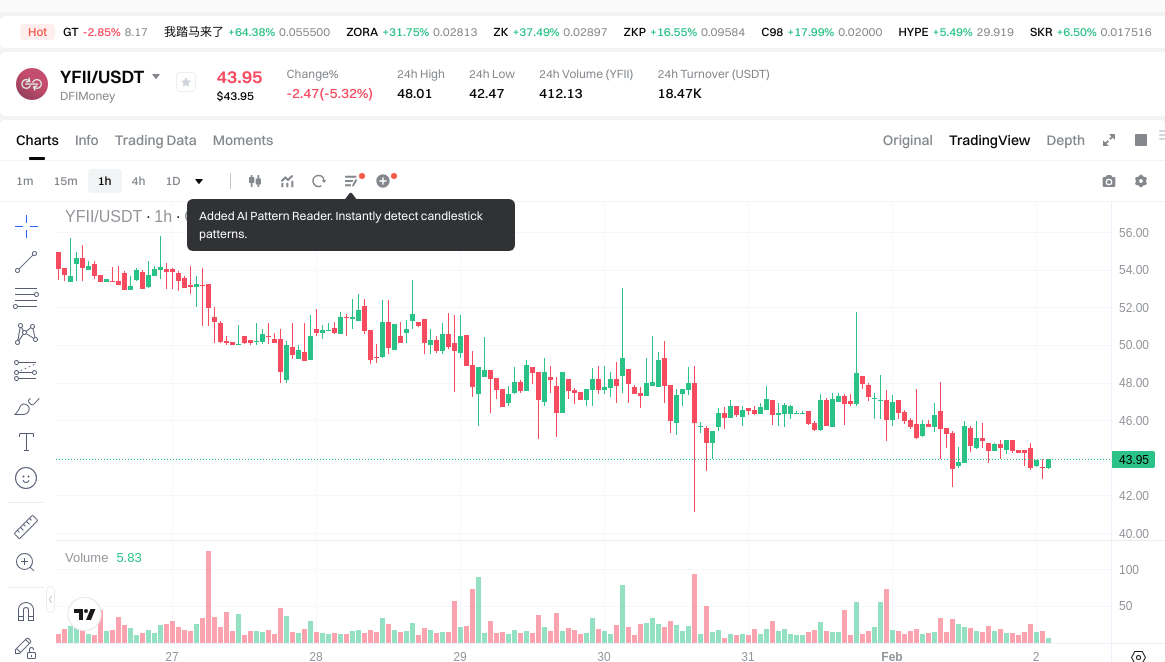
As of February 2, 2026, YFII is trading at $43.4, showing a 24-hour decline of 6.49% with trading volume reaching $18,452.99. The token has experienced a 0.25% decrease in the past hour and a more pronounced 20.58% decline over the past seven days. Monthly performance indicates a 15.39% decrease, while the annual trend shows an 86.72% decline.
The current market capitalization stands at approximately $1.72 million, with a circulating supply of 39,732.11 YFII tokens, representing 99.33% of the maximum supply of 40,000 tokens. The fully diluted market cap is closely aligned with the current market cap at $1.74 million. YFII holds a market ranking of 2145 with a dominance of 0.000062% in the cryptocurrency market.
The 24-hour trading range has fluctuated between $42.47 and $48.01. Market sentiment analysis indicates an extreme fear level with a volatility index of 14, suggesting heightened caution among market participants. The token is held by approximately 14,375 addresses, reflecting its community distribution model.
Click to view current YFII market price
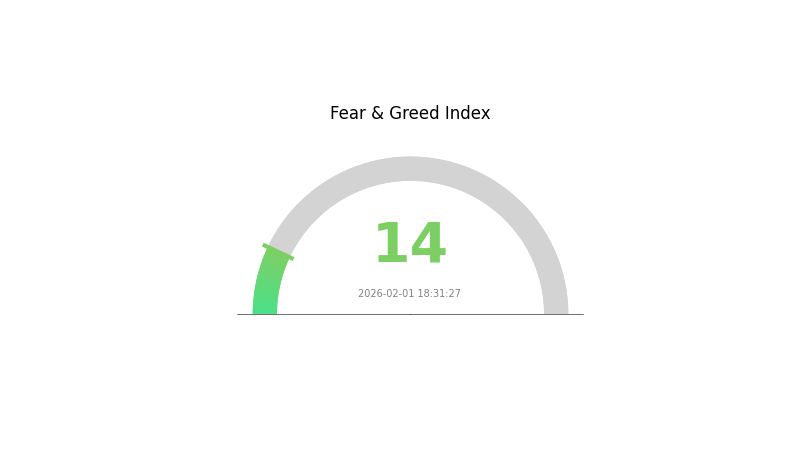
YFII Market Sentiment Index
2026-02-01 Fear and Greed Index: 14 (Extreme Fear)
Click to view current Fear & Greed Index
The cryptocurrency market is currently experiencing extreme fear, with the index reaching just 14 points. This represents one of the lowest sentiment levels, indicating that investors are highly pessimistic about market conditions. When fear reaches such extreme levels, it often signals potential buying opportunities for contrarian investors, as markets typically recover from these oversold conditions. However, traders should exercise caution and conduct thorough research before making investment decisions in such volatile environments. Monitoring sentiment shifts closely can help guide strategic positioning in the current market cycle.
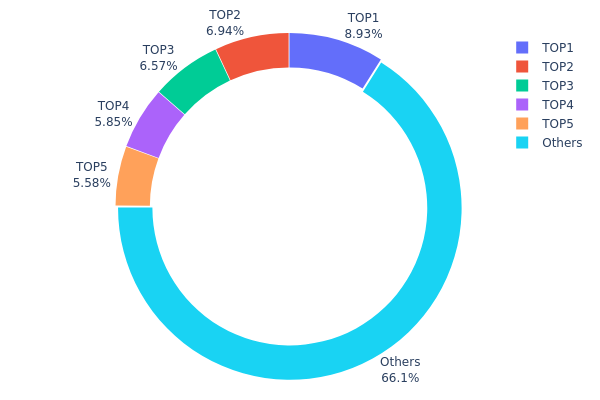
YFII Holding Distribution
The holding distribution chart reflects the allocation of token holdings across different addresses on the blockchain, serving as a critical indicator of decentralization and market structure. By analyzing the concentration of tokens among top holders, we can assess potential risks related to price manipulation and evaluate the overall health of the token's distribution ecosystem.
Based on the current data, YFII demonstrates a relatively balanced distribution structure. The top 5 addresses collectively hold 33.85% of the total supply, with the largest holder controlling 8.92% (3.57K tokens), followed by addresses holding 6.94%, 6.57%, 5.85%, and 5.57% respectively. Notably, the remaining 66.15% of tokens are distributed among other addresses, indicating a relatively decentralized holding pattern. No single address commands an overwhelming majority, which reduces the risk of unilateral market manipulation by any whale entity.
This distribution characteristic suggests that YFII maintains a healthy on-chain structure with moderate concentration levels. While top holders possess meaningful stakes, the substantial portion held by the broader community (66.15%) provides a buffer against extreme volatility triggered by large-scale sell-offs. The relatively even distribution among the top 5 addresses, with none exceeding 10%, further enhances market stability. This balanced holding pattern reflects a mature token ecosystem where governance power and market influence are reasonably dispersed, contributing to sustainable long-term development and reducing systemic risks associated with centralized control.
Click to view current YFII Holding Distribution
| Top |
Address |
Holding Qty |
Holding (%) |
| 1 |
0x0d07...b492fe |
3.57K |
8.92% |
| 2 |
0x4426...46149a |
2.78K |
6.94% |
| 3 |
0xeed8...7e4f51 |
2.63K |
6.57% |
| 4 |
0x91dc...20dc92 |
2.34K |
5.85% |
| 5 |
0x17d6...1b40d9 |
2.23K |
5.57% |
| - |
Others |
26.45K |
66.15% |
II. Core Factors Influencing YFII's Future Price
Supply Mechanism
- Liquidity Mining Allocation: YFII employs a liquidity mining model where tokens are distributed to users who provide liquidity to DeFi protocols. The platform automatically selects and configures products based on annual yield rates, security coefficients, and financial cycles to maximize user benefits.
- Historical Patterns: The supply dynamics of YFII have been closely tied to liquidity mining activities. Historical data suggests that increased mining activity and subsequent token sales have contributed to downward price pressure during certain periods.
- Current Impact: As the DeFi market continues to evolve, YFII's supply mechanism remains sensitive to competition from other yield aggregation platforms. Market demand and supply balance, along with platform innovation, will continue to shape price movements.
Macro-Economic Environment
- Monetary Policy Impact: The broader cryptocurrency market, including DeFi tokens like YFII, is influenced by global monetary policy trends. Central bank decisions regarding interest rates and liquidity can affect investor appetite for DeFi products and risk assets.
- Inflation Hedge Attribute: DeFi platforms offering yield optimization services may attract users seeking alternative investment strategies during inflationary periods. However, YFII's performance as an inflation hedge depends on overall DeFi market conditions and user adoption rates.
Technical Development and Ecosystem Building
- DeFi Aggregation Services: YFII focuses on providing aggregated DeFi wealth management services, automatically selecting optimal products from various liquidity mining options. This technical approach aims to simplify user experience and maximize returns.
- Ecosystem Applications: As part of the broader DeFi ecosystem, YFII's value is influenced by its integration with other protocols and platforms. The growth of DeFi applications and cross-chain infrastructure development may create new opportunities for YFII's ecosystem expansion.
- Market Competition: The DeFi aggregator space includes multiple competing platforms. YFII's ability to maintain competitive advantage through innovation, security enhancements, and strategic partnerships will be crucial for its long-term price trajectory.
III. 2026-2031 YFII Price Prediction
2026 Outlook
- Conservative prediction: $25.73 - $43.61
- Neutral prediction: $43.61 average price level
- Optimistic prediction: $62.80 (requires favorable market conditions and increased DeFi adoption)
2027-2029 Outlook
- Market stage expectation: Potential transition into a recovery and growth phase following market consolidation, with gradual expansion in DeFi ecosystem adoption
- Price range predictions:
- 2027: $30.86 - $70.23, representing approximately 22% price change
- 2028: $32.09 - $66.65, reflecting continued market maturation with 42% growth potential
- 2029: $48.78 - $88.58, indicating strengthening momentum with 47% advancement
- Key catalysts: Enhanced protocol development, broader DeFi integration, technological improvements in yield optimization strategies, and potential institutional participation in decentralized finance
2030-2031 Long-term Outlook
- Baseline scenario: $67.22 - $102.35 (assuming steady DeFi sector growth and maintained protocol competitiveness)
- Optimistic scenario: $89.37 - $100.09 (contingent upon significant ecosystem expansion and widespread adoption of yield farming protocols)
- Transformational scenario: Potential range extending toward upper boundaries (requires breakthrough innovations in DeFi technology, regulatory clarity, and substantial market capital inflows)
- 2030-02-02: YFII projected at $76.38 average price (representing 75% growth trajectory from 2026 baseline)
- 2031-02-02: YFII estimated at $89.37 average price (achieving 105% cumulative growth, subject to sustained market development)
| Year |
Predicted High Price |
Predicted Average Price |
Predicted Low Price |
Price Change |
| 2026 |
62.7984 |
43.61 |
25.7299 |
0 |
| 2027 |
70.22954 |
53.2042 |
30.85844 |
22 |
| 2028 |
66.65422 |
61.71687 |
32.09277 |
42 |
| 2029 |
88.57605 |
64.18555 |
48.78102 |
47 |
| 2030 |
102.35 |
76.3808 |
67.2151 |
75 |
| 2031 |
100.09 |
89.36554 |
58.0876 |
105 |
IV. YFII Professional Investment Strategy and Risk Management
YFII Investment Methodology
(1) Long-term Holding Strategy
- Suitable for: Investors seeking exposure to DeFi yield aggregation protocols with a long-term perspective
- Operational Recommendations:
- Consider dollar-cost averaging to mitigate entry timing risk
- Monitor the platform's TVL (Total Value Locked) and protocol revenue metrics
- Store assets in Gate Web3 Wallet for enhanced security and accessibility
(2) Active Trading Strategy
- Technical Analysis Tools:
- Volume Analysis: Track the 24-hour trading volume ($18,452.99) to identify liquidity trends
- Support/Resistance Levels: Monitor the 24-hour low ($42.47) and high ($48.01) for potential entry/exit points
- Band Trading Considerations:
- Be aware of significant volatility, with recent 7-day decline of 20.58%
- Set stop-loss orders to protect against downside risk
YFII Risk Management Framework
(1) Asset Allocation Principles
- Conservative Investors: 1-3% of crypto portfolio
- Aggressive Investors: 5-10% of crypto portfolio
- Professional Investors: Up to 15% with appropriate hedging
(2) Risk Hedging Solutions
- Portfolio Diversification: Balance YFII allocation with other DeFi tokens and mainstream cryptocurrencies
- Position Sizing: Limit exposure given the token's current volatility metrics
(3) Secure Storage Solutions
- Hardware Wallet Recommended: Gate Web3 Wallet for optimal security
- Multi-signature Solutions: Consider for institutional-sized holdings
- Security Precautions: Never share private keys; enable two-factor authentication; verify contract addresses (0xa1d0E215a23d7030842FC67cE582a6aFa3CCaB83 on ETH)
V. YFII Potential Risks and Challenges
YFII Market Risks
- Extreme Volatility: The token has experienced a 1-year decline of 86.72%, indicating significant price instability
- Limited Liquidity: With a market cap of approximately $1.72 million and relatively low trading volume, liquidity constraints may impact exit strategies
- Market Sentiment: Current market dominance of 0.000062% reflects limited mainstream adoption
YFII Regulatory Risks
- DeFi Protocol Scrutiny: Evolving regulatory frameworks for decentralized finance may impact yield aggregation platforms
- Compliance Requirements: Potential future regulatory obligations could affect protocol operations
- Jurisdictional Uncertainty: Varying regulatory approaches across different regions may create operational challenges
YFII Technical Risks
- Smart Contract Vulnerabilities: As with all DeFi protocols, potential security risks exist in underlying smart contracts
- Protocol Dependency: YFII's functionality relies on the stability of aggregated protocols (Compound, Aave, dYdX, DDEX)
- Fork-related Considerations: As a fork of YFI, ongoing development and community support are critical factors
VI. Conclusion and Action Recommendations
YFII Investment Value Assessment
YFII represents a DeFi yield aggregation protocol with an innovative halving mechanism designed for fairer token distribution. However, the project faces significant challenges including substantial price depreciation (86.72% over one year), limited market capitalization, and relatively low liquidity. While the protocol's automatic yield optimization across multiple DeFi platforms offers utility, investors should carefully weigh the technical innovation against current market performance and volatility risks.
YFII Investment Recommendations
✅ Beginners: Exercise extreme caution; consider starting with educational resources about DeFi protocols before investing; limit allocation to a minimal portion of portfolio
✅ Experienced Investors: Conduct thorough due diligence on protocol mechanics; monitor development activity and community engagement; maintain strict position sizing discipline
✅ Institutional Investors: Evaluate protocol fundamentals and competitive positioning within the DeFi yield aggregation space; implement robust risk management frameworks; consider diversified DeFi exposure strategies
YFII Trading Participation Methods
- Spot Trading: Available on Gate.com with YFII trading pairs
- DeFi Participation: Engage directly with YFII pools for yield generation (requires understanding of smart contract interactions)
- Research and Monitor: Track protocol updates via official channels (Twitter: @DfiMoney, GitHub: https://github.com/yfii) before committing capital
Cryptocurrency investment carries extremely high risks, and this article does not constitute investment advice. Investors should make prudent decisions based on their own risk tolerance and are advised to consult professional financial advisors. Never invest more than you can afford to lose.
FAQ
What is YFII? What are its main functions and uses?
YFII is a cryptocurrency token designed for yield farming and revenue aggregation. It enables users to optimize their asset returns through smart contracts, participate in liquidity mining, and earn rewards by depositing assets into the protocol.
YFII peaked in December 2020 at $10,000, marking a major milestone. The token experienced significant decline in 2021, dropping near $100 by June. 2022 saw modest recovery, reflecting typical market cycles in DeFi governance tokens.
What are the main factors affecting YFII price fluctuations?
YFII price is mainly influenced by DeFi market trends, market demand, trading volume, cryptocurrency market sentiment, protocol updates, and overall blockchain ecosystem development.
YFII technical analysis uses historical price data and trading volume through charts and indicators like moving averages and RSI to predict future price trends. Analyze support/resistance levels and market momentum to guide investment decisions.
What are the advantages and disadvantages of YFII compared to other DeFi tokens such as YFI and Curve?
YFII's main advantage is its decentralized mining mechanism accessible to small investors, unlike YFI which favors large holders. YFII offers greater equality but faces higher market volatility and adoption risks compared to established protocols like Curve.
What are the investment risks of YFII? What is the future development prospect?
YFII faces market volatility and liquidity constraints. However, as DeFi innovation continues, YFII's yield farming protocol shows strong potential. With growing adoption and ecosystem development, YFII is positioned for significant growth in the decentralized finance sector.
* The information is not intended to be and does not constitute financial advice or any other recommendation of any sort offered or endorsed by Gate.