This comprehensive analysis examines ZCX's price trajectory from 2026 to 2031, providing expert forecasts and investment strategies for Unizen's platform token. The article reviews ZCX's historical performance from its 2021 peak of $7.03 to current 2026 levels of $0.003003, analyzing market sentiment and holder distribution. Key factors influencing ZCX's price include supply dynamics, macroeconomic conditions, and ecosystem development. Price predictions range from conservative ($0.00264-$0.00303 in 2026) to transformative scenarios exceeding $0.00847 by 2031. The guide offers tailored investment strategies for different investor profiles, emphasizing risk management through dollar-cost averaging and portfolio diversification on Gate exchange. Comprehensive risk analysis covers market volatility, liquidity constraints, regulatory uncertainties, and technical vulnerabilities. Ideal for cryptocurrency investors seeking detailed platform token analysis and actionable trading recommendations.
Introduction: ZCX's Market Position and Investment Value
Unizen (ZCX), as an exchange-based platform token operating on the Ethereum blockchain, has been serving the cryptocurrency ecosystem since its launch in 2021. As of 2026, ZCX maintains a market capitalization of approximately $1.99 million, with a circulating supply of around 665.37 million tokens, and the price hovering around $0.003003. This asset, functioning similarly to platform tokens in the exchange infrastructure space, is playing an increasingly vital role in facilitating trading activities and platform utilities.
This article will comprehensively analyze ZCX's price trajectory from 2026 to 2031, combining historical patterns, market supply and demand dynamics, ecosystem development, and macroeconomic conditions to provide investors with professional price forecasts and practical investment strategies.
I. ZCX Price History Review and Current Market Status
ZCX Historical Price Evolution Trajectory
- 2021: ZCX reached its peak price of $7.03 on September 14, marking a significant milestone in its price trajectory
- 2021-2026: The token experienced a substantial decline from its historical high, reflecting broader market volatility and changing trading dynamics
- 2026: On January 18, ZCX recorded its historical low price of $0.00251208, representing a dramatic decrease from previous levels
ZCX Current Market Situation
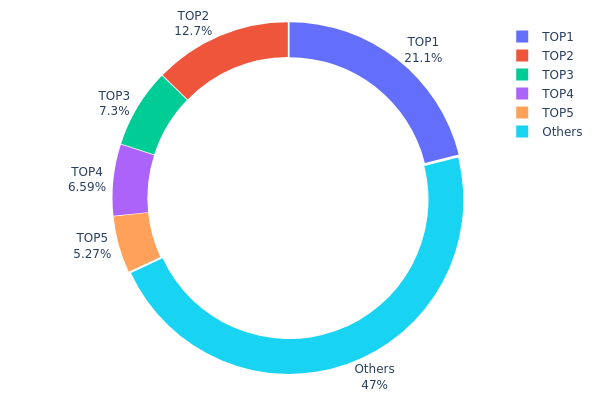
As of February 1, 2026, ZCX is trading at $0.003003, showing notable short-term volatility. The token has experienced a 1.099% decrease over the past hour and an 11.98% decline in the last 24 hours. The 24-hour trading volume stands at $14,917.89, with the price fluctuating between a high of $0.003614 and a low of $0.002866.
Over extended timeframes, ZCX has exhibited significant downward pressure. The 7-day performance shows a 17.39% decrease, while the 30-day period reflects a 38.84% decline. The yearly performance indicates a 95.87% decrease, demonstrating substantial market challenges.
The circulating supply of ZCX is 665,372,670.027032 tokens, representing approximately 66.54% of the total supply of 884,544,965.347032 tokens. The maximum supply is capped at 1,000,000,000 tokens. The current market capitalization stands at $1,998,114.13, with a fully diluted market cap of $2,656,288.53. ZCX holds a market dominance of 0.000095%, with the market cap to fully diluted valuation ratio at 66.54%.
The token is supported by approximately 18,537 holders and is available for trading on 5 exchanges. ZCX was initially published on April 15, 2021, with a launch price of $1.99845. The current market sentiment index indicates a reading of 14, classified as Extreme Fear, suggesting cautious investor behavior in the broader cryptocurrency market.
Click to view the current ZCX market price
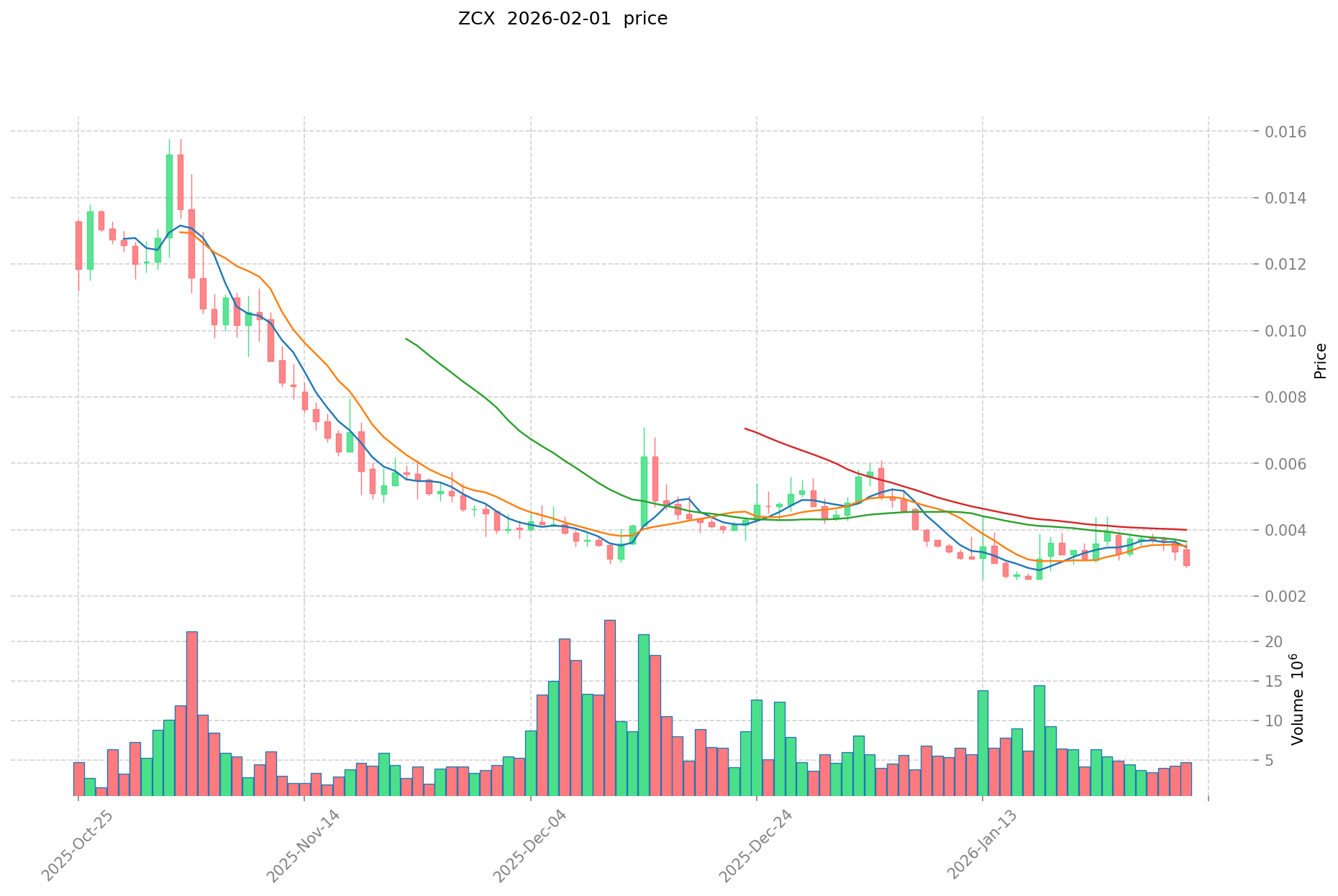
ZCX Market Sentiment Index
2026-02-01 Fear and Greed Index: 14 (Extreme Fear)
Click to view current Fear & Greed Index
The cryptocurrency market is currently experiencing extreme fear with an index reading of 14. This ultra-low sentiment indicates widespread panic among investors, creating significant market volatility. During periods of extreme fear, risk-averse traders often exit positions, while contrarian investors may view this as a potential buying opportunity. Market participants should exercise caution and conduct thorough analysis before making trading decisions. Monitor key support levels and market developments closely to assess potential recovery signals.
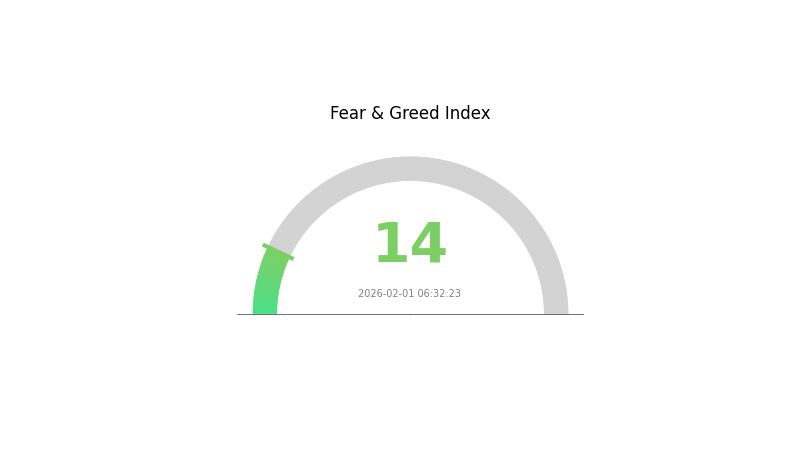
ZCX Holding Distribution
The holding distribution chart illustrates how ZCX tokens are allocated across different wallet addresses, providing insights into the token's concentration level and decentralization degree. By analyzing the proportion of tokens held by top addresses versus the broader holder base, we can assess potential risks related to market manipulation and evaluate the overall health of the token's on-chain structure.
Based on current data, ZCX exhibits a moderate to high concentration pattern. The top holder controls approximately 21.12% of the total supply (200 million tokens), while the second-largest address holds 12.74% (120.73 million tokens). The top five addresses collectively account for 52.99% of the circulating supply, indicating that more than half of ZCX tokens are concentrated in relatively few wallets. Notably, the fifth-ranked address (0x0000...00dead) represents a burn address holding 6.58% of tokens, which effectively reduces circulating supply and demonstrates a deflationary mechanism.
This concentration structure presents both opportunities and risks for market participants. The significant holdings by top addresses could lead to increased price volatility, as large-scale sell-offs from these wallets may trigger sharp price movements. However, the presence of the burn address and the 47% allocation to other holders suggests some degree of distribution among the broader community. For investors, monitoring changes in top holder positions becomes crucial, as shifts in these whale wallets often signal important market developments. The current distribution pattern indicates a relatively centralized token structure that requires careful observation to assess long-term sustainability and potential decentralization trends.
Click to view the current ZCX Holding Distribution
| Top |
Address |
Holding Qty |
Holding (%) |
| 1 |
0x277c...9ba6d9 |
200000.00K |
21.12% |
| 2 |
0xda51...0d4cca |
120726.62K |
12.74% |
| 3 |
0x7e81...34f621 |
69160.00K |
7.30% |
| 4 |
0x0000...00dead |
62393.60K |
6.58% |
| 5 |
0x58ed...a36a51 |
49863.88K |
5.26% |
| - |
Others |
444794.46K |
47% |
II. Core Factors Influencing ZCX's Future Price
Supply Mechanism
- Market-Driven Supply: ZCX's price is influenced by supply and demand dynamics in the cryptocurrency market. When demand increases relative to supply, prices tend to rise, and conversely, when supply exceeds demand, prices may decline.
- Historical Patterns: Historical data shows that cryptocurrency prices often respond to shifts in market sentiment and trading volumes. During periods of increased adoption or positive market sentiment, prices have shown upward momentum.
- Current Impact: The current supply dynamics suggest that market participants should monitor trading volumes and liquidity levels. Any significant changes in supply availability or demand patterns could impact ZCX's price trajectory.
Institutional and Major Holder Dynamics
- Institutional Holdings: Specific institutional holding data for ZCX was not available in the provided materials. However, institutional interest in cryptocurrencies generally tends to provide price support through increased liquidity and market confidence.
- Corporate Adoption: Information regarding specific corporate adoption of ZCX was not mentioned in the reference materials. Corporate integration typically enhances utility and demand for digital assets.
- National Policies: Regulatory developments continue to shape cryptocurrency markets. Changes in regulatory frameworks, particularly regarding cryptocurrency acceptance and compliance requirements, can significantly influence market sentiment and price movements.
Macroeconomic Environment
- Monetary Policy Impact: Global monetary policies, particularly those of major central banks, affect cryptocurrency markets. Interest rate decisions and quantitative easing measures can influence investor risk appetite and capital flows into digital assets.
- Inflation Hedge Characteristics: Cryptocurrencies are often viewed as alternative assets during inflationary periods. However, their performance as inflation hedges can vary based on broader market conditions and investor sentiment.
- Geopolitical Factors: International political developments and economic uncertainties can drive investors toward or away from cryptocurrencies. Market volatility often increases during periods of geopolitical tension.
Technological Development and Ecosystem Building
- Market Infrastructure: The development of trading infrastructure and market accessibility continues to evolve. Improvements in trading platforms and custody solutions can enhance market participation.
- Regulatory Framework: Ongoing developments in regulatory clarity and compliance standards may influence market structure and participant behavior.
- Ecosystem Applications: The broader cryptocurrency ecosystem's growth, including developments in decentralized applications and blockchain technology adoption, can create indirect effects on individual token valuations through increased sector interest and investment flows.
III. 2026-2031 ZCX Price Prediction
2026 Outlook
- Conservative prediction: $0.00264 - $0.00303
- Neutral prediction: around $0.00303
- Optimistic prediction: up to $0.00354 (requires favorable market conditions)
2027-2029 Outlook
- Market stage expectation: transitional growth phase with gradual adoption expansion
- Price range prediction:
- 2027: $0.00237 - $0.00454 (approximately 9% annual change)
- 2028: $0.00231 - $0.00512 (approximately 30% annual change)
- 2029: $0.00235 - $0.00524 (approximately 50% annual change)
- Key catalysts: ecosystem development, increased trading volume, and broader market recovery
2030-2031 Long-term Outlook
- Baseline scenario: $0.00341 - $0.00649 (assuming steady ecosystem growth and stable market conditions)
- Optimistic scenario: $0.00335 - $0.00847 (assuming accelerated adoption and favorable regulatory environment)
- Transformative scenario: potential to exceed $0.00847 (under conditions of significant technological breakthroughs and mass market adoption)
- 2026-02-01: ZCX trading within the predicted range of $0.00264 - $0.00354 (early-stage market positioning)
| Year |
Predicted High Price |
Predicted Average Price |
Predicted Low Price |
Price Change |
| 2026 |
0.00354 |
0.00303 |
0.00264 |
0 |
| 2027 |
0.00454 |
0.00329 |
0.00237 |
9 |
| 2028 |
0.00512 |
0.00391 |
0.00231 |
30 |
| 2029 |
0.00524 |
0.00452 |
0.00235 |
50 |
| 2030 |
0.00649 |
0.00488 |
0.00341 |
62 |
| 2031 |
0.00847 |
0.00568 |
0.00335 |
89 |
IV. ZCX Professional Investment Strategy and Risk Management
ZCX Investment Methodology
(1) Long-term Holding Strategy
- Target Investors: Investors seeking exposure to decentralized exchange infrastructure with medium to high risk tolerance
- Operational Recommendations:
- Consider dollar-cost averaging (DCA) to mitigate entry timing risk, given the token's high volatility reflected in its -95.87% annual decline
- Monitor project development milestones and exchange ecosystem updates before making position adjustments
- Storage Solution: Utilize Gate Web3 Wallet for secure asset custody with multi-signature protection features
(2) Active Trading Strategy
- Technical Analysis Tools:
- Volume Analysis: Track the $14,917.89 24-hour trading volume relative to historical averages to identify accumulation or distribution phases
- Support and Resistance Levels: Monitor the recent 24-hour range between $0.002866 (low) and $0.003614 (high) for short-term trading boundaries
- Swing Trading Essentials:
- Set stop-loss orders below recent support levels to protect against further downside, particularly given the -38.84% monthly decline
- Consider taking partial profits during rebounds toward resistance levels to manage risk in this volatile asset
ZCX Risk Management Framework
(1) Asset Allocation Principles
- Conservative Investors: 0.5-1% of cryptocurrency portfolio allocation
- Aggressive Investors: 2-5% of cryptocurrency portfolio allocation
- Professional Investors: Up to 10% with active hedging strategies in place
(2) Risk Hedging Solutions
- Portfolio Diversification: Balance ZCX exposure with more established platform tokens and layer-1 assets
- Position Sizing: Limit individual position size based on the token's low market cap of approximately $2 million and limited exchange availability (5 exchanges)
(3) Secure Storage Solutions
- Hot Wallet Option: Gate Web3 Wallet for active trading positions requiring frequent access
- Cold Storage Solution: Hardware wallet storage for long-term holdings to minimize exposure to exchange and network risks
- Security Precautions: Never share private keys, enable two-factor authentication, and regularly verify contract addresses (0xc52c326331e9ce41f04484d3b5e5648158028804 on Ethereum) before transactions
V. ZCX Potential Risks and Challenges
ZCX Market Risks
- Extreme Price Volatility: The token has experienced a -95.87% decline over the past year, indicating substantial market risk and price instability
- Low Liquidity: With a 24-hour trading volume of only $14,917.89 and market cap of approximately $2 million, the token faces significant liquidity constraints that may lead to high slippage
- Limited Exchange Presence: Trading availability on only 5 exchanges restricts market access and may contribute to price discovery inefficiencies
ZCX Regulatory Risks
- Exchange Token Classification: Platform tokens like ZCX may face evolving regulatory scrutiny regarding their classification as securities or utility tokens in various jurisdictions
- Compliance Requirements: Changes in cryptocurrency exchange regulations could impact the token's utility and value proposition within the Unizen ecosystem
- Cross-border Restrictions: Geographic limitations on exchange token usage may affect the token's global accessibility and adoption potential
ZCX Technical Risks
- Smart Contract Vulnerabilities: As an ERC-20 token on Ethereum, ZCX is subject to potential smart contract exploits or vulnerabilities in its code implementation
- Network Dependency: The token's functionality relies entirely on Ethereum network stability, exposing holders to network congestion and gas fee fluctuations
- Platform Development Risk: The token's value proposition depends on continued development and adoption of the Unizen exchange ecosystem, which carries execution risk
VI. Conclusion and Action Recommendations
ZCX Investment Value Assessment
ZCX presents as a high-risk, speculative investment opportunity within the exchange platform token sector. The token's substantial decline of -95.87% over the past year, combined with its low market capitalization of approximately $2 million and limited liquidity, suggests significant challenges in the current market environment. The circulating supply of 665.37 million tokens represents 66.54% of the fully diluted market cap, indicating moderate token unlock risk. While the token operates on Ethereum infrastructure, its long-term value proposition remains closely tied to the success and adoption of the Unizen exchange platform.
ZCX Investment Recommendations
✅ Beginners: Avoid allocation until demonstrating stronger price stability and increased market liquidity; focus on established platform tokens with proven track records
✅ Experienced Investors: Consider minimal speculative allocation (maximum 1-2% of crypto portfolio) only after thorough due diligence on platform development and competitive positioning
✅ Institutional Investors: Evaluate within broader platform token thesis with appropriate risk-adjusted sizing; conduct comprehensive technical and fundamental analysis before position establishment
ZCX Trading Participation Methods
- Spot Trading: Execute direct purchases on supported exchanges with careful attention to liquidity depth and order book conditions
- Dollar-Cost Averaging: Implement systematic purchase plans to mitigate timing risk, particularly suitable given current price volatility
- Portfolio Integration: Position as a satellite holding within a diversified cryptocurrency portfolio focused on exchange and DeFi infrastructure themes
Cryptocurrency investment carries extremely high risk, and this article does not constitute investment advice. Investors should make prudent decisions based on their own risk tolerance and are advised to consult professional financial advisors. Never invest more than you can afford to lose.
FAQ
What is ZCX? What are its main uses and characteristics?
ZCX is a utility token designed for the Web3 ecosystem, enabling governance participation and transaction settlement. Its main features include decentralized control, efficient transaction processing, and community-driven development, positioning it as a key asset in the crypto market.
What are the main factors affecting ZCX price?
ZCX price is influenced by market sentiment, supply and demand dynamics, trading volume, ecosystem developments, and broader cryptocurrency market trends. Technological upgrades and adoption rate also play significant roles in price movements.
How to predict ZCX price? What are the analysis methods?
Predict ZCX price using technical analysis with indicators like MACD, RSI, and Bollinger Bands for short-term trends. Apply fundamental analysis examining network adoption, institutional investment, and macroeconomic factors for long-term outlook.
What is the historical price trend of ZCX? What stage is it currently in?
ZCX reached an all-time high of $7.01 on September 14, 2021, and a low of $0.02955 on April 8, 2025. Currently in February 2026, ZCX is in a recovery and consolidation phase, with potential for upward momentum as market sentiment stabilizes.
What are the risks of investing in ZCX for price prediction trading?
ZCX price prediction trading carries high risk of total capital loss. Market volatility, sentiment fluctuations, and liquidation risks exist. Only invest capital you can afford to lose. Conduct thorough risk assessment before trading.
What are the advantages and disadvantages of ZCX compared to similar tokens?
ZCX combines CEX and DEX advantages with efficient trading and liquidity management. Its AI-driven analysis enhances trading experience. However, it faces market competition and regulatory risks like other emerging tokens.
* The information is not intended to be and does not constitute financial advice or any other recommendation of any sort offered or endorsed by Gate.