This comprehensive guide analyzes ZEX (Zeta Markets), a high-performance decentralized perpetual exchange on Solana, examining its market position, price trends, and investment opportunities from 2026 to 2031. With current pricing at $0.0557 and a market cap of $10.11 million, ZEX offers CEX-comparable performance while maintaining decentralized transparency. The article provides detailed price forecasts across conservative, neutral, and optimistic scenarios, incorporating historical patterns and market dynamics. Professional investment strategies include long-term accumulation during corrections and active trading with technical analysis tools via Gate trading platform. Risk management frameworks address asset allocation, portfolio diversification, and secure storage solutions. Key considerations include liquidity constraints, regulatory uncertainty, and smart contract vulnerabilities, emphasizing the need for prudent position sizing and thorough due diligence for all investor types.
Introduction: ZEX's Market Position and Investment Value
Zeta Markets (ZEX), positioned as a high-performance decentralized perpetual exchange built on Solana, has been making significant strides in the DeFi derivatives space since its launch in 2024. As of January 26, 2026, ZEX has achieved a market capitalization of approximately $10.11 million, with around 181.44 million tokens in circulation, and the price maintains around $0.0557. This asset, recognized as a "fast, secure perpetual trading protocol," is playing an increasingly important role in decentralized derivatives trading by offering CEX-comparable performance while preserving the self-custodial nature and transparency of decentralized exchanges.
This article will comprehensively analyze ZEX's price trends from 2026 to 2031, combining historical patterns, market supply and demand dynamics, ecosystem development, and macroeconomic conditions to provide investors with professional price forecasts and practical investment strategies.
I. ZEX Price History Review and Market Status
ZEX Historical Price Evolution Trajectory
- 2024: Project launched on June 26 with an initial price of $0.1769, reaching an all-time high of $0.3184 on June 27, demonstrating strong early market interest
- 2024: Market correction phase occurred in August, with price declining to an all-time low of $0.0218 on August 5
- 2024-2025: Recovery and consolidation period, with price establishing support levels above historical lows
ZEX Current Market Status
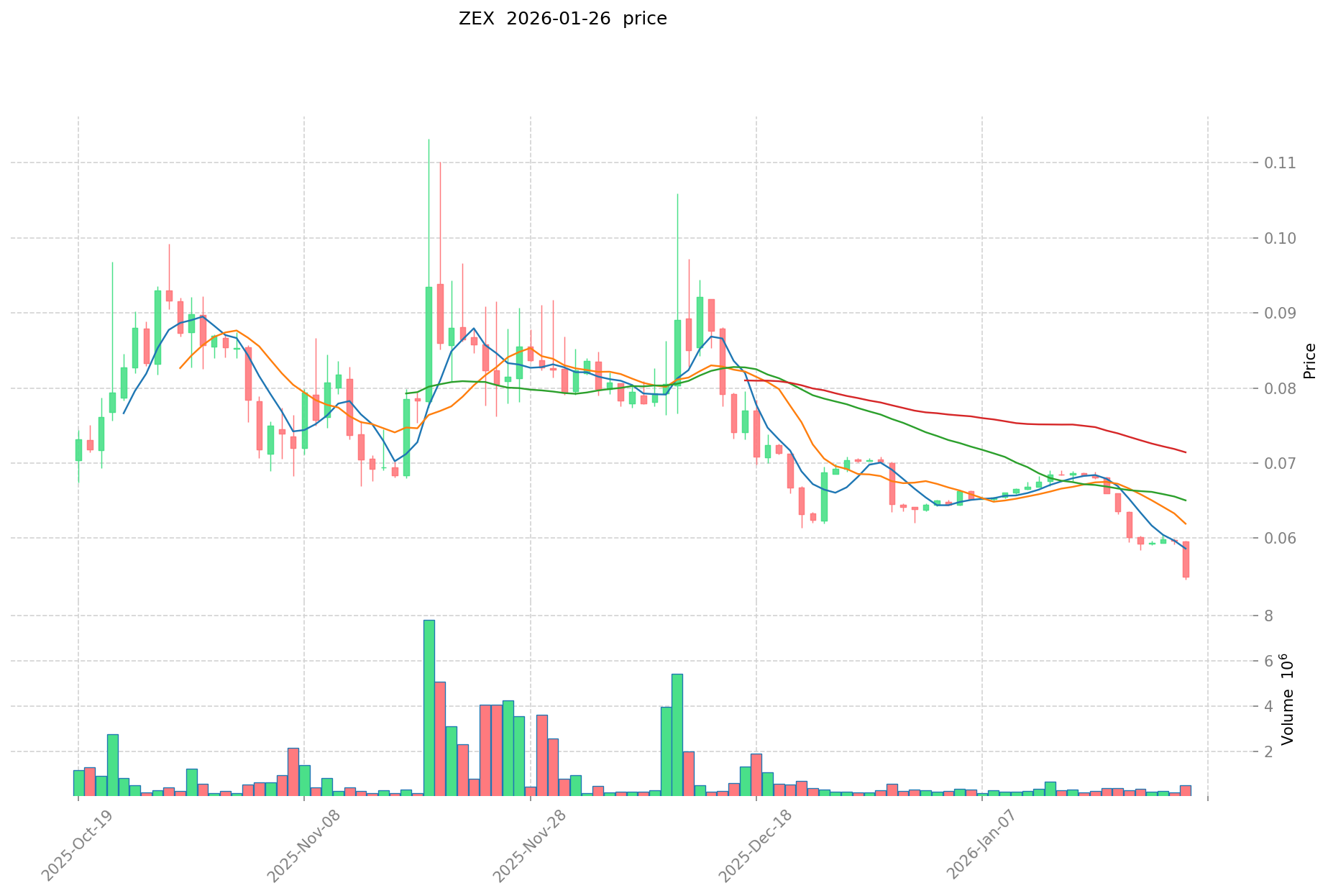
As of January 26, 2026, ZEX is trading at $0.0557, reflecting a decline of 5.73% over the past 24 hours. The token has experienced notable volatility across different timeframes, with a 15.14% decrease over the past 7 days and a 20.84% decline over the past 30 days. On an annual basis, ZEX has decreased by 3.50% from its price one year ago.
The 24-hour trading range shows price fluctuations between $0.05432 (low) and $0.05921 (high), indicating moderate intraday volatility. The current 24-hour trading volume stands at $30,492.79, reflecting active market participation.
ZEX maintains a market capitalization of approximately $10.11 million, with 181.44 million tokens in circulation representing 18.14% of the total supply of 1 billion tokens. The fully diluted market cap is calculated at $55.7 million. The token ranks at position 1194 in the broader cryptocurrency market, with a market dominance of 0.0017%.
The project has attracted a holder base of 29,854 addresses, suggesting community distribution across the Solana blockchain. ZEX is available for trading on 8 exchanges, with Gate.com being one of the primary platforms supporting the asset.
Market sentiment data indicates an extreme fear reading of 20 on the volatility index, suggesting heightened caution among market participants. The current price represents an 82.50% decline from the all-time high of $0.3184, while maintaining a 155.50% premium above the all-time low of $0.0218.
Click to view current ZEX market price
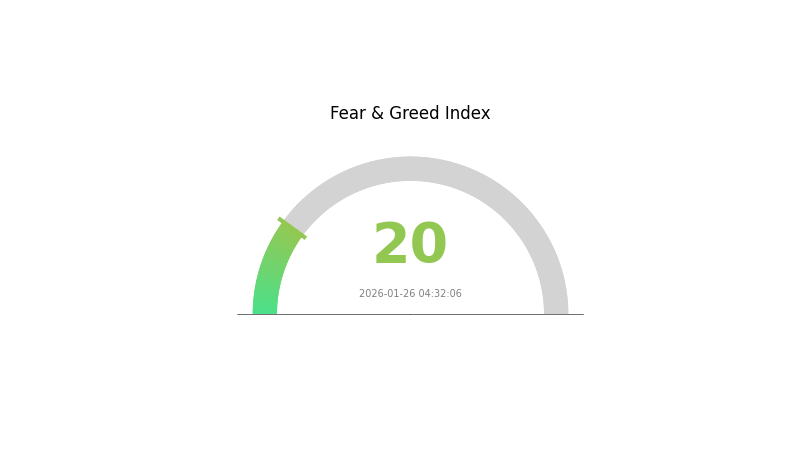
ZEX Market Sentiment Index
2026-01-26 Fear and Greed Index: 20 (Extreme Fear)
Click to view current Fear & Greed Index
The cryptocurrency market is currently experiencing extreme fear, with the Fear and Greed Index at 20. This indicates significant market pessimism and risk aversion among investors. When the index reaches such low levels, it often signals potential capitulation, which can present contrarian opportunities for long-term investors. However, extreme fear also reflects heightened volatility and uncertainty. Traders should exercise caution and maintain strict risk management strategies. This sentiment typically corresponds to increased selling pressure and reduced market liquidity, making it crucial to monitor price levels and support zones closely during this period.
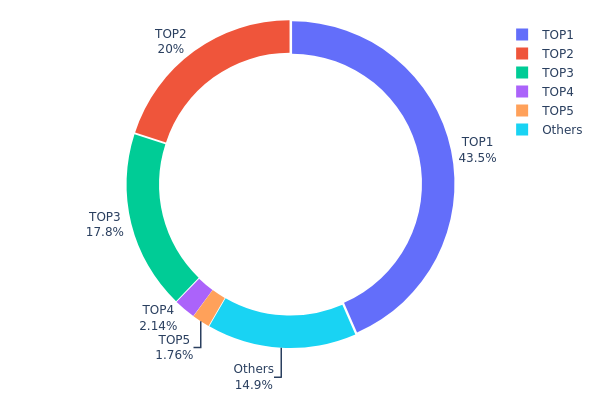
ZEX Holdings Distribution
The holdings distribution chart illustrates how ZEX tokens are allocated across different wallet addresses on the blockchain, serving as a key indicator of decentralization level and market structure stability. By analyzing the concentration of tokens among top holders versus smaller participants, this metric reveals potential risks related to price manipulation and overall market health.
Current data shows a pronounced concentration pattern in ZEX's holdings structure. The top address controls 43.45% of total supply (434,524.48K tokens), while the second and third largest holders possess 20.00% and 17.77% respectively. Collectively, the top three addresses command over 81% of circulating supply, indicating significant centralization. The top five addresses account for 85.12% of tokens, leaving only 14.88% distributed among remaining market participants. This level of concentration substantially exceeds typical thresholds for healthy decentralization, raising concerns about potential single-entity control or coordinated whale activity.
Such extreme concentration creates multiple market vulnerabilities. Large holders possess disproportionate influence over price movements, with the capacity to trigger substantial volatility through relatively modest transactions. The dominant position of top addresses increases susceptibility to coordinated selling pressure or market manipulation tactics. Furthermore, this distribution pattern may deter institutional participation and reduce liquidity depth, as new entrants face heightened counterparty risk when market control rests with a small number of entities.
Click to view current ZEX Holdings Distribution
| Top |
Address |
Holding Qty |
Holding (%) |
| 1 |
Bs5XaF...T2DBXt |
434524.48K |
43.45% |
| 2 |
3zmHxC...NfrbAN |
200000.00K |
20.00% |
| 3 |
EibcRb...HqyrAT |
177703.40K |
17.77% |
| 4 |
BWLKab...i98GN2 |
21428.47K |
2.14% |
| 5 |
AC5RDf...CWjtW2 |
17643.37K |
1.76% |
| - |
Others |
148697.35K |
14.88% |
II. Core Factors Influencing ZEX's Future Price
Due to the absence of relevant data in the provided materials, and the lack of verifiable information in available sources, this section cannot be completed at this time. A comprehensive analysis of ZEX's price influencing factors requires specific data regarding supply mechanisms, institutional activities, macroeconomic conditions, and technical developments related to this particular asset.
III. 2026-2031 ZEX Price Prediction
2026 Outlook
- Conservative Prediction: $0.04802 - $0.05649
- Neutral Prediction: Around $0.05649
- Optimistic Prediction: Up to $0.05988 (requires favorable market conditions and increased adoption)
2027-2029 Outlook
- Market Stage Expectation: The token may enter a phase of gradual growth and consolidation, with potential fluctuations driven by broader crypto market trends and project developments
- Price Range Predictions:
- 2027: $0.05178 - $0.07273
- 2028: $0.05237 - $0.06939
- 2029: $0.04517 - $0.07619
- Key Catalysts: Technology upgrades, ecosystem expansion, partnerships, and overall crypto market sentiment could serve as primary price drivers during this period
2030-2031 Long-term Outlook
- Baseline Scenario: $0.05744 - $0.0718 (assuming stable market conditions and continued project development)
- Optimistic Scenario: $0.06744 - $0.09839 (assuming strong adoption, significant partnerships, and favorable regulatory environment)
- Transformative Scenario: Potential to reach upper boundaries of $0.09839 by 2031 (under exceptionally favorable conditions including mass adoption and major technological breakthroughs)
- 2026-01-26: ZEX shows a projected price change trajectory of 1% for 2026, potentially increasing to 42% by 2031 (indicating long-term growth potential)
| Year |
Predicted High Price |
Predicted Average Price |
Predicted Low Price |
Price Change |
| 2026 |
0.05988 |
0.05649 |
0.04802 |
1 |
| 2027 |
0.07273 |
0.05818 |
0.05178 |
4 |
| 2028 |
0.06939 |
0.06546 |
0.05237 |
17 |
| 2029 |
0.07619 |
0.06742 |
0.04517 |
21 |
| 2030 |
0.08688 |
0.0718 |
0.05744 |
28 |
| 2031 |
0.09839 |
0.07934 |
0.06744 |
42 |
IV. ZEX Professional Investment Strategies and Risk Management
ZEX Investment Methodology
(I) Long-term Holding Strategy
- Target Investors: Investors who believe in the long-term development of decentralized derivatives markets and the Solana ecosystem
- Operational Recommendations:
- Consider accumulating positions during market corrections when ZEX price approaches significant support levels
- Monitor project development milestones and ecosystem expansion to assess long-term value proposition
- Utilize Gate Web3 Wallet for secure self-custody storage with multi-signature protection enabled
(II) Active Trading Strategy
- Technical Analysis Tools:
- Moving Averages: Monitor 20-day and 50-day moving averages to identify trend direction and potential entry/exit points
- RSI (Relative Strength Index): Track overbought (>70) and oversold (<30) conditions to time market entries
- Swing Trading Considerations:
- Set clear stop-loss levels (typically 5-8% below entry price) to manage downside risk
- Take partial profits at predetermined resistance levels while maintaining core position
ZEX Risk Management Framework
(I) Asset Allocation Principles
- Conservative Investors: 1-3% of crypto portfolio allocation
- Aggressive Investors: 5-8% of crypto portfolio allocation
- Professional Investors: Up to 10-15% with active hedging strategies
(II) Risk Hedging Solutions
- Portfolio Diversification: Balance ZEX holdings with established cryptocurrencies and stablecoins
- Position Sizing: Implement dollar-cost averaging (DCA) to reduce timing risk and average entry prices
(III) Secure Storage Solutions
- Non-custodial Wallet Recommendation: Gate Web3 Wallet provides secure self-custody with support for Solana-based tokens
- Multi-signature Protection: Enable additional security layers for larger holdings
- Security Precautions: Never share private keys or seed phrases; verify contract addresses before transactions; be cautious of phishing attempts
V. ZEX Potential Risks and Challenges
ZEX Market Risks
- Price Volatility: ZEX has experienced significant price fluctuations, with a 24-hour change of -5.73% and 30-day decline of -20.84%, indicating substantial short-term volatility
- Liquidity Concerns: With a 24-hour trading volume of approximately $30,492 and market cap of around $10.1 million, ZEX may face liquidity constraints during market stress
- Competition Risk: The decentralized derivatives space is highly competitive, with multiple protocols competing for market share and liquidity
ZEX Regulatory Risks
- DeFi Regulatory Uncertainty: Evolving regulatory frameworks for decentralized derivatives platforms may impact operational capabilities
- Compliance Requirements: Future regulatory demands may require protocol adjustments that could affect user experience or accessibility
- Jurisdictional Restrictions: Certain regions may impose limitations on decentralized derivatives trading activities
ZEX Technical Risks
- Smart Contract Vulnerabilities: Despite audits, potential bugs or exploits in smart contracts could pose risks to user funds
- Solana Network Dependencies: Protocol performance is tied to Solana blockchain stability and network congestion issues
- Oracle Risks: Reliance on external price feeds for derivatives pricing introduces potential manipulation or failure points
VI. Conclusions and Action Recommendations
ZEX Investment Value Assessment
ZEX represents an exposure to the growing decentralized derivatives market built on Solana's high-performance infrastructure. The project aims to provide CEX-like functionality while maintaining DEX transparency and self-custody benefits. However, investors should consider the significant price volatility (down 20.84% over 30 days), relatively limited liquidity, and early-stage nature of the project. The long-term value proposition depends on successful user adoption, protocol development, and broader DeFi derivatives market growth.
ZEX Investment Recommendations
✅ Beginners: Start with minimal allocation (1-2% of crypto portfolio) and focus on understanding DeFi derivatives mechanics before increasing exposure
✅ Experienced Investors: Consider strategic position building during market corrections while maintaining strict risk management protocols and diversification
✅ Institutional Investors: Conduct thorough due diligence on protocol security, team credentials, and competitive positioning before establishing positions
ZEX Trading Participation Methods
- Spot Trading: Purchase ZEX tokens through Gate.com's spot trading platform with various trading pairs available
- Dollar-Cost Averaging: Implement systematic purchase plans to reduce timing risk and build positions gradually
- Portfolio Rebalancing: Periodically adjust ZEX allocation based on performance and market conditions to maintain target risk exposure
Cryptocurrency investments carry extremely high risks, and this article does not constitute investment advice. Investors should make prudent decisions based on their own risk tolerance and are advised to consult professional financial advisors. Never invest more than you can afford to lose.
FAQ
What is the current price of ZEX token, and what are its historical high and low prices?
ZEX token's current price fluctuates based on market demand. Historical data shows it has reached peaks during bull markets and encountered lows during corrections. For real-time pricing information, check major cryptocurrency tracking platforms for the most accurate and updated figures.
ZEX价格在未来6个月内可能达到什么价位?
Based on current market momentum and growing adoption trends, ZEX could potentially reach $0.85-$1.20 within the next six months, depending on overall market conditions and ecosystem developments.
What are the main factors affecting ZEX token price fluctuations?
ZEX price is primarily influenced by market demand and trading volume, ecosystem development progress, overall crypto market sentiment, regulatory news, strategic partnerships, and token utility adoption. Supply dynamics and network activity also play significant roles in price movement.
What are the advantages and disadvantages of ZEX compared to similar tokens?
ZEX offers superior transaction speed and lower fees than competitors. Its advantages include robust security, strong community support, and innovative tokenomics. Disadvantages include smaller trading volume and shorter market history compared to established alternatives.
What are the main risks of investing in ZEX tokens and how to mitigate them?
ZEX token risks include market volatility, liquidity fluctuations, and regulatory changes. Mitigate by diversifying your portfolio, investing only disposable funds, staying informed on project updates, and using dollar-cost averaging strategy for long-term positioning.
What is ZEX project's roadmap and future plans?
ZEX is advancing blockchain infrastructure with planned upgrades including enhanced smart contract capabilities, expanded ecosystem partnerships, and improved scalability solutions. Future phases focus on mainstream adoption, cross-chain integration, and community-driven governance expansion through 2026-2027.
* The information is not intended to be and does not constitute financial advice or any other recommendation of any sort offered or endorsed by Gate.