This comprehensive analysis examines Zenchain (ZTC), a Layer 1 blockchain combining Bitcoin's security with Ethereum's programmability, launched in January 2026. Currently trading at $0.0021 with a $10.28M market cap, ZTC serves AI-enhanced decentralized applications. The article provides professional price forecasts for 2026-2031, ranging from $0.00171-$0.0026 in 2026 to $0.00287-$0.00511 by 2031, representing potential 87% growth. It analyzes historical price evolution, current market status showing 19.19% 24-hour gains, and extreme market fear conditions. The guide offers investment strategies for beginners through institutional investors, including long-term holding and active trading approaches via Gate exchange. Risk assessment covers volatility concerns, regulatory uncertainties, and technical challenges. Detailed risk management frameworks, secure storage solutions, and comprehensive FAQ sections equip investors with actionable insights for navigating ZTC's emerging market landscape.
Introduction: ZTC's Market Position and Investment Value
Zenchain (ZTC), as a Layer 1 blockchain that combines Bitcoin's security with Ethereum's programmability, has been establishing its presence in the cryptocurrency ecosystem since its launch in 2026. As of January 2026, Zenchain has achieved a market capitalization of approximately $10.28 million, with a circulating supply of about 4.89 billion tokens, and the price maintaining around $0.0021. This asset, recognized as an "AI-enhanced hybrid consensus blockchain," is playing an increasingly important role in enabling autonomous intelligent decentralized applications with Bitcoin-level security.
This article will comprehensively analyze ZTC's price trends from 2026 to 2031, combining historical patterns, market supply and demand dynamics, ecosystem development, and macroeconomic environment factors to provide investors with professional price forecasts and practical investment strategies.
I. ZTC Price History Review and Market Status
ZTC Historical Price Evolution Trajectory
- 2026 Early Stage: ZTC token was officially launched on January 7, 2026, with price reaching $0.012675 during initial trading period
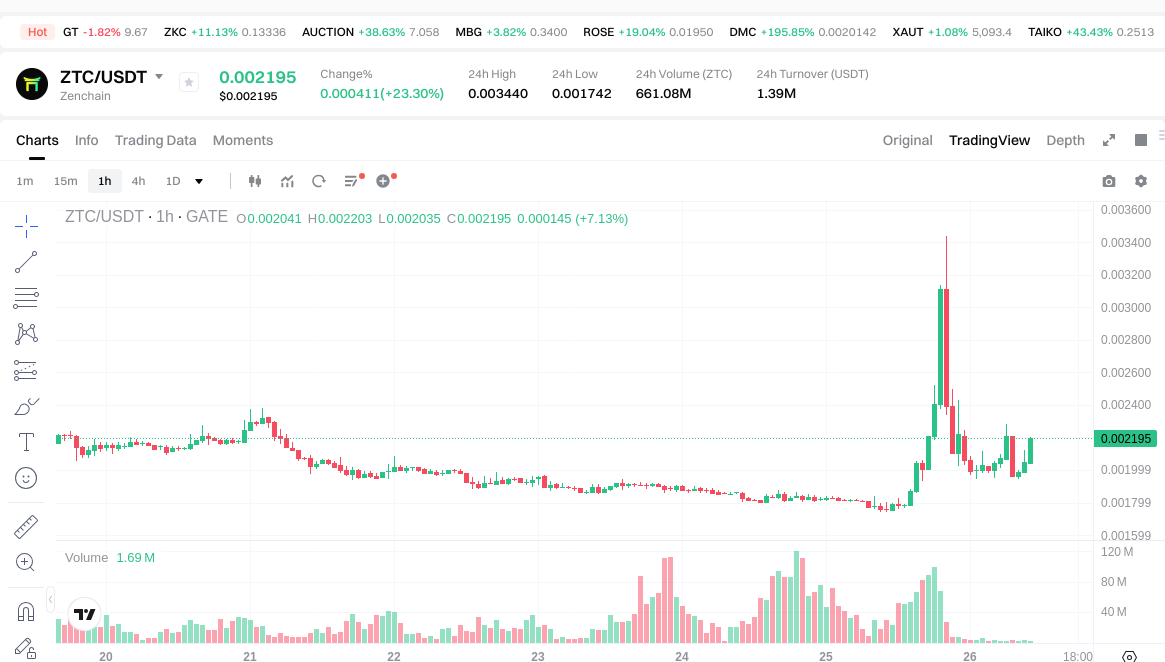
- 2026 January Mid-Phase: Market experienced significant volatility, with price declining from initial levels to $0.001742 on January 25, 2026
- 2026 Recent Period: Price showed recovery momentum with 24-hour increase, moving from lower levels toward $0.0021 range
ZTC Current Market Status
As of January 26, 2026, ZTC is trading at $0.0021, demonstrating notable short-term price movement patterns. The token has experienced a 19.19% increase over the past 24 hours, with trading volume reaching $1,404,468.77. In the past hour, the price showed a 5.71% upward movement, while the 7-day performance indicates a 3.95% gain.
The token's 24-hour trading range spans from $0.001742 to $0.00344, reflecting active market participation. Current circulating supply stands at 4,893,000,000 ZTC tokens, representing 23.3% of the maximum supply of 21,000,000,000 tokens. The market capitalization is positioned at $10,275,300, with a fully diluted valuation of $44,100,000.
ZTC currently ranks #1183 in the cryptocurrency market, with 695 token holders and availability across 11 exchanges. The token maintains a market dominance of 0.0014%. Trading activity on Gate.com provides access to ZTC markets for interested participants.
Click to view current ZTC market price
ZTC Market Sentiment Indicator
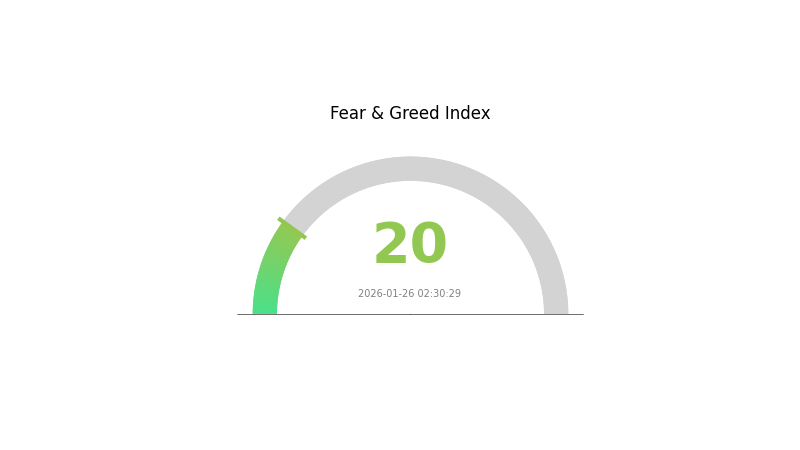
2026-01-26 Fear and Greed Index: 20 (Extreme Fear)
Click to view current Fear & Greed Index
The cryptocurrency market is currently experiencing extreme fear, with the Fear and Greed Index hitting 20. This indicates severe market pessimism and heightened investor anxiety. When fear reaches such extreme levels, it often signals potential buying opportunities for contrarian investors, as assets may be oversold. However, extreme fear also suggests elevated market volatility and risk. Investors should exercise caution and conduct thorough due diligence before making trading decisions. Monitor market developments closely and consider dollar-cost averaging to mitigate risks during this period of uncertainty.
ZTC Holding Distribution
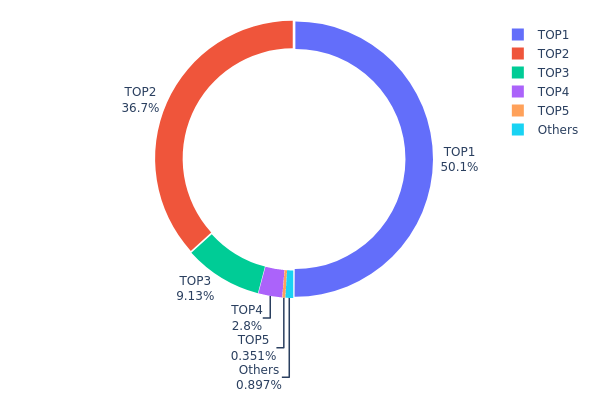
The holding distribution chart reflects the allocation of tokens across different wallet addresses, serving as a key indicator of asset concentration and decentralization within the blockchain ecosystem. By analyzing the proportion of tokens held by top addresses, we can assess whether the asset distribution exhibits healthy decentralization or faces risks from excessive concentration.
According to the current data, ZTC displays an extremely concentrated holding structure. The top address alone controls 10,519,702.57K tokens, accounting for 50.09% of the total supply, while the second-largest address holds 36.72%. Combined, the top two addresses control 86.81% of all circulating tokens, indicating severe centralization. The top three addresses collectively hold 95.94% of the supply, leaving only 4.06% distributed among other market participants. This distribution pattern significantly deviates from the ideal decentralized model and presents substantial concentration risks.
Such high concentration poses multiple concerns for market structure and price stability. First, addresses controlling over half of the supply possess considerable market manipulation capabilities, potentially triggering dramatic price fluctuations through large-scale sell-offs or coordinated operations. Second, this concentration undermines the fairness of token distribution, as the majority of tokens remain controlled by a few entities, limiting broad participation from retail investors and institutions. Furthermore, if these major holders are associated with the project team or early investors without transparent lock-up mechanisms, it could create significant downward pressure on prices upon potential unlocking events. From an on-chain structural perspective, the current distribution reflects weak decentralization and fragile market depth, making the asset highly vulnerable to single-entity decisions and reducing overall market resilience.
Click to view current ZTC Holding Distribution
| Top |
Address |
Holding Qty |
Holding (%) |
| 1 |
0x8703...f85187 |
10519702.57K |
50.09% |
| 2 |
0x44c6...fa9eca |
7712508.26K |
36.72% |
| 3 |
0xc051...e8140d |
1918166.61K |
9.13% |
| 4 |
0xc5a2...2a1695 |
587491.74K |
2.79% |
| 5 |
0x58ed...a36a51 |
73697.47K |
0.35% |
| - |
Others |
188433.35K |
0.92% |
II. Core Factors Influencing ZTC's Future Price
Based on the available information, there is currently insufficient data to provide a comprehensive analysis of the core factors that may influence ZTC's future price movements. A thorough evaluation would typically include supply mechanisms, institutional dynamics, macroeconomic conditions, and technological developments, but these details are not available in the provided materials at this time.
III. 2026-2031 ZTC Price Forecast
2026 Outlook
- Conservative forecast: $0.00171 - $0.00219
- Neutral forecast: $0.00219 (average estimated price)
- Optimistic forecast: up to $0.0026 (requires favorable market conditions and increased adoption)
Based on current market analysis, ZTC is projected to experience modest growth in 2026, with an expected price change of approximately 4% compared to current levels. The token's price trajectory will likely be influenced by broader cryptocurrency market sentiment and project-specific developments.
2027-2029 Mid-term Outlook
- Market stage expectation: Gradual expansion phase with increasing volatility
- Price range forecast:
- 2027: $0.00223 - $0.00321 (14% anticipated growth)
- 2028: $0.00202 - $0.00322 (33% projected increase)
- 2029: $0.0019 - $0.00407 (43% estimated growth)
- Key catalysts: Technology upgrades, ecosystem expansion, strategic partnerships, and overall cryptocurrency market recovery trends
During this mid-term period, ZTC is expected to demonstrate progressive price appreciation, with 2029 potentially marking a significant milestone as the token approaches the $0.004 threshold under favorable conditions.
2030-2031 Long-term Outlook
- Baseline scenario: $0.00241 - $0.00354 (assuming steady market conditions and consistent project development)
- Optimistic scenario: $0.00354 - $0.00432 (contingent on accelerated adoption and positive regulatory environment)
- Transformational scenario: $0.00432 - $0.00511 by 2031 (requires exceptional market conditions, major technological breakthroughs, and widespread institutional adoption)
By 2030, ZTC could achieve a cumulative growth of approximately 68% from 2026 levels, while 2031 projections suggest potential gains of up to 87%. The average price in 2031 is estimated at $0.00393, representing a significant long-term appreciation trajectory. However, investors should note that cryptocurrency markets remain inherently volatile, and actual performance may vary based on numerous unpredictable factors including regulatory changes, technological innovations, and global economic conditions.
| Year |
Predicted High Price |
Predicted Average Price |
Predicted Low Price |
Price Change |
| 2026 |
0.0026 |
0.00219 |
0.00171 |
4 |
| 2027 |
0.00321 |
0.00239 |
0.00223 |
14 |
| 2028 |
0.00322 |
0.0028 |
0.00202 |
33 |
| 2029 |
0.00407 |
0.00301 |
0.0019 |
43 |
| 2030 |
0.00432 |
0.00354 |
0.00241 |
68 |
| 2031 |
0.00511 |
0.00393 |
0.00287 |
87 |
IV. ZTC Professional Investment Strategy and Risk Management
ZTC Investment Methodology
(1) Long-term Holding Strategy
- Suitable for: Investors seeking exposure to Layer 1 blockchain infrastructure with Bitcoin-level security and EVM compatibility
- Operational recommendations:
- Consider gradual accumulation during market corrections to build position
- Monitor project development milestones and ecosystem growth metrics
- Storage solution: Use Gate Web3 Wallet for secure asset custody with multi-signature protection
(2) Active Trading Strategy
- Technical analysis tools:
- Volume analysis: Monitor 24-hour trading volume ($1.4M) against market cap ($10.3M) for liquidity assessment
- Support and resistance levels: Key levels at ATL $0.001742 and ATH $0.012675 for entry/exit planning
- Swing trading considerations:
- Recent 24-hour volatility of 19.19% presents short-term trading opportunities
- Set stop-loss orders to manage downside risk given 30-day decline of 69.83%
ZTC Risk Management Framework
(1) Asset Allocation Principles
- Conservative investors: 1-3% of crypto portfolio
- Moderate investors: 3-7% of crypto portfolio
- Aggressive investors: 7-15% of crypto portfolio
(2) Risk Hedging Approaches
- Portfolio diversification: Balance ZTC exposure with established Layer 1 tokens
- Position sizing: Limit initial investment to manageable amounts given early-stage nature
(3) Secure Storage Solutions
- Hot wallet recommendation: Gate Web3 Wallet for active trading and liquidity access
- Security best practices: Enable two-factor authentication and regularly review wallet security settings
- Key risk reminders: Never share private keys or seed phrases; verify contract address (0xa6773c4f26c80c86bc04aa6506533693a39d1195) before transactions
V. ZTC Potential Risks and Challenges
ZTC Market Risks
- High volatility: 30-day decline of 69.83% indicates significant price fluctuation potential
- Liquidity concerns: Trading volume of $1.4M suggests limited market depth
- Early-stage uncertainty: Only 23.3% circulating supply with recent launch in January 2026
ZTC Regulatory Risks
- Layer 1 blockchain classification: Evolving regulatory frameworks for blockchain infrastructure may impact operations
- Cross-jurisdictional compliance: Global operations require adherence to multiple regulatory regimes
- Smart contract regulation: Uncertain regulatory treatment of programmable blockchain platforms
ZTC Technical Risks
- Hybrid consensus complexity: Integration of Bitcoin security with Ethereum programmability requires robust technical execution
- AI layer dependencies: Native protocol-level AI for fraud detection and optimization introduces additional technical complexity
- Network maturity: As a newly launched platform, potential for undiscovered vulnerabilities
VI. Conclusion and Action Recommendations
ZTC Investment Value Assessment
Zenchain represents an innovative approach to combining Bitcoin's security model with Ethereum's programmability through its Layer 1 architecture and native AI integration. The project addresses key blockchain trilemma challenges with its hybrid consensus mechanism. However, investors should note the significant short-term volatility, with a 69.83% decline over 30 days from ATH, limited liquidity, and early-stage development risks. Long-term value proposition depends on successful execution of technical roadmap and ecosystem adoption.
ZTC Investment Recommendations
✅ Beginners: Start with small position sizes (1-2% of crypto portfolio) and focus on understanding the project fundamentals before increasing exposure
✅ Experienced investors: Consider strategic accumulation during market weakness while maintaining strict risk management protocols
✅ Institutional investors: Conduct thorough due diligence on technical architecture and team capabilities; consider staged investment approach
ZTC Trading Participation Methods
- Spot trading: Available on Gate.com and 11 other exchanges with ERC-20 standard support
- Secure custody: Utilize Gate Web3 Wallet for self-custody with enhanced security features
- Research monitoring: Track development progress through official documentation and community channels
Cryptocurrency investment carries extremely high risk. This article does not constitute investment advice. Investors should make prudent decisions based on their own risk tolerance and are advised to consult professional financial advisors. Never invest more than you can afford to lose.
FAQ
What is ZTC? What are its uses and value?
ZTC is a blockchain-based utility token designed for decentralized ecosystem participation. It enables transaction settlement, governance voting, and staking rewards. ZTC provides holders with protocol access and value appreciation potential through increasing adoption and network growth.
How to conduct ZTC price prediction? What analysis methods are available?
ZTC price prediction uses technical analysis(examining charts and patterns), fundamental analysis(evaluating project metrics and adoption), on-chain analysis(tracking transaction volume and wallet activity), and market sentiment analysis. Combine multiple methods for comprehensive forecasting.
What are the main factors affecting ZTC price?
ZTC price is primarily influenced by market demand and supply dynamics, trading volume, overall cryptocurrency market sentiment, blockchain adoption rates, technological developments, regulatory changes, and macroeconomic conditions affecting the digital asset sector.
What is the historical price trend of ZTC?
ZTC has shown volatile market dynamics since launch. The token experienced initial growth phases followed by market corrections. Recently, ZTC demonstrated recovery momentum with increasing trading volumes. Long-term trends suggest potential for continued development as the project matures and adoption expands in the crypto ecosystem.
What risks should I pay attention to when investing in ZTC?
ZTC investment risks include market volatility, liquidity fluctuations, regulatory changes, and technology risks. Monitor price movements, diversify your portfolio, and invest only what you can afford to lose. Stay updated on project developments and market conditions.
What are the differences between ZTC and other mainstream cryptocurrencies?
ZTC distinguishes itself through innovative blockchain technology, lower transaction fees, faster settlement speeds, and enhanced privacy features. Its unique consensus mechanism and scalability solutions provide superior performance compared to traditional cryptocurrencies, making it ideal for next-generation decentralized applications.
What are ZTC's future development prospects and potential?
ZTC demonstrates strong growth potential driven by increasing adoption, expanding ecosystem partnerships, and technological innovations. With growing transaction volumes and community engagement, ZTC is positioned for significant long-term value appreciation in the Web3 landscape.
* The information is not intended to be and does not constitute financial advice or any other recommendation of any sort offered or endorsed by Gate.