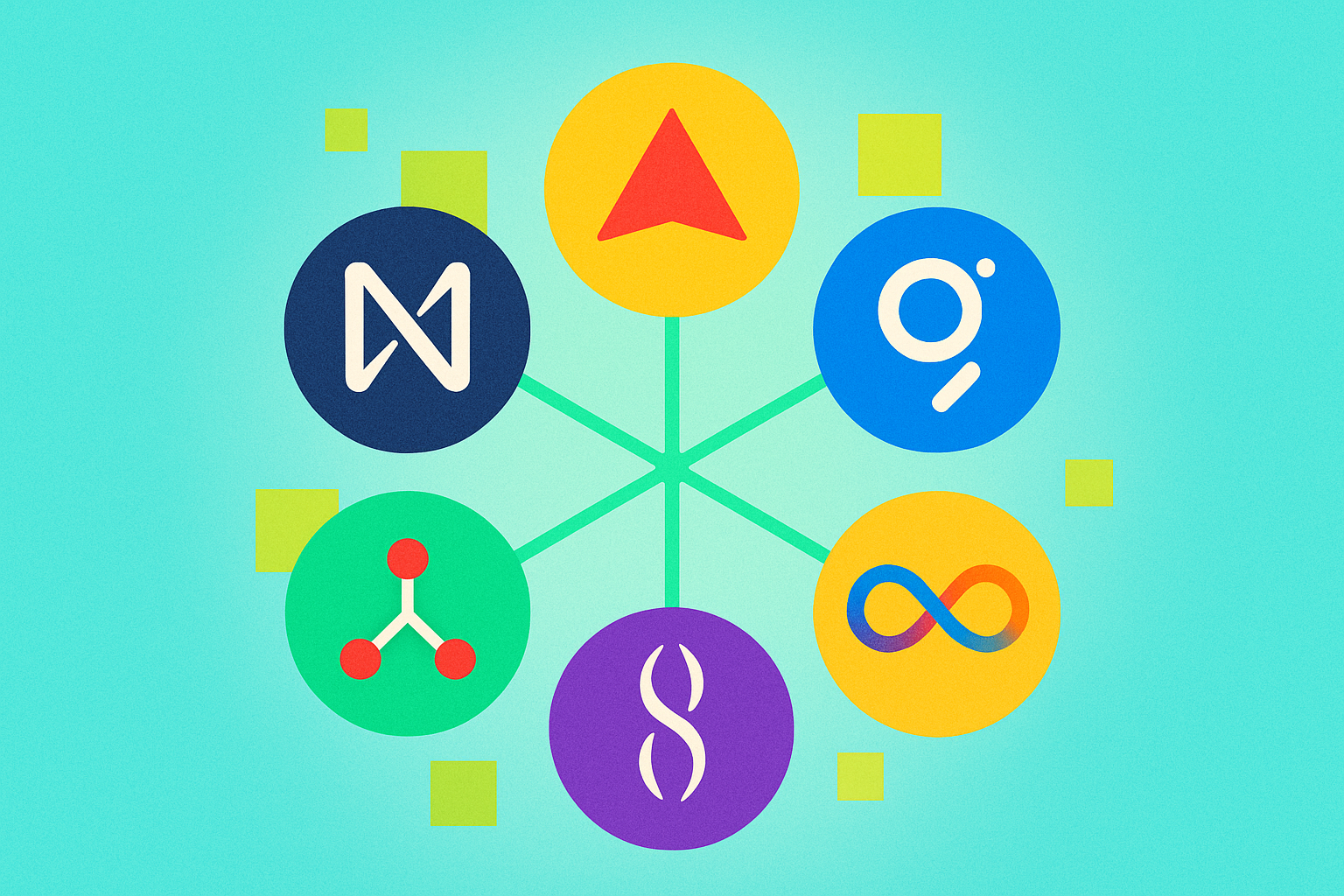
A Guide to Selecting AI-Related Cryptocurrencies and Investing: Discover Six Top Tokens Including NEAR, Render, and The Graph. This beginner-friendly guide provides a detailed overview of how to buy, key investment strategies, and effective risk management. It also includes step-by-step instructions for purchasing on platforms like Gate. Pursue profit in AI cryptocurrency investments in 2024.
What Are AI-Related Cryptocurrencies? Integration of Blockchain and AI Explained
AI-related cryptocurrencies are next-generation crypto assets that fuse artificial intelligence (AI) and blockchain technologies. By combining AI’s advanced data processing with the decentralized design of blockchain networks, these projects create new value that traditional crypto assets could not achieve.
Utilizing AI technology enables the following innovative features:
-
Task Automation: AI-powered trading bots analyze market data in real time, determine optimal trading opportunities, and automatically execute buy and sell orders. This enables objective trading, free from human emotions.
-
Data Process Optimization: AI rapidly and accurately processes and analyzes massive amounts of blockchain data. This dramatically boosts data management efficiency and enables faster decision-making.
-
Decentralized AI Applications: Integrating AI with blockchain enables the creation of highly transparent systems that do not require centralized administrators. This reduces the risk of data tampering and significantly enhances security.
Specific use cases for AI-related cryptocurrencies include:
- Market Prediction: AI analyzes historical and current market data to forecast future price trends.
- Fraud Detection: Automatically identifies abnormal trading patterns to prevent fraudulent activity.
- Algorithmic Trading: Uses complex mathematical models to calculate optimal trading timing.
- Portfolio Management: Optimizes asset allocation based on the investor’s risk profile.
- Smart Contract Optimization: Improves contract execution efficiency and safety.
- Regulatory Compliance: Monitors transactions in real time to ensure legal compliance.
- KYC: Streamlines the Know Your Customer process using AI to enhance user experience.
- ICO Prediction: Analyzes the probability of new project success to support investment decisions.
- Energy Consumption Optimization: Improves energy efficiency for mining operations and reduces environmental impact.
- Wallet Security: Detects abnormal access or transactions to protect assets.
AI-related crypto assets mainly function as utility tokens on AI-based platforms. Token holders utilize them for a range of purposes, including buying or renting AI models, accessing services, and receiving rewards for contributing to the platform. Active users are incentivized, fostering overall ecosystem growth.
Pros and Cons of AI-Related Cryptocurrency Tokens
Before investing in AI-related cryptocurrencies, it’s crucial to understand their strengths and weaknesses. Here, we outline key considerations to inform your investment decisions.
Advantages:
-
High-Speed Data Processing and Analysis: AI technology instantly processes massive market data, enabling investors to capture market trends at speeds unattainable for humans. This helps avoid missed opportunities and supports swift decision-making.
-
Increased Operational Efficiency: Automated systems reduce manual tasks and lower the risk of human error. This delivers cost savings and increased productivity.
-
Scalability: The decentralized network design maintains system performance even as user numbers and transaction volumes grow. The platform efficiently processes large data volumes and supports expansion.
-
Enhanced Security: AI-driven anomaly detection identifies unauthorized access or fraud early. Combined with blockchain’s tamper resistance, this ensures high-level security.
Disadvantages:
-
High Costs: Deploying and operating AI technology requires advanced hardware and skilled professionals, resulting in high initial and ongoing costs. Individual investors may face significant entry barriers.
-
Immature Technology: Many AI-related crypto assets rely on emerging technologies that may have unforeseen bugs or security vulnerabilities. Technical uncertainty increases investment risk.
-
Market Volatility: Crypto markets are highly volatile, and AI tokens, as a new segment, often see even greater price swings. Investors risk substantial short-term losses.
-
Data Privacy and Transparency Issues: When AI processes user data, privacy protection and transparency are critical challenges. Projects lacking proper safeguards may risk personal data leaks.
AI Token Use Cases and Applications
AI-related crypto assets are being used in leading-edge scenarios, including:
-
AI Agents: Autonomous AI agents that learn and execute tasks based on user instructions operate on decentralized networks, automating complex tasks without central administrators.
-
Decentralized Computing Systems: Idle computing resources worldwide are efficiently pooled for large-scale AI workloads at low cost, making advanced AI accessible without expensive hardware.
-
Zero-Knowledge Machine Learning (zkML): This technology ensures complete data privacy during high-performance AI computation, with expected applications in sensitive fields like healthcare and finance.
-
AI Model Transactions: Marketplaces enable secure trading and sharing of AI models, democratizing access to advanced AI tools.
In summary, AI-related cryptocurrencies offer technological innovation and new business opportunities. However, investing in this sector requires advanced expertise and diligent risk management. Thoroughly research each project’s technical foundation, development team, and the practical utility of its use cases before investing.
Six AI Tokens to Watch
Recently, a wave of innovative projects has emerged at the intersection of AI and blockchain. This section highlights six AI-related cryptocurrencies with unique technologies and practical use cases, all driving the evolution of the AI crypto market.
NEAR Protocol (NEAR): Available on Japanese Exchanges
NEAR Protocol is a next-generation proof-of-stake (PoS) blockchain platform delivering both scalability and usability. Its main feature is the proprietary sharding technology, "Nightshade."
Sharding splits the blockchain network into smaller segments (“shards”), so each node processes only its assigned shard’s data, not the entire network. This greatly increases throughput, accelerates transactions, and reduces costs—an innovative solution to the scalability challenges of legacy blockchains.
NEAR Protocol also emphasizes interoperability with Ethereum. Its "Rainbow Bridge" enables bidirectional transfers of Ethereum tokens to and from the NEAR network, and the "Aurora" Ethereum-compatible layer makes deploying Ethereum dApps on NEAR simple.
For AI integration, NEAR Protocol advances the "User-Owned AI" concept—a decentralized AI framework empowering users with full control of their data and assets. This approach stands apart from traditional, centralized, profit-driven AI development. NEAR Foundation supports open, transparent AI development, allowing users to boost productivity, personalize experiences, and access new economic opportunities while protecting their privacy.
In recent years, NEAR Foundation launched incubation programs for user-owned AI infrastructure. The first cohort included teams such as Mizu, Pond, Nevermined, Hyperbolic, Ringfence, and Exhibits, advancing practical decentralized AI research and development.
Render (RNDR): Available on Japanese Exchanges
Render Network is a decentralized rendering platform connecting creators needing GPU power with users who have idle GPUs. The platform delivers high-quality 3D rendering at lower cost than traditional solutions.
RNDR is the network’s native utility token, essential for the ecosystem. Creators pay for rendering services with RNDR, while GPU providers earn RNDR for processing jobs. This efficiently utilizes distributed resources and creates a global computing pool.
Industries such as film, gaming, and architectural visualization benefit from Render Network’s advanced graphics capabilities. High-quality rendering once required costly hardware and long processing times, but Render Network greatly reduces both cost and time.
By leveraging blockchain and smart contracts, Render Network provides a secure, transparent rendering marketplace. Smart contracts automate job assignment, completion, and payment, ensuring reliability and efficiency. All transactions are recorded on-chain, guaranteeing fairness and transparency.
RNDR was initially issued on Ethereum, then migrated to Solana. This improved transaction speed, reduced fees, and enhanced user experience. With Solana’s performance, Render Network processes rendering jobs more efficiently at scale.
The Graph (GRT): Available on Japanese Exchanges
The Graph is a decentralized protocol for efficiently indexing and querying blockchain data. Blockchain data is vast and complex, making rapid information retrieval challenging. The Graph solves this problem.
Developers specify which data to index via a "subgraph manifest." Using the GraphQL query language, they then access indexed data efficiently. GraphQL enables developers to specify exactly what data they need, greatly improving retrieval efficiency.
The Graph mainnet now supports over 30 blockchain networks, including Ethereum, Polygon, Arbitrum, and Optimism, and is widely adopted in the industry.
For AI integration, Semiotic Labs—a core development team—drives AI and cryptography adoption. Their tools for indexers (data indexing node operators) include "AutoAgora" for automated price modeling and "Allocation Optimizer" for resource management.
AutoAgora analyzes market supply and demand, automatically setting competitive, optimal pricing for indexer services. Allocation Optimizer calculates the most efficient resource allocation across multiple subgraphs.
The Graph team also plans AI-powered natural language access to blockchain data. If realized, even non-technical users could query and analyze blockchain data using simple questions, further accelerating adoption.
Internet Computer (ICP): Available on International Exchanges
Internet Computer Protocol (ICP) is a next-generation blockchain project aimed at surpassing the boundaries of traditional blockchain. ICP uses advanced consensus mechanisms, including threshold cryptography and state machine replication.
ICP’s key innovation is its goal of enabling Web3. While conventional blockchains focus on finance and data storage, ICP aims to decentralize the entire internet. Its smart contracts can host websites and respond directly to HTTP requests, enabling fully decentralized web apps without centralized servers.
ICP is designed to integrate seamlessly with existing web technologies, so developers can use familiar tools while benefiting from blockchain features. Unlike platforms requiring specialized environments or languages, ICP is accessible to a wider developer base.
For AI integration, ICP advances decentralized AI (DeAI), which boosts reliability and transparency. ICP’s smart contracts ensure AI models cannot be tampered with and protect data in a decentralized environment, solving the AI "black box" problem and making AI decision processes more transparent.
Examples include ELNA AI, a platform on ICP for developing and monetizing AI agents. Developers publish AI agents for others to use and earn revenue. The Kinic project uses AI to optimize Web3 app usage by learning user behavior and recommending services, enhancing the ecosystem’s usability.
SingularityNET (AGIX): Available on International Exchanges
SingularityNET is a decentralized marketplace democratizing access to AI services. While advanced AI was once the domain of large companies or research labs, SingularityNET enables anyone to offer and use AI services.
Blockchain technology ensures transparency and trust, recording all AI service transactions on an immutable ledger. Smart contracts automate service delivery and payment, eliminating intermediaries for efficient transactions.
AGIX is the platform’s native token, used for all transactions. Developers offer services such as image recognition, speech analysis, NLP, and predictive analytics; users pay with AGIX, and developers receive AGIX as compensation.
SingularityNET actively collaborates with other blockchain projects. Partnerships with Cardano improved speed and cost; integration with Filecoin supports large-scale model and dataset sharing.
Recently, SingularityNET announced a major strategic merger with Fetch.ai (FET) and Ocean Protocol (OCEAN) to form the Artificial Superintelligence (ASI) alliance. AGIX and OCEAN tokens will migrate to FET, then eventually unify as the ASI token. This is one of the largest integrations in decentralized AI, aiming to build a unified, robust ecosystem.
Bittensor (TAO): Available on International Exchanges
Bittensor is an innovative decentralized network connecting machine learning models owned by individuals worldwide. Previously, only organizations with large data centers or high-performance computers could develop and use advanced models, but Bittensor is changing this.
Built on the Substrate framework and compatible with Polkadot, Bittensor lets developers flexibly extend network features. It uses a highly efficient proof-of-stake consensus mechanism, maximizing security while minimizing environmental impact.
Bittensor’s core feature is providing a platform where machine intelligence is evaluated and traded. Researchers and developers publish models on Bittensor and receive rewards based on network-wide performance evaluations—better models earn higher rewards.
On the consumer side, users easily find and use the best models for their needs, from image recognition to NLP and predictive analytics. This democratizes access to advanced AI, enabling individuals and small businesses to benefit from cutting-edge technology.
TAO is Bittensor’s native token, used for researcher rewards, transaction fees, and network governance. Token holders participate in proposals and votes, supporting decentralized management.
Bittensor also focuses on data privacy and security. Training AI models requires large datasets, but Bittensor uses privacy-preserving technology to protect personal information, making the platform safe for sensitive industries like healthcare and finance.
How to Buy AI Tokens in Japan: Exchange Options and Steps
This section explains how to purchase AI-related cryptocurrencies through Japanese and international exchanges. The process varies depending on whether the token is listed domestically or only abroad.
Using International Exchanges
International exchanges offer more AI tokens, but you cannot purchase directly with Japanese yen, so a domestic exchange is needed as an intermediary. Here is the general process:
Step 1: Create an Exchange Account
Go to a major international exchange’s official site to register. Enter your email and password, enable two-factor authentication, and complete KYC with your ID (passport or driver’s license) and proof of address (utility bill, etc.).
Step 2: Buy XRP on a Domestic Exchange
Open an account at a leading Japanese exchange, deposit yen, and buy XRP (Ripple). Bank transfers, convenience store deposits, and quick deposits are available. XRP is ideal for overseas transfers due to its speed and low fees.
Step 3: Send XRP to the International Exchange
On your domestic exchange’s withdrawal page, enter the international exchange’s XRP deposit address and destination tag—do not omit the tag. Specify the amount and execute the transfer. Typically, transfers complete in minutes to tens of minutes.
Step 4: Buy AI Tokens
Once XRP arrives at the international exchange, convert it to USDT or another stablecoin. Find the AI token you want, select the trading pair (e.g., ICP/USDT), choose a market or limit order, enter the quantity, and execute your trade.
Using Domestic Exchanges
Some AI tokens—such as NEAR, RNDR, and GRT—are available on Japanese exchanges. This process is simpler and includes Japanese support.
Step 1: Create an Exchange Account
Sign up at a major Japanese exchange and complete KYC with your driver’s license or My Number card. With online ID verification (photo of your ID and face via smartphone), you can start trading the same day in some cases.
Step 2: Deposit Japanese Yen
Deposit yen into your exchange wallet. Bank transfers are most common and usually free. Some exchanges also accept credit or debit cards, though fees may be higher.
Step 3: Buy AI Tokens
Search for the AI token you want (e.g., NEAR/JPY), choose market or limit order, enter quantity, and execute. Market orders fill immediately, though prices may change; limit orders fill automatically at your target price.
After purchase, your crypto is stored in the exchange wallet. For long-term holdings, transfer to a hardware or other external wallet for greater security.
Summary
The fusion of AI and blockchain is ushering in a new era for the digital economy. AI-related cryptocurrencies deliver advanced features traditional crypto assets could not offer, powering innovative solutions across market forecasting, fraud detection, algorithmic trading, and data management.
The six tokens covered here—NEAR Protocol, Render, The Graph, Internet Computer, SingularityNET, and Bittensor—each offer unique technologies and use cases, driving AI crypto market growth. These projects leverage decentralized networks to democratize AI, optimize computing resources, and protect data privacy.
However, investing in AI-related crypto carries both high return potential and significant risk. Main risks include immature technology, extreme volatility, regulatory uncertainty, high costs, and ongoing privacy and transparency challenges.
When investing, keep these key points in mind:
-
Thorough Research: Evaluate each project’s technology, team, roadmap, and community activity.
-
Risk Management: Invest only what you can lose, and diversify your portfolio to reduce risk.
-
Long-Term Perspective: AI-related crypto is a developing field—focus on long-term growth, not short-term price swings.
-
Continuous Learning: Stay current with advances in AI and blockchain to inform your investment strategy.
-
Security Measures: Always enable two-factor authentication and use secure hardware wallets for long-term holdings.
AI-related cryptocurrencies offer compelling opportunities for innovation and new business, but require advanced knowledge and careful risk management. Use this guide to make investments that fit your goals and risk profile. The convergence of AI and blockchain could profoundly impact business and daily life.
FAQ
What Are AI-Related Cryptocurrencies?
AI-related cryptocurrencies are blockchain assets that integrate artificial intelligence. They offer AI functionality via smart contracts and help advance AI technology, creating new value through the union of AI and crypto.
Which AI Cryptocurrencies Are Available in Japan?
AI-related cryptocurrencies available in Japan include Bitcoin (BTC), Ethereum (ETH), Solana (SOL), USDC, and BNB. These serve as platform tokens for projects leveraging AI and machine learning.
How Do I Buy AI-Related Cryptocurrencies in Japan?
To buy AI cryptocurrencies in Japan, you need to use an international crypto exchange. Register an account, complete identity verification, then deposit yen or crypto to purchase.
How Are AI Cryptocurrencies Different from Regular Cryptocurrencies?
AI cryptocurrencies are developed with artificial intelligence technology and feature automated management, predictive capabilities, or advanced smart contracts. They are technically more complex and offer greater innovation than conventional cryptocurrencies.
What Are the Risks of Investing in AI-Related Cryptocurrencies?
Risks include high price volatility, shifting demand from tech innovation, regulatory uncertainty, security threats, and liquidity fluctuations.
What Fees Apply When Buying AI Cryptocurrencies on Japanese Exchanges?
Trading fees on Japanese exchanges are typically around 0.04%. Deposit fees are usually free.
* The information is not intended to be and does not constitute financial advice or any other recommendation of any sort offered or endorsed by Gate.