This comprehensive analysis compares ALEPH and BAT, two prominent Web3 tokens with distinct ecosystem positioning. ALEPH operates as a decentralized cross-blockchain cloud computing network, while BAT powers the Brave browser's attention-based advertising model. As of January 2026, ALEPH trades at $0.03017 with a $5.62M market cap, while BAT stands at $0.1742 with $260.55M market cap. Both experienced significant declines from historical peaks—ALEPH down 96.6% and BAT down 90.8%. The article examines historical price trends, supply mechanisms, institutional adoption, technical ecosystems, and investment strategies suited for different investor profiles. Medium to long-term price forecasts through 2031 are provided alongside risk assessments covering market, technical, and regulatory factors. Detailed recommendations guide novice, experienced, and institutional investors in decision-making, emphasizing that BAT offers greater liquidity and stability while ALEPH presents higher growth potential for risk-toleran
Introduction: Investment Comparison Between ALEPH and BAT
In the cryptocurrency market, the comparison between ALEPH vs BAT has been an unavoidable topic for investors. The two differ significantly in market cap ranking, application scenarios, and price performance, representing different positioning within the crypto asset landscape.
ALEPH (ALEPH): Since its emergence, this decentralized network has gained market recognition for its positioning as a cross-blockchain second-layer network, decentralized secure cloud computing network, and decentralized messaging and analytics platform.
BAT (BAT): Launched in 2017, Basic Attention Token has been known for its innovative approach to digital advertising, created by JavaScript founder and Mozilla/Firefox co-founder Brendan Eich. It operates within the Brave browser ecosystem to address advertising display and user incentive challenges.
This article will comprehensively analyze the investment value comparison of ALEPH vs BAT, focusing on historical price trends, supply mechanisms, institutional adoption, technical ecosystems, and future projections, attempting to answer the question investors care about most:
"Which is the better buy right now?"
I. Historical Price Comparison and Current Market Status
ALEPH and BAT Historical Price Trends
- January 2022: ALEPH reached its all-time high of $0.875793, driven by market momentum during the crypto bull market period.
- November 2021: BAT achieved its historical peak at $1.9, coinciding with increased adoption of the Brave browser ecosystem and broader market enthusiasm.
- September 2020: ALEPH recorded its all-time low of $0.00623944, reflecting early-stage market conditions and limited liquidity.
- July 2017: BAT registered its historical low at $0.072394 shortly after its initial coin offering launch.
- Comparative Analysis: During the 2021-2022 market cycle, ALEPH experienced a decline from $0.875793 to current levels, representing a decrease of approximately 96.6%, while BAT declined from $1.9 to current levels, showing a reduction of approximately 90.8%.
Current Market Status (January 28, 2026)
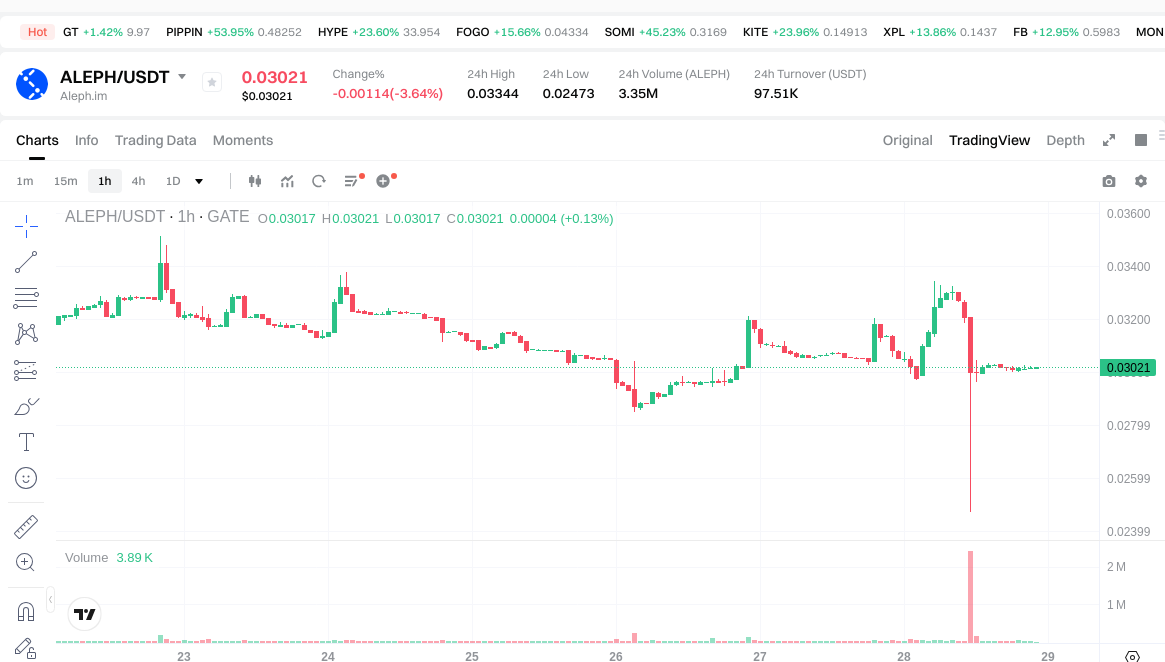
- ALEPH Current Price: $0.03017
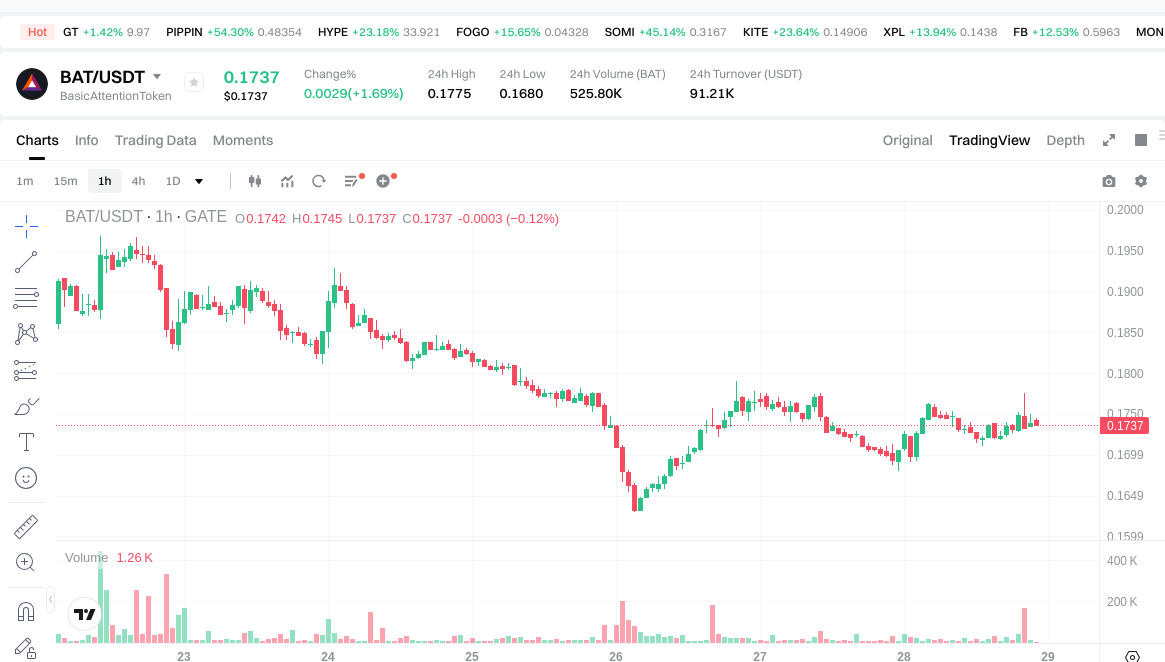
- BAT Current Price: $0.1742
- 24-Hour Trading Volume: ALEPH $97,474.55 vs BAT $91,495.17
- Market Capitalization: ALEPH $5.62M vs BAT $260.55M
- 24-Hour Price Change: ALEPH -3.63% vs BAT +2.41%
- Market Sentiment Index (Fear & Greed Index): 29 (Fear)
View real-time prices:
- Check ALEPH current price Market Price
- Check BAT current price Market Price
II. Core Factors Influencing ALEPH vs BAT Investment Value
Supply Mechanism Comparison (Tokenomics)
- ALEPH: The reference materials do not provide specific information about ALEPH's token supply mechanism. As a decentralized cloud platform, the project focuses on cross-chain infrastructure and serverless computing services.
- BAT: The reference materials do not contain detailed information about BAT's supply mechanism or tokenomics structure.
- 📌 Historical Pattern: Supply mechanisms play a role in shaping price cycles, though specific historical data for these tokens is not available in the provided materials.
Institutional Adoption and Market Application
- Institutional Holdings: The reference materials do not provide comparative data on institutional preference between ALEPH and BAT.
- Enterprise Adoption: ALEPH operates as an open-source cross-chain decentralized cloud platform based in Paris, offering serverless trusted computing services, database (file storage), and computing (micro virtual machines). BAT's enterprise application details are not specified in the provided materials.
- Policy Landscape: The reference materials do not contain information regarding regulatory attitudes toward either token across different jurisdictions.
Technology Development and Ecosystem Building
- ALEPH Technical Development: The platform provides cross-chain decentralized cloud infrastructure, including serverless computing, data storage, and micro virtual machine capabilities. The project emphasizes trustless computing services and cross-chain interoperability.
- BAT Technical Development: According to the reference materials, BAT's value proposition relates to its role within network operations and content creation incentive mechanisms, though specific technical upgrade details are not provided.
- Ecosystem Comparison: ALEPH focuses on decentralized cloud infrastructure, while both projects' specific involvement in DeFi, NFT, payment systems, and smart contract deployments is not detailed in the available materials.
Macroeconomic Environment and Market Cycles
- Performance in Inflationary Environments: The reference materials do not provide comparative analysis of how ALEPH or BAT perform under inflationary conditions.
- Macroeconomic Monetary Policy: The materials do not discuss the impact of interest rates or dollar index movements on either token.
- Geopolitical Factors: While cross-border transaction demand and international circumstances can influence digital asset markets, specific impacts on ALEPH and BAT are not addressed in the provided materials.
III. 2026-2031 Price Forecast: ALEPH vs BAT
Short-term Forecast (2026)
- ALEPH: Conservative $0.0214 - $0.0302 | Optimistic $0.0302 - $0.0353
- BAT: Conservative $0.1459 - $0.1737 | Optimistic $0.1737 - $0.1980
Medium-term Forecast (2028-2029)
- ALEPH may enter a gradual growth phase, with estimated price range of $0.0198 - $0.0463
- BAT may enter an expansion phase, with estimated price range of $0.1176 - $0.3343
- Key drivers: institutional capital inflows, ETF developments, ecosystem growth
Long-term Forecast (2030-2031)
- ALEPH: Baseline scenario $0.0277 - $0.0420 | Optimistic scenario $0.0420 - $0.0544
- BAT: Baseline scenario $0.1910 - $0.2938 | Optimistic scenario $0.2938 - $0.4798
View detailed price predictions for ALEPH and BAT
Disclaimer
ALEPH:
| Year |
Predicted High Price |
Predicted Average Price |
Predicted Low Price |
Price Change |
| 2026 |
0.0353457 |
0.03021 |
0.0214491 |
0 |
| 2027 |
0.040644534 |
0.03277785 |
0.0245833875 |
8 |
| 2028 |
0.0385467516 |
0.036711192 |
0.01982404368 |
21 |
| 2029 |
0.046283635314 |
0.0376289718 |
0.02257738308 |
24 |
| 2030 |
0.04950843819726 |
0.041956303557 |
0.02769116034762 |
39 |
| 2031 |
0.054421521343784 |
0.04573237087713 |
0.043445752333273 |
51 |
BAT:
| Year |
Predicted High Price |
Predicted Average Price |
Predicted Low Price |
Price Change |
| 2026 |
0.198018 |
0.1737 |
0.145908 |
0 |
| 2027 |
0.2416167 |
0.185859 |
0.1115154 |
6 |
| 2028 |
0.2928208545 |
0.21373785 |
0.1175558175 |
22 |
| 2029 |
0.33432874497 |
0.25327935225 |
0.1848939271425 |
45 |
| 2030 |
0.381945263193 |
0.29380404861 |
0.1909726315965 |
68 |
| 2031 |
0.47978201138013 |
0.3378746559015 |
0.25002724536711 |
93 |
IV. Investment Strategy Comparison: ALEPH vs BAT
Long-term vs Short-term Investment Strategies
- ALEPH: Suitable for investors focused on decentralized cloud infrastructure development and cross-chain technology adoption. The token's positioning in serverless computing and database solutions may appeal to those evaluating emerging blockchain infrastructure projects.
- BAT: Suitable for investors interested in digital advertising innovation and browser ecosystem growth. The token's connection to the Brave browser platform may attract those seeking exposure to attention-based economy models.
Risk Management and Asset Allocation
- Conservative Investors: ALEPH 20-30% vs BAT 70-80%. Given BAT's larger market capitalization ($260.55M vs $5.62M) and established ecosystem presence, a conservative approach might favor higher BAT allocation.
- Aggressive Investors: ALEPH 50-60% vs BAT 40-50%. Higher risk tolerance investors might increase ALEPH exposure given its smaller market cap and potential for growth in the decentralized infrastructure sector.
- Hedging Tools: Stablecoin allocation for liquidity management, options strategies for downside protection, cross-asset portfolio diversification across different blockchain sectors.
V. Potential Risk Comparison
Market Risks
- ALEPH: Lower liquidity evidenced by smaller market capitalization and 24-hour trading volume ($97,474.55). The token experienced a decline of approximately 96.6% from its historical peak, indicating significant volatility. Current market sentiment at 29 (Fear) suggests cautious market conditions.
- BAT: While possessing higher market capitalization, the token has experienced an approximate 90.8% decline from its peak price. Market performance remains subject to broader cryptocurrency market cycles and sentiment shifts.
Technical Risks
- ALEPH: As a cross-chain decentralized cloud platform, potential risks include scalability challenges in serverless computing infrastructure, competition from centralized cloud providers, and network stability considerations in early-stage deployment.
- BAT: Technical risks may include dependency on Brave browser adoption rates, competition from alternative advertising models, and integration challenges within the digital advertising ecosystem.
Regulatory Risks
- Both tokens operate in evolving regulatory landscapes. ALEPH's infrastructure services and BAT's advertising model may face different regulatory considerations across jurisdictions. Changes in data privacy regulations, cryptocurrency taxation policies, and digital asset classification could impact both projects differently based on their respective use cases and operational models.
VI. Conclusion: Which Is the Better Buy?
📌 Investment Value Summary:
- ALEPH Advantages: Positioned in the growing decentralized cloud infrastructure sector, offering cross-chain capabilities and serverless computing services. Lower market capitalization may present growth potential for risk-tolerant investors seeking exposure to blockchain infrastructure development.
- BAT Advantages: Established presence in digital advertising innovation with connection to the Brave browser ecosystem. Higher market capitalization ($260.55M) and greater liquidity provide relatively more stability within the volatile cryptocurrency market.
✅ Investment Recommendations:
- Novice Investors: Consider starting with BAT due to its larger market presence and more established ecosystem. Allocate smaller portions to higher-risk assets like ALEPH only after understanding market dynamics and volatility patterns.
- Experienced Investors: May consider balanced exposure based on risk tolerance and sector preferences. Those interested in infrastructure plays might allocate toward ALEPH, while digital advertising ecosystem believers might favor BAT. Diversification across both could provide exposure to different blockchain use cases.
- Institutional Investors: Conduct thorough due diligence on technical infrastructure, adoption metrics, and ecosystem development before allocation. Consider liquidity requirements, regulatory compliance factors, and alignment with broader portfolio strategies.
⚠️ Risk Warning: The cryptocurrency market exhibits extreme volatility. This article does not constitute investment advice. Past performance does not guarantee future results. Investors should conduct independent research and consult financial advisors before making investment decisions.
VII. FAQ
Q1: What are the main differences between ALEPH and BAT in terms of their use cases?
ALEPH focuses on decentralized cloud infrastructure while BAT targets digital advertising innovation. ALEPH operates as an open-source cross-chain decentralized cloud platform offering serverless trusted computing services, database solutions, and micro virtual machines for blockchain infrastructure needs. In contrast, BAT functions within the Brave browser ecosystem to revolutionize digital advertising through attention-based economy models, addressing advertising display and user incentive challenges. These fundamentally different applications position them in separate market segments within the cryptocurrency landscape.
Q2: Which token has better liquidity for trading purposes?
BAT demonstrates significantly better liquidity compared to ALEPH. As of January 28, 2026, BAT's market capitalization stands at $260.55M with 24-hour trading volume of $91,495.17, while ALEPH has a market capitalization of only $5.62M with trading volume of $97,474.55. The substantial difference in market cap (approximately 46 times larger for BAT) indicates that BAT offers greater liquidity, tighter spreads, and reduced slippage for traders, making it more suitable for investors requiring easier entry and exit positions.
Q3: How have ALEPH and BAT performed since their historical peaks?
Both tokens have experienced significant declines from their all-time highs, though ALEPH's decline has been more severe. ALEPH reached its peak at $0.875793 in January 2022 and has declined approximately 96.6% to its current price of $0.03017. BAT achieved its historical high at $1.9 in November 2021 and has decreased approximately 90.8% to its current price of $0.1742. These substantial declines reflect both project-specific developments and broader cryptocurrency market cycle dynamics, emphasizing the high-risk nature of these assets.
Q4: What are the price projections for ALEPH and BAT by 2030?
Price forecasts suggest different growth trajectories for both tokens through 2030. ALEPH's baseline scenario projects a price range of $0.0277 - $0.0420 by 2030, representing potential growth from current levels, while the optimistic scenario suggests $0.0420 - $0.0544. BAT's baseline forecast indicates $0.1910 - $0.2938 by 2030, with an optimistic scenario of $0.2938 - $0.4798. These projections depend on various factors including institutional adoption, ecosystem development, and broader cryptocurrency market conditions. However, these predictions should not be considered investment advice as cryptocurrency markets remain highly volatile and unpredictable.
Q5: Which token is more suitable for conservative investors?
BAT is generally more appropriate for conservative investors seeking relatively lower risk within the cryptocurrency space. BAT's larger market capitalization ($260.55M vs $5.62M), established ecosystem presence through the Brave browser platform, and superior liquidity provide comparatively greater stability than ALEPH. A conservative portfolio allocation might consist of 70-80% BAT and 20-30% ALEPH for investors seeking cryptocurrency exposure while managing risk. However, both tokens remain high-risk assets subject to significant volatility, and conservative investors should carefully consider their risk tolerance and diversification strategies.
Q6: What are the primary risk factors investors should consider for ALEPH?
ALEPH faces several key risk factors that investors must evaluate. The token's extremely low liquidity evidenced by its $5.62M market capitalization creates challenges for larger transactions and increases vulnerability to price manipulation. Technical risks include potential scalability challenges in serverless computing infrastructure, intense competition from established centralized cloud providers like AWS and Google Cloud, and network stability considerations during early-stage deployment. Additionally, ALEPH's 96.6% decline from its historical peak demonstrates extreme price volatility. The project's success depends heavily on adoption of decentralized infrastructure solutions, which remains uncertain in the current market environment.
Q7: How does the current market sentiment affect investment decisions between ALEPH and BAT?
The current Fear & Greed Index reading of 29 (Fear) indicates cautious market conditions that influence investment approaches for both tokens. During fearful market periods, investors typically favor assets with greater liquidity and established track records, which would benefit BAT's relative position. ALEPH's smaller market cap and lower liquidity make it more susceptible to sharp price movements during uncertain market conditions. However, fear-driven markets can also present accumulation opportunities for risk-tolerant investors seeking exposure to undervalued assets. The market sentiment underscores the importance of proper risk management, diversification strategies, and alignment of investment choices with individual risk tolerance levels rather than market timing decisions.
Q8: What role does ecosystem development play in the investment thesis for each token?
Ecosystem development represents a critical factor differentiating ALEPH and BAT investment considerations. ALEPH's value proposition depends on the adoption and growth of decentralized cloud infrastructure, cross-chain integration capabilities, and the development of serverless computing applications within the blockchain space. Its success requires attracting developers and projects to build on its platform. BAT's ecosystem revolves around the Brave browser adoption, advertiser participation in its attention-based economy model, and user engagement with its reward mechanisms. BAT benefits from an already functioning ecosystem with measurable metrics like browser downloads and active users. Investors should evaluate which ecosystem development trajectory aligns better with their conviction about future blockchain application trends and adoption patterns.
* The information is not intended to be and does not constitute financial advice or any other recommendation of any sort offered or endorsed by Gate.