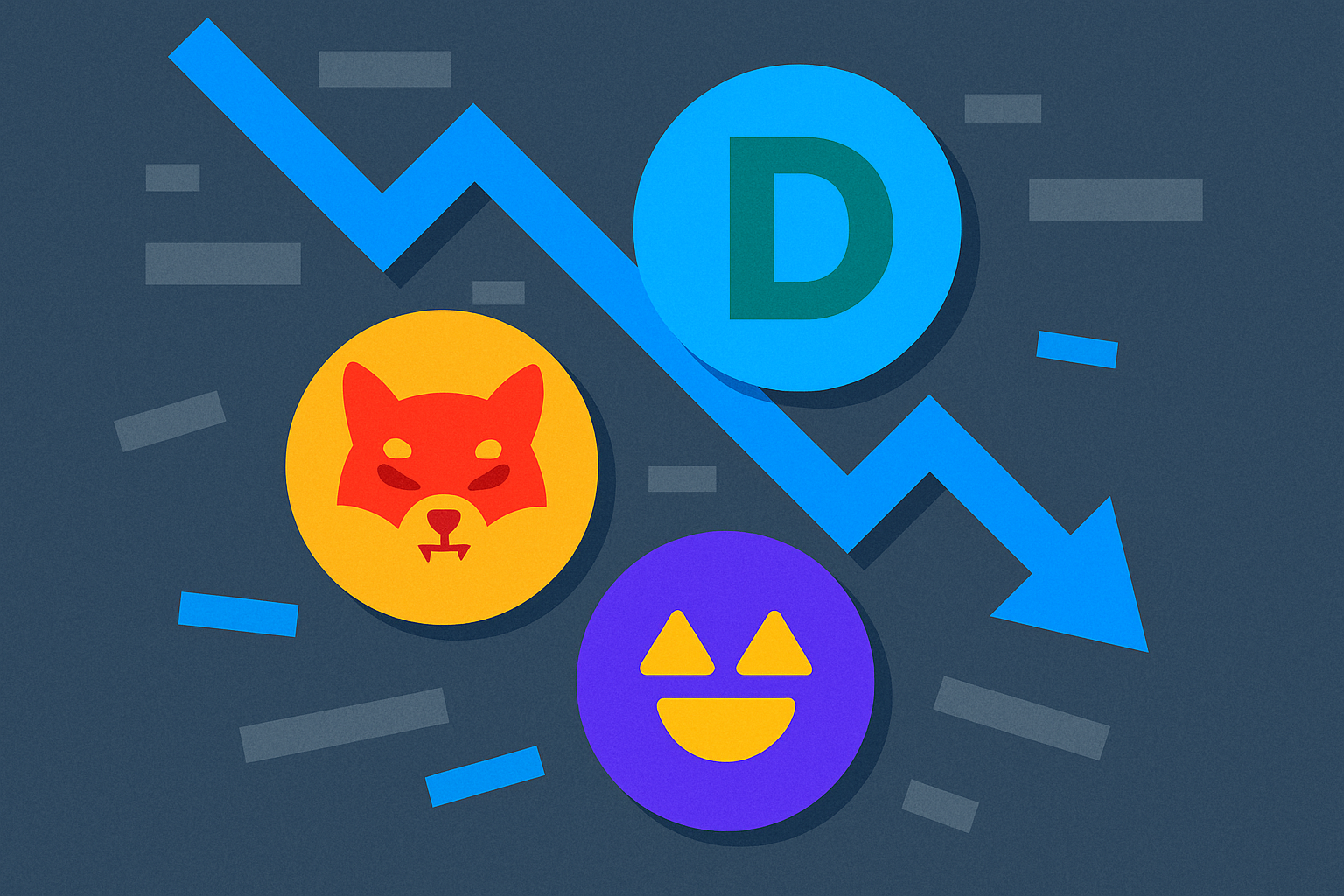
This comprehensive guide explores the meme coin market's 66% crash from its $116.7 billion peak and the concurrent 43% NFT market decline to $2.78 billion. The article analyzes the causes behind these corrections—including speculative bubble collapse, reduced retail interest, and broader crypto market weakness—while examining individual asset performance across major tokens like Dogecoin, Shiba Inu, and emerging projects. Beyond market mechanics, the guide addresses investor concerns through detailed FAQs covering risk management strategies, asset evaluation criteria, and long-term prospects for both meme coins and NFTs. Whether you're a seasoned trader on Gate or emerging investor, this resource provides essential insights for navigating volatile cryptocurrency sectors and identifying resilient projects positioned for sustainable growth amid market consolidation.
Meme Coin Market Crashes 66% From Early-Year Peak Amid Broad Crypto Sell-Off
The meme coin sector experienced one of its most significant downturns during a recent trading session, as speculative digital assets faced intense selling pressure across the board. This decline reflects a broader shift in market sentiment, with investors moving away from high-risk alternative crypto assets amid mounting concerns about market stability and regulatory uncertainty.
Market capitalization for the meme coin category plunged dramatically to $39.4 billion, down from $44 billion the previous day, effectively wiping out nearly $4.6 billion in value within a 24-hour period. This sharp contraction occurred despite a notable 40% increase in trading volume, suggesting that the sell-off was driven by panic selling rather than a lack of market liquidity. The heightened trading activity indicates that many holders rushed to exit their positions, creating downward price pressure that overwhelmed any buying interest.
The current downturn represents a continuation of a multi-week decline that began after the sector reached its peak valuation of $116.7 billion in early January. The recent trading session's valuation now reflects a staggering 66.2% decline from that high, marking one of the steepest corrections in the meme coin market's relatively short history. This dramatic reversal has effectively erased months of gains and pushed valuations back to levels not seen since the previous year.
Across major meme coin tokens, losses were widespread and severe, affecting both established projects and newer entrants to the market. Dogecoin, the largest meme coin by market capitalization, traded at $0.1426 during the session, with brief hourly gains failing to offset a 4.21% daily decline and a more substantial 12.88% weekly slide. The token's performance reflects the broader weakness in the sector, as even the most established meme coins struggled to maintain investor confidence.
Shiba Inu, the second-largest meme coin, followed a similar downward trajectory, trading at $0.000057987 and posting a 14.04% decline over the seven-day period. The token's performance suggests that even projects with strong community backing and established market presence are not immune to the current wave of selling pressure.
Other prominent meme coins faced even steeper declines, highlighting the severity of the market correction. Pepe, Bonk, and Floki all posted weekly declines exceeding 17%, with each token struggling to find support levels amid the sustained selling pressure. Dogwifhat, a relatively newer entrant to the meme coin space, saw one of the deepest drops at 21.13% over the seven-day period, suggesting that smaller-cap tokens are bearing the brunt of the market downturn.
Despite the widespread losses, trading activity remained heavily concentrated in the largest and most liquid assets. Dogecoin recorded nearly $3.95 billion in 24-hour trading volume, a figure that dwarfs the single-digit millions seen across smaller tokens. This concentration of trading volume in established tokens suggests that investors are seeking relative safety in more liquid assets, even as they reduce their overall exposure to the meme coin sector.
Only a handful of assets managed to show pockets of resilience amid the broader market weakness. The Official Trump token demonstrated short-term strength, rising across hourly and daily timeframes, though it still ended the week down 13.53%. This mixed performance suggests that even tokens with strong narrative backing are struggling to maintain momentum in the current market environment. Meanwhile, SPX6900 stood out as the only major meme coin to end the week in positive territory, posting a 14.04% gain despite experiencing short-term losses during certain trading sessions.
The meme coin sector's struggles are occurring within the context of broader market weakness that has affected the entire cryptocurrency ecosystem. The total crypto market capitalization fell to $2.99 trillion during the recent trading session, representing a 2.2% drop from the prior day and a more substantial decline from $3.77 trillion recorded in early November. This erosion of market value has eliminated roughly $800 billion in just three weeks, underscoring the severity and speed of the current correction.
Bitcoin, the largest cryptocurrency by market capitalization, traded at $85,023 during the session, reflecting a nearly 15% decline on the week and a sharp retreat from recent highs. The leading digital asset's weakness has set the tone for the broader market, as Bitcoin's price movements typically influence sentiment across all cryptocurrency sectors. Ethereum, the second-largest cryptocurrency, hovered around $2,785, mirroring Bitcoin's weekly losses and reflecting the broader volatility affecting large-cap assets.
Other major cryptocurrencies also posted significant losses during the period. Solana and BNB both recorded double-digit weekly declines, though neither managed to reverse the month's sustained downward momentum. The widespread nature of these losses across different blockchain ecosystems suggests that the current market weakness is driven by macro factors affecting the entire crypto space, rather than issues specific to individual projects or sectors.
Global NFT Market Cap Drops 43% in a Month, Hitting $2.78B Low
The NFT market continued its parallel decline alongside meme coins, experiencing one of its most significant contractions in recent memory. This downturn represents a fundamental shift in how digital collectibles are perceived and valued, as the initial enthusiasm that drove the NFT boom has given way to a more skeptical and cautious market environment.
According to comprehensive data from CoinGecko, the global NFT market capitalization dropped to $2.78 billion during the recent trading session, marking a substantial 43% decline from its $4.9 billion level recorded the previous month. This sharp contraction represents the lowest NFT market valuation since April and places digital collectibles down more than 80% from their early-2022 peak near $17 billion. The magnitude of this decline suggests that the NFT market is undergoing a fundamental repricing, as speculative excesses from the previous bull market are being wrung out of the system.
Long-term charts and historical data indicate that the NFT market is entering a prolonged correction phase with no clear signs of stabilization. After surging to multi-billion-dollar heights during the 2021 boom, when digital collectibles captured mainstream attention and attracted significant capital inflows, the sector has spent most of the period from 2023 to the present in a tightening range. Intermittent rallies have periodically emerged but have consistently failed to sustain momentum, suggesting that the market lacks the fundamental buying pressure needed to support higher valuations.
Recent trading volume data paints a concerning picture of market liquidity and participation. With only $3.99 million traded globally in a 24-hour period, the NFT market is experiencing significantly reduced liquidity across all blockchain networks. This thin trading volume makes it difficult for holders to exit positions without accepting substantial price discounts, creating a challenging environment for both collectors and speculators. The low volume also suggests that many participants have simply left the market, reducing the pool of potential buyers for existing NFT collections.
Most leading NFT collections posted deep monthly losses, reflecting the sector-wide weakness and declining collector interest. Hyperliquid's Hypurr NFTs, which had previously attracted significant attention, fell 41.1% over the 30-day period, representing one of the steepest declines among major collections. Moonbirds, once considered a premium collection with strong community backing, dropped 32.7%, while CryptoPunks, the most iconic and historically significant NFT collection, sank 27.1%. Despite this substantial decline, CryptoPunks remained the highest-valued collection with a floor price of 29.89 ETH, demonstrating that even blue-chip collections are not immune to the current market downturn.
Pudgy Penguins, another prominent collection that had previously shown resilience, declined 26.6% during the period, though the collection retained some gains when measured over an extended timeframe. This mixed performance suggests that while the short-term outlook for NFTs remains challenging, some collections with strong community engagement and utility may be better positioned to weather the current storm.
Only two collections managed to buck the prevailing downward trend during the period. Infinex Patrons posted an 11.3% gain, while Autoglyphs, an early generative art project, held nearly flat. These outliers suggest that certain niche collections with unique characteristics or strong holder conviction can still maintain value even in a broadly declining market.
Chain-level activity data reflected similar trends of declining engagement and concentration of volume in established platforms. Ethereum continued to dominate NFT trade volume, accounting for 62.4% of the week's $38.5 million in transactions, demonstrating that the original smart contract platform remains the preferred venue for NFT trading despite competition from newer, faster blockchains. HyperEVM, Base, and Solana followed at significantly lower levels, indicating that while alternative chains have gained some market share, they have not fundamentally challenged Ethereum's dominance in the NFT space.
Interestingly, monthly user activity data revealed some divergence from volume patterns. Base, a layer-2 scaling solution, recorded 253,000 active traders during the period, far surpassing both Ethereum and Solana in terms of user count. This discrepancy between user activity and trading volume suggests that Base is attracting a large number of smaller traders and casual participants, while Ethereum continues to host the highest-value transactions and most significant collections.
Amid the ongoing market collapse, major NFT marketplaces are being forced to adapt their business models and strategic focus. OpenSea, which once dominated the NFT boom and served as the primary marketplace for digital collectibles, has undergone a significant rebranding and pivot. The platform has transformed itself into a multi-chain crypto trading aggregator after NFT trading volumes across the sector dropped by more than 90% from their 2021 peak levels. This strategic shift reflects the harsh reality that the NFT-focused business model that thrived during the boom period is no longer sustainable in the current market environment.
Despite the challenging market conditions, OpenSea's diversification strategy has shown some early signs of success. The platform processed $1.6 billion in crypto trades and $230 million in NFT transactions in the first half of October, marking its strongest month in more than three years. This performance suggests that by expanding beyond NFTs into broader asset trading, marketplaces can potentially find new revenue streams and remain viable even as the digital collectibles market continues to contract. However, the fact that NFT transactions represented only a small fraction of total volume underscores how dramatically the market has shifted from the heights of the previous bull cycle.
FAQ
What are Meme Coins and why did the Meme Coin market experience a $5B decline?
Meme Coins are cryptocurrencies created as jokes or based on internet memes, lacking fundamental utility. The $5B decline resulted from speculative bubble collapse, reduced retail interest, and profit-taking as market sentiment shifted toward projects with real-world applications and technological value.
What are the main reasons for the 43% decline in the NFT market? Does this mean NFT investments have lost value?
The NFT market decline reflects reduced speculative interest and profit-taking after the 2021-2022 bull run. This correction doesn't eliminate NFT value; it consolidates the market toward utility-focused projects. Quality NFTs with strong communities and real-world applications are repositioning for sustainable growth.
Why do altcoins have greater risk and volatility compared to Bitcoin and Ethereum?
Altcoins have smaller market caps, lower trading volumes, and fewer institutional investors, making prices more susceptible to rapid swings. Their smaller liquidity pools amplify price movements from significant trades, while speculative interest and lower adoption rates drive extreme volatility.
How should investors evaluate and manage risk during cryptocurrency market downturns?
During market downturns, diversify your portfolio across different assets, set clear stop-loss levels, and maintain adequate reserve capital. Focus on projects with strong fundamentals and established use cases. Dollar-cost averaging can reduce timing risk. Monitor market sentiment and technical indicators closely to identify potential recovery points and adjust positions accordingly.
What are the future prospects of Meme coins and NFTs? Are they still worth investing in?
Meme coins and NFTs show resilience despite recent corrections. Both sectors attract community-driven projects with growing utility. As adoption expands and innovation continues, they remain compelling opportunities for strategic investors seeking exposure to emerging web3 trends.
What long-term impact will this market downturn have on the entire cryptocurrency ecosystem?
Market corrections strengthen the ecosystem by eliminating speculative projects and low-utility assets. Survivors gain increased market share, institutional adoption accelerates, and regulatory clarity improves. This consolidation fosters healthier fundamentals and sustainable growth for quality blockchain projects through 2026-2027.
* The information is not intended to be and does not constitute financial advice or any other recommendation of any sort offered or endorsed by Gate.