This comprehensive analysis compares ANKR and LRC, two leading blockchain infrastructure tokens with distinct market positioning. ANKR operates as a distributed computing platform leveraging idle computing resources, while LRC functions as a Layer 2 decentralized exchange protocol. The article examines historical price movements from 2021 peaks, current market status as of January 2026, tokenomics, institutional adoption, and technical ecosystems through 2031. Price forecasts indicate ANKR ranging $0.00775-$0.0154 and LRC reaching $0.0527-$0.111 by 2030-2031 under baseline to optimistic scenarios. The analysis provides tailored investment strategies for conservative and aggressive investors, evaluates critical risk factors including market volatility and regulatory considerations, and offers evidence-based recommendations based on liquidity metrics and ecosystem maturity for cryptocurrency investors seeking infrastructure exposure.
Introduction: ANKR vs LRC Investment Comparison
In the cryptocurrency market, the comparison between ANKR and LRC has consistently drawn investor attention. Both assets exhibit distinct differences in market cap ranking, application scenarios, and price performance, representing different positioning within the crypto asset landscape.
AnkrNetwork (ANKR): Launched in 2019, the project positions itself as a distributed computing platform that utilizes idle computing power from data centers, personal computers, and edge devices. By unlocking a cloud computing-based sharing economy through its computing power marketplace, ANKR aims to provide cost-effective infrastructure solutions.
Loopring (LRC): Since its inception in 2017, Loopring has established itself as an open protocol based on ERC20 and smart contracts for multi-party token trading. The protocol enables the creation of decentralized exchange applications without requiring asset custody or fund freezing, offering a competitive off-chain matching and on-chain settlement mechanism.
This article will comprehensively analyze the investment value comparison between ANKR and LRC through examining historical price movements, supply mechanisms, institutional adoption, technical ecosystems, and future projections, attempting to address the question that concerns investors most:
"Which asset presents a more compelling opportunity based on current market conditions?"
I. Historical Price Comparison and Current Market Status
ANKR and LRC Historical Price Trends
- 2021: ANKR reached a price peak of $0.213513 in April 2021, reflecting heightened market interest during the broader cryptocurrency bull market cycle.
- 2021: LRC experienced significant price movement with its all-time high of $3.75 recorded in November 2021, driven by increased adoption of Layer 2 scaling solutions.
- Comparative Analysis: During the 2021-2026 market cycle, ANKR declined from its high of $0.213513 to its current level of $0.007143, representing a substantial decrease. LRC similarly retreated from its peak of $3.75 to $0.05304, showing comparable downward pressure across both assets.
Current Market Status (January 18, 2026)
- ANKR Current Price: $0.007143
- LRC Current Price: $0.05304
- 24-Hour Trading Volume: ANKR recorded $19,741.53 compared to LRC's $55,685.57
- Market Sentiment Index (Fear & Greed Index): 49 (Neutral)
View Real-Time Prices:
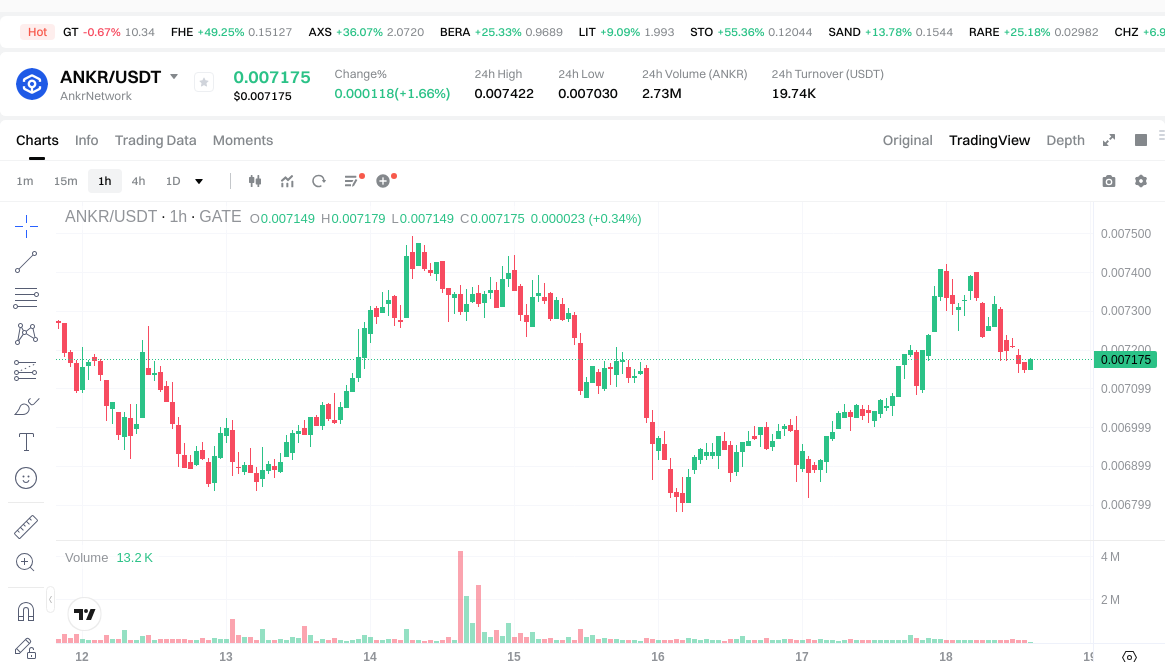
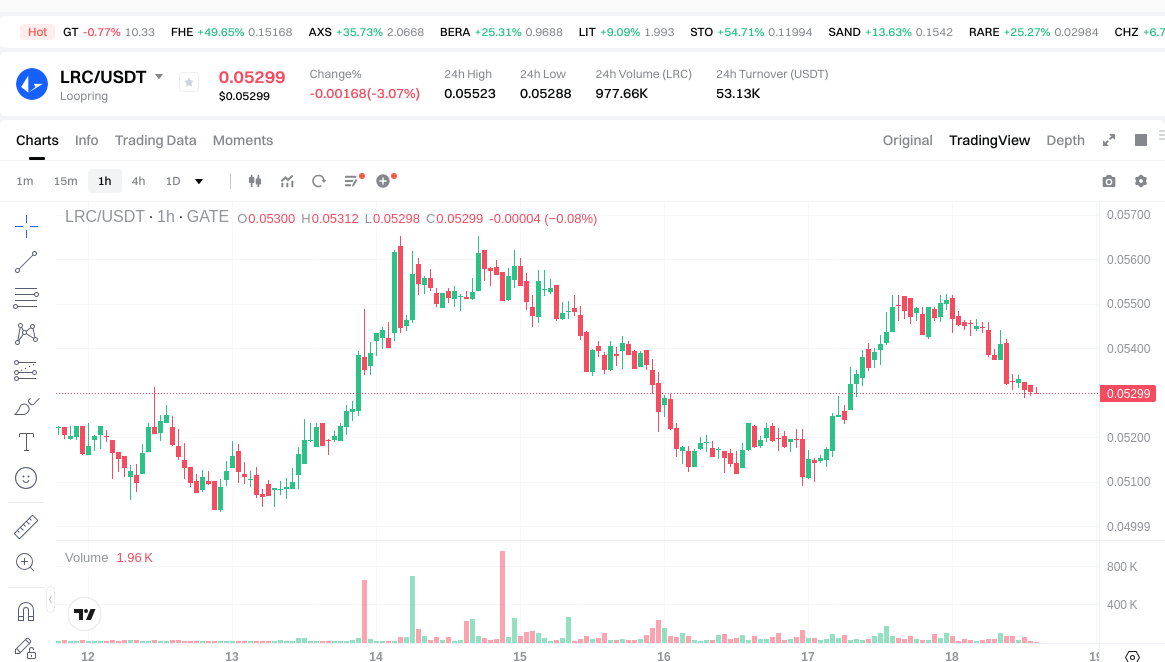
II. Core Factors Influencing ANKR vs LRC Investment Value
Supply Mechanism Comparison (Tokenomics)
-
ANKR: Based on available references, ANKR appears to be categorized within Web3 infrastructure projects. Specific supply mechanism details such as fixed supply, deflationary model, or emission schedule were not explicitly provided in the reference materials.
-
LRC: LRC is mentioned within Layer 2 scaling solutions and ZK-system categories. The reference materials classify it under L2 public chains and ZK-series projects, suggesting involvement in scaling infrastructure, though precise tokenomics details regarding supply caps or deflation mechanisms were not directly specified.
-
📌 Historical Pattern: Supply mechanisms can influence price cycles by affecting token scarcity and inflation rates. Projects with controlled or deflationary supply structures may experience different market dynamics compared to those with ongoing emissions, though specific historical data for these two tokens was not detailed in the materials.
Institutional Adoption and Market Application
-
Institutional Holdings: The reference materials did not provide specific data comparing institutional preference or holding patterns between ANKR and LRC.
-
Enterprise Adoption: Both tokens are associated with blockchain infrastructure categories (Web3 and Layer 2 respectively), which suggests potential utility in scaling, settlement, or decentralized application environments. However, detailed use cases in cross-border payments, corporate settlement systems, or investment portfolios were not documented in the provided references.
-
National Policy: One reference mentioned LRC's inclusion in a "Hong Kong concept" category alongside other tokens, which may indicate some regional attention. Specific regulatory stances from different jurisdictions toward either token were not elaborated in the materials.
Technology Development and Ecosystem Building
-
ANKR Technology Progress: ANKR is classified within Web3 infrastructure alongside projects focused on decentralized services. Specific technical upgrades, roadmap milestones, or ecosystem expansion initiatives were not detailed in the reference materials.
-
LRC Technology Development: LRC is positioned within Layer 2 and ZK-system categories, indicating association with scaling technology and zero-knowledge proof implementations. Concrete technical developments, protocol upgrades, or ecosystem partnerships were not explicitly outlined in the provided references.
-
Ecosystem Comparison: The materials suggest both projects operate within sectors relevant to DeFi infrastructure and blockchain scaling. However, detailed metrics on DeFi integration depth, NFT marketplace adoption, payment system deployments, or smart contract activity were not available in the references.
Macroeconomic Context and Market Cycles
-
Performance in Inflationary Environments: The reference materials did not provide comparative data on how ANKR or LRC have historically performed during inflationary periods or which exhibits stronger inflation-hedging characteristics.
-
Macroeconomic Monetary Policy: The impact of interest rate changes, U.S. dollar index fluctuations, or broader monetary policy shifts on these two tokens was not addressed in the available references.
-
Geopolitical Factors: While both tokens may have relevance in cross-border transaction infrastructure, specific geopolitical influences, international demand patterns, or regulatory developments tied to global events were not documented in the reference materials.
III. 2026-2031 Price Forecast: ANKR vs LRC
Short-term Forecast (2026)
- ANKR: Conservative $0.00388-$0.00718 | Optimistic $0.00718-$0.00897
- LRC: Conservative $0.0503-$0.0530 | Optimistic $0.0530-$0.0562
Mid-term Forecast (2028-2029)
- ANKR may enter a gradual growth phase, with estimated price range of $0.00748-$0.00983 in 2028 and $0.00802-$0.0110 in 2029
- LRC may enter a steady appreciation phase, with estimated price range of $0.0362-$0.0768 in 2028 and $0.0366-$0.0836 in 2029
- Key drivers: institutional capital inflows, ETF developments, ecosystem expansion
Long-term Forecast (2030-2031)
- ANKR: Baseline scenario $0.00775-$0.0101 (2030), $0.0102-$0.0123 (2031) | Optimistic scenario $0.0145 (2030), $0.0154 (2031)
- LRC: Baseline scenario $0.0527-$0.0763 (2030), $0.0759-$0.0893 (2031) | Optimistic scenario $0.102 (2030), $0.111 (2031)
View detailed price predictions for ANKR and LRC
Disclaimer: Price predictions are based on historical data analysis and market modeling. Cryptocurrency markets are highly volatile and subject to numerous unpredictable factors. These forecasts should not be considered as investment advice. Users should conduct independent research and assess their own risk tolerance before making any investment decisions.
ANKR:
| Year |
Predicted High Price |
Predicted Average Price |
Predicted Low Price |
Price Change |
| 2026 |
0.00897375 |
0.007179 |
0.00387666 |
0 |
| 2027 |
0.008722485 |
0.008076375 |
0.00654186375 |
13 |
| 2028 |
0.0098273331 |
0.00839943 |
0.0074754927 |
17 |
| 2029 |
0.0110271916755 |
0.00911338155 |
0.008019775764 |
27 |
| 2030 |
0.01450121272236 |
0.01007028661275 |
0.007754120691817 |
40 |
| 2031 |
0.015357187084443 |
0.012285749667555 |
0.01019717222407 |
71 |
LRC:
| Year |
Predicted High Price |
Predicted Average Price |
Predicted Low Price |
Price Change |
| 2026 |
0.0561694 |
0.05299 |
0.0503405 |
0 |
| 2027 |
0.068224625 |
0.0545797 |
0.045846948 |
2 |
| 2028 |
0.076752703125 |
0.0614021625 |
0.036227275875 |
15 |
| 2029 |
0.083583693703125 |
0.0690774328125 |
0.036611039390625 |
30 |
| 2030 |
0.102282954765468 |
0.076330563257812 |
0.05266808864789 |
43 |
| 2031 |
0.110740381174434 |
0.08930675901164 |
0.075910745159894 |
68 |
IV. Investment Strategy Comparison: ANKR vs LRC
Long-term vs Short-term Investment Strategies
-
ANKR: May appeal to investors focused on Web3 infrastructure development and distributed computing applications. The token's positioning within decentralized service infrastructure suggests potential alignment with investors seeking exposure to cloud computing and resource-sharing economies.
-
LRC: May suit investors interested in Layer 2 scaling solutions and zero-knowledge proof technology applications. The protocol's focus on decentralized exchange infrastructure and settlement mechanisms could attract those monitoring DeFi protocol development and scaling technology adoption.
Risk Management and Asset Allocation
-
Conservative Investors: ANKR 30% vs LRC 70% - This allocation reflects LRC's relatively higher trading volume ($55,685.57 vs $19,741.53) and established presence in Layer 2 infrastructure.
-
Aggressive Investors: ANKR 45% vs LRC 55% - A more balanced allocation for investors willing to accept higher volatility in exchange for potential upside from earlier-stage infrastructure projects.
-
Hedging Tools: Stablecoin allocation (20-30% portfolio buffer), options strategies for downside protection, cross-asset diversification across infrastructure categories.
V. Potential Risk Comparison
Market Risks
-
ANKR: The token has experienced substantial price decline from its 2021 peak of $0.213513 to current levels of $0.007143, indicating exposure to broader market cycles and sentiment shifts. Lower 24-hour trading volume may contribute to liquidity constraints during volatile periods.
-
LRC: Similarly declined from its November 2021 high of $3.75 to $0.05304, demonstrating vulnerability to market-wide corrections. While trading volume exceeds ANKR, the token remains subject to fluctuations in Layer 2 adoption rates and competition from alternative scaling solutions.
Technical Risks
-
ANKR: As a distributed computing platform, potential risks include network participation rates, computing power availability, and competition from established cloud service providers. Scalability challenges may emerge as the network attempts to coordinate idle computing resources across diverse hardware environments.
-
LRC: Protocol risks include smart contract vulnerabilities inherent in decentralized exchange mechanisms, zero-knowledge proof implementation complexity, and dependencies on Ethereum mainnet security. Competition from other Layer 2 solutions and evolving scaling technologies may impact long-term protocol adoption.
Regulatory Risks
- Global regulatory frameworks continue to evolve regarding decentralized infrastructure services and trading protocols. ANKR's distributed computing model may face scrutiny regarding data sovereignty and cross-border computing resource allocation. LRC's decentralized exchange protocol could encounter varying interpretations of securities regulations across jurisdictions, particularly regarding token trading mechanics and custody arrangements. The reference to LRC's inclusion in regional categories suggests some tokens may experience jurisdiction-specific attention, though comprehensive regulatory clarity remains limited across both assets.
VI. Conclusion: Which Is the Better Buy?
📌 Investment Value Summary:
-
ANKR Advantages: Positioned within Web3 infrastructure sector with focus on distributed computing and resource-sharing economy. Price forecasts suggest potential range of $0.00775-$0.0154 by 2030-2031 under baseline to optimistic scenarios. Lower current price point ($0.007143) may present entry opportunity for investors with higher risk tolerance.
-
LRC Advantages: Established presence in Layer 2 scaling solutions and zero-knowledge proof technology. Higher 24-hour trading volume ($55,685.57) indicates relatively stronger liquidity. Price forecasts estimate range of $0.0527-$0.111 by 2030-2031, suggesting potential appreciation pathway aligned with Layer 2 adoption trends.
✅ Investment Recommendations:
-
Beginner Investors: Consider starting with smaller position sizes (5-10% of crypto portfolio) split between both assets to gain exposure to infrastructure sectors while maintaining risk management. Focus on understanding underlying technology use cases before increasing allocation.
-
Experienced Investors: May evaluate diversified infrastructure exposure with 30-45% allocation across ANKR and LRC combined, weighted toward LRC (55-70%) given its relatively higher liquidity and established Layer 2 positioning. Monitor technical development milestones and ecosystem growth metrics.
-
Institutional Investors: Could assess both tokens as part of broader blockchain infrastructure thesis, with allocation decisions dependent on research into network adoption metrics, protocol security audits, and regulatory compliance frameworks. Consider staggered entry strategies and regular portfolio rebalancing aligned with market cycle analysis.
⚠️ Risk Warning: The cryptocurrency market exhibits high volatility. This analysis does not constitute investment advice. Investors should conduct independent research, assess personal risk tolerance, and consult qualified financial advisors before making investment decisions.
VII. FAQ
Q1: What are the main differences between ANKR and LRC in terms of their core technology and use cases?
ANKR focuses on distributed computing infrastructure while LRC specializes in Layer 2 trading protocols. ANKR positions itself as a platform that leverages idle computing power from data centers and edge devices to create a cost-effective cloud computing sharing economy, targeting infrastructure-as-a-service applications. In contrast, LRC (Loopring) operates as an open protocol built on ERC20 and smart contracts, enabling decentralized token exchanges through off-chain order matching combined with on-chain settlement, specifically designed to address scalability challenges in decentralized trading environments.
Q2: Which token shows better liquidity based on current market data?
LRC demonstrates superior liquidity with approximately 2.8x higher trading volume than ANKR. As of January 18, 2026, LRC recorded a 24-hour trading volume of $55,685.57 compared to ANKR's $19,741.53. This higher liquidity typically translates to tighter bid-ask spreads and reduced slippage during trades, making LRC potentially more suitable for investors who prioritize ease of entry and exit positions without significant price impact.
Q3: How do the price forecasts for 2030-2031 compare between ANKR and LRC?
LRC projects significantly higher absolute price targets compared to ANKR by 2030-2031. Under baseline scenarios, ANKR forecasts range from $0.00775-$0.0123 by 2030-2031, while LRC estimates $0.0527-$0.0893 for the same period. In optimistic scenarios, ANKR could reach $0.0145-$0.0154, whereas LRC projects $0.102-$0.111. However, percentage gains tell a different story—ANKR forecasts suggest 40-71% growth from 2026 levels, while LRC indicates 43-68% growth, showing relatively comparable percentage appreciation potential despite the absolute price differences.
Q4: What allocation strategy should conservative investors consider between ANKR and LRC?
Conservative investors should favor a 30% ANKR / 70% LRC allocation weighted toward LRC's more established position. This recommendation reflects LRC's higher trading volume, stronger liquidity profile, and more mature presence in the Layer 2 infrastructure ecosystem. The allocation also accounts for LRC's relatively lower volatility characteristics compared to ANKR's earlier-stage positioning in distributed computing. Conservative portfolios should additionally maintain 20-30% in stablecoin buffers as a risk management tool to navigate market volatility and preserve capital during downturns.
Q5: What are the primary risk factors that differentiate ANKR from LRC?
ANKR faces computing infrastructure-specific risks including network participation rates and competition from established cloud providers, while LRC encounters trading protocol risks related to smart contract vulnerabilities and Layer 2 competition. ANKR's distributed computing model depends on consistent availability of idle computing resources and coordination across diverse hardware environments, creating operational complexity risks. LRC's risks center on smart contract security, zero-knowledge proof implementation complexity, and dependencies on Ethereum mainnet security. Both tokens experienced substantial declines from 2021 peaks (ANKR down 96.7%, LRC down 98.6%), demonstrating shared exposure to broader market cycle risks.
Q6: How do regulatory considerations differ between ANKR and LRC?
ANKR may face data sovereignty and cross-border computing resource regulations, while LRC encounters securities classification questions regarding trading protocols. ANKR's distributed computing model could attract scrutiny concerning where data is processed, stored, and governed across international jurisdictions, particularly as regulatory frameworks around decentralized infrastructure services continue evolving. LRC faces potential regulatory challenges related to decentralized exchange mechanisms, with different jurisdictions potentially classifying its trading protocol features under varying securities regulations. The reference to LRC's inclusion in regional categories (such as "Hong Kong concept") suggests some tokens may experience jurisdiction-specific regulatory attention, though comprehensive clarity remains limited for both assets.
Q7: Which token is more suitable for investors seeking exposure to DeFi infrastructure?
LRC offers more direct DeFi infrastructure exposure through its focus on decentralized exchange protocols and Layer 2 scaling solutions. While both tokens operate within blockchain infrastructure sectors, LRC's core functionality directly addresses DeFi scalability challenges through its protocol designed for decentralized token trading, order matching, and settlement mechanisms. ANKR's distributed computing platform serves broader Web3 infrastructure needs beyond DeFi-specific applications, making it a more generalized infrastructure play. Investors specifically targeting DeFi ecosystem growth may find LRC's positioning more aligned with that thesis, though both can serve as complementary infrastructure holdings within a diversified crypto portfolio.
Q8: What timeline should investors consider when evaluating entry points for ANKR vs LRC?
Short-term investors (2026) should monitor the neutral market sentiment (Fear & Greed Index: 49) and consider staggered entry strategies, while long-term investors (2028-2031) may benefit from accumulation during current price levels relative to historical peaks. ANKR's 96.7% decline from its 2021 high and LRC's 98.6% decline suggest both tokens are trading significantly below previous cycle peaks, potentially offering attractive risk-reward ratios for patient capital. However, the substantial drawdowns also highlight volatility risks. Mid-term forecasts (2028-2029) indicate potential gradual recovery phases for both tokens, suggesting investors with 2-3 year horizons could consider dollar-cost averaging approaches to manage timing risks while building positions across market cycles.
* The information is not intended to be and does not constitute financial advice or any other recommendation of any sort offered or endorsed by Gate.