This comprehensive guide demystifies Annual Percentage Yield (APY) in cryptocurrency, helping investors maximize returns on their digital assets. The article explains how APY differs from simple interest rates by accounting for compound interest effects, and distinguishes APY from APR in both traditional and crypto contexts. It demonstrates practical applications on major platforms like Gate, where users can earn 7-10% APY on stablecoins like USDT without lock-up periods. The guide details APY calculation methods, explores why cryptocurrency yields significantly exceed traditional savings accounts (often exceeding 1-100%), and explains high APY mechanisms through staking, lending, and liquidity provision. Critical risk considerations are addressed, emphasizing the importance of due diligence regarding project security and fundamentals. Whether you're a yield-seeking investor or crypto newcomer, this resource provides actionable insights for comparing platforms and making informed investment decisions in the d
What Is APY?
In traditional finance, a savings account typically has both a simple interest rate and an Annual Percentage Yield (APY). Understanding the distinction between these two concepts is fundamental for anyone looking to maximize their returns on deposits and investments.
The Annual Percentage Yield (APY) represents the total annual return generated from both the principal capital and the accumulated interest on investments or savings. This metric provides a comprehensive view of the actual earnings potential of a financial product over a one-year period.
The simple interest rate, on the other hand, refers to the basic interest percentage earned on deposits without considering the effects of compounding. For example, if a particular bank account offers an annual interest rate of 5%, and a user deposits $1,000 into this account, they would have $1,050 after one year through simple interest calculation.
Interest Rate vs. APY: Understanding the Core Difference
The fundamental distinction between interest rate and APY lies in how compound interest is treated. The interest rate does not account for the effects of compound interest, whereas APY does. APY refers to the projected annual return on a deposit after factoring in compound interest, which is the interest earned on both the original principal amount and the accumulated interest from previous periods.
Compound interest represents a powerful wealth-building mechanism where users earn returns not only on their initial investment but also on the interest that investment has already generated. This creates a snowball effect that can significantly enhance returns over time, particularly with frequent compounding periods.
Real-World Example of APY in Action
To illustrate this concept more clearly, let's consider the same account mentioned above, but with monthly compounding. If the same user deposits $1,000 into this account with monthly compounding, they would have $1,051.16 after one year. While the difference between these two amounts may seem insignificant in the short term, over extended periods, the gains become substantial and can make a meaningful difference in wealth accumulation.
Unfortunately, most traditional savings accounts offer very low APYs, with the highest rates hovering around 0.70% and the lowest at approximately 0.06%. Consequently, the interest income from savings account deposits is quite modest compared to returns from stock market investments or alternative investment vehicles, which has driven many investors to seek higher-yielding opportunities in emerging financial sectors.
How Does APY Work in Cryptocurrency?
In the cryptocurrency ecosystem, APY functions on the same fundamental principles as traditional finance, but with significantly different opportunities and mechanisms. Cryptocurrency users can earn compound interest on their digital assets through various methods, including holding them in interest-bearing accounts, participating in staking programs, and providing liquidity to decentralized liquidity pools.
These interest-generating activities are accessible through major cryptocurrency exchanges, decentralized finance (DeFi) protocols, and specialized wallet applications. Generally, users receive interest payments in the same cryptocurrency they deposited, though some platforms offer the flexibility to earn interest in alternative cryptocurrencies, providing additional diversification opportunities.
The crypto space has revolutionized passive income generation by offering multiple avenues for earning yield. Staking, for instance, allows users to lock their tokens to support network operations and security, earning rewards in return. Liquidity provision enables users to supply trading pairs to automated market makers, earning a share of trading fees and additional token rewards.
What Constitutes a Good APY for Cryptocurrency?
Typically, the APY earned through cryptocurrency investments is substantially higher than that offered by traditional savings accounts. Most cryptocurrency projects offer APYs exceeding 1%, with many providing significantly higher returns. For example, when depositing stablecoins like Tether (USDT) on major exchanges, users can receive an estimated APY of 7% without locking their funds for any specific period. If users are willing to commit to a 7-day lock-up period, the APY can increase to 10% or higher.
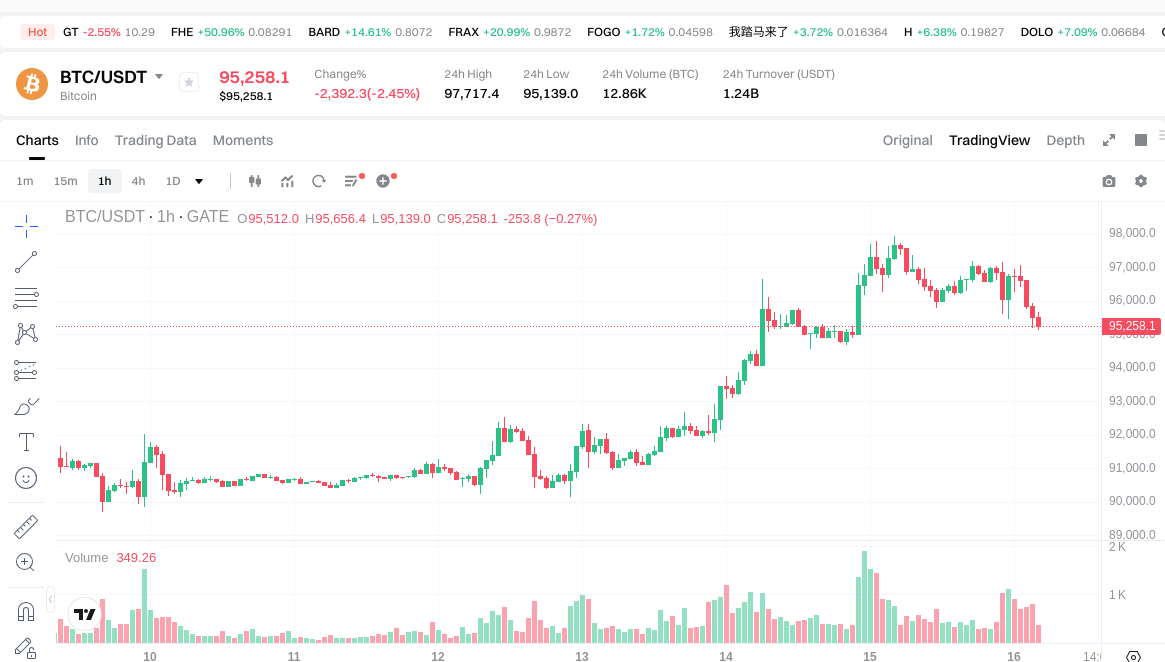
There are also projects offering exceptionally high APYs exceeding 100%, typically found on major DeFi platforms and liquidity protocols. These platforms have created innovative mechanisms for distributing rewards to liquidity providers and participants in their ecosystems.
The APYs across different platforms are extremely competitive, creating a dynamic marketplace for yield-seeking investors. When transaction fees are sufficiently low, yield farmers can move between liquidity pools on various platforms to maximize their returns. However, users should be aware that some projects may have fundamentally unsound economics or security vulnerabilities, so careful due diligence is essential before committing capital to any platform.
APY vs. APR (Annual Percentage Rate): Key Differences
The Annual Percentage Yield (APY) and Annual Percentage Rate (APR) may appear very similar since both involve interest calculations. Some users even use these terms interchangeably, but APY and APR are fundamentally different concepts that serve distinct purposes in financial contexts.
As previously mentioned, APY represents the annual return from principal capital and accrued interest on investments or savings, accounting for the compound interest effect. In contrast, APR is the annualized interest rate for a specific debt obligation, typically associated with borrowing rather than saving.
When a user takes out any type of loan, their lender assigns them a specific APR. The APR can be fixed or variable, depending on the loan type and the user's requirements. APR is generally higher than the nominal interest rate of the loan because it incorporates various fees such as origination costs, insurance premiums, and closing fees. Unlike APY, however, APR does not account for compound interest and represents a simple interest calculation.
Interpreting APY and APR: The Investor's Perspective
For APY, a higher percentage is preferable because users earn more from their deposits and investments. Conversely, a high APR on debt means users must pay more interest on borrowed funds. The APR that users pay typically correlates with their creditworthiness in traditional finance. Users with good credit scores qualify for lower APRs, while those with poor credit histories are assigned higher rates. APY, however, has no connection to the user's creditworthiness and is determined purely by market conditions and platform offerings.
In the cryptocurrency lending and borrowing space, since creditworthiness is not a prerequisite, APR is instead linked to market fluctuations and supply-demand dynamics. Like APY, APR increases when demand is high and decreases when the market stabilizes, creating a more dynamic and responsive interest rate environment than traditional finance.
How Is APY Calculated?
APY can be determined using a specific mathematical formula that has been refined over decades of use in traditional finance. This formula is typically employed in conventional financial settings where the nominal interest rate remains relatively stable over extended periods. The calculation incorporates the nominal interest rate value and the number of compounding periods.
The key components of the APY formula are defined as follows:
- The nominal interest rate is the stated interest rate before accounting for inflation or compounding effects. It represents the base rate at which interest accrues on the principal amount.
- The compounding period refers to the time interval between successive interest calculations and additions to the principal. For example, monthly compounding means interest is calculated and added to the principal every month. Compounding can occur monthly, daily, annually, or at any other specified interval, with more frequent compounding generally resulting in higher effective yields.
APY Calculation Formula
The standard formula for calculating APY is:
APY = (1 + r/n)^n - 1
Where:
- r = nominal interest rate (expressed as a decimal)
- n = number of compounding periods per year
This formula demonstrates how compound interest amplifies returns over time. The more frequent the compounding (higher n value), the greater the APY relative to the nominal rate. This mathematical relationship explains why platforms offering daily or continuous compounding can provide higher effective yields than those compounding less frequently, even with identical nominal rates.
Why Is APY So High in Cryptocurrency?
The annual percentage yields in the cryptocurrency ecosystem are constantly fluctuating due to the dynamic nature of digital asset markets. Consequently, the APYs displayed on cryptocurrency exchanges, liquidity pools, and staking platforms are often estimates rather than guaranteed rates. This volatility stems from changes in supply and demand for specific crypto assets. When demand for a particular cryptocurrency is high, both the interest rate and APY typically increase correspondingly.
The calculation of APY in cryptocurrency also depends on the blockchain protocol employed by different projects, as the compounding period can vary significantly between implementations. Some projects calculate compound interest based on blocks mined per block cycle, while others operate with different time intervals. Generally, the greater the number of compounding periods, the higher the APY, though the difference may be relatively modest in practical terms.
Practical Example of Compounding Frequency Impact
For instance, suppose a user deposits $100,000 into an account with a 5% interest rate and monthly compounding. After one year, they would have approximately $105,116, representing an APY of 5.116%. If the same account compounds daily instead, the user would have approximately $105,126 after one year, yielding an APY of 5.126%. The difference between monthly and daily compounding APY is approximately 0.01%, demonstrating that while compounding frequency matters, its impact diminishes with higher frequencies.
As previously discussed, the APY for any specific crypto project depends on the supply and demand dynamics for that project's assets. High demand drives high APY rates, creating opportunities for savvy investors. Most exceptionally high APY offerings originate from yield farming or liquidity mining programs, where users provide liquidity to pools and lend their tokens to others in exchange for yield and rewards.
Cryptocurrency Lending Dynamics
When users earn more than 1% through lending activities, it indicates that other users are willing to pay more than 1% interest to borrow those crypto assets. Generally, users engaging in crypto lending can generate profits through several strategies:
- Interest arbitrage involves borrowing crypto assets from pools with low interest rates and lending them to pools with higher rates, capturing the differential as profit. This strategy requires careful monitoring of rates across multiple platforms and quick execution to capitalize on rate discrepancies.
- Short selling allows users to borrow a specific value of a crypto asset and sell the borrowed funds in anticipation of a price decline. Once the price drops, the user can repurchase the same quantity of crypto assets at a lower price and pocket the difference, though this strategy carries significant risk if prices move contrary to expectations.
Projects offering incredibly high APYs exceeding 100% are often attempting to counteract impermanent loss, which occurs when the ratio of tokens in a specific pool becomes imbalanced due to price movements. High APYs are common for new projects launching on major trading platforms because the price is highly volatile during the first days of a coin's existence, and the probability of a price crash is elevated. By offering enormous APYs, these projects attempt to offset impermanent loss and incentivize users to continue providing liquidity rather than selling. Over time, the APY typically decreases as the number of liquidity providers grows and the project stabilizes.
Conclusion
The Annual Percentage Yield (APY) represents the return on an investment after accounting for both principal capital and compound interest effects. A high APY indicates that users can earn more from their deposits, making it a critical metric for comparing investment opportunities. Therefore, users looking to deposit their cryptocurrencies should pay close attention to APY when comparing platforms, while remaining aware that APY rates fluctuate based on market conditions.
Most crypto savings options and liquidity pools offer APYs exceeding 1%, significantly outperforming traditional savings accounts. Some newer projects even offer APYs exceeding 100% to compensate for impermanent loss and price volatility. Consequently, users can leverage these pools to generate attractive returns on their cryptocurrency holdings.
However, it is crucial to conduct thorough research before depositing funds into any platform or protocol. While high APYs can be attractive, they may also signal elevated risk levels. Users should evaluate factors including project fundamentals, security audits, team credibility, and community feedback to avoid potential scams and fraudulent schemes. A balanced approach that considers both potential returns and associated risks will help users make informed decisions and protect their capital in the dynamic cryptocurrency ecosystem.
FAQ
What does APY mean in cryptocurrency? How is it different from APY in traditional finance?
APY in cryptocurrency represents annual yield including interest and market gains. Unlike traditional finance APY which only compounds interest, crypto APY typically offers higher returns due to market volatility and diverse earning mechanisms like staking and lending.
How is cryptocurrency APY calculated? What role does compound interest play in it?
Cryptocurrency APY is calculated using compound interest, where interest is earned on both the principal and accumulated interest. This compounding effect significantly boosts long-term returns compared to simple interest, allowing your investment to grow exponentially over time.
What is the difference between APY and APR? Why is APY typically higher in DeFi?
APY includes compounding interest while APR does not. In DeFi, APY is usually higher because frequent compounding—daily or more often—amplifies returns over time compared to simple APR calculations.
How to earn APY rewards through staking or lending protocols?
Deposit your crypto assets into staking or lending platforms. These platforms use your assets for lending and liquidity provision, generating passive income. Current APY rates typically range from 3% to 8% annually, depending on the asset and protocol chosen.
What are the main risks of cryptocurrency APY investments? What should I pay attention to?
Main risks include market volatility, regulatory uncertainty, and smart contract vulnerabilities. Monitor price fluctuations, stay informed on regulatory changes, and verify protocol security before investing.
Why do different DeFi platforms (such as Aave, Compound, Lido) have such large differences in APY?
Different DeFi platforms have varying APY rates due to differences in capital pool utilization rates, interest rate curve designs, and market liquidity levels. Higher utilization rates typically result in higher APY, while each platform's unique risk parameters and token incentive structures also contribute to these differences.
* The information is not intended to be and does not constitute financial advice or any other recommendation of any sort offered or endorsed by Gate.