This comprehensive guide compares Pirate Chain (ARRR), a privacy-focused cryptocurrency, with Synthetix (SNX), a decentralized derivatives protocol, to help investors evaluate their investment potential. ARRR emphasizes zero-knowledge proof technology for transaction anonymity with deflationary tokenomics, while SNX provides DeFi infrastructure for synthetic asset creation through staking mechanisms. The analysis examines historical price trends, supply models, institutional adoption, and technical ecosystems to address key investment considerations. Current market conditions show SNX with superior liquidity ($725,976 daily volume) compared to ARRR ($118,763), reflecting broader DeFi integration and exchange accessibility. Long-term forecasts project SNX reaching $0.53-$1.05 by 2031 with consistent growth, while ARRR shows higher volatility potential reaching $0.98-$1.11. Investors should consider risk tolerance, regulatory environment, and portfolio diversification when choosing between privacy-centric and D
Introduction: Comparing ARRR and SNX Investment Opportunities
In the cryptocurrency market, the comparison between Pirate Chain (ARRR) and Synthetix (SNX) represents two distinct approaches to blockchain innovation. Both assets occupy different market positions in terms of market capitalization ranking, application scenarios, and price performance, reflecting varied investment philosophies within the crypto ecosystem.
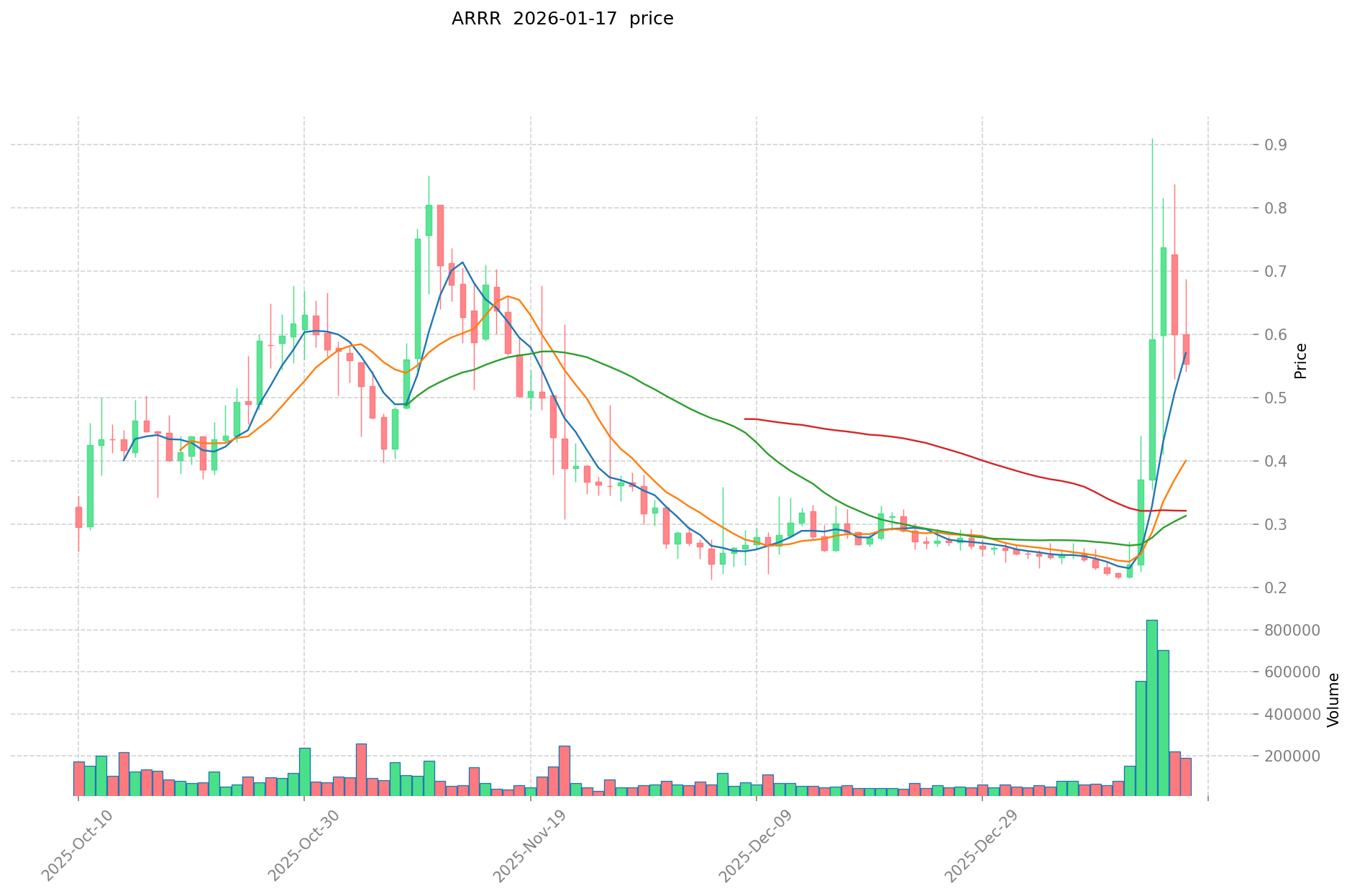
Pirate Chain (ARRR): Launched in 2019, this privacy-focused cryptocurrency has positioned itself as a truly private and decentralized digital asset, building upon the ZeroCoin protocol and the Komodo ecosystem. As of January 17, 2026, ARRR ranks #356 with a market cap of approximately $100.68 million and a current price of $0.5131.
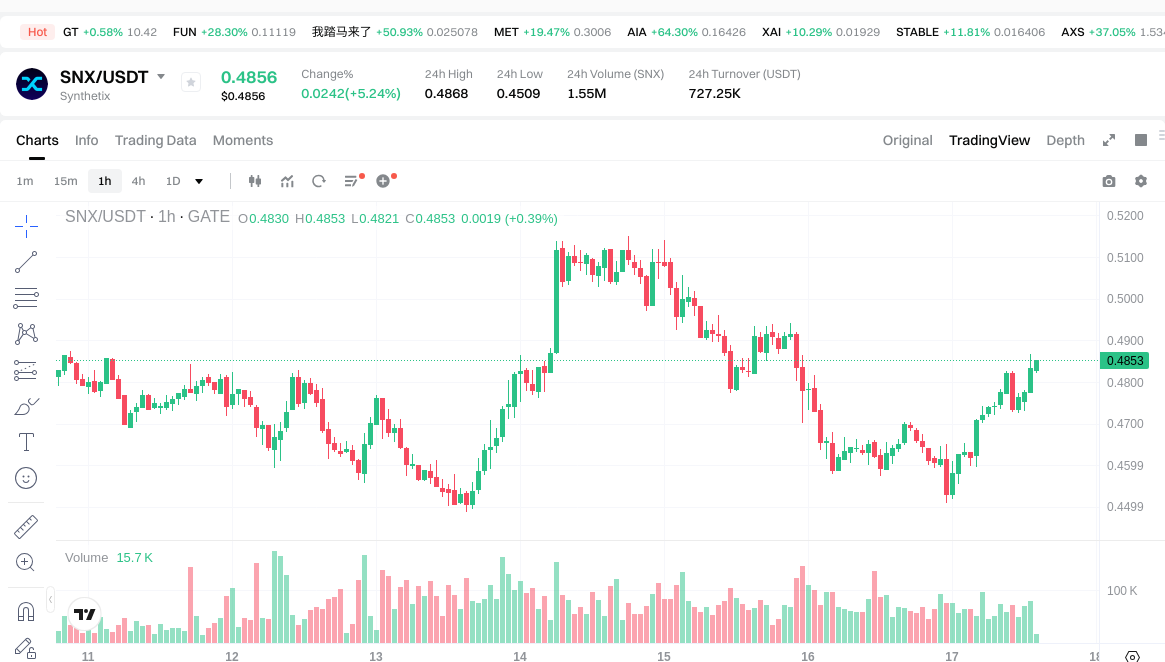
Synthetix (SNX): Introduced in 2018, SNX serves as the foundation for a decentralized synthetic asset protocol, enabling the creation of derivatives representing fiat currencies, precious metals, indices, and other cryptocurrencies. Currently ranked #271, SNX maintains a market cap of around $166.07 million with a price of $0.4835.
This article will analyze the investment comparison between ARRR and SNX across multiple dimensions, including historical price trends, supply mechanisms, technical ecosystems, and market performance metrics, aiming to address the key question investors frequently ask:
"Which asset presents stronger investment potential in the current market environment?"
I. Historical Price Comparison and Current Market Status
Historical Price Trends of ARRR (Coin A) and SNX (Coin B)
-
2021: ARRR reached its all-time high of $16.76 on April 24, 2021, during the broader cryptocurrency market rally. The token experienced significant volatility, with price movements influenced by increased interest in privacy-focused cryptocurrencies.
-
2020: ARRR recorded its historical low of $0.00797788 on November 26, 2020, during a period of limited market awareness and lower trading activity for privacy coins.
-
2021: SNX achieved its all-time high of $28.53 on February 14, 2021, driven by the DeFi boom and strong demand for synthetic asset platforms. The token benefited from growing interest in decentralized derivatives trading.
-
2019: SNX recorded its historical low of $0.0347864 on January 6, 2019, during the early stages of the project's development when market recognition remained limited.
-
Comparative Analysis: During the 2021 market cycle, ARRR surged from its 2020 low to reach $16.76 before declining, experiencing a peak-to-trough volatility pattern. SNX demonstrated a similar trajectory, rising from early-2019 lows to peak at $28.53 in February 2021, though it maintained relatively stronger market positioning during subsequent corrections.
Current Market Status (2026-01-17)
- ARRR Current Price: $0.5131
- SNX Current Price: $0.4835
- 24-Hour Trading Volume: ARRR $118,763.68 vs SNX $725,976.37
- Market Sentiment Index (Fear & Greed Index): 50 (Neutral)
View Real-Time Prices:
II. Core Factors Influencing ARRR vs SNX Investment Value
Supply Mechanism Comparison (Tokenomics)
-
ARRR: Pirate Chain employs a deflationary supply model with a capped maximum supply, designed to maintain scarcity over time. The protocol focuses on privacy-centric transactions without inflationary rewards.
-
SNX: Synthetix operates with an inflationary token model where SNX tokens are staked to mint synthetic assets. The supply adjusts based on network participation and staking rewards, creating dynamic tokenomics tied to protocol usage.
-
📌 Historical Pattern: Supply mechanisms influence price cycles through scarcity dynamics (ARRR) versus utility-driven demand (SNX), with deflationary models typically showing different volatility patterns compared to staking-reward systems.
Institutional Adoption and Market Application
-
Institutional Holdings: Current market data suggests limited institutional exposure to ARRR due to its privacy-focused nature, while SNX has gained attention within DeFi institutional circles for its synthetic asset platform.
-
Enterprise Adoption: ARRR focuses on anonymous transactions for privacy-conscious users, while SNX serves as infrastructure for derivative trading and synthetic asset creation within decentralized finance ecosystems.
-
Regulatory Landscape: Privacy coins like ARRR face varying regulatory scrutiny across jurisdictions, whereas DeFi protocols like SNX navigate evolving frameworks around synthetic assets and derivatives.
Technology Development and Ecosystem Building
-
ARRR Technical Features: The protocol emphasizes zero-knowledge proof technology for complete transaction anonymity, building upon privacy-focused blockchain infrastructure.
-
SNX Development Progress: Synthetix continues advancing its oracle systems and cross-chain capabilities, expanding synthetic asset offerings and improving scalability.
-
Ecosystem Comparison: ARRR operates within privacy-focused communities with limited DeFi integration, while SNX maintains significant presence across DeFi protocols, synthetic asset markets, and decentralized trading platforms.
Macroeconomic Factors and Market Cycles
-
Performance in Inflationary Environments: Both assets represent alternative investment vehicles during inflationary periods, though their correlation with traditional inflation hedges varies based on market sentiment toward privacy technologies (ARRR) and DeFi infrastructure (SNX).
-
Monetary Policy Impact: Interest rate changes and dollar strength influence both assets through broader cryptocurrency market correlations, with SNX showing additional sensitivity to DeFi lending rate dynamics.
-
Geopolitical Considerations: Privacy-focused assets like ARRR may see increased attention during heightened surveillance concerns, while SNX benefits from growing demand for decentralized financial instruments across different jurisdictions.
III. 2026-2031 Price Forecast: ARRR vs SNX
Short-term Forecast (2026)
- ARRR: Conservative $0.438175-$0.5155 | Optimistic $0.5155-$0.64953
- SNX: Conservative $0.261522-$0.4843 | Optimistic $0.4843-$0.552102
Mid-term Forecast (2028-2029)
- ARRR may enter a growth phase, with projected price range of $0.577971383-$1.0361194305 in 2028, potentially reaching $0.609336903175-$0.90530054186 in 2029
- SNX may enter a gradual appreciation phase, with projected price range of $0.3747629632-$0.819793982 in 2028, potentially reaching $0.66051972264-$0.88537750056 in 2029
- Key drivers: institutional capital inflows, ETF developments, ecosystem expansion
Long-term Forecast (2030-2031)
- ARRR: Baseline scenario $0.54161345879355-$0.887890916055 (2030) | Optimistic scenario $0.976147273110867-$1.114081126920011 (2031)
- SNX: Baseline scenario $0.714626125452-$0.9369542533704 (2030) | Optimistic scenario $0.527949900903372-$1.047244885398492 (2031)
View detailed price predictions for ARRR and SNX
Disclaimer
ARRR:
| Year |
Predicted High Price |
Predicted Average Price |
Predicted Low Price |
Price Change |
| 2026 |
0.64953 |
0.5155 |
0.438175 |
0 |
| 2027 |
0.8271713 |
0.582515 |
0.466012 |
13 |
| 2028 |
1.0361194305 |
0.70484315 |
0.577971383 |
37 |
| 2029 |
0.90530054186 |
0.87048129025 |
0.609336903175 |
69 |
| 2030 |
1.23416837331645 |
0.887890916055 |
0.54161345879355 |
73 |
| 2031 |
1.114081126920011 |
1.061029644685725 |
0.976147273110867 |
106 |
SNX:
| Year |
Predicted High Price |
Predicted Average Price |
Predicted Low Price |
Price Change |
| 2026 |
0.552102 |
0.4843 |
0.261522 |
0 |
| 2027 |
0.65293326 |
0.518201 |
0.27982854 |
7 |
| 2028 |
0.819793982 |
0.58556713 |
0.3747629632 |
21 |
| 2029 |
0.88537750056 |
0.702680556 |
0.66051972264 |
45 |
| 2030 |
0.9369542533704 |
0.79402902828 |
0.714626125452 |
64 |
| 2031 |
1.047244885398492 |
0.8654916408252 |
0.527949900903372 |
79 |
IV. Investment Strategy Comparison: ARRR vs SNX
Long-term vs Short-term Investment Strategies
-
ARRR: Suitable for investors focused on privacy-centric blockchain applications and niche use cases. The deflationary supply model and privacy features may appeal to those seeking exposure to anonymous transaction technologies. Long-term holders may consider accumulation during lower volatility periods, while short-term traders should monitor privacy coin sentiment shifts and regulatory news cycles.
-
SNX: Suitable for investors seeking exposure to decentralized finance infrastructure and synthetic asset platforms. The staking mechanism and DeFi integration provide utility-driven value propositions. Long-term investors may benefit from protocol development and ecosystem expansion, while short-term positions could capitalize on DeFi market cycles and trading volume fluctuations.
Risk Management and Asset Allocation
-
Conservative Investors: ARRR 20-30% vs SNX 70-80% - Given SNX's broader DeFi integration and established protocol usage, conservative portfolios may lean toward SNX while maintaining limited ARRR exposure for privacy technology diversification.
-
Aggressive Investors: ARRR 40-50% vs SNX 50-60% - Risk-tolerant investors may increase ARRR allocation to capture potential upside from privacy coin adoption trends, while maintaining significant SNX holdings for DeFi ecosystem participation.
-
Hedging Tools: Stablecoin allocation for portfolio rebalancing, options contracts for downside protection, cross-asset combinations including established cryptocurrencies to reduce concentration risk.
V. Potential Risk Comparison
Market Risk
-
ARRR: Privacy-focused cryptocurrencies face liquidity constraints and limited exchange listings, resulting in higher price volatility during market downturns. Trading volume concentration on specific platforms may amplify price swings during periods of reduced market participation.
-
SNX: DeFi protocol tokens experience correlation with broader DeFi sector performance, creating sensitivity to smart contract vulnerabilities across the ecosystem. Market sentiment toward synthetic assets and derivatives platforms directly influences price movements, with potential cascading effects during DeFi market corrections.
Technical Risk
-
ARRR: Network scalability considerations related to privacy transaction complexity, potential limitations in transaction throughput during high-demand periods, dependence on underlying privacy protocol infrastructure for continued functionality.
-
SNX: Smart contract complexity introduces potential vulnerability vectors, oracle system dependencies create external risk factors, protocol upgrades and governance changes may impact token economics and platform stability.
Regulatory Risk
- Global regulatory frameworks vary significantly in their approach to privacy-focused cryptocurrencies versus DeFi protocols. ARRR faces potential restrictions in jurisdictions implementing enhanced cryptocurrency transaction monitoring requirements, while SNX navigates evolving regulations around synthetic assets, derivatives platforms, and decentralized financial services. Compliance developments in major markets may create divergent impacts on accessibility and institutional adoption for both assets.
VI. Conclusion: Which Is the Better Buy?
📌 Investment Value Summary:
-
ARRR Advantages: Privacy-centric technology positioning, deflationary supply mechanism supporting scarcity value, niche market appeal for anonymous transaction use cases, potential upside from growing privacy awareness in digital finance.
-
SNX Advantages: Established DeFi protocol infrastructure, utility-driven tokenomics through staking and synthetic asset creation, broader ecosystem integration across decentralized finance platforms, institutional recognition within DeFi derivatives markets.
✅ Investment Recommendations:
-
Beginner Investors: Consider starting with SNX exposure given its established protocol usage and broader DeFi ecosystem integration. New market participants may benefit from understanding DeFi fundamentals through synthetic asset platforms before exploring specialized privacy technologies.
-
Experienced Investors: Evaluate portfolio diversification opportunities by balancing DeFi infrastructure exposure (SNX) with privacy technology positioning (ARRR). Consider market cycle timing, regulatory developments, and sector rotation patterns when adjusting allocation ratios.
-
Institutional Investors: Assess compliance frameworks and custody solutions for both assets. SNX may offer more straightforward institutional onboarding through established DeFi infrastructure, while ARRR requires specialized evaluation of privacy coin regulatory considerations across operating jurisdictions.
⚠️ Risk Warning: The cryptocurrency market exhibits extreme volatility. This analysis does not constitute investment advice.
VII. FAQ
Q1: What are the main differences between ARRR and SNX in terms of their core use cases?
ARRR focuses on privacy-centric transactions while SNX enables synthetic asset creation. ARRR (Pirate Chain) utilizes zero-knowledge proof technology to provide complete transaction anonymity, serving users who prioritize financial privacy and anonymous blockchain interactions. In contrast, SNX (Synthetix) operates as a DeFi protocol allowing users to mint and trade synthetic assets representing fiat currencies, commodities, indices, and other cryptocurrencies. The fundamental distinction lies in ARRR's emphasis on transaction privacy versus SNX's role as infrastructure for decentralized derivatives and synthetic asset markets within the broader DeFi ecosystem.
Q2: How do the supply mechanisms of ARRR and SNX impact their long-term price potential?
ARRR employs a deflationary capped supply model while SNX uses an inflationary staking-based system. ARRR's deflationary approach creates scarcity over time, potentially supporting price appreciation through limited token availability without additional supply expansion. SNX's inflationary model ties supply dynamics to network participation, where tokens are staked to mint synthetic assets and stakers receive rewards. This creates utility-driven demand that correlates with protocol usage rather than pure scarcity. The deflationary mechanism typically exhibits different volatility patterns compared to staking-reward systems, with ARRR potentially benefiting from scarcity value while SNX derives value from active protocol engagement and DeFi ecosystem integration.
Q3: Which asset shows better liquidity and trading accessibility for investors?
SNX demonstrates superior liquidity with 24-hour trading volume of $725,976.37 compared to ARRR's $118,763.68. The significant volume differential reflects SNX's broader exchange listings and integration within DeFi trading platforms, providing investors with better price execution and lower slippage during position entry and exit. ARRR faces liquidity constraints due to its privacy-focused nature, which limits exchange listings in jurisdictions with stringent cryptocurrency monitoring requirements. This liquidity disparity means SNX offers more favorable conditions for both retail and institutional investors seeking to establish or adjust positions without substantial market impact costs.
Q4: What are the primary regulatory risks facing ARRR versus SNX?
Privacy coins like ARRR face stricter regulatory scrutiny regarding transaction anonymity while SNX navigates synthetic asset and derivatives regulations. ARRR encounters potential restrictions in jurisdictions implementing enhanced cryptocurrency transaction monitoring requirements, as privacy-focused technologies may conflict with anti-money laundering (AML) and know-your-customer (KYC) compliance frameworks. Several exchanges have delisted privacy coins under regulatory pressure, limiting ARRR's accessibility. SNX confronts evolving regulations around decentralized synthetic assets and derivatives platforms, though DeFi protocols generally maintain broader regulatory acceptance compared to privacy-centric cryptocurrencies. Compliance developments in major markets continue creating divergent regulatory pathways for these distinct asset categories.
Q5: How do ARRR and SNX perform during different market cycles and macroeconomic conditions?
Both assets show distinct correlation patterns during varying market conditions, with SNX demonstrating stronger ties to DeFi cycles. During bull markets, SNX tends to benefit from increased DeFi activity and synthetic asset trading volume, showing positive correlation with broader DeFi sector performance. ARRR experiences demand fluctuations tied to privacy awareness trends and regulatory concerns rather than DeFi market cycles. In inflationary environments, both represent alternative investment vehicles, though SNX shows additional sensitivity to DeFi lending rate dynamics while ARRR responds more to surveillance-related concerns. During bear markets, SNX typically maintains better liquidity support through ecosystem integration, whereas ARRR faces amplified volatility due to concentrated trading venues.
Q6: What portfolio allocation strategy should investors consider between ARRR and SNX?
Conservative portfolios should favor SNX (70-80%) over ARRR (20-30%) due to established DeFi infrastructure and broader utility. This allocation reflects SNX's stronger liquidity profile, ecosystem integration, and institutional recognition within decentralized finance markets. Aggressive investors may increase ARRR allocation to 40-50% alongside SNX holdings of 50-60% to capture potential upside from privacy technology adoption while maintaining significant DeFi exposure. The allocation decision should consider individual risk tolerance, regulatory environment in operating jurisdictions, and portfolio objectives regarding privacy technology versus DeFi infrastructure exposure. Both allocations benefit from complementary diversification across different blockchain use cases and market sentiment drivers.
Q7: Which asset offers better growth potential through 2031 based on current projections?
Long-term projections suggest SNX may deliver more consistent appreciation with 79% predicted growth by 2031, while ARRR shows higher volatility with 106% potential growth. SNX's baseline scenario projects prices reaching $0.53-$1.05 by 2031, supported by continued DeFi ecosystem expansion and synthetic asset platform development. ARRR's forecast indicates prices between $0.98-$1.11 by 2031, reflecting potential privacy technology adoption growth but with greater uncertainty due to regulatory variables. The prediction differential reflects SNX's established protocol utility versus ARRR's speculative positioning within niche privacy markets. Investors should note these projections carry significant uncertainty given cryptocurrency market volatility and evolving regulatory landscapes affecting both assets differently.
Q8: What are the key technological developments that could impact ARRR and SNX valuations?
Protocol upgrades and ecosystem expansion represent primary technological catalysts for both assets. For SNX, developments include enhanced oracle systems for accurate price feeds, cross-chain integration expanding synthetic asset accessibility, and scalability improvements increasing transaction throughput on the Synthetix platform. These technical advancements directly enhance protocol utility and user adoption potential. For ARRR, technological focus centers on maintaining privacy protocol integrity, improving transaction scalability without compromising anonymity features, and potential integration with privacy-focused DeFi applications. Network security audits and privacy protocol updates significantly influence market confidence in ARRR's technology positioning. Both assets face ongoing technical evolution requirements to maintain competitive positioning within their respective market segments.
* The information is not intended to be and does not constitute financial advice or any other recommendation of any sort offered or endorsed by Gate.