This comprehensive guide compares BAKE and LTC, two distinct cryptocurrency assets with different market positioning and investment profiles. BAKE, launched in 2020, operates as a DeFi governance token on Binance Smart Chain, while LTC, established since 2011, functions as a payment-focused digital asset. The analysis examines historical price trends, tokenomics, institutional adoption, and technical ecosystems to evaluate investment potential. As of February 2026, LTC demonstrates significantly higher liquidity and market maturity, while BAKE offers exposure to DeFi sector dynamics with higher volatility characteristics. The article provides price estimates through 2031, risk assessment frameworks, and tailored investment strategies for conservative, aggressive, and institutional investors. Real-time price data available on Gate enables informed comparison and portfolio allocation decisions for cryptocurrency investors seeking exposure across different blockchain ecosystems.
Introduction: Investment Comparison Between BAKE and LTC
In the cryptocurrency market, the comparison between BAKE vs LTC has consistently been a topic of interest for investors. These two assets differ significantly in market capitalization ranking, application scenarios, and price performance, representing distinct positioning within the crypto asset landscape.
BAKE (BAKE): Launched in 2020, it has gained market recognition through its positioning as a decentralized exchange governance token on Binance Smart Chain with liquidity mining capabilities.
LTC (LTC): Since its inception in 2011, it has been regarded as digital silver and remains one of the cryptocurrencies with substantial global trading volume and market capitalization.
This article will comprehensively analyze the investment value comparison between BAKE vs LTC from perspectives including historical price trends, supply mechanisms, institutional adoption, technological ecosystem, and future outlook, attempting to address the question investors care about most:
"Which is the better buy right now?"
I. Price History Comparison and Market Status
BAKE and LTC Historical Price Trends
- 2021: BAKE reached a peak price of $8.38 in May, reflecting heightened market activity during the broader cryptocurrency bull market cycle.
- 2021: LTC achieved a historical high of $410.26 in May, coinciding with increased adoption and market momentum during the same period.
- 2026: BAKE recorded a historical low of $0.00537876 on February 1, while LTC established its historical low of $1.15 in January 2015.
- Comparative Analysis: During recent market cycles, BAKE has experienced significant volatility, declining from its peak of $8.38 to its current level, while LTC has similarly moved from its high of $410.26 to current trading ranges.
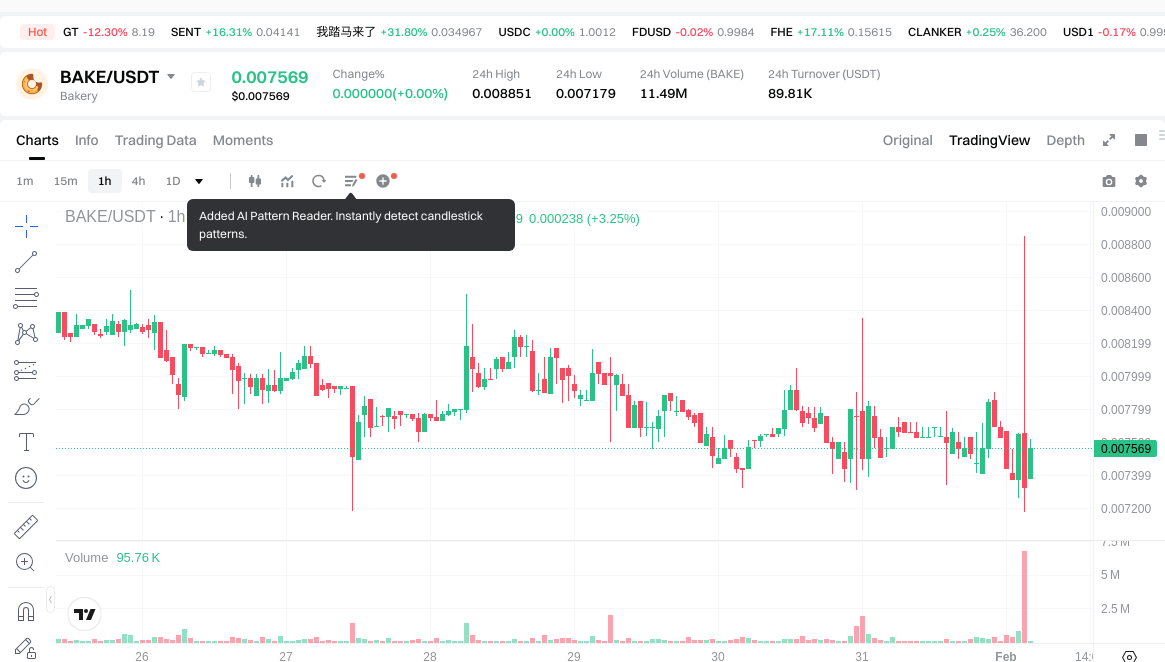
Current Market Status (2026-02-01)
- BAKE current price: $0.007621
- LTC current price: $58.06
- 24-hour trading volume: BAKE $88,598.38 vs LTC $9,085,923.36
- Market Sentiment Index (Fear & Greed Index): 20 (Extreme Fear)
Click to view real-time prices:

II. Core Factors Influencing BAKE vs LTC Investment Value
Tokenomics Comparison
- BAKE: The investment value is influenced by token economics, which encompasses supply mechanisms and distribution models within the DeFi ecosystem.
- LTC: Features a halving mechanism that reduces block rewards periodically, creating potential supply constraints over time.
- 📌 Historical Pattern: Supply mechanisms have historically played a role in shaping price cycles, with scheduled supply changes potentially affecting market dynamics.
Institutional Adoption and Market Application
- Institutional Holdings: Market data suggests varying degrees of institutional interest across different crypto assets, with established assets potentially attracting more institutional attention.
- Enterprise Adoption: Applications in cross-border payments, settlement systems, and investment portfolios differ between tokens, influenced by their respective technological capabilities and market positioning.
- National Policies: Regulatory approaches vary across jurisdictions, affecting the operational environment for different crypto assets.
Technical Development and Ecosystem Building
- BAKE Technical Aspects: Value drivers include on-chain activity and governance mechanisms within its ecosystem.
- LTC Technical Development: Influenced by ongoing technical innovation and network upgrades.
- Ecosystem Comparison: The application scope varies across DeFi, payment systems, and smart contract implementations, with each asset having distinct ecosystem characteristics.
Macroeconomic Environment and Market Cycles
- Performance in Inflationary Environments: Different assets may respond differently to macroeconomic conditions based on their fundamental characteristics.
- Macroeconomic Monetary Policy: Interest rates and currency market dynamics can influence crypto asset valuations through multiple channels.
- Geopolitical Factors: Cross-border transaction demand and international developments may affect market sentiment and adoption patterns.
III. 2026-2031 Price Prediction: BAKE vs LTC
Short-term Forecast (2026)
- BAKE: Conservative $0.00401157 - $0.007569 | Optimistic $0.007569 - $0.00953694
- LTC: Conservative $33.1113 - $58.09 | Optimistic $58.09 - $66.8035
Mid-term Forecast (2028-2029)
- BAKE may enter a phase of moderate growth, with estimated price range between $0.0074090102625 and $0.015180568093845
- LTC may enter a phase of expansion, with estimated price range between $39.47883535 and $114.488622515
- Key drivers: institutional capital inflows, ETF developments, ecosystem expansion
Long-term Forecast (2030-2031)
- BAKE: Baseline scenario $0.007326118255683 - $0.015262746366006 | Optimistic scenario $0.015262746366006 - $0.020146825203128
- LTC: Baseline scenario $78.345748752075 - $109.7807713995125 | Optimistic scenario $109.7807713995125 - $150.399656817332125
View detailed price predictions for BAKE and LTC
Disclaimer
BAKE:
| Year |
Predicted High Price |
Predicted Average Price |
Predicted Low Price |
Price Change |
| 2026 |
0.00953694 |
0.007569 |
0.00401157 |
0 |
| 2027 |
0.0112043907 |
0.00855297 |
0.0078687324 |
12 |
| 2028 |
0.014027726097 |
0.00987868035 |
0.0074090102625 |
29 |
| 2029 |
0.015180568093845 |
0.0119532032235 |
0.006096133643985 |
56 |
| 2030 |
0.01695860707334 |
0.013566885658672 |
0.007326118255683 |
78 |
| 2031 |
0.020146825203128 |
0.015262746366006 |
0.009310275283264 |
100 |
LTC:
| Year |
Predicted High Price |
Predicted Average Price |
Predicted Low Price |
Price Change |
| 2026 |
66.8035 |
58.09 |
33.1113 |
0 |
| 2027 |
73.687165 |
62.44675 |
51.8308025 |
7 |
| 2028 |
89.8483839 |
68.0669575 |
39.47883535 |
17 |
| 2029 |
114.488622515 |
78.9576707 |
74.220210458 |
35 |
| 2030 |
122.838396191525 |
96.7231466075 |
78.345748752075 |
66 |
| 2031 |
150.399656817332125 |
109.7807713995125 |
80.139963121644125 |
89 |
IV. Investment Strategy Comparison: BAKE vs LTC
Long-term vs Short-term Investment Strategies
- BAKE: May appeal to investors interested in DeFi governance mechanisms and decentralized exchange ecosystems, with focus on blockchain-based financial services development.
- LTC: May suit investors seeking exposure to established digital assets with historical market presence and payment-oriented use cases.
Risk Management and Asset Allocation
- Conservative Investors: BAKE 20-30% vs LTC 70-80%
- Aggressive Investors: BAKE 40-50% vs LTC 50-60%
- Hedging Tools: Stablecoin allocation, options strategies, cross-asset portfolio diversification
V. Potential Risk Comparison
Market Risk
- BAKE: Subject to volatility patterns common in DeFi governance tokens, with price movements potentially influenced by platform activity levels and broader DeFi sector trends.
- LTC: Experiences market cycles consistent with established cryptocurrency assets, with price dynamics influenced by broader market sentiment and adoption patterns.
Technical Risk
- BAKE: Considerations include scalability characteristics and network stability within its operational framework.
- LTC: Technical considerations involve network infrastructure and ongoing development initiatives.
Regulatory Risk
- Global regulatory developments may affect both assets differently based on their respective use cases, with DeFi-focused tokens potentially facing distinct regulatory considerations compared to payment-oriented cryptocurrencies.
VI. Conclusion: Which Is the Better Buy?
📌 Investment Value Summary:
- BAKE Characteristics: Participation in DeFi governance structures, exposure to decentralized exchange ecosystem dynamics, and potential correlation with broader DeFi sector developments.
- LTC Characteristics: Established market presence since 2011, historical track record across multiple market cycles, and positioning within payment and settlement use cases.
✅ Investment Considerations:
- New Investors: Consider starting with assets having longer operational histories and established market infrastructure, while maintaining diversified exposure and appropriate position sizing.
- Experienced Investors: May evaluate portfolio allocation based on risk tolerance, market cycle positioning, and specific exposure preferences across different blockchain ecosystems.
- Institutional Investors: Assessment factors may include liquidity characteristics, regulatory clarity, custody solutions availability, and alignment with institutional investment mandates.
⚠️ Risk Disclosure: Cryptocurrency markets exhibit substantial volatility. This content is for informational purposes only and does not constitute investment advice.
VII. FAQ
Q1: What are the main differences between BAKE and LTC in terms of their core use cases?
BAKE functions as a DeFi governance token on Binance Smart Chain focused on decentralized exchange operations and liquidity mining, while LTC serves as a payment-oriented cryptocurrency designed for peer-to-peer transactions and value transfer.
BAKE's primary utility lies within the BakerySwap ecosystem, where it enables holders to participate in governance decisions, stake for rewards, and access platform features. In contrast, LTC operates as a standalone blockchain network optimized for faster transaction speeds compared to Bitcoin, with applications in cross-border payments, merchant settlements, and value storage. The fundamental distinction reflects BAKE's ecosystem-specific positioning versus LTC's broader monetary functionality.
Q2: How do the supply mechanisms of BAKE and LTC differ, and what impact might this have on their price dynamics?
BAKE utilizes token economics common to DeFi governance tokens with supply influenced by platform activity and staking mechanisms, while LTC employs a halving mechanism that reduces block rewards approximately every four years, creating programmed supply constraints.
LTC's halving events (occurring roughly every 840,000 blocks) reduce miner rewards by 50%, creating predictable supply reduction schedules similar to Bitcoin's model. This mechanism historically correlates with market cycle patterns, as reduced supply issuance can affect price dynamics when demand remains constant or increases. BAKE's supply dynamics are more closely tied to platform usage, staking participation rates, and governance decisions within its ecosystem, making its supply characteristics more variable and dependent on DeFi sector activity levels.
Q3: Which asset shows higher liquidity based on current market data?
LTC demonstrates significantly higher liquidity with 24-hour trading volume of $9,085,923.36 compared to BAKE's $88,598.38 as of February 1, 2026.
The substantial difference in trading volume (approximately 100x higher for LTC) indicates deeper market liquidity, which typically translates to tighter bid-ask spreads, reduced slippage for larger transactions, and greater ease of entry and exit for investors. LTC's higher liquidity stems from its longer market presence since 2011, broader exchange listings, established trading pairs, and wider institutional recognition. BAKE's lower liquidity reflects its more specialized positioning within the DeFi sector and smaller market capitalization, which may result in higher volatility and potentially larger price impacts from significant trades.
Q4: How have BAKE and LTC performed during the current market cycle compared to their historical peaks?
Both assets have experienced substantial declines from their 2021 peaks, with BAKE falling approximately 99.9% from $8.38 to $0.007621, while LTC has declined approximately 85.8% from $410.26 to $58.06.
The magnitude of decline reflects broader cryptocurrency market cycle dynamics, with both assets peaking during the May 2021 bull market period. BAKE's more severe decline percentage indicates higher volatility characteristics typical of DeFi governance tokens with smaller market capitalizations and ecosystem-specific dependencies. LTC's relatively smaller percentage decline (though still substantial in absolute terms) reflects its more established market position and broader adoption base. The current Fear & Greed Index reading of 20 (Extreme Fear) suggests market-wide risk-averse sentiment affecting both assets, though their recovery trajectories may differ based on their distinct fundamental characteristics.
Q5: What are the key risk factors investors should consider when comparing BAKE and LTC?
BAKE carries higher concentration risk tied to its specific DeFi ecosystem and platform performance, while LTC faces risks related to competition from other payment-focused cryptocurrencies and technological obsolescence.
For BAKE, primary risks include dependence on BakerySwap platform activity, competition from other DeFi protocols, smart contract vulnerabilities, and broader DeFi sector sentiment shifts. Additionally, regulatory scrutiny of DeFi platforms may disproportionately affect governance tokens. For LTC, key risks involve maintaining relevance amid newer blockchain technologies, competition from faster and more feature-rich networks, and potential regulatory developments affecting payment cryptocurrencies. Both assets face market volatility, macroeconomic headwinds, and liquidity risks, though LTC's longer operational history provides more data for risk assessment while BAKE's shorter track record increases uncertainty.
Q6: How do institutional adoption patterns differ between BAKE and LTC?
LTC has historically attracted more institutional attention due to its longer operational track record, established custody solutions, and clearer regulatory status, while BAKE's institutional adoption remains more limited and tied to specialized DeFi-focused investment mandates.
Institutional investors typically prioritize factors such as regulatory clarity, custody infrastructure, liquidity depth, and operational history—areas where LTC holds advantages from its 15-year market presence. LTC benefits from availability on major institutional platforms, inclusion in cryptocurrency indices, and established compliance frameworks. BAKE's institutional adoption faces additional hurdles including its DeFi-specific use case, smaller market capitalization, more limited custody solutions, and evolving regulatory environment surrounding DeFi governance tokens. Institutions with specialized DeFi investment strategies may include BAKE as part of sector-specific allocations, but such exposure typically represents a smaller portion of institutional cryptocurrency holdings compared to established assets like LTC.
Q7: What role does ecosystem development play in the investment thesis for each asset?
For BAKE, ecosystem development centers on DeFi innovation, protocol partnerships, and BakerySwap platform enhancements, while LTC's ecosystem development focuses on network upgrades, payment integration, and adoption in financial applications.
BAKE's value proposition remains closely tied to the growth and competitiveness of the BakerySwap platform, including factors such as total value locked (TVL), trading volume, new feature implementations, and integration with broader Binance Smart Chain ecosystem developments. Positive ecosystem developments might include increased liquidity mining participation, governance improvements, and strategic partnerships within DeFi. LTC's ecosystem development emphasizes different priorities, including Lightning Network adoption for faster payments, integration with payment processors, merchant acceptance growth, and technical upgrades to maintain network competitiveness. The MimbleWimble privacy protocol implementation and ongoing development activity contribute to LTC's long-term technological relevance. These distinct ecosystem focuses reflect the different investment narratives underlying each asset.
Q8: Based on the price predictions provided, which asset shows higher potential percentage gains by 2031?
According to the baseline scenario projections, BAKE shows potential gains of approximately 100% from current levels to 2031, while LTC demonstrates potential gains of approximately 89% over the same period, though these projections carry substantial uncertainty.
The optimistic scenario for BAKE suggests a price range reaching $0.020146825203128 by 2031 (representing a 164% increase from current $0.007621), while LTC's optimistic scenario projects $150.399656817332125 (representing a 159% increase from current $58.06). However, these numerical projections should be interpreted with significant caution, as they represent modeling exercises rather than guaranteed outcomes. The higher percentage potential for BAKE reflects its smaller market capitalization and higher volatility profile, which historically correlates with both larger potential gains and higher downside risk. LTC's more modest projected percentage gains align with typical patterns for larger, more established assets. Investors should recognize that actual outcomes may vary substantially from these projections due to unpredictable market dynamics, technological developments, regulatory changes, and macroeconomic factors.
* The information is not intended to be and does not constitute financial advice or any other recommendation of any sort offered or endorsed by Gate.