This comprehensive analysis compares BANK (Lorenzo Protocol) and RUNE (THORChain) as investment opportunities in the DeFi market. BANK, launched in 2025, positions itself as an institutional-grade asset management platform offering yield-bearing tokens like stBTC and enzoBTC. RUNE, operational since 2019, functions as a cross-chain protocol token enabling multi-chain transactions with sub-second finality. The article examines historical price performance, current market status at Gate, forecasts through 2031, and tailored investment strategies for different investor types. Conservative investors may favor RUNE's established track record and higher liquidity ($256K daily volume), while aggressive investors could explore BANK's institutional positioning. Risk factors include BANK's lower trading volume and RUNE's cross-chain complexity. Both assets carry regulatory uncertainty and extreme market volatility requiring careful portfolio allocation and risk management strategies for optimal returns.
Introduction: BANK vs RUNE Investment Comparison
In the cryptocurrency market, the comparison between BANK and RUNE remains a topic of significant interest for investors. Both assets demonstrate notable differences in market capitalization ranking, application scenarios, and price performance, representing distinct positioning within the crypto asset landscape.
BANK (Lorenzo Protocol): Launched in 2025, this token has gained market recognition through its institutional-grade asset management platform positioning. Lorenzo Protocol issues yield-bearing tokens backed by diverse underlying strategies, featuring BTC Liquid Staking Token stBTC powered by Babylon staking yields and wrapped BTC enzoBTC containing native yield and on-chain liquidity farming yields.
RUNE (THORChain): Operating since 2019, RUNE has established itself as a multi-chain protocol token with cross-chain transaction capabilities. THORChain utilizes pBFT consensus for sub-second block finality, facilitating protocol-level chain transactions and order matching while supporting both limit and market orders.
This article examines historical price trends, supply mechanisms, institutional adoption, technical ecosystems, and future projections to provide a comprehensive analysis of BANK vs RUNE investment value comparison, addressing the critical question investors frequently consider:
"Which represents a more compelling opportunity under current market conditions?"
I. Historical Price Comparison and Current Market Status
BANK (Lorenzo Protocol) and RUNE (THORChain) Historical Price Trends
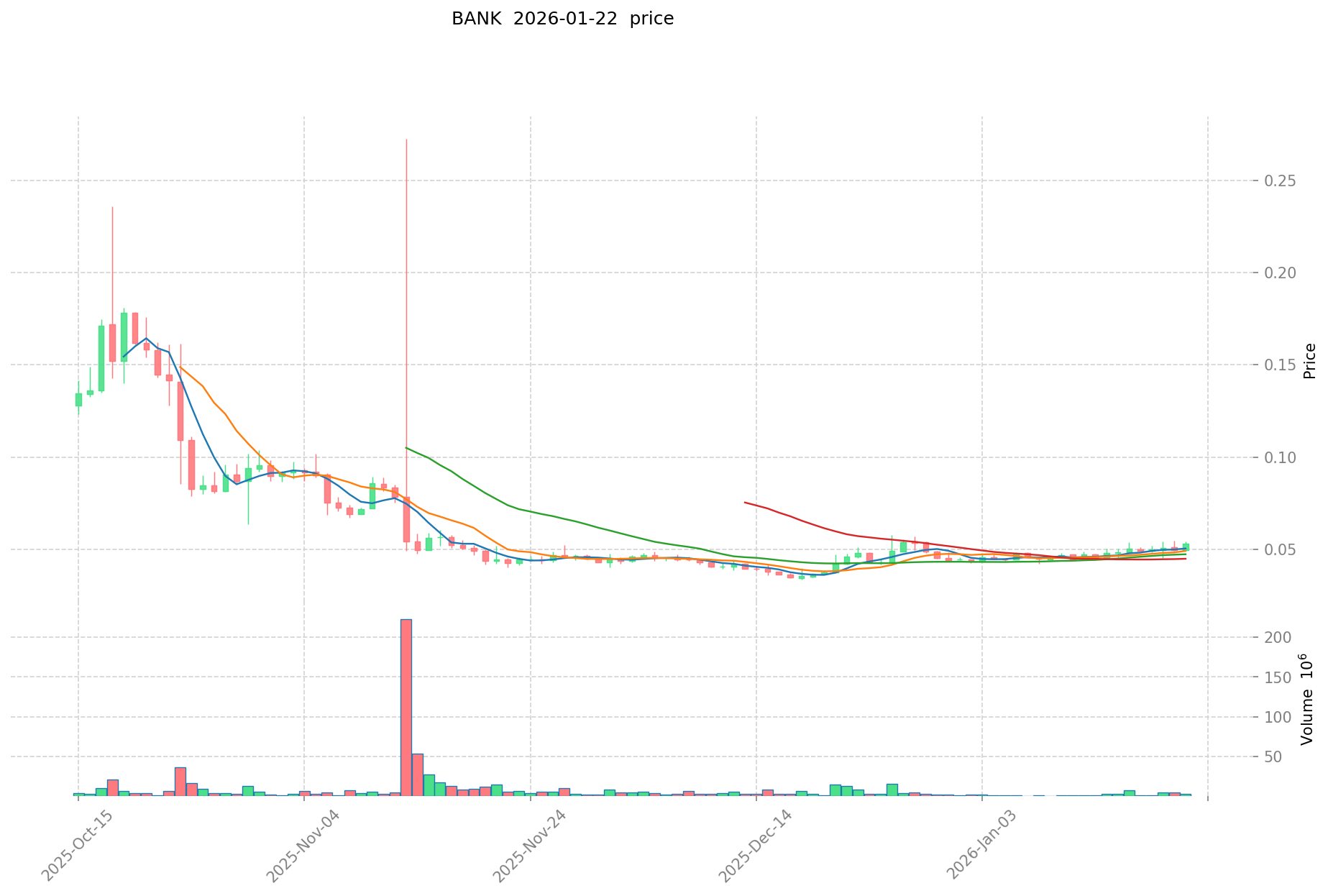
- 2025: BANK experienced significant volatility after its launch in January 2025, with the price reaching a notable level of $0.27257 in November 2025.
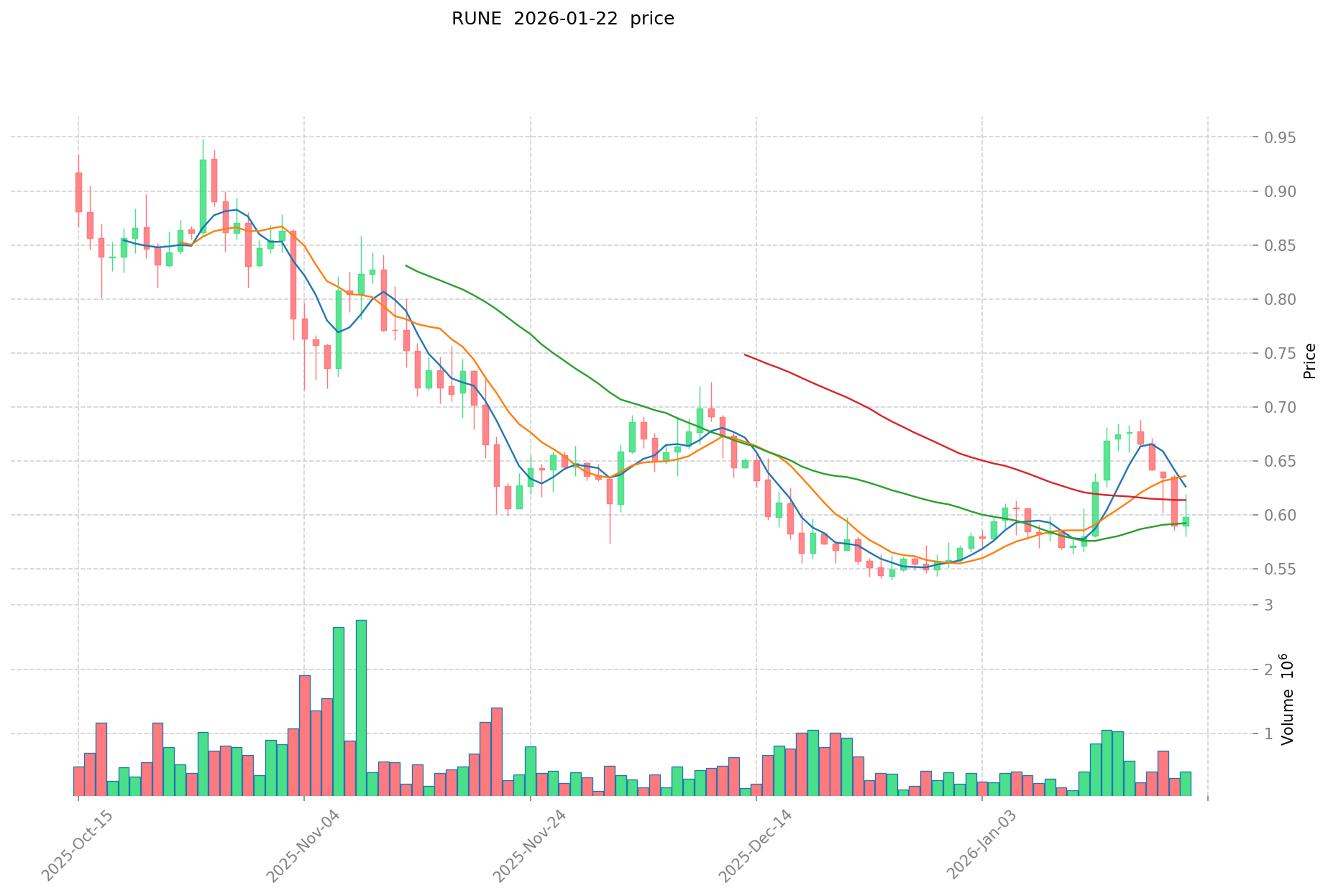
- 2021: RUNE was influenced by the broader crypto market rally, with the price reaching $20.87 in May 2021.
- Comparative Analysis: During different market cycles, BANK moved from its peak of $0.27257 to a lower level of $0.007, while RUNE declined from its historical high of $20.87 to $0.00851264.
Current Market Status (2026-01-22)
- BANK current price: $0.05243
- RUNE current price: $0.5943
- 24-hour trading volume: BANK $99,859.01 vs RUNE $256,214.92
- Market Sentiment Index (Fear & Greed Index): 20 (Extreme Fear)
Check real-time prices:
II. Core Factors Affecting BANK vs RUNE Investment Value
Due to the absence of reference materials and insufficient information in the knowledge base regarding BANK and RUNE, this comparative analysis cannot be completed at this time. A comprehensive evaluation of supply mechanisms, institutional adoption, technical development, and macroeconomic factors requires specific data and documentation that is currently unavailable.
For an accurate assessment of these assets' investment value drivers, detailed information would be needed regarding their respective tokenomics models, market positioning, technological roadmaps, and regulatory environments.
III. 2026-2031 Price Forecast: BANK vs RUNE
Short-term Forecast (2026)
- BANK: Conservative $0.042-$0.052 | Optimistic $0.052-$0.065
- RUNE: Conservative $0.31-$0.59 | Optimistic $0.59-$0.79
Mid-term Forecast (2028-2029)
- BANK may enter a consolidation phase, with estimated price range of $0.034-$0.090
- RUNE may enter a growth phase, with estimated price range of $0.54-$1.06
- Key drivers: institutional capital inflows, ETF developments, ecosystem expansion
Long-term Forecast (2030-2031)
- BANK: Base scenario $0.045-$0.088 | Optimistic scenario $0.088-$0.131
- RUNE: Base scenario $0.66-$1.20 | Optimistic scenario $1.20-$1.41
View detailed price predictions for BANK and RUNE
Disclaimer: Price predictions are based on historical data analysis and market trends. Cryptocurrency markets are highly volatile and subject to numerous unpredictable factors. These forecasts should not be considered as investment advice. Past performance does not guarantee future results.
BANK:
| Year |
Predicted High Price |
Predicted Average Price |
Predicted Low Price |
Price Change |
| 2026 |
0.06525 |
0.0522 |
0.042282 |
0 |
| 2027 |
0.0739935 |
0.058725 |
0.056376 |
12 |
| 2028 |
0.0895849875 |
0.06635925 |
0.0338432175 |
26 |
| 2029 |
0.0810910035 |
0.07797211875 |
0.0522413195625 |
48 |
| 2030 |
0.09623318896125 |
0.079531561125 |
0.04533298984125 |
51 |
| 2031 |
0.130944738814256 |
0.087882375043125 |
0.052729425025875 |
67 |
RUNE:
| Year |
Predicted High Price |
Predicted Average Price |
Predicted Low Price |
Price Change |
| 2026 |
0.791217 |
0.5949 |
0.309348 |
0 |
| 2027 |
0.99800424 |
0.6930585 |
0.464349195 |
16 |
| 2028 |
1.0484588988 |
0.84553137 |
0.6172379001 |
42 |
| 2029 |
1.060634550528 |
0.9469951344 |
0.539787226608 |
59 |
| 2030 |
1.4053407794496 |
1.003814842464 |
0.66251779602624 |
68 |
| 2031 |
1.312989813942912 |
1.2045778109568 |
0.674563574135808 |
102 |
IV. Investment Strategy Comparison: BANK vs RUNE
Long-term vs Short-term Investment Strategies
- BANK: May appeal to investors focused on institutional-grade asset management platforms and yield-bearing token mechanisms, particularly those interested in BTC Liquid Staking opportunities through stBTC backed by Babylon staking yields
- RUNE: May attract investors seeking exposure to cross-chain transaction infrastructure and multi-chain protocol functionality, particularly those interested in decentralized exchange mechanisms with sub-second block finality
Risk Management and Asset Allocation
- Conservative investors: BANK 30% vs RUNE 70%
- Aggressive investors: BANK 60% vs RUNE 40%
- Hedging instruments: Stablecoin allocation, options strategies, cross-asset portfolio diversification
V. Potential Risk Comparison
Market Risks
- BANK: Trading volume of $99,859.01 indicates relatively lower liquidity conditions, price experienced significant fluctuation from peak of $0.27257 to lower level of $0.007 since January 2025 launch
- RUNE: Trading volume of $256,214.92 reflects higher market activity, price declined from historical level of $20.87 in May 2021 to current range, experiencing substantial market cycle adjustments
Technical Risks
- BANK: Platform scalability considerations for institutional-grade asset management operations, network stability requirements for yield-bearing token mechanisms
- RUNE: Cross-chain transaction infrastructure complexity, network consensus mechanism dependencies, protocol-level transaction processing capabilities
Regulatory Risks
- Global regulatory developments may impact both assets differently based on their distinct operational models: BANK's institutional asset management positioning versus RUNE's cross-chain transaction protocol functionality
VI. Conclusion: Which Is the Better Buy?
📌 Investment Value Summary:
- BANK advantages: Institutional-grade asset management platform positioning, yield-bearing token mechanisms including stBTC backed by Babylon staking yields and enzoBTC with native yield capabilities
- RUNE advantages: Established operational history since 2019, cross-chain transaction infrastructure with pBFT consensus enabling sub-second block finality, protocol-level chain transaction and order matching capabilities
✅ Investment Recommendations:
- Beginner investors: Consider starting with smaller allocations given the current market sentiment index of 20 (Extreme Fear), focus on understanding each asset's core mechanisms and market positioning
- Experienced investors: Evaluate portfolio diversification strategies incorporating both institutional asset management exposure (BANK) and cross-chain infrastructure opportunities (RUNE) based on individual risk tolerance
- Institutional investors: Assess alignment with institutional requirements for asset management platforms and cross-chain transaction infrastructure within broader portfolio strategies
⚠️ Risk Disclaimer: Cryptocurrency markets exhibit extreme volatility. This content does not constitute investment advice.
VII. FAQ
Q1: What are the main differences between BANK and RUNE in terms of their core functionality?
BANK serves as an institutional-grade asset management platform token focusing on yield-bearing mechanisms, while RUNE operates as a cross-chain transaction protocol token with decentralized exchange capabilities. BANK's Lorenzo Protocol issues yield-bearing tokens like stBTC (backed by Babylon staking yields) and enzoBTC (containing native yield and liquidity farming yields), targeting institutional investors seeking BTC-related yield opportunities. In contrast, RUNE's THORChain enables cross-chain transactions through pBFT consensus with sub-second block finality, supporting protocol-level chain transactions and both limit and market orders across multiple blockchains.
Q2: How do the historical price performances of BANK and RUNE compare?
RUNE has demonstrated greater price volatility over a longer timeframe, while BANK's history is more recent but equally volatile. RUNE reached its peak of $20.87 in May 2021 during the broader crypto market rally, subsequently declining to $0.00851264 before recovering to its current price of $0.5943. BANK, launched in January 2025, peaked at $0.27257 in November 2025, then dropped to $0.007 before stabilizing at its current price of $0.05243. The current 24-hour trading volume shows RUNE at $256,214.92 versus BANK at $99,859.01, indicating higher liquidity for RUNE.
Q3: Which asset offers better short-term growth potential in 2026?
Based on conservative and optimistic forecasts, RUNE presents higher absolute price growth potential in 2026. The conservative forecast for RUNE ranges from $0.31-$0.59, while the optimistic scenario projects $0.59-$0.79, representing potential upside from its current price of $0.5943. BANK's 2026 forecasts show a conservative range of $0.042-$0.052 and optimistic range of $0.052-$0.065 from its current price of $0.05243. However, investors should consider that percentage gains may vary, and higher price volatility accompanies both assets in the current market sentiment of Extreme Fear (Fear & Greed Index: 20).
Q4: What allocation strategy should different investor types consider for BANK vs RUNE?
Conservative investors are recommended to allocate 30% BANK and 70% RUNE, emphasizing RUNE's established operational history since 2019 and higher trading liquidity. Aggressive investors may consider 60% BANK and 40% RUNE to gain greater exposure to BANK's institutional-grade asset management mechanisms and yield-bearing token potential. Both strategies should incorporate hedging instruments including stablecoin allocations, options strategies, and cross-asset portfolio diversification. Beginner investors should start with smaller allocations given the current Extreme Fear market sentiment, while institutional investors should assess alignment with their specific requirements for asset management platforms and cross-chain infrastructure.
Q5: What are the primary technical risks associated with each asset?
BANK faces technical risks related to platform scalability for institutional-grade operations, network stability requirements for yield-bearing token mechanisms, and the complexity of managing multiple underlying strategies for stBTC and enzoBTC. RUNE's technical risks include cross-chain transaction infrastructure complexity, dependencies on network consensus mechanisms (pBFT), protocol-level transaction processing capabilities across multiple blockchains, and potential vulnerabilities in order matching systems. Both assets require robust technical infrastructure to maintain their core functionalities, and investors should monitor development updates and network performance metrics when evaluating technical risk exposure.
Q6: How might regulatory developments differently impact BANK and RUNE?
Regulatory impacts may diverge significantly due to the distinct operational models of each asset. BANK's institutional-grade asset management positioning and yield-bearing token mechanisms could face heightened scrutiny under securities regulations, particularly regarding yield generation claims and institutional investor protections. RUNE's cross-chain transaction protocol functionality may encounter regulatory challenges related to decentralized exchange operations, cross-border transaction compliance, and potential classification as financial infrastructure. Global regulatory developments concerning DeFi protocols, staking mechanisms, and cross-chain bridges will affect both assets differently, requiring investors to monitor jurisdiction-specific regulatory announcements and compliance requirements for each protocol.
Q7: What factors support the long-term price forecasts for 2030-2031?
The long-term forecasts incorporate multiple growth drivers and market maturation factors. For BANK, the base scenario ($0.045-$0.088) and optimistic scenario ($0.088-$0.131) for 2030-2031 assume increased institutional adoption of yield-bearing token mechanisms, expanded BTC staking opportunities through Babylon integration, and growing demand for institutional-grade asset management platforms. RUNE's projections of $0.66-$1.20 (base scenario) and $1.20-$1.41 (optimistic scenario) factor in broader cross-chain transaction adoption, ecosystem expansion across multiple blockchains, potential ETF developments in the DeFi sector, and sustained institutional capital inflows. However, these forecasts remain highly speculative and subject to numerous unpredictable market variables, technological developments, and regulatory changes.
Q8: Should investors prioritize liquidity considerations when choosing between BANK and RUNE?
Liquidity represents a critical consideration, particularly for investors requiring entry and exit flexibility. RUNE's current 24-hour trading volume of $256,214.92 significantly exceeds BANK's $99,859.01, indicating superior market liquidity and potentially tighter bid-ask spreads for RUNE transactions. Lower liquidity conditions for BANK may result in higher slippage during larger trades and increased price volatility during periods of market stress. Investors with shorter time horizons or those requiring rapid position adjustments should weight liquidity factors heavily in their decision-making process. However, lower liquidity assets like BANK may offer opportunities for patient long-term investors willing to accept reduced trading flexibility in exchange for exposure to emerging institutional-grade asset management mechanisms.
* The information is not intended to be and does not constitute financial advice or any other recommendation of any sort offered or endorsed by Gate.