This comprehensive investment analysis compares Beyond Gaming (BDG) and Bitcoin (BTC) across multiple dimensions including historical price performance, market adoption, supply mechanisms, and technology ecosystems. BDG, launched in 2025 on Ethereum Layer 2, targets the GameFi sector with AI and meme integration, while BTC remains the established market leader with institutional adoption and cross-border payment utility. The article examines current market status with BTC trading at $84,299.7 and BDG at $0.0008788, analyzing how different supply mechanisms and liquidity profiles ($1.164B vs $11,449.06 daily volume) create distinct risk characteristics. Investment frameworks for conservative versus aggressive investors are outlined, alongside detailed risk assessments covering market, technical, and regulatory dimensions. Real-time price data and market analysis available on Gate provide investors with actionable insights for portfolio allocation decisions. The analysis addresses whether BTC's market maturity
Introduction: BDG vs BTC Investment Comparison
In the cryptocurrency market, the comparison between BDG and BTC remains a key topic for investors. The two assets differ significantly in market capitalization ranking, application scenarios, and price performance, representing distinct positioning within the crypto asset landscape.
Beyond Gaming (BDG): Launched in 2025, this project aims to redefine GameFi by integrating AI and memes. Built on Ethereum Layer 2 with Optimistic Rollup technology, it focuses on delivering fast transactions and low fees within the blockchain gaming ecosystem.
Bitcoin (BTC): Introduced in 2008, Bitcoin has established itself as a foundational digital asset in the cryptocurrency space. As the asset with the highest trading volume and market capitalization globally, it serves as a benchmark for the entire crypto market.
This article will provide a comprehensive analysis of BDG vs BTC investment value comparison, examining historical price trends, supply mechanisms, institutional adoption, technical ecosystems, and future outlook. The analysis aims to address investors' most pressing question:
"Which is the better buy right now?"
I. Historical Price Comparison and Current Market Status
BDG (Beyond Gaming) and BTC (Bitcoin) Historical Price Trends
-
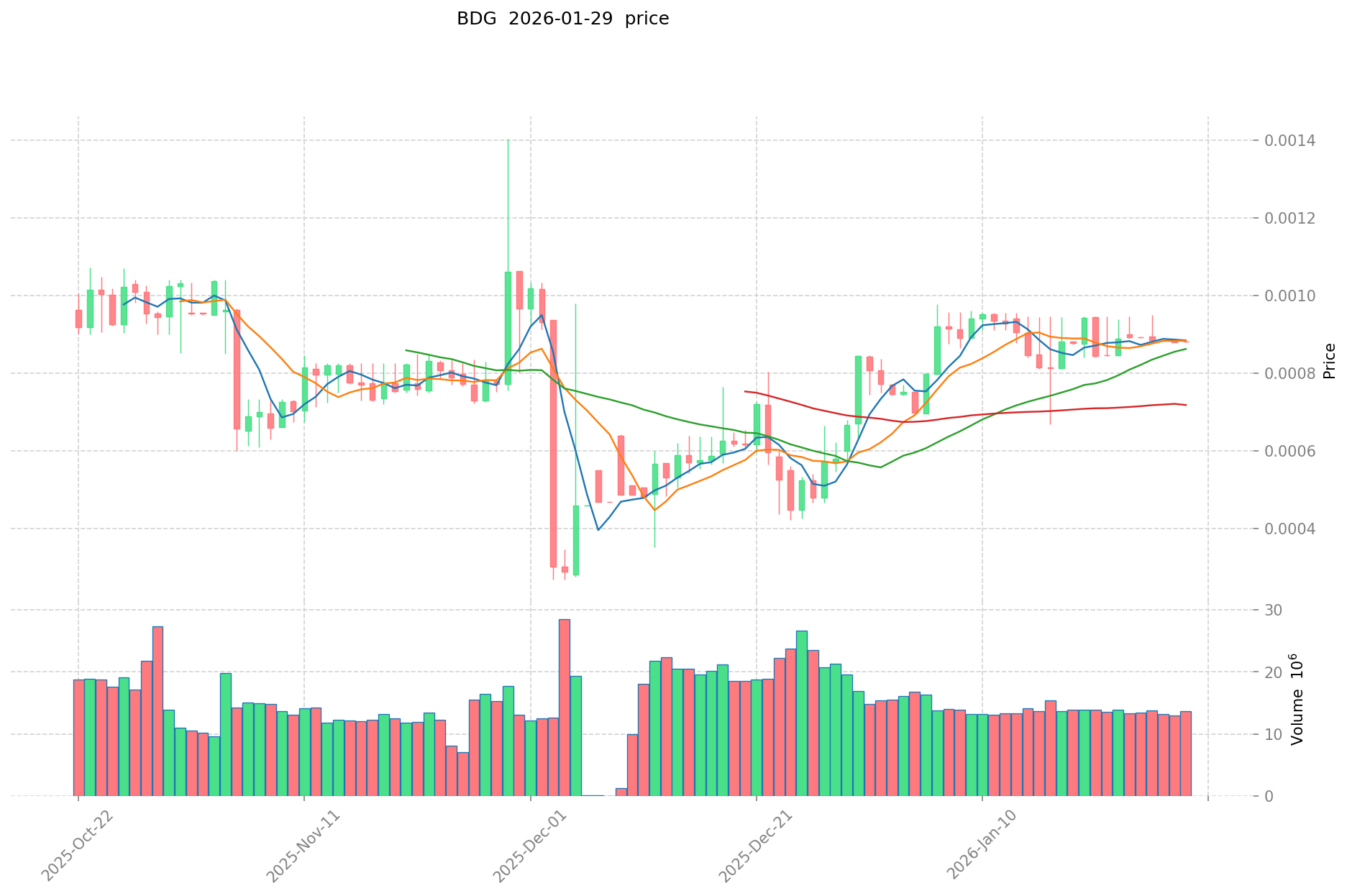
2025: BDG launched in late February 2025 with a publish price of $0.001. The token experienced significant volatility in its first year, reaching an all-time high of $0.003702 in early March 2025 before declining substantially.
-
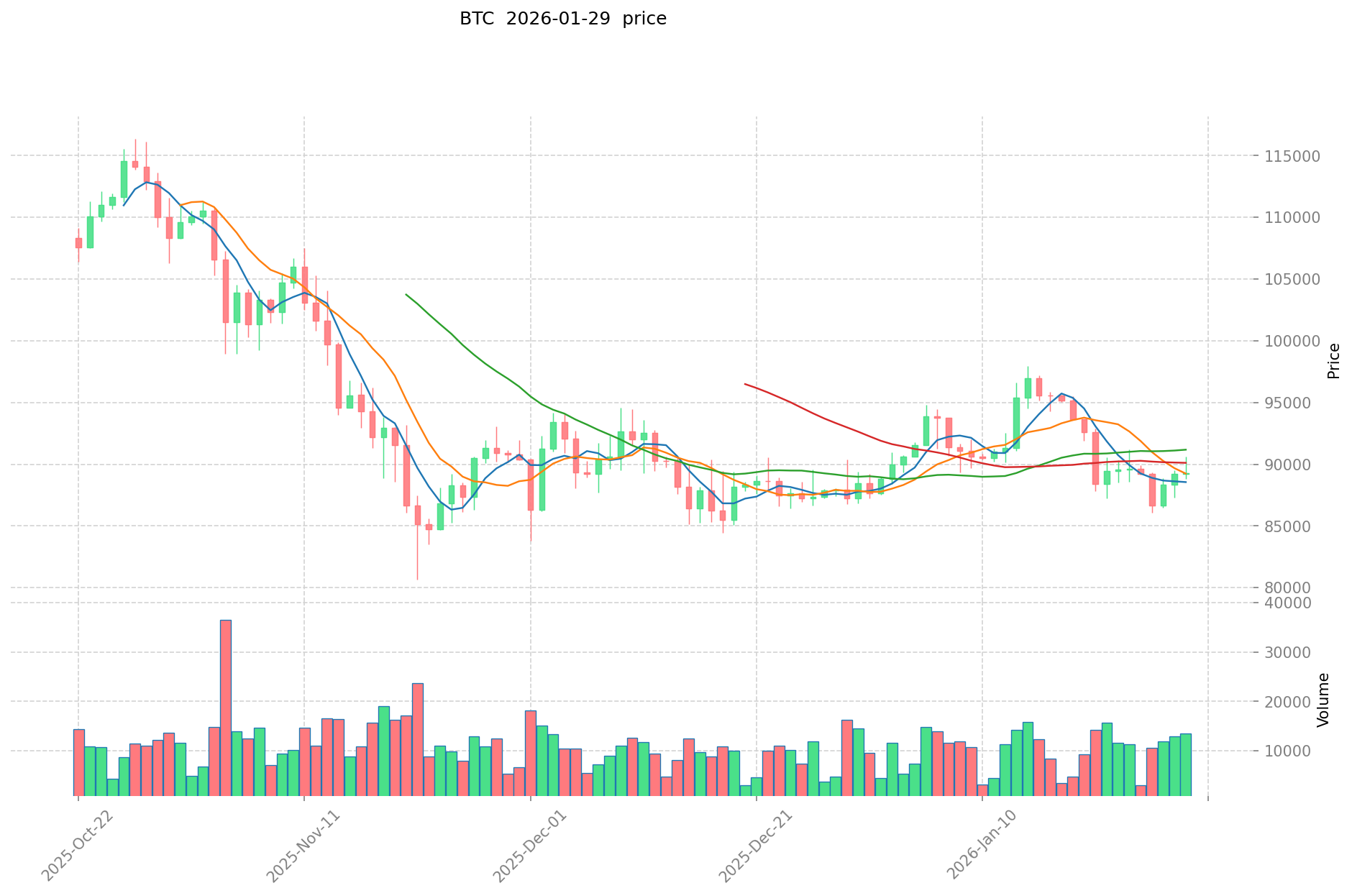
2025: Bitcoin faced price pressure throughout the year, with notable fluctuations driven by macroeconomic factors and institutional flows. BTC reached a peak of $126,080 in October 2025 before experiencing a correction phase.
-
Comparative Analysis: During the recent market cycle, BDG declined from its all-time high of $0.003702 to a low of $0.0002688 in December 2025, representing a substantial drawdown. In contrast, Bitcoin demonstrated relatively more stability, declining from $126,080 to approximately $84,299.7, showing different volatility patterns between the established cryptocurrency and the newer gaming token.
Current Market Status (January 30, 2026)
- BDG Current Price: $0.0008788
- BTC Current Price: $84,299.7
- 24-Hour Trading Volume: BDG recorded $11,449.06 vs BTC's $1.164 billion, reflecting the significant difference in market liquidity and trading activity between the two assets.
- Market Sentiment Index (Fear & Greed Index): 26 (Fear)
View real-time prices:
II. Core Factors Influencing BDG vs BTC Investment Value
Supply Mechanism Comparison (Tokenomics)
- BDG: The supply mechanism exhibits characteristics influenced by market conditions and project development stages. Token distribution follows a structure designed to support ecosystem expansion and community engagement.
- BTC: Features a fixed maximum supply of 21 million coins with a halving mechanism approximately every four years, creating a deflationary model that reduces new issuance over time.
- 📌 Historical Pattern: Supply mechanisms have demonstrated influence on price cycles, with scarcity dynamics playing a role in market valuation trends.
Institutional Adoption and Market Application
- Institutional Holdings: BTC has experienced broader institutional interest and participation in traditional financial markets. BDG represents an emerging asset with evolving institutional engagement patterns.
- Enterprise Adoption: BTC has gained traction in cross-border payment systems, corporate treasury strategies, and investment portfolios. BDG focuses on gaming and esports sector applications, with ongoing exploration of payment scenario integration.
- National Policies: Regulatory frameworks vary significantly across jurisdictions for both assets, with BTC facing more established (though diverse) regulatory approaches globally, while BDG navigates evolving policies specific to gaming tokens and emerging digital assets.
Technology Development and Ecosystem Building
- BDG Technology Upgrades: Development efforts center on optimizing transaction efficiency and security through consensus mechanism innovations. The project combines elements of decentralized finance (DeFi) and decentralized storage technologies to enhance network performance.
- BTC Technology Development: Ongoing improvements focus on scalability solutions, transaction throughput, and network security enhancements through protocol upgrades and layer-2 implementations.
- Ecosystem Comparison: BTC maintains presence across DeFi protocols, payment networks, and settlement systems with mature infrastructure. BDG concentrates on gaming and esports applications, with developing DeFi integration and ecosystem partnerships aimed at expanding use cases.
Macroeconomic Environment and Market Cycles
- Performance in Inflationary Environment: Both assets operate within volatile market conditions. BTC has been explored as a potential inflation hedge given its fixed supply characteristics, though market behavior reflects multiple influencing factors.
- Macroeconomic Monetary Policy: Interest rate movements, monetary policy shifts, and dollar index fluctuations affect sentiment and capital flows for both BDG and BTC, with varying degrees of correlation to traditional financial markets.
- Geopolitical Factors: Cross-border transaction demand, international political developments, and economic environment changes influence both assets' market dynamics and adoption trajectories. BTC benefits from established cross-border payment utility, while BDG's value proposition connects to gaming industry internationalization trends.
III. 2026-2031 Price Forecast: BDG vs BTC
Short-term Forecast (2026)
- BDG: Conservative $0.00084192 - $0.000877 | Optimistic $0.000877 - $0.00127165
- BTC: Conservative $75,151.778 - $84,440.2 | Optimistic $84,440.2 - $112,305.466
Mid-term Forecast (2028-2029)
- BDG may enter a gradual development phase, with projected price range of $0.00084845 - $0.001931851 in 2028, expanding to $0.00084166 - $0.0017157 in 2029
- BTC may enter a maturation phase, with projected price range of $76,779.996 - $151,366.278 in 2028, expanding to $121,389.174 - $142,273.333 in 2029
- Key drivers: institutional capital flows, ETF adoption, ecosystem development
Long-term Forecast (2030-2031)
- BDG: Baseline scenario $0.001150323 - $0.00166714 (2030) | Optimistic scenario $0.001411147 - $0.002125431 (2031)
- BTC: Baseline scenario $72,291.821 - $136,399.663 (2030) | Optimistic scenario $157,064.212 - $238,938.110 (2031)
View detailed price predictions for BDG and BTC
Disclaimer: Price forecasts are based on historical data analysis and market modeling. Cryptocurrency markets are highly volatile and subject to multiple unpredictable factors. These projections should not be considered as investment advice or guaranteed outcomes.
BDG:
| Year |
Predicted High Price |
Predicted Average Price |
Predicted Low Price |
Price Change |
| 2026 |
0.00127165 |
0.000877 |
0.00084192 |
0 |
| 2027 |
0.00153628475 |
0.001074325 |
0.00084871675 |
22 |
| 2028 |
0.001931851215 |
0.001305304875 |
0.00084844816875 |
48 |
| 2029 |
0.0017156927277 |
0.001618578045 |
0.0008416605834 |
84 |
| 2030 |
0.001817177571121 |
0.00166713538635 |
0.001150323416581 |
89 |
| 2031 |
0.002125430904057 |
0.001742156478735 |
0.001411146747775 |
98 |
BTC:
| Year |
Predicted High Price |
Predicted Average Price |
Predicted Low Price |
Price Change |
| 2026 |
112305.466 |
84440.2 |
75151.778 |
0 |
| 2027 |
120998.58459 |
98372.833 |
50170.14483 |
16 |
| 2028 |
151366.2781371 |
109685.708795 |
76779.9961565 |
29 |
| 2029 |
142273.3328779945 |
130525.99346605 |
121389.1739234265 |
54 |
| 2030 |
197779.5115994322625 |
136399.66317202225 |
72291.8214811717925 |
61 |
| 2031 |
238938.109961589976437 |
167089.58738572725625 |
157064.212142583620875 |
97 |
IV. Investment Strategy Comparison: BDG vs BTC
Long-term vs Short-term Investment Strategies
-
BDG: May suit investors focused on emerging gaming and esports sector opportunities, with tolerance for elevated volatility and interest in early-stage blockchain gaming ecosystem development. The asset's characteristics align with speculative positioning in nascent market segments.
-
BTC: May suit investors seeking exposure to an established digital asset with broader institutional participation and adoption across payment infrastructure. The asset's maturity and liquidity profile align with strategies emphasizing market leadership positioning and cross-border utility.
Risk Management and Asset Allocation
-
Conservative Investors: Potential allocation framework could consider BDG: 5-10% vs BTC: 90-95%, reflecting risk-adjusted exposure weighted toward established market participants with limited allocation to higher-volatility emerging assets.
-
Aggressive Investors: Potential allocation framework could consider BDG: 20-30% vs BTC: 70-80%, incorporating increased exposure to growth-oriented assets while maintaining core positioning in market-leading cryptocurrency.
-
Hedging Tools: Stablecoin reserves for liquidity management, options strategies for downside protection, and cross-asset portfolio construction to manage correlation dynamics.
V. Potential Risk Comparison
Market Risk
-
BDG: Exhibits characteristics of elevated price volatility, with significant drawdowns observed since launch. Limited trading volume of $11,449.06 (as of January 30, 2026) indicates lower liquidity conditions that may amplify price movements. Market sentiment and gaming sector trends represent key influence factors.
-
BTC: Demonstrates price fluctuations influenced by macroeconomic conditions, institutional capital flows, and regulatory developments. While experiencing corrections from peak levels, maintains substantially higher liquidity with $1.164 billion in 24-hour trading volume, providing greater market depth for position management.
Technical Risk
-
BDG: Faces considerations around network scalability as adoption expands, platform stability during usage growth phases, and ecosystem development execution. Technology integration across gaming applications and DeFi protocols represents ongoing development areas.
-
BTC: Considerations include mining concentration patterns across geographic regions and pool operators, network security maintenance as block rewards decrease over time, and scalability solution implementation for transaction throughput enhancement.
Regulatory Risk
- Global regulatory frameworks continue evolving for both assets, with varying approaches across jurisdictions. BTC faces established regulatory scrutiny and compliance requirements in major markets, including classification debates and taxation policies. BDG navigates emerging regulatory considerations specific to gaming tokens, including securities classification questions and cross-border gaming regulations. Policy developments in major markets may create asymmetric impacts on the two assets given their different market positions and use cases.
VI. Conclusion: Which Is the Better Buy?
📌 Investment Value Summary:
-
BDG Characteristics: Exposure to blockchain gaming and esports sector development, early-stage positioning within GameFi ecosystem integration, Ethereum Layer 2 infrastructure utilization for transaction efficiency. Price appreciation potential tied to gaming industry adoption trajectories and ecosystem expansion execution.
-
BTC Characteristics: Established market leadership with broad institutional recognition, extensive payment infrastructure integration and cross-border settlement utility, fixed supply mechanism creating scarcity dynamics, mature ecosystem with developed DeFi and trading infrastructure.
✅ Investment Considerations:
-
New Investors: May consider starting with established assets like BTC that offer greater liquidity, market depth, and institutional participation. Focus on understanding market cycles, volatility patterns, and risk management fundamentals before exploring emerging assets.
-
Experienced Investors: May evaluate portfolio allocation across both assets based on risk tolerance and investment horizons. Consider BTC for core positioning with potential tactical allocation to BDG for gaming sector exposure, while maintaining disciplined risk management and position sizing.
-
Institutional Investors: May assess BTC for treasury management, payment infrastructure, and portfolio diversification strategies given regulatory clarity progression and market infrastructure maturity. BDG evaluation may focus on gaming industry strategic alignment and ecosystem development milestones.
⚠️ Risk Disclosure: Cryptocurrency markets demonstrate extreme volatility and uncertainty. This analysis does not constitute investment advice, financial recommendations, or guarantees of future performance. Investors should conduct independent research, assess personal risk tolerance, and consider consulting qualified financial advisors before making investment decisions.
VII. FAQ
Q1: What is the primary difference between BDG and BTC as investment assets?
BTC is an established digital asset serving as a store of value and payment infrastructure with $1.164 billion daily trading volume, while BDG is an emerging GameFi token launched in 2025 focused on blockchain gaming ecosystems with significantly lower liquidity ($11,449.06 daily volume). Bitcoin operates as the market's benchmark cryptocurrency with institutional adoption and cross-border payment utility, whereas Beyond Gaming targets the gaming and esports sector through Ethereum Layer 2 infrastructure. The fundamental distinction lies in market maturity, liquidity depth, and use case positioning—BTC represents established digital asset exposure while BDG offers speculative positioning in nascent gaming sector development.
Q2: How do the supply mechanisms of BDG and BTC affect their investment characteristics?
BTC features a fixed maximum supply of 21 million coins with a halving mechanism every four years, creating deflationary dynamics through programmatic scarcity. This predetermined supply schedule has historically influenced price cycles and institutional interest in Bitcoin as a potential inflation hedge. BDG's supply mechanism reflects characteristics tied to project development stages and ecosystem expansion needs, with token distribution designed to support community engagement and platform growth. The key difference manifests in predictability: Bitcoin's supply trajectory is mathematically certain, while BDG's tokenomics remain subject to ecosystem development requirements and market conditions.
Q3: What are the projected price ranges for BDG and BTC through 2031?
Based on historical data analysis and market modeling, BTC projects a conservative 2026 range of $75,151.778 - $84,440.2, expanding to an optimistic 2031 scenario of $157,064.212 - $238,938.110. BDG forecasts show a conservative 2026 range of $0.00084192 - $0.000877, with optimistic 2031 projections of $0.001411147 - $0.002125431. However, these forecasts carry significant uncertainty given cryptocurrency market volatility and multiple unpredictable factors including regulatory developments, technological changes, and macroeconomic conditions. These projections should not be interpreted as guaranteed outcomes or investment advice.
Q4: How should investors approach portfolio allocation between BDG and BTC?
Conservative investors may consider a framework weighted heavily toward BTC (90-95%) with limited BDG allocation (5-10%), reflecting risk-adjusted exposure favoring established market leadership with minimal speculative positioning. Aggressive investors might explore increased exposure to growth-oriented assets with BDG allocation of 20-30% versus BTC at 70-80%, while maintaining core positioning in the market-leading cryptocurrency. Allocation decisions should incorporate individual risk tolerance, investment horizon, liquidity requirements, and portfolio diversification objectives. Implementing hedging tools such as stablecoin reserves, options strategies, and cross-asset positioning can support risk management across different market conditions.
Q5: What are the primary risk factors differentiating BDG and BTC investments?
BDG faces elevated volatility risk with significant drawdowns since launch, limited liquidity creating potential price amplification, and execution risk around ecosystem development and gaming sector adoption. Technical considerations include network scalability during growth phases and integration challenges across gaming applications. BTC's risk profile centers on macroeconomic sensitivity, regulatory developments across major jurisdictions, mining concentration patterns, and network security maintenance as block rewards decrease. Both assets face regulatory uncertainty, though BTC confronts established compliance frameworks while BDG navigates emerging gaming token regulations. Liquidity differential represents a critical distinction—BTC's $1.164 billion daily volume versus BDG's $11,449.06 creates substantially different risk dynamics for position entry and exit.
Q6: Which asset offers better potential for institutional investors?
BTC presents characteristics more aligned with institutional treasury management, payment infrastructure development, and portfolio diversification strategies given progressing regulatory clarity, mature market infrastructure, and broad institutional participation. The asset's liquidity depth, established custody solutions, and integration with traditional financial systems support institutional-scale operations. BDG may attract institutional interest specifically focused on gaming industry strategic alignment, esports sector exposure, or early-stage GameFi ecosystem positioning. However, limited liquidity, evolving regulatory frameworks for gaming tokens, and early development stage present challenges for institutional-scale allocation. Institutional evaluation should prioritize risk management frameworks, regulatory compliance requirements, and strategic alignment with organizational objectives.
* The information is not intended to be and does not constitute financial advice or any other recommendation of any sort offered or endorsed by Gate.