This comprehensive analysis compares BICO and LINK, two leading blockchain infrastructure platforms with distinct market positions. BICO, launched in 2021, focuses on enhancing Web3 user experience through account abstraction and gasless transactions, while LINK, established in 2017, serves as fundamental oracle infrastructure connecting smart contracts with external data sources. The article examines historical price trends, tokenomics, institutional adoption, technical ecosystems, and provides detailed 2026-2031 price forecasts for both tokens. Current market data shows BICO at $0.04186 with $41.86M market cap, while LINK trades at $12.894 with $9.13B market cap. We evaluate investment strategies, risk profiles, and liquidity considerations to help investors determine optimal allocation between these emerging and established infrastructure solutions.
Introduction: Investment Comparison Between BICO and LINK
In the cryptocurrency market, the comparison between BICO vs LINK has been a topic of ongoing interest among investors. The two tokens demonstrate notable differences in market capitalization ranking, application scenarios, and price performance, representing distinct positioning within the crypto asset landscape.
BICO (Biconomy): Launched in 2021, this token has gained recognition for its role in simplifying Web3 user experience through developer tools that enable cross-chain applications, ERC20 token gas payments, and gasless transfers.
LINK (Chainlink): Since its inception in 2017, LINK has established itself as a fundamental infrastructure component in the blockchain ecosystem, serving as the native token for Chainlink's decentralized oracle network that connects smart contracts with off-chain data.
This article will provide a comprehensive analysis of BICO vs LINK investment value comparison, examining historical price trends, supply mechanisms, institutional adoption, technical ecosystems, and future projections. We aim to address the question that concerns investors most:
"Which is the better buy right now?"
I. Historical Price Comparison and Current Market Status
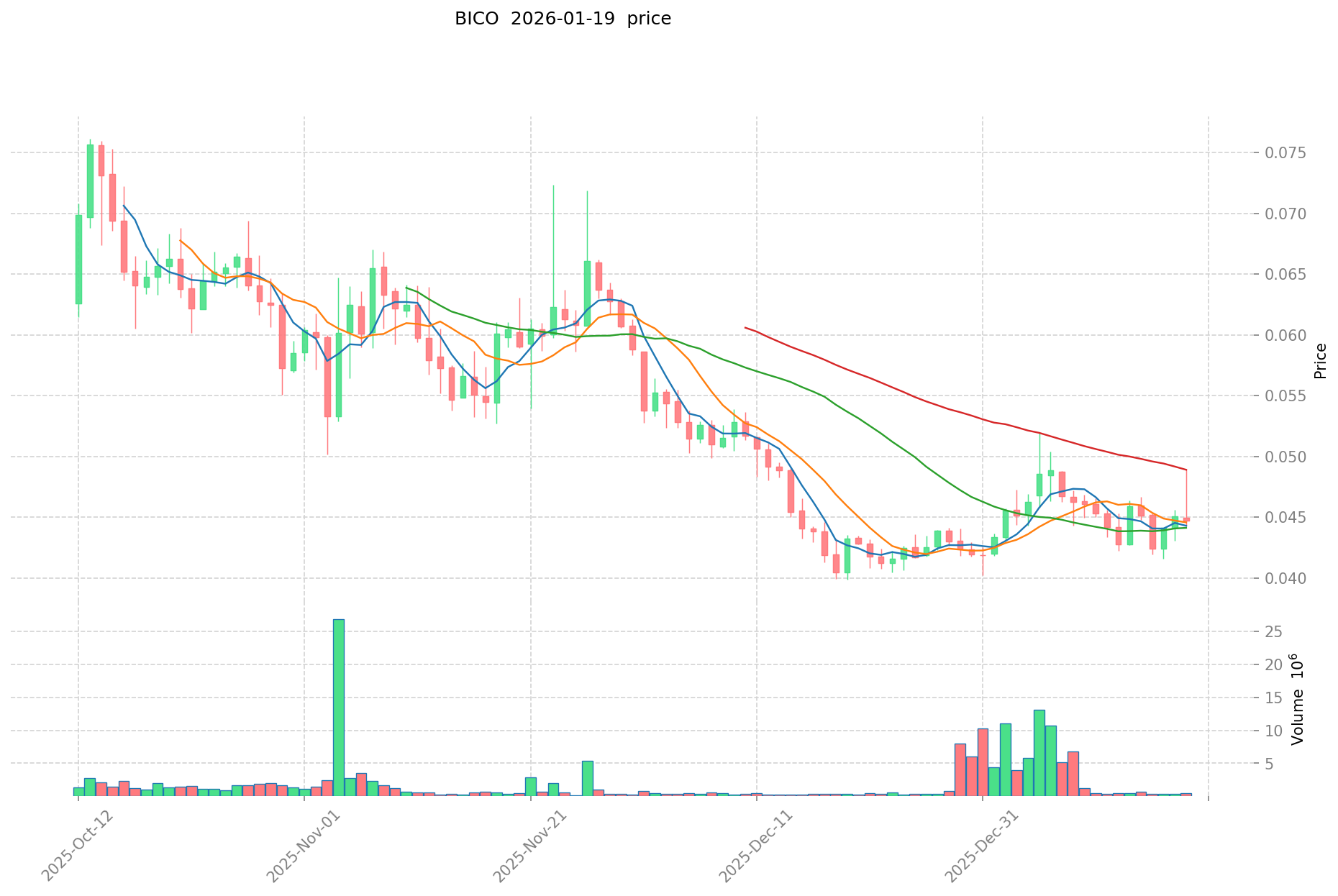
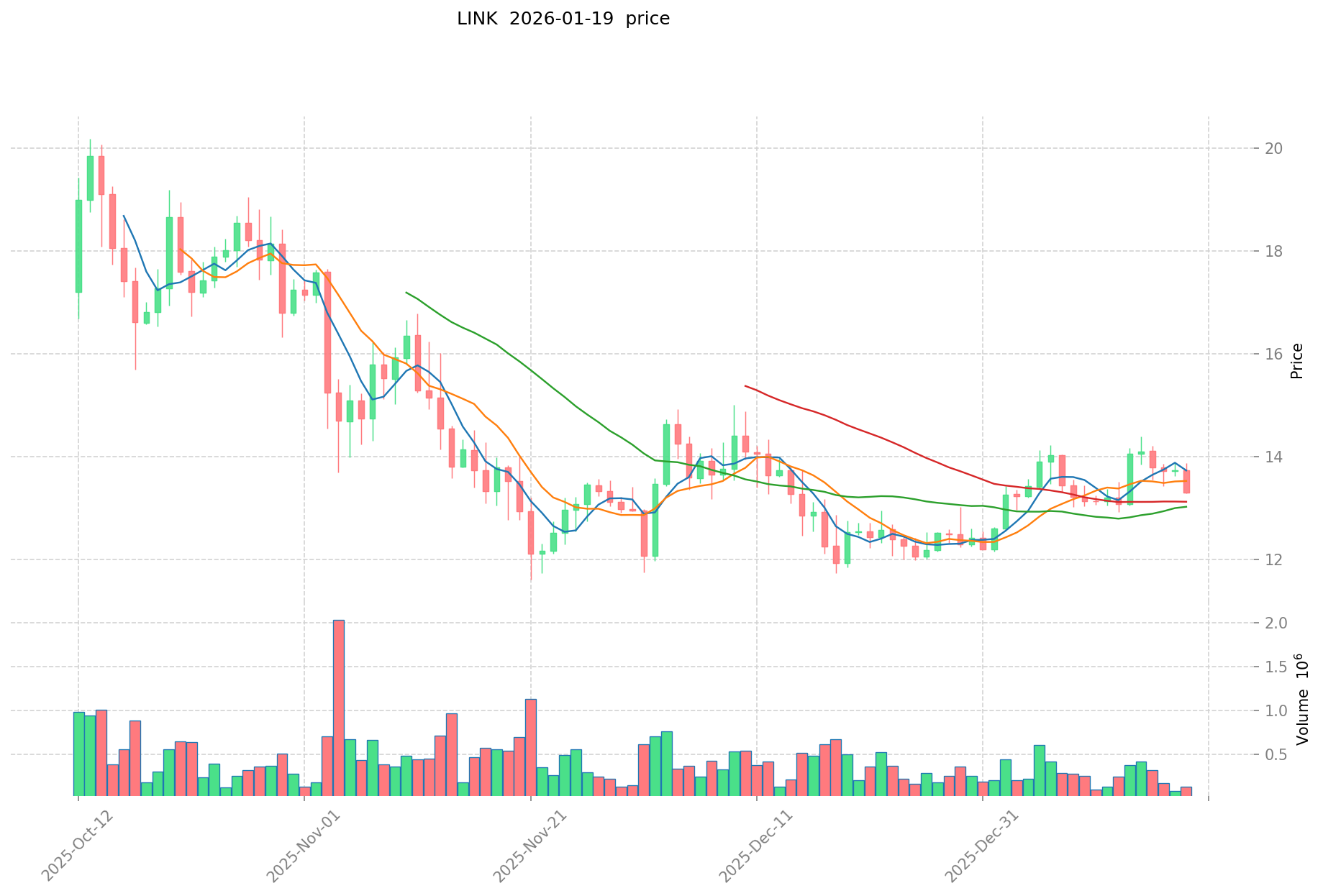
BICO (Coin A) and LINK (Coin B) Historical Price Trends
- December 2021: BICO experienced significant price movement, with its historical high reaching $21.45 during this period, reflecting early market enthusiasm following its launch in September 2021.
- May 2021: LINK reached its all-time high of $52.7, driven by widespread adoption of oracle services and growing integration with DeFi platforms.
- December 2025: BICO recorded its historical low of $0.0398811 on December 19, 2025, representing a substantial decline from peak levels.
- Comparative Analysis: Over the past year, BICO has declined approximately 85.11%, falling from higher price levels to the current range. LINK has experienced a decline of approximately 46.48% over the same period, showing relatively different volatility patterns compared to BICO.
Current Market Status (January 20, 2026)
- BICO Current Price: $0.04186
- LINK Current Price: $12.894
- 24-Hour Price Change: BICO -12.35% | LINK -6.73%
- 24-Hour Trading Volume: BICO $40,472.49 | LINK $5,674,471.08
- Market Capitalization: BICO $41.86M | LINK $9.13B
- Market Sentiment Index (Fear & Greed Index): 44 (Fear)
View real-time prices:
- Check BICO current price Market Price
- Check LINK current price Market Price
II. Core Factors Influencing BICO vs LINK Investment Value
Tokenomics Comparison
-
BICO: Functions as a governance and utility token within the Biconomy ecosystem, designed to facilitate transaction fee payments and protocol governance. The token economics aim to incentivize network participants and support multi-chain infrastructure development.
-
LINK: Operates under a node operator staking model where tokens secure oracle services. The supply mechanism supports decentralized data provision for smart contracts across multiple blockchain networks.
-
📌 Historical Pattern: Token supply structures influence price cycles through staking rewards, network utility demand, and ecosystem expansion phases.
Institutional Adoption and Market Application
-
Institutional Holdings: Both projects attract attention from blockchain infrastructure investors, though specific institutional preference data varies by market conditions and infrastructure requirements.
-
Enterprise Adoption:
- BICO: Focuses on simplifying blockchain user experience through gasless transactions and multi-chain operations, targeting dApp developers and Web3 platforms.
- LINK: Serves as critical infrastructure for DeFi protocols, insurance platforms, and enterprise blockchain solutions requiring reliable external data feeds.
-
Regulatory Environment: Both tokens operate within evolving regulatory frameworks, with acceptance varying across jurisdictions based on utility classification and compliance with local digital asset regulations.
Technology Development and Ecosystem Building
-
BICO Technical Upgrades: Concentrates on enhancing transaction efficiency across multiple blockchain networks through account abstraction and meta-transaction infrastructure. These developments aim to reduce friction in user onboarding and cross-chain operations.
-
LINK Technical Evolution: Continues expanding oracle capabilities through Cross-Chain Interoperability Protocol (CCIP) and hybrid smart contract infrastructure. Development focuses on enabling secure data transfer and computation across blockchain environments.
-
Ecosystem Comparison:
- BICO: Primarily supports user experience optimization in DeFi applications, NFT marketplaces, and multi-chain dApps.
- LINK: Extensively integrated across DeFi lending protocols, prediction markets, insurance products, and blockchain gaming through oracle services.
Macroeconomic Factors and Market Cycles
-
Performance During Inflationary Periods: Both tokens exhibit characteristics tied to blockchain infrastructure demand rather than traditional inflation hedges. Value correlates more closely with Web3 adoption rates and smart contract activity.
-
Macro Monetary Policy Impact: Interest rate adjustments and dollar index movements influence risk appetite for blockchain infrastructure investments. Tightening monetary conditions may affect capital allocation to emerging blockchain technologies.
-
Geopolitical Considerations: Cross-border transaction demand and international blockchain adoption trends influence both projects. Regulatory clarity in major markets impacts institutional participation and ecosystem development trajectories.
III. 2026-2031 Price Forecast: BICO vs LINK
Short-term Forecast (2026)
- BICO: Conservative $0.024-$0.042 | Optimistic $0.042-$0.059
- LINK: Conservative $12.37-$12.89 | Optimistic $12.89-$17.53
Mid-term Forecast (2028-2029)
- BICO may enter a gradual growth phase, with estimated price range of $0.039-$0.075
- LINK may enter a steady expansion phase, with estimated price range of $12.96-$23.15
- Key drivers: institutional capital inflows, ETF developments, ecosystem growth
Long-term Forecast (2030-2031)
- BICO: Baseline scenario $0.042-$0.068 | Optimistic scenario $0.095-$0.107
- LINK: Baseline scenario $11.55-$21.38 | Optimistic scenario $24.16-$26.64
View detailed price predictions for BICO and LINK
Disclaimer
BICO:
| Year |
Predicted High Price |
Predicted Average Price |
Predicted Low Price |
Price Change |
| 2026 |
0.0591072 |
0.04192 |
0.0238944 |
0 |
| 2027 |
0.054554688 |
0.0505136 |
0.033338976 |
20 |
| 2028 |
0.06881972864 |
0.052534144 |
0.039400608 |
25 |
| 2029 |
0.0746326316736 |
0.06067693632 |
0.054609242688 |
44 |
| 2030 |
0.095393245435488 |
0.0676547839968 |
0.041945966078016 |
61 |
| 2031 |
0.106796459278148 |
0.081524014716144 |
0.049729648976847 |
94 |
LINK:
| Year |
Predicted High Price |
Predicted Average Price |
Predicted Low Price |
Price Change |
| 2026 |
17.52632 |
12.887 |
12.37152 |
0 |
| 2027 |
21.289324 |
15.20666 |
11.1008618 |
17 |
| 2028 |
20.9851908 |
18.247992 |
12.95607432 |
41 |
| 2029 |
23.147577852 |
19.6165914 |
16.870268604 |
52 |
| 2030 |
24.16175562738 |
21.382084626 |
11.54632569804 |
65 |
| 2031 |
26.6431465482273 |
22.77192012669 |
21.6333241203555 |
76 |
IV. Investment Strategy Comparison: BICO vs LINK
Long-term vs Short-term Investment Strategies
-
BICO: May appeal to investors focused on emerging Web3 infrastructure and multi-chain user experience optimization. The token's positioning in account abstraction and gasless transaction technology suggests potential alignment with investors interested in blockchain usability improvements.
-
LINK: May suit investors seeking exposure to established oracle infrastructure with broader DeFi integration. The token's role in connecting smart contracts with external data sources positions it within foundational blockchain services.
Risk Management and Asset Allocation
-
Conservative Investors: Consider allocation frameworks emphasizing established infrastructure (potential weighting toward LINK due to broader market integration) while maintaining limited exposure to emerging technologies (BICO representing higher-risk allocation).
-
Aggressive Investors: May explore higher allocation to projects with significant growth potential relative to current market capitalization, balanced against volatility tolerance and liquidity requirements.
-
Hedging Instruments: Stablecoin reserves for volatility management, options strategies for downside protection, cross-asset diversification across multiple blockchain infrastructure categories.
V. Potential Risk Comparison
Market Risk
-
BICO: Lower trading volume ($40,472.49 daily) may present liquidity challenges during market stress. The 85.11% decline over the past year reflects significant price volatility and sensitivity to broader market sentiment.
-
LINK: Higher market capitalization ($9.13B) and trading volume ($5,674,471.08 daily) provide relatively greater liquidity. The 46.48% decline indicates correlation with broader cryptocurrency market cycles.
Technical Risk
-
BICO: Development focuses on cross-chain transaction infrastructure and account abstraction technology. Network adoption rates and multi-chain compatibility remain key factors for technical viability.
-
LINK: Oracle network security depends on node operator participation and data feed reliability. Cross-chain interoperability protocol (CCIP) expansion introduces complexity in maintaining service quality across multiple blockchain environments.
Regulatory Risk
- Global regulatory frameworks continue evolving regarding blockchain infrastructure tokens. Both projects face potential classification considerations as utility tokens, with implications varying across jurisdictions. Compliance requirements for oracle services and cross-chain operations may differ based on regional digital asset regulations.
VI. Conclusion: Which Is the Better Buy?
📌 Investment Value Summary:
-
BICO Characteristics: Focuses on Web3 user experience infrastructure through account abstraction and gasless transactions. Current market capitalization ($41.86M) reflects early-stage positioning with corresponding volatility profile.
-
LINK Characteristics: Serves as established oracle infrastructure across DeFi and enterprise blockchain applications. Market capitalization ($9.13B) and ecosystem integration suggest broader adoption within blockchain data services.
✅ Investment Considerations:
-
New Investors: Consider starting with smaller position sizes in established infrastructure projects while developing understanding of blockchain technology fundamentals and market dynamics.
-
Experienced Investors: Evaluate allocation based on risk tolerance, portfolio diversification objectives, and assessment of infrastructure development trends across blockchain ecosystems.
-
Institutional Investors: Conduct thorough due diligence on technology architecture, ecosystem partnerships, regulatory compliance frameworks, and liquidity profiles before determining allocation strategies.
⚠️ Risk Disclosure: Cryptocurrency markets demonstrate high volatility. This content provides informational analysis and does not constitute investment advice. Conduct independent research and consult qualified financial advisors before making investment decisions.
VII. FAQ
Q1: What is the main difference between BICO and LINK's utility in the blockchain ecosystem?
BICO focuses on improving Web3 user experience through account abstraction and gasless transactions, while LINK provides decentralized oracle services connecting smart contracts with external data sources. BICO's technology aims to reduce friction in blockchain interactions by enabling cross-chain operations and eliminating gas fee requirements for end users. LINK, on the other hand, serves as fundamental infrastructure that allows smart contracts to access real-world data, APIs, and payment systems, making it essential for DeFi protocols, insurance platforms, and enterprise blockchain applications requiring reliable off-chain information.
Q2: Which token has demonstrated better price stability over the past year?
LINK has shown relatively better price stability with a 46.48% decline over the past year, compared to BICO's 85.11% decline. This difference reflects LINK's more established market position, higher liquidity ($5,674,471.08 daily trading volume versus BICO's $40,472.49), and broader ecosystem integration across DeFi platforms. LINK's larger market capitalization ($9.13B) and longer operational history since 2017 contribute to reduced volatility compared to BICO, which launched in 2021 and maintains a significantly smaller market cap of $41.86M.
Q3: What are the key factors that could drive future price appreciation for each token?
For BICO, growth catalysts include increased adoption of account abstraction technology, expansion of multi-chain infrastructure usage, and broader implementation of gasless transaction solutions across Web3 applications. For LINK, price drivers encompass continued integration with DeFi protocols, successful deployment of Cross-Chain Interoperability Protocol (CCIP), expansion of hybrid smart contract capabilities, and growing demand for oracle services in enterprise blockchain solutions. Both tokens benefit from overall blockchain adoption trends, though LINK's established position in oracle services provides exposure to a broader range of smart contract applications.
Q4: How do liquidity differences between BICO and LINK affect investment considerations?
LINK's substantially higher daily trading volume ($5,674,471.08 versus BICO's $40,472.49) provides significant liquidity advantages, enabling easier position entry and exit with minimal price impact. This liquidity difference means LINK investors face lower slippage risks and can execute larger transactions without materially affecting market prices. BICO's lower liquidity presents challenges during market stress periods and may result in wider bid-ask spreads, making it more suitable for investors with higher risk tolerance and longer investment horizons who can withstand potential execution difficulties during volatile market conditions.
Q5: What role do institutional investors play in the adoption of BICO versus LINK?
LINK has attracted broader institutional attention due to its established infrastructure position and integration with enterprise blockchain solutions requiring reliable data feeds. The token's role in DeFi lending protocols, prediction markets, and insurance products provides institutional investors with exposure to fundamental blockchain services. BICO's focus on user experience optimization appeals to institutions interested in emerging Web3 infrastructure, though its smaller market capitalization and newer operational history result in different institutional participation patterns. Both projects operate within evolving regulatory frameworks that influence institutional allocation decisions based on utility classification and compliance requirements.
Q6: How should investors approach portfolio allocation between BICO and LINK?
Conservative investors may consider heavier allocation toward LINK given its established market position, higher liquidity, and broader ecosystem integration, while maintaining limited exposure to BICO as a higher-risk allocation representing emerging Web3 infrastructure. Aggressive investors might explore higher allocation to BICO based on growth potential relative to current market capitalization, balanced against volatility tolerance. Diversification frameworks should account for the different risk profiles: LINK representing foundational blockchain services with relatively lower volatility, and BICO positioning in early-stage infrastructure development with corresponding higher risk-return characteristics.
Q7: What technological developments should investors monitor for each project?
For BICO, key developments include progress in account abstraction implementation, expansion of multi-chain compatibility, adoption rates among dApp developers, and successful deployment of gasless transaction infrastructure across Web3 platforms. For LINK, important technological milestones encompass CCIP deployment across additional blockchain networks, expansion of oracle service capabilities, growth in node operator participation, security enhancements in data feed reliability, and integration with new DeFi protocols. Both projects' technological roadmaps influence long-term value propositions, with BICO's success depending on user experience improvements and LINK's growth tied to oracle service expansion.
Q8: What market conditions would favor BICO versus LINK investment performance?
BICO may demonstrate stronger relative performance during periods of increased Web3 adoption, growing demand for cross-chain applications, and heightened focus on blockchain user experience improvements. The token could benefit from market phases emphasizing emerging infrastructure solutions and multi-chain ecosystem development. LINK typically performs well during DeFi expansion cycles, increased smart contract activity requiring external data, growing enterprise blockchain adoption, and periods when oracle infrastructure demand rises. Both tokens correlate with broader cryptocurrency market trends, though LINK's established position provides relatively more stability during market downturns, while BICO exhibits higher sensitivity to risk appetite fluctuations in blockchain infrastructure investments.
* The information is not intended to be and does not constitute financial advice or any other recommendation of any sort offered or endorsed by Gate.