This comprehensive guide analyzes Bitcoin's 2024-2025 market dynamics following its correction from $126,000 to below $100,000, examining technical support levels and the Fear and Greed Index at extreme lows. The article explores institutional adoption trends, including significant ETF outflows, while highlighting macroeconomic pressures from US-China trade tensions and Federal Reserve policies that have intensified market volatility. Beyond Bitcoin, it evaluates altcoin performance declines, stablecoin inflows, and DeFi liquidations, drawing historical parallels to previous crypto cycles. The analysis demonstrates that despite short-term bearish sentiment, long-term recovery forecasts range from $120,000 to $170,000 within 6-12 months, supported by growing institutional participation, blockchain innovation, and evolving regulatory frameworks that enhance market legitimacy and stability on Gate and other platforms.
Bitcoin Price Movements and Technical Analysis
Bitcoin has experienced a significant correction in recent months, dropping below the $100,000 mark after reaching an all-time high of $126,000 in late 2025. This 20% decline has sent shockwaves through the cryptocurrency market, prompting analysts to closely monitor key psychological and technical support levels. The $97,500–$99,000 range is currently viewed as a critical zone that could determine Bitcoin's next directional move.
Technical analysis reveals that Bitcoin has broken through several important support levels, indicating bearish momentum in the short term. The Fear and Greed Index has plummeted to an "extreme fear" level of 21, reflecting widespread pessimism among investors and traders.
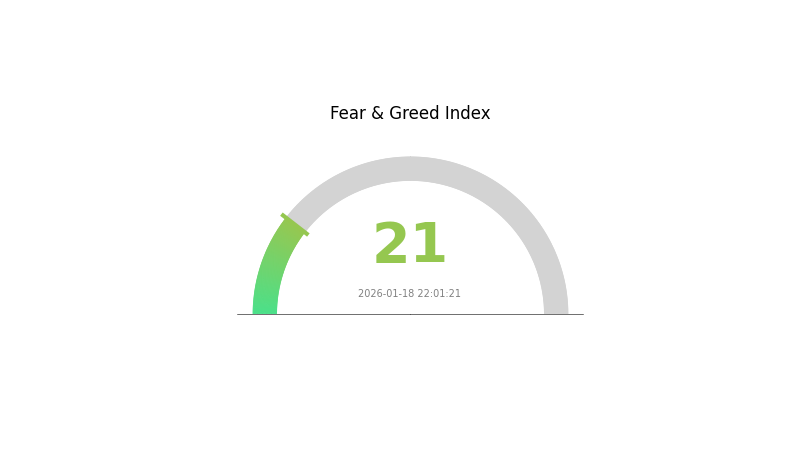 This sentiment indicator suggests that market participants are highly risk-averse, leading to increased selling pressure across the crypto market.
Despite the downturn, some analysts maintain an optimistic outlook on Bitcoin's long-term potential. Based on historical price patterns and the cryptocurrency's fundamental value proposition, forecasts suggest a potential recovery ranging from $120,000 to $170,000 within the next 6–12 months. These projections are grounded in the belief that institutional adoption, technological advancements, and growing mainstream acceptance will continue to drive Bitcoin's value proposition over time.
Institutional Adoption and ETF Flows
Institutional activity continues to play a pivotal role in Bitcoin's market dynamics and overall cryptocurrency market sentiment. Spot Bitcoin ETFs recorded outflows exceeding $2 billion in the weeks following the market peak, contributing significantly to the recent sell-off. These substantial outflows reflect institutional investors' risk management strategies and their response to broader macroeconomic uncertainties.
While these short-term outflows have created downward pressure on Bitcoin's price, institutional adoption remains a crucial long-term driver for the cryptocurrency market. Major financial institutions, hedge funds, and corporate treasuries have increasingly allocated portions of their portfolios to Bitcoin and other digital assets. This trend suggests that despite temporary setbacks, institutional confidence in the long-term value proposition of cryptocurrencies remains intact.
The development of regulated investment vehicles, such as spot Bitcoin ETFs, has provided institutional investors with compliant and accessible ways to gain exposure to cryptocurrency markets. As regulatory frameworks continue to evolve and mature, institutional participation is expected to increase, potentially providing a stabilizing force for the market over time.
Macroeconomic Factors Affecting the Crypto Market
The broader macroeconomic environment has significantly influenced the recent cryptocurrency market downturn. Several interconnected factors have contributed to the risk-off sentiment that has impacted digital assets:
-
US-China Trade Tensions: Ongoing geopolitical disputes between the world's two largest economies have heightened market uncertainty. These tensions have led to increased volatility across global financial markets, with investors seeking safer assets and reducing exposure to risk assets like cryptocurrencies. Trade policy uncertainties have created an environment where investors are more cautious about allocating capital to speculative investments.
-
Federal Reserve Policy: Rising interest rates and tightening monetary policy have reduced liquidity in financial markets. As central banks worldwide have shifted from accommodative to restrictive monetary policies to combat inflation, the cost of capital has increased. This shift has particularly impacted growth-oriented and speculative assets, including cryptocurrencies, as investors have reallocated capital to higher-yielding traditional investments with lower risk profiles.
-
Global Risk Aversion: A general shift toward safer investments has exacerbated the sell-off in the cryptocurrency market. Economic uncertainties, including concerns about global growth, inflationary pressures, and geopolitical instabilities, have prompted investors to move capital into traditional safe-haven assets such as government bonds and gold. This flight to safety has resulted in significant capital outflows from the cryptocurrency market.
These macroeconomic headwinds have created a challenging environment for cryptocurrencies, as digital assets are often viewed as risk-on investments that tend to underperform during periods of economic uncertainty and market stress.
The market downturn has not been limited to Bitcoin alone. The broader cryptocurrency market has experienced significant declines, with major altcoins facing substantial price corrections. Ethereum, the second-largest cryptocurrency by market capitalization, fell by 16% over a 48-hour period during the peak of the sell-off. This decline reflects both the overall market sentiment and specific concerns about Ethereum's scalability and competition from alternative blockchain platforms.
Solana, which had gained significant traction as a high-performance blockchain platform, lost nearly 19% of its value over a one-month period. This correction has been particularly notable given Solana's previous strong performance and growing ecosystem of decentralized applications. The decline highlights the vulnerability of even promising blockchain projects to broader market downturns.
Smaller altcoins and emerging blockchain projects have faced even greater challenges during this period. Many of these assets have experienced reduced liquidity, making them more susceptible to large price swings. Mass sell-offs in the altcoin market have been driven by investors seeking to reduce risk exposure and move capital to more established cryptocurrencies or traditional assets. This trend has resulted in a flight to quality within the cryptocurrency market, with capital concentrating in Bitcoin and other major digital assets.
Market Sentiment and the Role of Stablecoins
Market sentiment has reached a low point according to the Fear and Greed Index, which measures investor emotions and market trends. During periods of extreme volatility and uncertainty, stablecoins have emerged as a safe haven for investors within the cryptocurrency ecosystem. These digital assets, which are pegged to traditional currencies like the US dollar, provide a way for investors to preserve capital while remaining within the crypto infrastructure.
Net inflows into stablecoins increased substantially during the sell-off, indicating that many investors chose to convert their volatile cryptocurrency holdings into stable assets rather than exiting the market entirely. This behavior suggests that despite the downturn, a significant portion of market participants maintain confidence in the long-term prospects of the cryptocurrency market and are positioning themselves to re-enter when conditions improve.
The growing role of stablecoins in the cryptocurrency ecosystem highlights their importance as a bridge between traditional finance and digital assets. They provide liquidity, facilitate trading, and serve as a store of value during turbulent market conditions, contributing to the overall resilience and maturation of the crypto market.
Decentralized finance (DeFi) and non-fungible token (NFT) markets have undergone significant stress tests during the recent downturn. DeFi protocols have faced substantial liquidations as collateral values declined, triggering automated mechanisms that close out leveraged positions. These cascading liquidations have further amplified downward price pressure and reduced liquidity across decentralized markets.
Many DeFi platforms have experienced reduced total value locked (TVL) as users withdrew funds in response to market volatility and declining asset prices. This reduction in capital has impacted the functionality and efficiency of decentralized exchanges, lending protocols, and yield farming platforms. However, the resilience of many DeFi protocols during this stress period has demonstrated the robustness of blockchain-based financial infrastructure.
The NFT market has recorded a significant decline in trading volumes during the downturn. As speculative interest waned and liquidity dried up, many NFT collections experienced substantial price corrections. High-profile projects that had commanded premium prices during the market peak saw reduced demand and lower transaction volumes. This correction has led to a more sustainable valuation framework for NFTs, with focus shifting from speculative trading to utility-driven use cases and genuine artistic value.
Historical Comparisons with Previous Crypto Market Corrections
The current market correction shares notable parallels with previous downturns in the cryptocurrency space. Historical data reveals that Bitcoin and the broader crypto market have often experienced strong recoveries following significant corrections. Previous bear markets, such as those in 2018 and 2022, were followed by substantial bull runs that established new all-time highs.
These historical patterns suggest that market cycles are an inherent characteristic of the cryptocurrency space. Corrections serve to reset valuations, eliminate excessive speculation, and create opportunities for long-term investors to accumulate assets at more favorable prices. The cyclical nature of cryptocurrency markets has been driven by factors including technological developments, regulatory changes, macroeconomic conditions, and shifts in investor sentiment.
Analyzing past corrections provides valuable insights into potential recovery timelines and price trajectories. While each market cycle has unique characteristics, the fundamental drivers of cryptocurrency adoption—technological innovation, increasing institutional participation, and growing mainstream acceptance—have consistently supported long-term value appreciation despite short-term volatility.
Long-Term Outlook for Bitcoin and the Broader Market
Despite the bearish short-term outlook, many analysts remain optimistic about Bitcoin's long-term potential and the future of the cryptocurrency market. Recovery forecasts range from $120,000 to $170,000 within the next 6–12 months, driven by several fundamental factors that continue to support the value proposition of digital assets.
Growing institutional adoption remains a key driver of long-term optimism. As more financial institutions, corporations, and investment funds allocate capital to cryptocurrencies, the market is expected to gain greater stability and legitimacy. Technological advancements in blockchain infrastructure, including improvements in scalability, security, and interoperability, are enhancing the utility and efficiency of cryptocurrency networks.
The expanding use cases for blockchain technology beyond speculative investment—including decentralized finance, supply chain management, digital identity, and tokenization of real-world assets—are creating fundamental value that supports long-term price appreciation. Additionally, the finite supply of Bitcoin and other cryptocurrencies with capped issuance creates a scarcity dynamic that could drive value as demand increases over time.
Regulatory Developments and Their Impact on the Crypto Ecosystem
Regulatory developments continue to play a crucial role in shaping the cryptocurrency market's trajectory. While increased regulation may create short-term uncertainty and compliance challenges, it also has the potential to provide greater legitimacy and stability to the market over the long term. Clear regulatory frameworks can reduce risks associated with fraud, market manipulation, and operational failures, thereby increasing investor confidence.
Governments and regulatory bodies worldwide are working to establish comprehensive frameworks for cryptocurrency oversight. These efforts include defining the legal status of digital assets, implementing consumer protection measures, establishing taxation policies, and creating licensing requirements for cryptocurrency businesses. While regulatory approaches vary significantly across jurisdictions, the overall trend toward greater regulatory clarity is viewed as positive for long-term market development.
The evolution of cryptocurrency regulation is expected to facilitate greater institutional participation, as clear legal frameworks reduce compliance risks and provide certainty for large-scale investors. However, the balance between regulation and innovation remains a critical consideration, as overly restrictive policies could stifle technological development and limit the transformative potential of blockchain technology.
Conclusion
The recent cryptocurrency market downturn has highlighted the complex interplay of factors influencing Bitcoin, blockchain technology, and the broader digital asset ecosystem. From macroeconomic pressures and institutional trends to market sentiment and regulatory developments, the current situation presents both challenges and opportunities for investors and industry participants.
While short-term volatility remains a concern and market sentiment has reached pessimistic levels, the long-term prospects for Bitcoin and the cryptocurrency market continue to inspire optimism among analysts and investors. The fundamental drivers of cryptocurrency adoption—technological innovation, increasing institutional participation, expanding use cases, and growing mainstream acceptance—remain intact despite temporary setbacks.
As the market navigates this correction phase, the resilience of blockchain infrastructure, the maturation of regulatory frameworks, and the continued development of the cryptocurrency ecosystem suggest that digital assets will remain an important component of the global financial landscape. Investors and market participants who maintain a long-term perspective and focus on fundamental value drivers may find significant opportunities emerging from the current market conditions.
FAQ
What is Bitcoin and how does it differ from traditional currency?
Bitcoin is a decentralized digital currency operating on blockchain technology, independent of central banks or governments. Unlike traditional fiat currency, it has no physical form, offers faster cross-border transactions, and provides users with greater financial autonomy and transparency.
What is the core principle of blockchain technology? Why is it considered revolutionary?
Blockchain operates on decentralized distributed ledgers using cryptography and consensus mechanisms to ensure data security and immutability. It's revolutionary because it enables transparent, secure transactions while eliminating intermediaries, fundamentally transforming trust mechanisms in digital systems.
What are the main risks faced by Bitcoin and other digital assets during cryptocurrency market downturns?
During downturns, Bitcoin and digital assets face credit risks from fraudulent projects, market volatility without price limits, operational risks from inadequate exchange security, and regulatory uncertainty across jurisdictions.
What factors affect Bitcoin price fluctuations?
Bitcoin price fluctuations are driven by market sentiment, speculative trading, regulatory developments, macroeconomic events, trading volume, and technological innovations. Institutional adoption and geopolitical factors also play significant roles in price movements.
How to assess current cryptocurrency market investment opportunities and risks?
Evaluate regulatory changes, market volatility, and technological advancements like Layer 2 solutions. Monitor security threats, liquidity risks, and platform updates. Analyze Bitcoin and blockchain trends, diversify with stablecoins, and stay informed on policy shifts affecting market dynamics.
What are the application prospects of blockchain technology beyond the financial sector?
Blockchain technology has promising applications in supply chain management, cultural entertainment, smart manufacturing, and social welfare. Its decentralization and transparency enhance efficiency and reduce fraud across these industries.
What are the differences between Bitcoin and other mainstream cryptocurrencies like Ethereum?
Bitcoin is the first cryptocurrency focused on peer-to-peer transactions and store of value. Ethereum is a smart contract platform enabling decentralized applications. Bitcoin uses Proof of Work, while Ethereum uses Proof of Stake. Ethereum supports programmable contracts; Bitcoin prioritizes security and decentralization.
What investment strategy should be adopted during market downturns?
During market downturns, employ dollar-cost averaging to accumulate quality assets at lower prices. Diversify across Bitcoin, altcoins, and stablecoins. Maintain liquidity reserves and avoid panic selling. Focus on long-term fundamentals rather than short-term volatility.
* The information is not intended to be and does not constitute financial advice or any other recommendation of any sort offered or endorsed by Gate.