Discover safe ways to buy Bitcoin on Gate during bear markets. Explore strategies for acquiring crypto as prices fall, insights into halving cycles, and investment opportunities in digital assets. Gain expert guidance tailored for traders and investors.
Understanding Bitcoin’s Historical Four-Year Cycle
Bitcoin’s price history has long been shaped by its four-year halving cycle—a protocol-based event that has traditionally triggered alternating bull and bear markets. This halving mechanism, built into Bitcoin’s code from day one, serves as a clockwork system regulating the supply of new coins hitting the market.
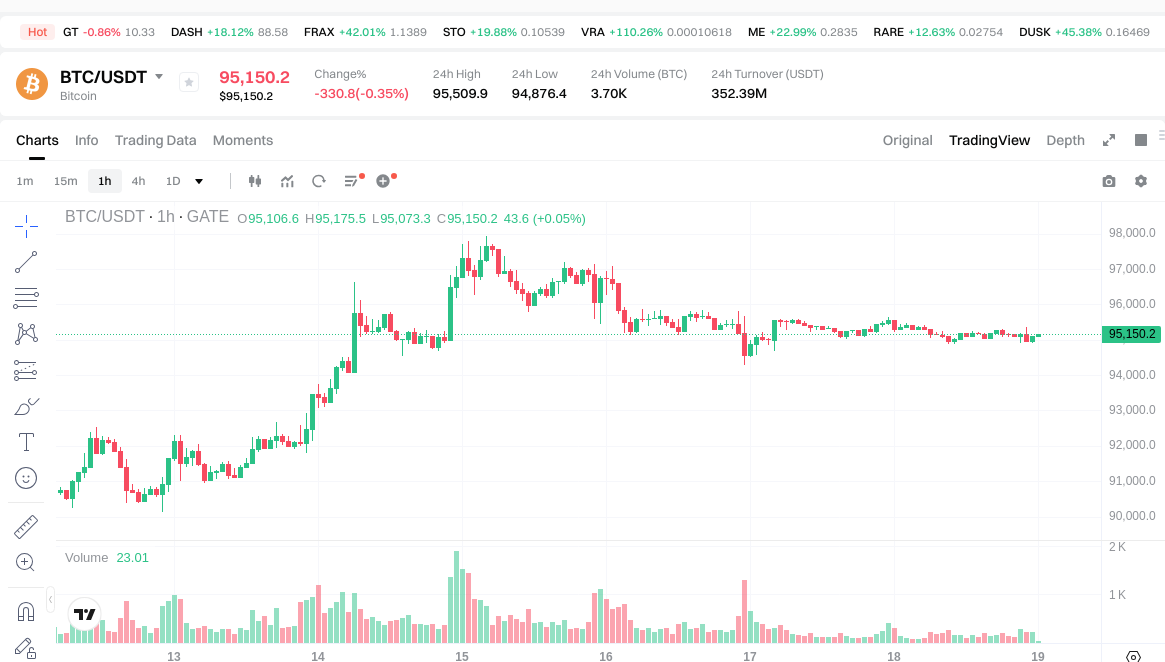 However, as the crypto market matures, this classic pattern is increasingly subject to major shifts driven by evolving market dynamics, large-scale institutional adoption, and global macroeconomic forces.
Historically, each halving has set off a familiar chain of events: reduced mining rewards create supply shortages, which drive up demand and prices. Yet, today’s market—with institutional giants and changing regulatory landscapes—can fundamentally rewire this process.
What Is the Four-Year Halving Cycle?
The four-year halving cycle is one of Bitcoin’s most important protocol features, designed by Satoshi Nakamoto. Approximately every 210,000 blocks—roughly every four years—Bitcoin mining rewards are halved. Each halving instantly cuts the reward for mining a block in half, directly reducing the rate of new coin issuance.
This creates a powerful supply shock, slowing the flow of new Bitcoins into circulation. Historically, these supply squeezes, with steady or rising demand, have led to substantial price rallies over the next 12 to 18 months. After sharp surges, Bitcoin typically experiences major corrections and lengthy consolidation periods, resulting in bear markets that may last one or two years.
Halving also impacts mining economics: as rewards shrink, less efficient miners exit the network, strengthening Bitcoin’s overall security and stability over time.
Is the Halving Cycle Still Relevant?
While halvings have long provided a reliable framework for predicting Bitcoin price cycles, several key factors are challenging its status as the market’s primary driver:
-
Institutional Adoption: The entry of institutional investors—hedge funds, pensions, corporations—has introduced long-term holding strategies and strategic asset allocation. These players see Bitcoin as a store of value, which naturally dampens short-term volatility and smooths out the dramatic swings of past cycles.
-
Regulatory Changes: Governments and regulators worldwide now exert greater influence, establishing clearer legal frameworks. Regulatory certainty helps legitimize Bitcoin as an asset class, but also tempers extreme price moves through added oversight and transparency requirements.
-
Crypto-Based ETFs: The arrival of dedicated exchange-traded funds has opened new doors for traditional investors who previously avoided direct crypto exposure. These instruments bring more stable and predictable capital flows, potentially softening the classic halving-driven cycles.
Whale Activity and Its Impact on Market Cycles
Large Bitcoin holders—known as “whales”—hold outsized sway over market cycles. Their high-volume buying and selling can send shockwaves through the market, strongly shaping Bitcoin’s short- and medium-term price action.
Estimates show that about 2% of addresses control over 70% of Bitcoin’s supply, giving these actors significant market power. Their strategic portfolio moves can trigger cascading effects, especially during periods of low liquidity or heightened uncertainty.
How Whales Move Bear Markets
Whales can spark sharp price drops by selling large quantities of Bitcoin in a short time. These selloffs pressure prices, often prompting retail panic selling and triggering stop-loss orders—deepening the decline.
Yet whales also stabilize the market: by accumulating during steep downturns, they build strong price support and lay the groundwork for the next bull run. Veteran large investors often use periods of maximum pessimism to increase their holdings at attractive levels—a behavior that has historically preceded new upward trends.
On-chain metrics tracking whale activity have become crucial for gauging market sentiment and spotting potential turning points in Bitcoin’s cycles.
Macroeconomic Factors Shaping Future Bear Markets
With Bitcoin’s integration into global finance, its price increasingly responds to broad macroeconomic forces—far beyond crypto’s internal dynamics. Leading analysts forecast that future bear markets may track global economic cycles more closely than the traditional four-year halving rhythm.
Central bank policy, inflation, geopolitical tensions, and traditional market performance now all strongly impact Bitcoin’s price. Interest rate policy is especially pivotal: rate hikes have historically pulled capital away from risk assets, including crypto.
Business Cycles vs. Halving Cycles
Top crypto experts argue that Bitcoin’s price is increasingly correlated with global business cycles. Economic growth can drive capital into Bitcoin as an alternative asset, while slowdowns or recessions lead to reduced risk appetite and investment.
This shift became especially clear after COVID-19, when Bitcoin’s correlation with stock markets surged. Institutions—now a major market force—view Bitcoin through the lens of traditional risk management and portfolio allocation, linking it to broader economic cycles.
Consequently, future Bitcoin bear markets may be less predictable via halving cycles and more dependent on macroeconomic context, demanding more comprehensive market analysis from investors.
Historic Bitcoin Price Patterns and Corrections
Since launch, Bitcoin’s price has seen dramatic corrections during bear markets, often dropping 70%–85% from peak values in earlier cycles. These steep declines were a hallmark of a volatile, immature market dominated by retail investors and limited liquidity.
Leading analysts now expect future corrections to be less severe and damaging, thanks to greater market maturity, more long-term institutional participation, improved liquidity on regulated exchanges, and stronger regulatory clarity in key markets.
Past vs. Present Market Cycles
-
Early Cycles (2013–2018): Bitcoin faced extreme volatility, with 80–85% drawdowns followed by rapid but unstable rebounds. Speculative sentiment, limited infrastructure, and little institutional involvement defined these periods. The market was highly sensitive to news, regulatory events, and technical issues.
-
Recent Trends (2020–Present): The latest cycles show a fundamental shift: major declines are typically confined to the 20%–35% range—far less than historic norms. This reflects a maturing market, with institutional buyers viewing dips as accumulation opportunities and enhanced risk management tools.
Today’s cycles also feature longer consolidation phases, rather than the sharp V-shaped recoveries typical of Bitcoin’s early years.
Institutional Adoption and Bitcoin Stability
Institutional investors now play a transformative role in Bitcoin’s ecosystem, fundamentally reshaping market dynamics. Large financial institutions, corporations, family offices, and sovereign funds increasingly treat Bitcoin as a legitimate asset class for diversified portfolios.
These institutions bring professional risk management, long-term holding strategies (often three to five years or longer), and deep capital pools—naturally reducing short-term volatility and supporting more stable price trends. Unlike emotional retail investors, institutions operate under strict mandates and disciplined approaches.
Institutional participation also drives the development of regulated infrastructure: institutional-grade custody, asset insurance, and compliance protocols boost market confidence and attract further traditional capital.
How Crypto-Based ETFs Shape the Market
Crypto-focused ETFs have revolutionized Bitcoin access for mainstream investors. These regulated vehicles remove technical barriers—such as private key management, wallet security, and exchange complexity—making it easier for institutions to invest.
ETF launches in various jurisdictions have driven steady, large-scale demand for Bitcoin. Pension funds, insurers, and other institutional players who were previously blocked by regulations now have legal, convenient access to this asset class.
This persistent institutional inflow via ETFs creates a more stable market, with fewer wild swings than Bitcoin’s early days. Daily capital flows in and out of ETFs also serve as valuable indicators of institutional sentiment.
Bitcoin Price Peaks and Correction Forecasts
Leading analysts and research firms expect Bitcoin’s price to reach its next cyclical peak in the coming years, though precise timing remains uncertain due to the market’s growing complexity. After future halvings, price moves may be more subdued and less explosive than in past cycles, thanks to the maturity factors discussed above.
Many experts believe the classic parabolic surges of prior cycles could give way to steadier, more sustainable growth with fewer extremes—reflecting Bitcoin’s evolution from a speculative asset to a mature store of value with broader acceptance.
Possible Scenarios for the Next Bear Market
-
Moderate Corrections: Most analysts anticipate future bear markets will show corrections in the 30%–50% range from peak, much less than historical 70%–85% drawdowns. This underscores rising market maturity, long-term institutional holders, and improved liquidity.
-
Volatility Near Highs: Historical data and technical analysis reveal that Bitcoin tends to be most volatile near previous all-time highs. These levels act as powerful psychological barriers, with concentrated sell orders from investors seeking profits or breakeven exits.
-
Prolonged Consolidation: Rather than sharp V-shaped rebounds, future bear markets may feature extended sideways movement and consolidation, allowing the market to gradually absorb supply and form new growth bases.
The Impact of New Technologies and Regulatory Shifts
Technological innovation—AI-powered trading, layer-two scaling solutions, privacy protocols, and core blockchain upgrades—may play a transformative role in shaping Bitcoin’s future market dynamics.
Meanwhile, global regulatory changes will continue to shape investor behavior, institutional participation, and market stability. Jurisdictions worldwide are developing crypto laws, which may spur or limit growth depending on their nature.
Balancing Innovation and Regulation
Advancements like faster transactions, lower fees via scaling, and expanded utility through smart contracts can drive real-world Bitcoin adoption. Yet, regulatory clarity is critical for long-term, sustainable growth.
Investors and institutions need predictable rules to make long-term decisions. Overly strict regulation can stifle innovation and limit growth, while no regulation increases risk and deters institutional entry.
The best path forward is a balanced approach—protecting investors, preventing abuse and illicit activity, while allowing room for technology and ecosystem growth. Jurisdictions that achieve this balance will likely lead the global crypto economy.
Conclusion
Bitcoin’s market cycles are undergoing a fundamental evolution, shaped by institutional adoption, shifting regulations, integration with traditional finance, and global macroeconomic trends.
While the four-year halving cycle has long served as a reliable framework for understanding and predicting Bitcoin price moves, its influence may fade as the market continues to mature, diversify, and merge with broader financial systems.
Future bear markets will likely see milder corrections but may be harder to predict amid a wider array of driving forces. Navigating Bitcoin’s price movements in the years ahead demands an understanding of institutional behavior, macro trends, technology innovation, and regulatory change.
Investors must adjust their strategies for this new reality, where classic cycles are less reliable and multi-factor analysis is essential for informed decisions.
FAQ
How long does a typical Bitcoin market cycle last? What are the main historical patterns?
Bitcoin’s typical market cycle lasts about four years, closely tied to halvings every 210,000 blocks. Historically, cycles feature repeating phases of growth, speculation, correction, and accumulation.
What is the Bitcoin halving cycle and how does it affect price trends?
The Bitcoin halving cycle occurs every four years (around 210,000 blocks), cutting the mining reward in half. This reduces new Bitcoin supply, and historically these events have driven price increases as scarcity boosts demand.
When might the next bear market arrive? Do historical models still apply?
The next bear market could begin around 2027. Historical models remain relevant: expect a drop of about 70% from peak, with a target range of $55,000–$60,000 for Bitcoin. Cycles and valuation metrics support this outlook.
What are the main features of historical Bitcoin bear markets? How should investors respond?
Historical Bitcoin bear markets feature low sentiment, security concerns, and regulatory actions. Investors should stay cautious, diversify portfolios, and closely track regulatory trends.
Which factors could break Bitcoin’s traditional cycle patterns?
Institutional investment, ETF flows, and regulatory changes can disrupt classic cycles. The halving effect persists, but is no longer the sole driver. New dynamics include political shifts and financial integration.
* The information is not intended to be and does not constitute financial advice or any other recommendation of any sort offered or endorsed by Gate.