This comprehensive guide explores Bitcoin's sustained market dominance at approximately 55% and its critical influence on cryptocurrency market trends. The article examines how Bitcoin's dominant position reflects investor sentiment and capital allocation patterns during market corrections, while notable underperformance of altcoins demonstrates a clear preference for established digital assets. Bitcoin maintains relative strength as a safe-haven investment during volatility, consolidating capital rather than rotating into higher-risk alternatives. The content analyzes market correction dynamics, investor behavior patterns, and what Bitcoin dominance shifts signal about crypto market cycles. Through practical FAQs, readers learn to identify optimal entry points and understand how dominance levels indicate transition between risk-on and risk-off market environments. Perfect for traders and crypto investors seeking to navigate market cycles strategically on Gate.
Market Dominance Overview
Bitcoin's market dominance has maintained a steady position at approximately 55%, according to data from Coinomedia, showcasing remarkable resilience amid ongoing market fluctuations in the cryptocurrency sector. This metric, which measures Bitcoin's market capitalization relative to the total cryptocurrency market, serves as a crucial indicator of investor sentiment and capital allocation patterns across the digital asset ecosystem.
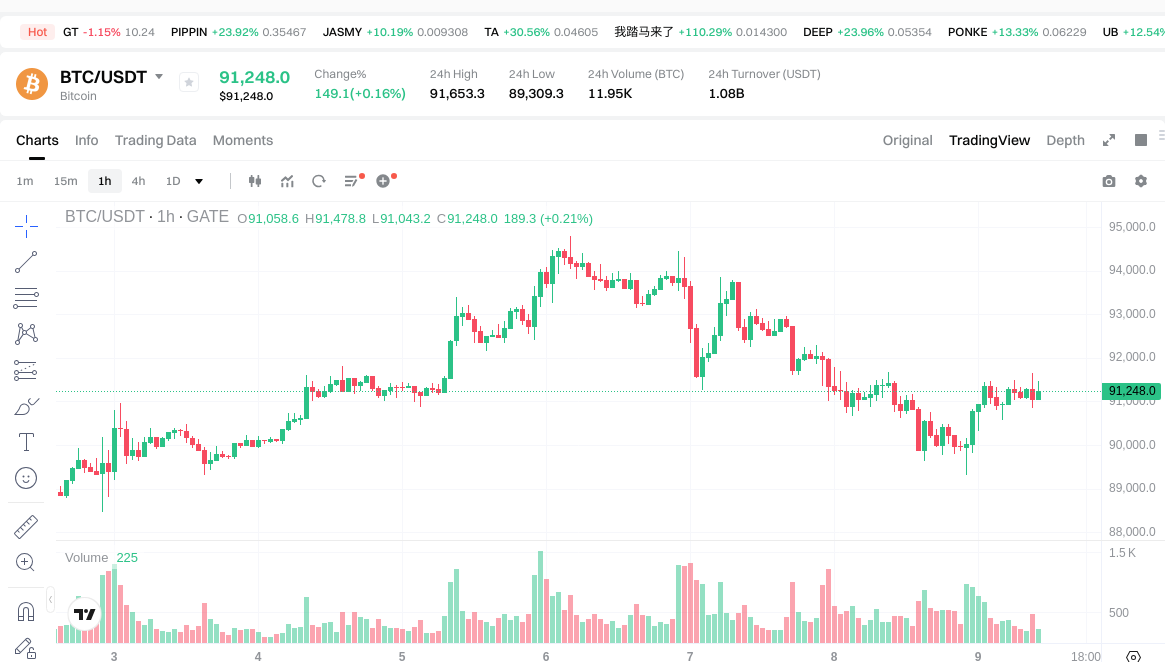
The sustained dominance level suggests that Bitcoin continues to command majority confidence among market participants, even as the broader cryptocurrency landscape experiences price adjustments. This stability in market share reflects Bitcoin's established position as the flagship digital asset and its role as a safe haven during periods of market uncertainty. The 55% threshold represents a significant concentration of capital, indicating that more than half of all cryptocurrency market value remains anchored in Bitcoin.
A notable absence of a significant altcoin season has become evident during this correction period, with alternative cryptocurrencies consistently underperforming relative to Bitcoin. The anticipated rotation of capital from Bitcoin into smaller-cap altcoins, which typically characterizes bullish market phases, has failed to materialize in recent market cycles.
This performance divergence highlights a clear preference hierarchy among investors, who appear to be consolidating positions in Bitcoin rather than diversifying into higher-risk altcoin investments. The capital concentration phenomenon demonstrates that market participants are prioritizing security and established value propositions over speculative opportunities in emerging tokens. Altcoins have struggled to gain momentum, with many experiencing sharper declines compared to Bitcoin during market downturns, further reinforcing the flight-to-quality narrative.
Market Correction Dynamics
The cryptocurrency market has undergone a broad-based correction affecting both Bitcoin and alternative digital assets, though the impact has been distributed unevenly across different market segments. This correction phase represents a natural market cycle following extended periods of price appreciation, where profit-taking and risk reassessment drive temporary price declines.
Bitcoin has demonstrated relative strength throughout this adjustment period, maintaining its dominance ratio while experiencing smaller percentage declines compared to the majority of altcoins. This pattern aligns with historical market behavior, where Bitcoin typically serves as a defensive asset within the cryptocurrency ecosystem during times of heightened volatility. The correction has effectively separated resilient projects from more speculative ventures, with capital flowing toward assets perceived as having stronger fundamental value propositions.
Investor Preference Trends
The persistent concentration of capital in Bitcoin reveals a clear investor preference for established digital assets during periods of market uncertainty. This behavioral pattern reflects a risk-off sentiment, where market participants prioritize capital preservation over aggressive growth strategies that might be pursued through altcoin investments.
Bitcoin's status as the preferred asset during this correction phase can be attributed to several factors, including its superior liquidity, broader institutional adoption, regulatory clarity compared to many altcoins, and established track record as a store of value. The maintained dominance level suggests that investors view Bitcoin as the most reliable vehicle for maintaining cryptocurrency exposure while minimizing downside risk.
This preference dynamic has important implications for market structure and capital flows. As long as Bitcoin maintains its dominant position, the broader cryptocurrency market is likely to remain in a consolidation phase, with limited capital available for altcoin appreciation. The eventual shift in this dynamic—marked by declining Bitcoin dominance and improving altcoin performance—would signal a potential transition to a more risk-on market environment and the possible emergence of a genuine altcoin season.
FAQ
What is Bitcoin Dominance (BTC.D) and how is it calculated?
Bitcoin Dominance measures Bitcoin's market value share of total cryptocurrency market cap. Calculated as (Bitcoin market cap / Total crypto market cap) × 100%. High dominance indicates strong Bitcoin market position and investor confidence concentration.
Why is Bitcoin dominance remaining stable at 55% important for the cryptocurrency market?
Bitcoin dominance at 55% demonstrates market stability and investor confidence. This level indicates balanced market health, influences capital allocation strategies, and signals sustainable ecosystem growth where both Bitcoin and alternative cryptocurrencies coexist effectively.
What impact does a decline in Bitcoin dominance have on other cryptocurrencies?
A decline in Bitcoin dominance typically increases capital inflow to altcoins, boosting their market value and attracting more investors. This shift can elevate altcoin performance and expand their market share during market expansion phases.
What are the highest and lowest levels of Bitcoin dominance in history?
Bitcoin dominance peaked at approximately 95% and reached its lowest around 37% in January 2018. The peak occurred after Ethereum's launch, while the low resulted from the 2017 ICO boom diverting funds to altcoins.
Why does Bitcoin dominance remain relatively stable during market volatility?
Bitcoin maintains stable dominance during volatility because investors seek its relative stability during risk-off periods, while in bull markets, Bitcoin often leads gains. This reflects cautious market sentiment and serves as a safe-haven asset.
How to judge market cycles and investment opportunities through changes in Bitcoin dominance?
High Bitcoin dominance(above 55%)indicates risk-averse market sentiment and consolidation phase, favoring Bitcoin accumulation. Low dominance signals altcoin season and speculative opportunities. Monitor dominance shifts to identify cycle transitions and optimal entry points for strategic positioning.
* The information is not intended to be and does not constitute financial advice or any other recommendation of any sort offered or endorsed by Gate.