This article provides essential strategies for navigating Bitcoin's current bear market environment amid unprecedented whale activity. It examines the $7.5 billion whale inflow to Gate exchange, the largest recorded in 2025, signaling potential selling pressure and market risk. The analysis compares current on-chain indicators to the 2021-2022 bear market rather than temporary corrections, with technical resistance levels at $73,000-$70,000 as critical support zones. The article challenges prevailing assumptions about Federal Reserve rate cuts, explaining how quantitative tightening drains market liquidity despite lower rates. For retail investors managing Bitcoin volatility, practical risk management approaches include dollar-cost averaging, strategic stop-loss placement, and monitoring whale flows while avoiding panic decisions during market corrections and leveraged liquidation events.
Understanding the $7.5B Whale Inflow Phenomenon
Bitcoin has experienced a significant surge in whale inflows to a major centralized exchange, with data from CryptoQuant revealing that approximately $7.5 billion worth of Bitcoin was transferred to the platform over the past 30 days. This represents the highest level of whale activity ever recorded within a single calendar year, raising serious concerns among market analysts about potential downward pressure on Bitcoin prices.
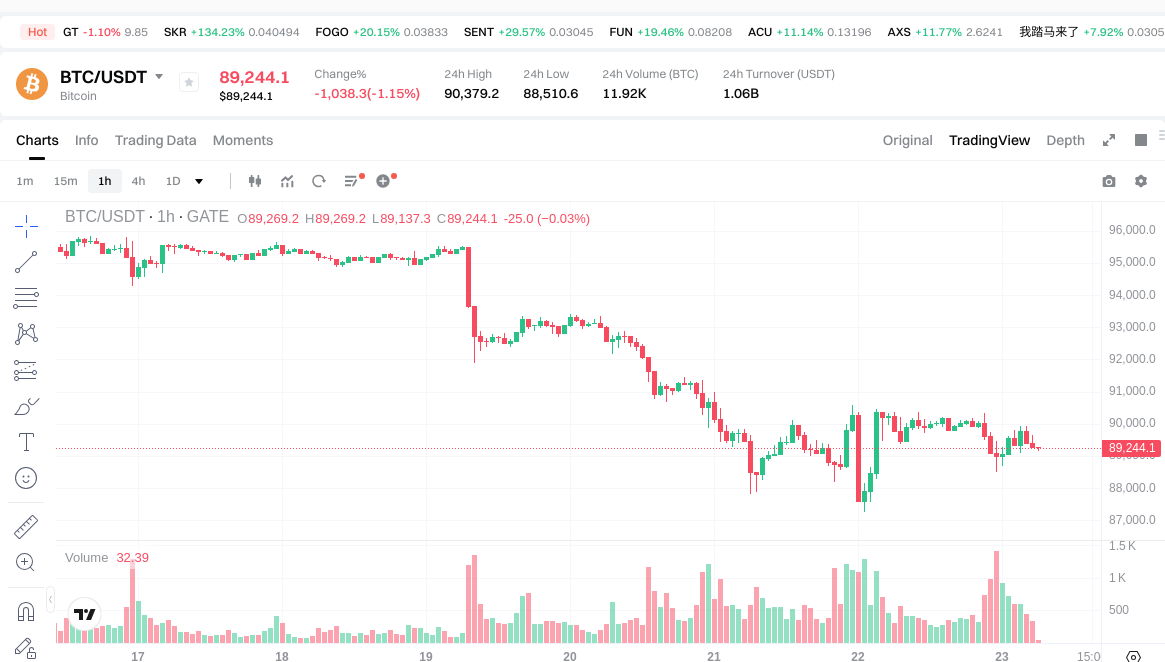
The magnitude of these whale inflows cannot be understated. When large holders, commonly referred to as "whales," move substantial amounts of Bitcoin to centralized exchanges, it typically signals one of two intentions: either taking profits after significant price appreciation or managing risk exposure during periods of market uncertainty. The current $7.5 billion inflow suggests that major Bitcoin holders are preparing for potential market movements, and historical patterns indicate this often precedes price corrections.
CryptoQuant analyst Maartunn drew parallels between the current whale activity and patterns observed earlier in 2025, when Bitcoin experienced a dramatic price decline from approximately $102,000 to the low $70,000 range. During that period, similar whale inflow spikes preceded the market downturn, suggesting that large holders had advance knowledge or strong convictions about impending price weakness.
What makes the current situation particularly concerning is that the 30-day whale inflow measure continues to climb, indicating that selling pressure has not yet stabilized. This ongoing accumulation of Bitcoin on exchanges suggests that whales are still positioning themselves for potential exits, and the market has not yet found a sustainable equilibrium. For investors, this means the risk zone for Bitcoin remains active, and the market structure is too fragile to confidently predict whether a trend reversal is imminent or if Bitcoin will continue testing lower price levels.
The implications extend beyond short-term price action. If whale selling pressure intensifies, it could trigger a cascade effect where retail investors panic and add to the selling momentum, potentially pushing Bitcoin into a prolonged bear market phase. Understanding these whale movement patterns is crucial for investors seeking to navigate the current market environment and make informed decisions about their Bitcoin holdings.
Bitcoin November Crash Mirrors 2021 Bear Market, Not 2023 Dip
Ki Young Ju, Founder and CEO at CryptoQuant, has issued a sobering assessment of Bitcoin's current market conditions, stating that "Bitcoin on-chain indicators are bearish, and further upside likely depends on macro liquidity." This perspective aligns with growing concerns that Bitcoin's recent price action resembles the early stages of a traditional bear market rather than a temporary correction within an ongoing bull cycle.
Expert Bitcoin and commodities investor G. Martín has presented a particularly bearish thesis, arguing that the $126,000 high reached in October may have marked Bitcoin's post-halving cycle top. In his detailed analysis titled "Bitcoin is in a Bear Market," Martín contends that the current price movement exhibits characteristics more consistent with the beginning of a multi-year bear market rather than a brief dip similar to those experienced during the 2023 bull market recovery.
The October 10 de-leveraging event serves as a critical data point in this analysis. During this event, approximately $19 billion was wiped from the cryptocurrency market in a matter of hours, causing widespread liquidations and forced selling. Martín argues that this de-leveraging episode bears striking similarities to the early stages of the 2021-2022 bear market, when excessive leverage in the system was violently unwound, rather than the relatively shallow open interest flushes that characterized corrections during the 2023 bull market.
Technical indicators support this bearish interpretation. The trend that had supported Bitcoin's price action throughout the previous bull phase has been decisively broken, and open interest in Bitcoin futures and perpetual contracts is beginning to accumulate again. This pattern suggests that traders are increasingly positioning for lower prices, building short positions or hedging their long exposure in anticipation of further downside.
Martín emphasizes that the past two months, during which Bitcoin fell from $126,000 to $80,000, demonstrate how heavily asset prices are influenced by sentiment, greed, and fear rather than fundamental value propositions. He describes Bitcoin as an asset without traditional cash flows, whose price is primarily driven by liquidity conditions and propelled by new narratives that emerge during each market cycle.
A particularly striking observation concerns retail investor behavior. Over the past six months, approximately 95% of retail participants purchased Bitcoin at an average cost basis of around $115,000, largely during the "Crypto President Trump" euphoria that followed positive regulatory signals and political developments. Few of these investors paused to consider that Bitcoin had already experienced a 700% bull run over the preceding three years, suggesting that much of the easy gains had already been captured.
When Bitcoin price was consolidating around $100,000, market narratives increasingly resembled denial rather than rational analysis. Martín observed that many market participants weren't genuinely bullish about Bitcoin's prospects; instead, they were anxious because their entry prices were underwater, leading to biased interpretations of market data that supported their need for price recovery.
Martín has identified Michael Saylor's Strategy MSTR modified Net Asset Value (mNAV) as a vital indicator for tracking Bitcoin-led bear market conditions. This metric, which measures the premium or discount at which MSTR trades relative to its Bitcoin holdings, is now behaving similarly to the early stages of the 2021-2022 bear market, when the premium collapsed as investor enthusiasm waned and risk appetite diminished.
Fed Rate Cuts Won't Save Bitcoin - Analyst Warns
Contrary to popular market expectations, Martín has issued a contrarian warning about the Federal Reserve's monetary policy and its impact on Bitcoin. Many investors viewed the Fed's rate cut decision in December as inherently bullish for Bitcoin, expecting it to fuel a "Santa rally" as quantitative tightening policies were set to end in the near term. However, Martín's analysis suggests this optimism may be misplaced.
The mechanics of Federal Reserve balance sheet reduction are more complex than simple rate cut narratives suggest. When the Fed reduces its holdings of long-term securities, the capital required to purchase these assets must come from the private sector. This process effectively drains liquidity from financial markets, as private capital that might otherwise flow into risk assets like Bitcoin is instead redirected toward absorbing government securities being sold by the Federal Reserve.
Martín explains that while rate cuts may prove positive for the broader economy by reducing borrowing costs and stimulating economic activity, they are not necessarily bullish for Bitcoin in the current environment. The distinction is crucial: lower interest rates can support economic growth and corporate profitability, but if they coincide with liquidity drainage through quantitative tightening, risk assets like Bitcoin may struggle to benefit from the lower rate environment.
This analysis leads Martín to a provocative conclusion: current Federal Reserve policies might fundamentally disrupt Bitcoin's historical 4-year cycle pattern. Instead of following the traditional post-halving trajectory of 12-18 months of price appreciation followed by a bear market, Bitcoin may experience an extended period of price weakness, potentially bottoming out in late 2026 when macro liquidity conditions are expected to improve.
According to Martín's technical analysis, Bitcoin must reclaim several major resistance levels that were lost during November's selloff before it can establish a proper market bottom. The 200-Week Simple Moving Average (SMA), a widely-watched long-term support level, serves as a critical reference point. Historically, Bitcoin has found major cycle bottoms near this moving average, and reclaiming it would signal that the worst of the selling pressure has been absorbed.
In Martín's most likely scenario, Bitcoin will revisit the $73,000 level or potentially even test the $70,000 lows in the coming months. This would represent a retest of previous support zones and would likely trigger significant anxiety among investors who purchased at higher levels. However, after establishing a bottom in this range, Martín anticipates a relief rally that could push Bitcoin back toward the $95,000-$105,000 range in the medium term.
This relief rally, if it materializes, should not be confused with the resumption of a bull market. Instead, it would represent a technical bounce within an ongoing bear market structure, similar to the rallies that occurred during the 2021-2022 bear market when Bitcoin briefly recovered before continuing its descent. Investors should approach such rallies with caution, viewing them as potential opportunities to reduce risk exposure rather than signals to increase leverage or add aggressively to positions.
The broader implication of Martín's analysis is that Bitcoin investors may need to adjust their expectations and timeframes. Rather than expecting a quick recovery and continuation of the bull market, a more realistic scenario may involve an extended period of price consolidation and weakness before macro conditions align to support a sustained recovery. Understanding these dynamics is essential for developing appropriate risk management strategies and maintaining realistic expectations about Bitcoin's near-term price trajectory.
FAQ
What are 'whale' funds in cryptocurrency? What does large capital inflow to exchanges mean?
Whale funds refer to large cryptocurrency holdings by major investors. Massive inflows to exchanges typically signal potential selling pressure, suggesting whales may be preparing to offload assets, which could trigger a bearish market correction.
What impact will a $7.5 billion Bitcoin inflow have on market prices?
Such massive inflow typically creates downward pressure on prices. Large whale movements often trigger selling, potentially pushing Bitcoin lower in the short term. However, sustained buying pressure from this volume could stabilize prices if demand remains strong.
Does a large inflow of whale funds to exchanges indicate that a bear market is coming?
Not necessarily. Large whale fund inflows can signal various market intents—accumulation, profit-taking, or hedging. While sometimes associated with selling pressure, it depends on broader market conditions, on-chain metrics, and macroeconomic factors. Monitor additional indicators for accurate market sentiment assessment.
How to monitor and analyze whale fund flows to judge market trends?
Track large wallet transfers on blockchain explorers, monitor on-chain data metrics like exchange inflows/outflows, and analyze transaction amounts. When whales accumulate significantly, it often signals bullish sentiment; large withdrawals may indicate profit-taking or bearish positioning. Use on-chain analytics tools to spot whale activity patterns and correlation with price movements.
How should retail investors adjust their strategies when Bitcoin faces large capital inflow pressure on major exchanges?
Consider dollar-cost averaging to reduce timing risk. Diversify your portfolio across multiple assets. Set clear stop-loss levels and take-profit targets. Monitor whale movements but avoid panic selling. Long-term holders should remain positioned; traders can capitalize on volatility swings strategically.
* The information is not intended to be and does not constitute financial advice or any other recommendation of any sort offered or endorsed by Gate.