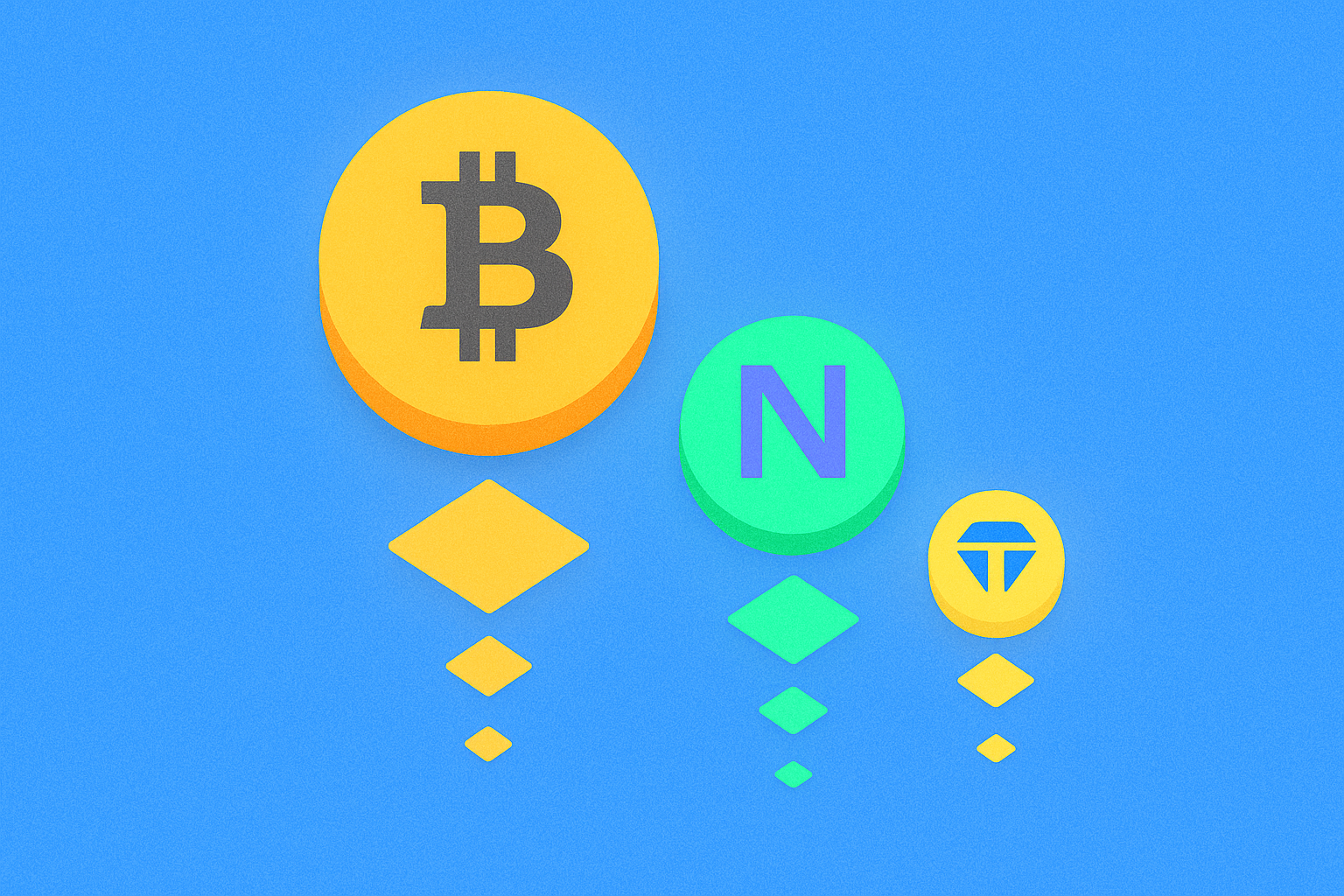
Learn how a drop in Bitcoin sets off a chain reaction in altcoin prices. Explore the price amplification model, trading tactics on Gate, and key rebound zones for NOICE and TOSHI. Get a complete investment guide for navigating market corrections.
Bitcoin Price Movement and Its Initial Impact
The cryptocurrency market recently saw a sharp correction as Bitcoin fell from $101,000 to $97,000—a 4% drop in a short time frame. This downturn isn’t a standalone event; it serves as a catalyst for the cascade effect, where Bitcoin’s decline drags down the entire digital asset market.
This $4,000 price drop in Bitcoin has triggered volatility across the crypto ecosystem, with low-cap altcoins being hit hardest. Such reactions highlight the strong correlation between Bitcoin and the altcoin market, as Bitcoin’s moves often signal similar trends in other digital assets.
Cascade Effect on Altcoins: NOICE and TOSHI
According to the cascade model, altcoins like NOICE and TOSHI will mirror Bitcoin’s downward movement, but with greater intensity due to their lower liquidity and higher volatility. Technical analysis suggests NOICE may move 1.6 times the percentage change of Bitcoin, while TOSHI’s movements could be amplified by 1.3 times.
Practically, a 4% drop in Bitcoin could lead to corrections of roughly 6.4% for NOICE and 5.2% for TOSHI. This amplified volatility is typical for low-cap altcoins, which tend to exaggerate both market gains and losses. Seasoned traders identify this pattern as a strategic entry opportunity ahead of potential rebounds.
Time Lag Pattern in Altcoin Movements
A key feature of the cascade model is the time lag between Bitcoin’s moves and altcoin responses. Historical data shows altcoins generally lag behind significant Bitcoin price changes by 15 to 25 minutes. Several market dynamics drive this delay:
First, trading algorithms and bots need time to process market information and execute trades across pairs. Second, manual traders take time to analyze Bitcoin’s move and adjust their altcoin positions. Third, liquidity shifts from Bitcoin to altcoins gradually, producing the observable lag.
Understanding this timing lets traders anticipate moves and set positions before the cascade plays out in their chosen altcoins.
Recovery Strategy and Rebound Zones
The model predicts a recovery pattern where Bitcoin’s first green candle after its decline signals a potential rebound in altcoins. NOICE could bounce back 6–10% from its lows, while TOSHI may see a more modest 4–6% recovery.
Target buy zones are essential for this strategy. For NOICE, the key level is around 0.000237—a technical support zone with a history of rebounds. For TOSHI, the accumulation zone is near 0.00058, a level that previously acted as support during corrections.
These levels are determined by volume analysis, liquidity zones, and Fibonacci levels applied to recent price action—not selected arbitrarily. The best entry confirmation is when Bitcoin shows clear reversal signs, such as green candles with rising volume.
Trader Recommendations and Risk Management
Traders should maintain discipline when trading this cascade model. Wait for price confirmation at the specified buy zones—NOICE near 0.000237 and TOSHI by 0.00058—before entering positions. Don’t rush; confirm the price reaches your target zone.
Profit-taking should be staged, based on projected rebound targets. For NOICE, consider partial exits after 6–10% gains from entry; for TOSHI, exit targets are 4–6%. Always set stop-loss orders below the buy zones to protect capital if the model fails.
It’s also vital to size your position according to your risk tolerance, as altcoins are much more volatile than Bitcoin. Experienced traders typically allocate only a small portion of their capital to these higher-risk trades, keeping the bulk of their portfolio in more stable assets.
FAQ
Why does a drop in Bitcoin’s price affect other cryptocurrencies (altcoins)?
Bitcoin is the crypto market’s dominant asset. When its price falls, it sparks panic and reduces overall demand, prompting investors to sell altcoins at the same time. Many altcoins are directly correlated with Bitcoin, which intensifies the cascade effect across the sector.
What is the cascade effect in crypto markets and how does it work?
The cascade effect happens when Bitcoin’s drop triggers massive altcoin selloffs, causing their prices to fall quickly. Investors seek liquidity by selling alternative assets, which creates a chain reaction and deepens losses market-wide.
Which altcoins are most vulnerable to a Bitcoin price drop?
Altcoins with low market cap, poor liquidity, and high correlation to Bitcoin are the most exposed. Those with small communities and less mature technology suffer steeper declines during Bitcoin corrections.
How can you protect an investment portfolio from a cascade of price drops?
Diversify across multiple assets instead of focusing on a single cryptocurrency. Use stop-loss orders to cap losses, keep reserves in stablecoins, and rebalance your portfolio regularly to match your risk goals.
Is there a correlation between Bitcoin price movements and altcoins?
Yes, there’s a strong correlation—Bitcoin sets the tone for the crypto market. When Bitcoin rises, most altcoins climb; when it drops, it pulls the market down. This link is most visible in volatility and overall price direction.
How long does it usually take for the altcoin market to recover after a Bitcoin drop?
Altcoin markets typically recover in 2 to 4 weeks after a Bitcoin decline, depending on the size of the move and prevailing market conditions. Large-cap altcoins usually bounce back faster than smaller ones.
What technical indicators predict a cascade pattern in crypto markets?
Key indicators are: critical support breakouts, surging sell volume, negative MACD convergence, RSI below 30, and falling buy volume. When Bitcoin breaks major supports, altcoins often collapse in cascade due to market correlation and leveraged position liquidations.
* The information is not intended to be and does not constitute financial advice or any other recommendation of any sort offered or endorsed by Gate.