This comprehensive guide examines Bitcoin's evolving market structure, centered on Bernstein's bold $150,000 price target for 2026. The article challenges the traditional 4-year cycle theory, revealing how institutional adoption through regulated vehicles like spot ETFs has fundamentally transformed Bitcoin's behavior, creating an elongated bull market with reduced volatility. Technical analysis confirms Bitcoin's strength above the critical $78,000 support level, with price action indicating consolidation rather than reversal. Federal Reserve monetary policy—featuring rate cuts and balance sheet expansion—provides structural support for this risk asset. The guide explores why institutional conviction persists despite 30% corrections, analyzes key resistance levels ($102K and $108K), and addresses investor concerns through detailed FAQs. Ideal for traders and investors seeking to understand Bitcoin's mature market dynamics on Gate and positioning strategies through 2026.
End of 4-Year Cycle and Fed Policy Could Ignite a Major Rally
Bernstein, a prominent investment research firm, has made a bold declaration that fundamentally challenges the traditional understanding of Bitcoin's market behavior. The firm has raised its Bitcoin price target to $150,000 for 2026, arguing that the well-documented 4-year cycle pattern has been broken by a new market dynamic driven by institutional participation.
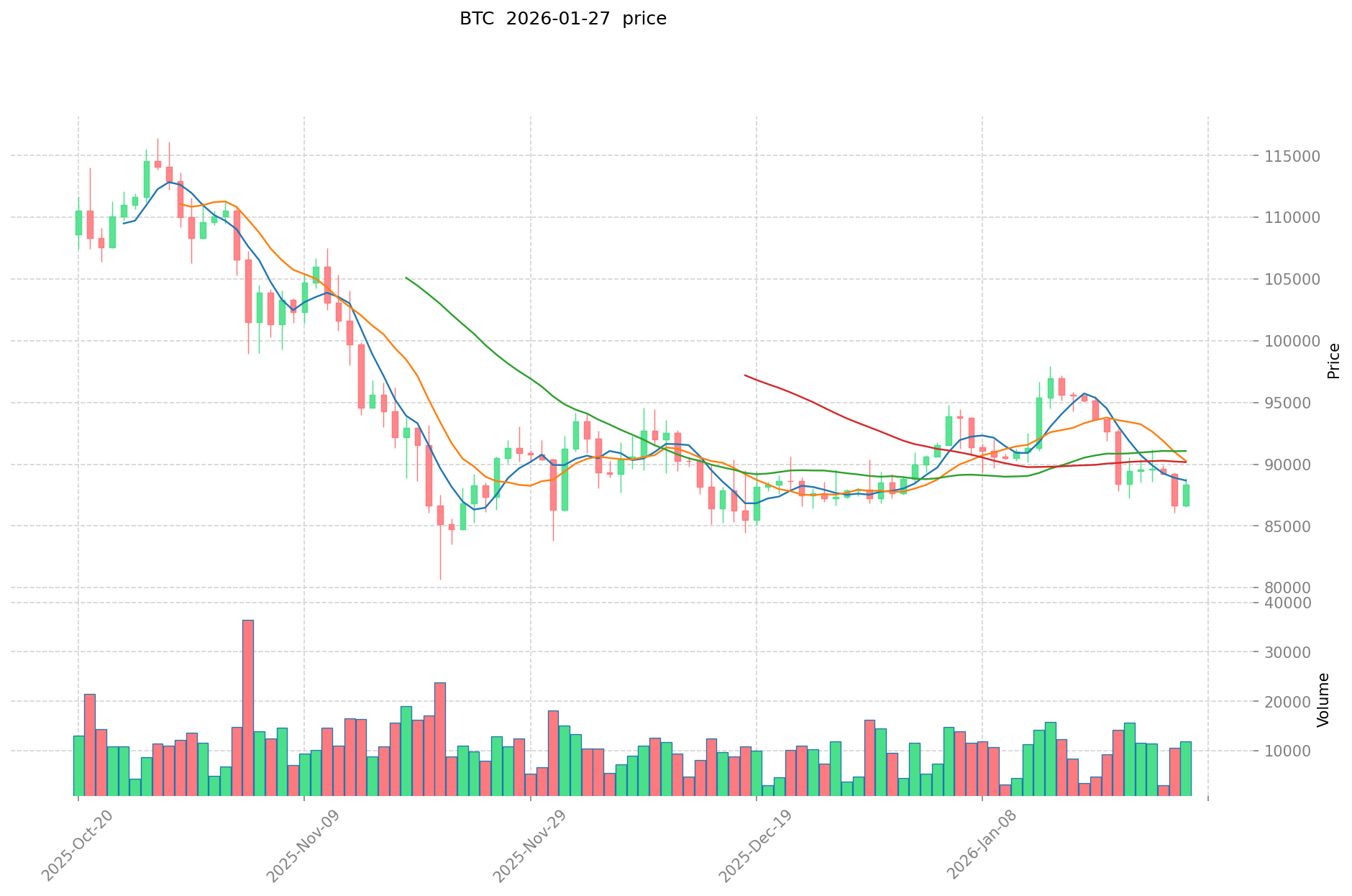
According to Matthew Sigel, Head of Digital Asset Research at VanEck, Bernstein stated that following the market correction that began in early October, "we believe the Bitcoin cycle has broken the 4-year pattern and is now in an elongated bull-cycle with more sticky institutional buying offsetting any retail panic selling."
This observation represents a significant shift in market structure. Historically, Bitcoin has followed a relatively predictable 4-year cycle closely tied to its halving events, with explosive bull runs followed by severe bear markets. However, the current cycle appears different due to the substantial influx of institutional capital through regulated investment vehicles.
Despite Bitcoin experiencing approximately 30% correction from its peak levels, the asset manager observed only about 5% outflows via ETFs. This striking disparity between price decline and capital outflows serves as a powerful indicator of institutional conviction and represents a marked departure from previous cycles where retail panic selling would trigger cascading liquidations.
Bernstein expects Bitcoin to resume its bull run in the coming period with a 2026 target of $150,000 and a potential cycle peak in 2027 at $200,000. Looking further ahead, the firm maintains an ambitious long-term outlook, stating that "our long-term 2033 Bitcoin price target remains approximately $1,000,000."
Analysts at the London Crypto Club suggest that a liquidity boost from the Federal Reserve in upcoming policy decisions may serve as a powerful catalyst, potentially driving the world's largest cryptocurrency "sharply higher." The relationship between Federal Reserve policy and risk asset performance has become increasingly important as Bitcoin matures into a macro asset class.
In their latest analysis, experts David Brickell and Chris Mills present the view that the central bank is positioned to deliver a "dovish surprise" that could benefit Bitcoin and other risk assets. They argue that "we're moving into a continued rate-cutting cycle accompanied by balance sheet expansion as the Fed effectively turns on the money printers to monetize the deficit."
This monetary policy backdrop creates what they describe as "a powerful, structural tide" that supports asset prices. The combination of rate cuts and balance sheet expansion historically has been favorable for scarce assets like Bitcoin, as it increases liquidity in the financial system and potentially devalues fiat currencies.
Bitcoin Price Prediction: Technical Structure Remains Bullish Above $78K
From a technical analysis perspective, the weekly chart shows Bitcoin holding above the critical $78,000 support level, which serves as a crucial demarcation line separating a deeper bear-market breakdown from the continuation of the macro uptrend. This support zone has been tested multiple times and has held firm, demonstrating underlying demand at these levels.
Price action recently experienced a sharp decline but has stabilized near the 20-week Simple Moving Average (SMA). Meanwhile, the 50-week SMA continues to slope upward, indicating that the long-term trend remains intact despite the correction. This divergence between short-term volatility and long-term trend strength is typical of healthy bull market consolidations.
The Relative Strength Index (RSI) momentum indicator has cooled significantly to the mid-40s level, reflecting a reset from overbought conditions without reaching the extreme oversold levels typically seen at major cycle bottoms. This suggests that while the market has corrected, it has not entered the capitulation phase that characterizes bear market bottoms.
As long as Bitcoin maintains the $78,000 region as support, the technical structure suggests this is consolidation within a larger bull cycle rather than the beginning of a prolonged bear market. This price level represents both previous resistance that has now flipped to support and aligns with key moving averages, making it a critical zone to monitor.
A recovery above $102,000 would demonstrate renewed strength and suggest that the correction has concluded. This level represents the breakdown point from the previous consolidation range. More significantly, clearing the $108,000 resistance zone would confirm extension into new highs and likely trigger additional momentum buying as traders recognize the continuation of the uptrend.
The technical picture supports Bernstein's thesis of an elongated bull market, as the structure shows characteristics of a consolidation phase rather than a trend reversal. The maintenance of higher lows and the preservation of key support levels are consistent with institutional accumulation rather than distribution.
FAQ
Why is Bitcoin's 4-year cycle considered broken? What does this mean for investors?
Institutions driving sustained demand have extended the traditional cycle, creating a longer bull market rather than the expected downturn. Investors should adapt strategies to this elongated growth pattern and reassess timing expectations.
How have institutional investors entering the Bitcoin market changed traditional market cycle patterns?
Institutional investors have stabilized Bitcoin's market, breaking the traditional 4-year cycle. Their substantial capital inflows create an elongated bull market with reduced volatility, shifting focus toward long-term value accumulation rather than cyclical boom-bust patterns.
Why did Bernstein set Bitcoin's 2026 target price at $150,000? What is the basis for this prediction?
Bernstein believes Bitcoin's traditional 4-year cycle is broken due to institutional adoption driving an elongated bull market. The $150,000 target reflects sustained institutional inflows, increased macroeconomic acceptance, and extended growth dynamics replacing the previous boom-bust pattern.
What is the essential difference between the so-called 'elongated bull market' and previous Bitcoin bull-bear cycles?
The elongated bull market shifts from a 4-year to a 5-year cycle driven by institutional investment and macroeconomic factors. Unlike past rapid speculative surges, this cycle features slower, steady institutional accumulation, with market maturation extending the timeline and reducing volatility, pushing the peak toward 2026.
What risks and uncertainties might Bitcoin face before 2026?
Bitcoin faces volatility risks with potential 30-50% corrections, regulatory uncertainty from policy changes, macroeconomic pressures, and geopolitical events. Market sentiment shifts and institutional flows could also trigger significant price fluctuations during this period.
How should ordinary investors view institutional-level long-term price predictions like this?
Institutional predictions like Bernstein's $150K Bitcoin target provide valuable market perspective. Investors should consider these forecasts as part of their research, align them with personal risk tolerance and investment horizons, and maintain a diversified portfolio strategy.
* The information is not intended to be and does not constitute financial advice or any other recommendation of any sort offered or endorsed by Gate.