This comprehensive Bitcoin price forecast analyzes current market dynamics and long-term outlook through both macroeconomic and technical lenses. Bitcoin has rebounded to $91,400, supported by improving technical indicators despite liquidity concerns from the yen carry trade unwind. The article explores how global monetary shifts, particularly Japan's policy changes and warnings from financial commentators like Robert Kiyosaki, create near-term volatility while potentially strengthening Bitcoin's long-term value proposition. Technical analysis reveals constructive price action with support at $81,000 and critical resistance at $92,800, suggesting potential rallies toward $98,000–$115,000. The guide provides actionable trading setups with risk management strategies and identifies key macro variables to monitor. Designed for investors seeking to understand Bitcoin's positioning within broader financial market turbulence, this analysis balances immediate trading opportunities with strategic portfolio allocation
Bitcoin Price Prediction
Bitcoin has demonstrated notable resilience in recent trading sessions, rebounding from a critical support level near $81,000 and stabilizing around the $91,400 mark. This recovery comes amid a complex macroeconomic backdrop where traders are carefully balancing renewed liquidity concerns across global financial markets against improving technical indicators that suggest potential upside momentum.
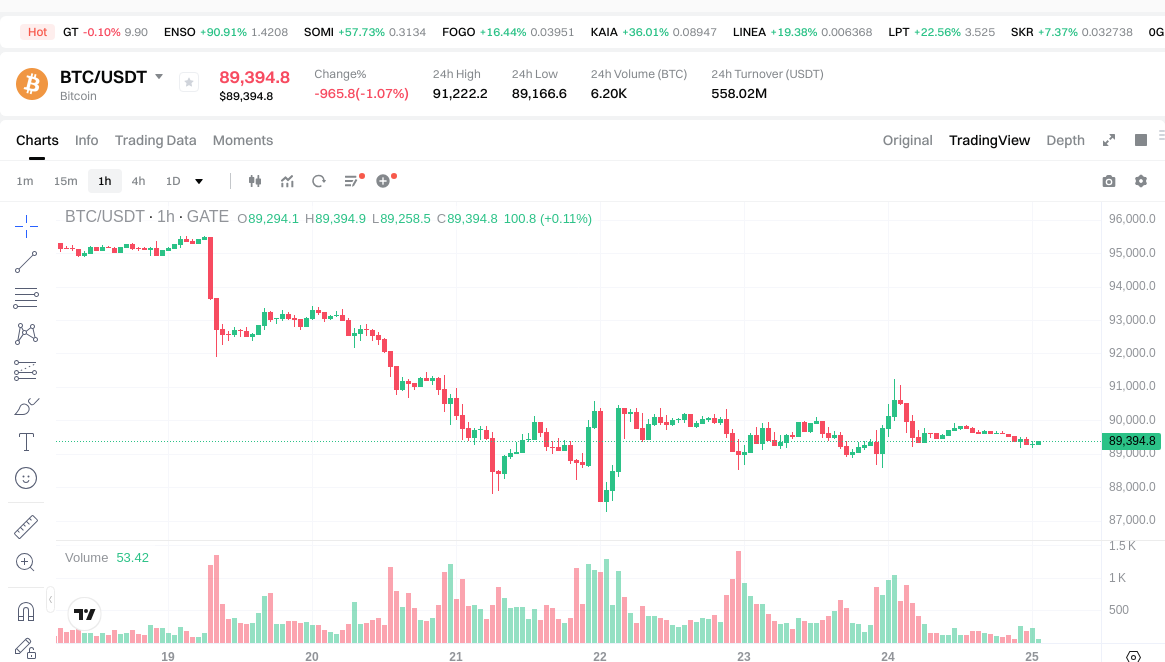
With a market capitalization hovering around $1.82 trillion and nearly 20 million BTC in circulation, Bitcoin continues to occupy a central position in broader macroeconomic discussions. The digital asset remains highly sensitive to shifts in global liquidity conditions, monetary policy decisions, and systemic financial risks. This positioning has intensified following renewed warnings from prominent financial commentators about potential market disruptions that could reshape the investment landscape.
The current price action reflects a tug-of-war between fundamental concerns about liquidity tightening and technical signals that point toward a potential trend reversal. Understanding these dynamics is crucial for investors navigating the increasingly complex cryptocurrency market environment.
Kiyosaki Flags Liquidity Shock
Robert Kiyosaki, the bestselling author of Rich Dad Poor Dad and a long-time advocate for alternative assets, has once again issued stark warnings about what he perceives as an approaching global financial crisis. His latest commentary arrives at a particularly sensitive moment when financial markets worldwide are grappling with what analysts characterize as a "two-front liquidity squeeze" – simultaneous pressure from Japan's evolving fiscal stance and tightening conditions in US dollar funding markets.
Kiyosaki has consistently positioned Bitcoin as a strategic hedge against monetary debasement and government currency manipulation. However, his current warnings focus less on philosophical arguments about sound money and more on mechanical forces that are actively draining liquidity from the financial system. This distinction is important because it highlights immediate, tangible pressures rather than theoretical long-term concerns.
The liquidity dynamics Kiyosaki references stem from structural changes in global capital flows. When major economies simultaneously tighten monetary conditions or experience funding stress, the ripple effects can quickly cascade through interconnected markets. For Bitcoin, this creates a paradoxical situation: short-term liquidity crunches typically pressure risk assets downward, yet these same conditions may ultimately drive investors toward decentralized alternatives as traditional financial system vulnerabilities become more apparent.
Kiyosaki's track record of market timing has been mixed, but his warnings carry weight due to his large following and ability to influence retail investor sentiment. His continued advocacy for Bitcoin, gold, and silver during periods of financial uncertainty reflects a broader narrative about diversification away from traditional fiat-based assets.
Yen Unwind Creates Global Pressure
Japan's recent policy shift represents one of the most significant changes in global monetary dynamics in recent years. The country's move toward heavier government spending coupled with rising bond yields has triggered substantial yen weakness, creating far-reaching consequences for international financial markets. This development is forcing investors to systematically unwind years of accumulated carry trade positions – a strategy where traders borrowed yen at extremely low interest rates to finance investments in higher-yielding assets globally.
The mechanics of the yen carry trade unwind deserve careful examination. For over a decade, Japan's ultra-loose monetary policy made the yen one of the cheapest funding currencies available. Investors borrowed yen and converted it into dollars, euros, or other currencies to purchase stocks, bonds, real estate, and cryptocurrencies. This massive flow of leveraged capital helped inflate asset prices across multiple markets. As Japan's fiscal position changes and yields rise, these positions become economically unviable, forcing rapid unwinding.
The unwinding process creates a vicious cycle: as investors sell assets to repay yen-denominated loans, they must buy back yen, which further strengthens the currency and makes remaining carry trades even more expensive to maintain. This forced deleveraging drains liquidity from global markets, causing correlations between seemingly unrelated assets to spike as everything gets sold simultaneously to meet margin calls and close positions.
For Bitcoin specifically, this dynamic presents both immediate challenges and potential long-term opportunities. In the near term, reduced liquidity and forced selling pressure can weigh heavily on cryptocurrency prices, particularly as Bitcoin often trades with high correlation to risk assets during periods of market stress. The digital asset's relatively smaller market size compared to traditional markets means it can experience amplified volatility when large-scale deleveraging occurs.
However, the longer-term implications may prove more constructive for Bitcoin's value proposition. As the carry trade unwind exposes vulnerabilities in the traditional financial system and highlights the risks of excessive leverage built on artificially suppressed interest rates, investors may increasingly view decentralized assets as attractive alternatives. Bitcoin's fixed supply, lack of counterparty risk, and independence from any single government's monetary policy become more appealing when traditional financial plumbing shows signs of stress.
The yen situation also underscores broader questions about global monetary coordination and the sustainability of debt-driven economic models. As major economies struggle to manage the transition away from ultra-accommodative policies implemented during and after the pandemic, assets that exist outside the traditional financial system may gain renewed attention from both institutional and retail investors seeking portfolio diversification.
Bitcoin Technical Outlook Turns Constructive
Despite the challenging macroeconomic headwinds, Bitcoin's price action has begun showing encouraging signs of technical stabilization and potential trend reversal. The digital asset has executed a sharp bounce from the $81,028 support level, an area that has consistently functioned as a higher-timeframe demand zone throughout the past several months. This price level represents a critical confluence of technical factors, including previous resistance-turned-support, volume profile peaks, and Fibonacci retracement levels.
The daily chart structure reveals a clean bullish reaction characterized by long lower wicks and sustained follow-through buying. These candlestick patterns suggest that buyers are actively defending the support zone and that selling pressure is being absorbed at these levels. The formation of higher lows after the initial bounce provides additional evidence of improving market structure, indicating that each successive dip finds support at progressively higher prices.
Bitcoin is currently testing a critical resistance zone around the 20-day Exponential Moving Average (EMA) at approximately $92,800. This moving average has transitioned from a support level to resistance following the breakdown that occurred in recent months. The 20-day EMA is widely monitored by technical traders as it represents short-term trend direction. A decisive daily close above this level, particularly if accompanied by strong volume, would mark Bitcoin's first meaningful structural improvement in several weeks and potentially signal a shift in momentum from bearish to bullish.
Momentum indicators are showing encouraging developments. The Relative Strength Index (RSI) has climbed from oversold readings near 32 to a more neutral 41, consistent with an early-stage recovery phase. This improvement suggests that selling pressure is diminishing and that buyers are gradually regaining control. However, the RSI has not yet reached overbought territory, indicating there may be room for further upside before technical exhaustion signals emerge.
The broader chart structure suggests a potential rounded retest pattern may be developing. This technical formation typically involves an initial sharp decline, followed by a stabilization period, a pullback to test support (forming a higher low), and then a more sustained rally. Based on current price action, a constructive scenario would involve a pullback toward the $88,000 level, formation of a higher low that holds above the previous $81,000 support, and then a drive toward $98,279 – a level that aligns with the 0.382 Fibonacci retracement of the recent decline.
A successful reclaim of the $98,279 level would represent a significant technical achievement and would open the door to further targets at $103,574 and $108,753. These levels correspond to deeper Fibonacci retracements and previous consolidation zones. If Bitcoin can reach and hold above $108,753, it would effectively reverse the larger correction and flip the broader trend from bearish to bullish, potentially setting up a run toward $115,000 in the coming months.
Volume analysis provides additional context for evaluating the strength of the current bounce. Ideally, the rally from support should be accompanied by increasing volume, indicating broad participation and conviction among buyers. Conversely, low-volume rallies often prove unsustainable as they suggest limited buying interest. Monitoring volume trends as Bitcoin approaches key resistance levels will be crucial for assessing the probability of a sustained breakout.
Bitcoin Outlook and Trade Setup
From a practical trading perspective, the cleanest risk-reward setup appears to be positioning for a confirmed daily close above the 20-day EMA, ideally supported by the formation of a higher low in the $88,000–$89,500 range. This approach allows traders to wait for confirmation of trend change while maintaining a clearly defined invalidation level.
A prudent risk management strategy would place stop-loss orders below $86,000, as a breakdown below this level would invalidate the bullish thesis and suggest that the recent bounce was merely a temporary relief rally within an ongoing downtrend. This stop placement provides adequate room for normal price fluctuation while protecting capital if the market structure deteriorates.
Upside targets extend toward $103,000 and $108,000 based on Fibonacci analysis and previous support/resistance zones. Traders might consider taking partial profits at these levels while allowing a portion of the position to run if momentum continues to build. This scaled approach to profit-taking helps balance the goals of locking in gains while maintaining exposure to potential extended moves.
Should broader market sentiment improve and liquidity conditions stabilize, Bitcoin's recovery could create positive spillover effects across the broader cryptocurrency ecosystem. This environment may prove particularly favorable for early-stage projects and alternative cryptocurrencies that tend to outperform during the later stages of Bitcoin bull markets. However, investors should remain cautious about distinguishing between legitimate opportunities and speculative excesses that often emerge during periods of market euphoria.
The key variables to monitor in the coming weeks include: developments in Japan's monetary policy and yen stability, US Federal Reserve commentary on liquidity conditions, Bitcoin's ability to reclaim and hold above key moving averages, and overall risk appetite in traditional financial markets. These factors will collectively determine whether the current technical improvement can translate into a sustained upward trend or whether additional consolidation and testing of support levels remains necessary before a more durable recovery can take hold.
FAQ
What is Robert Kiyosaki's latest Bitcoin price prediction?
Robert Kiyosaki recently warned of a potential Bitcoin crash, suggesting the yen unwind could trigger a significant liquidity event. He predicts BTC may face substantial downward pressure in the near term before potential recovery.
What is Yen Unwind (日元套利交易) and how does it affect Bitcoin price?
Yen Unwind refers to the unwinding of Japanese yen carry trades. When yen strengthens, traders close leveraged positions, triggering asset sales and market volatility. This liquidity event can pressure Bitcoin prices downward as investors liquidate crypto holdings to cover losses, but may also create buying opportunities as markets stabilize.
What liquidity impact will Japanese Yen depreciation bring to the cryptocurrency market?
Yen depreciation increases capital outflows from Japan, directing funds toward higher-yield assets like Bitcoin. This drives increased trading volume and liquidity inflows into crypto markets, potentially strengthening BTC prices through expanded market depth and reduced slippage.
Does Bitcoin face short-term crash risk? How should we respond?
Bitcoin shows resilience despite volatility. The yen unwind may create liquidity events, but long-term fundamentals remain strong. Consider dollar-cost averaging and holding quality assets through market cycles.
What impact will the end of yen carry trades have on risk assets like Bitcoin?
Yen carry trade unwinding typically triggers liquidity events that increase market volatility. Risk assets like Bitcoin often experience sharp sell-offs as investors liquidate positions to cover margin calls. This forced deleveraging can create significant downward pressure on BTC prices in the short term, though it may also present buying opportunities for long-term holders.
In the current macroeconomic environment, what is the value of Bitcoin as an asset allocation?
Bitcoin serves as a diversification hedge against currency devaluation and inflation. With potential yen unwind liquidity events, BTC offers portfolio protection. As digital gold, it maintains long-term store-of-value properties amid macro uncertainty and monetary expansion.
* The information is not intended to be and does not constitute financial advice or any other recommendation of any sort offered or endorsed by Gate.