Discover how blockchain transactions operate within the Bitcoin network. This comprehensive guide covers the UTXO model, confirmation process, transaction fees, and processing speed. An essential resource for investors and traders on Gate.
Introduction
A Bitcoin transaction is the foundational action that transfers value on the Bitcoin network. At its core, a transaction is a data packet that spends a specific amount of bitcoin from one or more addresses and reassigns it to new addresses.
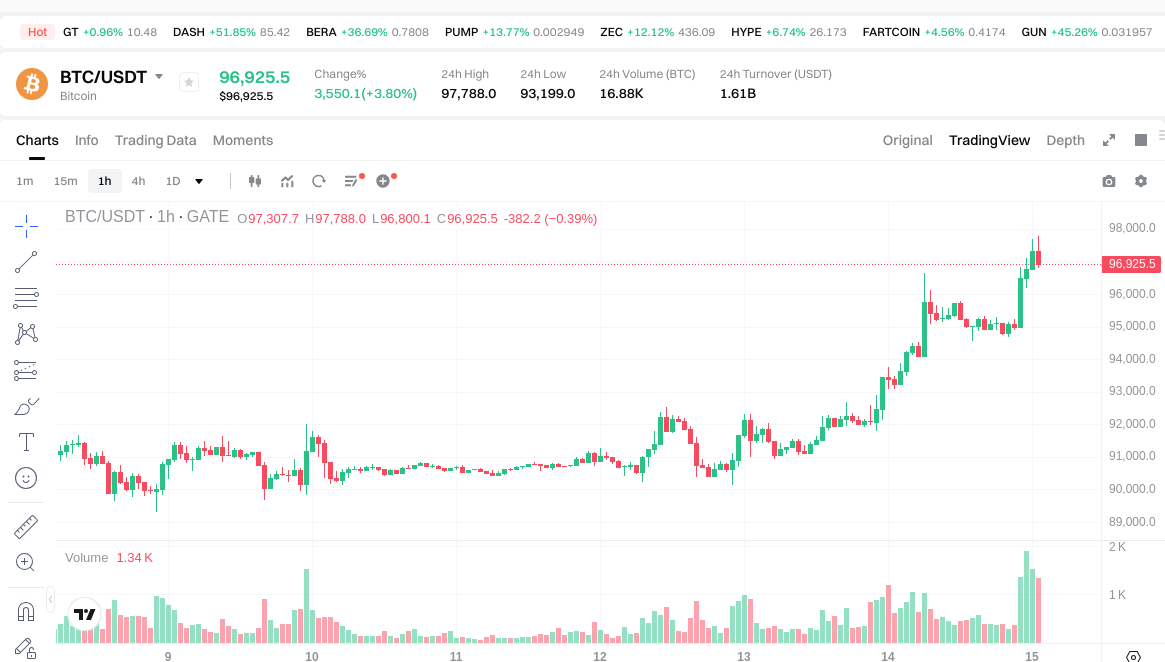 Every on-chain payment you send or receive in Bitcoin is recorded as a transaction in the blockchain ledger and becomes part of the network’s immutable history.
Bitcoin operates on the UTXO (Unspent Transaction Output) model. In this system, the blockchain ledger is a collection of outputs from previous transactions that haven't been spent yet. Unlike traditional banking, which uses an account balance model, Bitcoin does not track balances directly—only sets of unspent outputs owned by specific addresses. Transaction inputs are sources of funds (references to previous UTXOs), and outputs are the destinations for bitcoin transfers.
This model ensures a high level of transparency and verifiability: any network participant can trace the origin of every bitcoin all the way back to its creation in a coinbase transaction.
Key Properties of Bitcoin Transactions
Bitcoin transactions have several unique features that distinguish them from traditional financial operations:
-
Identification via TXID: Every transaction is assigned a TXID (Transaction ID)—a unique hash of the transaction data. This identifier makes it possible to track the transaction’s status on the blockchain and serves as a permanent reference to that transaction.
-
Size and Fee: Each transaction has a size measured in bytes, determined by the number of inputs and outputs and the types of addresses involved. Fees are calculated based on this size and expressed in satoshis per byte (sat/vB). Larger transactions incur higher absolute fees at the same rate.
-
Multiple Inputs and Outputs: A transaction may include multiple inputs (spending several UTXOs simultaneously) and multiple outputs (sending funds to several recipients in a single operation). This enables efficient fund consolidation and batch transactions.
-
Irreversibility: Once confirmed on the blockchain, a transaction is effectively irreversible, ensuring protection against double-spending fraud.
How Are Transactions Confirmed in Bitcoin?
Confirming a Bitcoin transaction is a multi-stage process that secures and maintains the integrity of the network.
When you send a Bitcoin transaction, it first enters the mempool (memory pool)—a temporary holding area for unconfirmed transactions. At this stage, the transaction remains unconfirmed, awaiting inclusion in a block. Full nodes independently validate it: they verify that all inputs reference valid, unspent UTXOs, that signatures are valid, and that outputs do not exceed inputs when accounting for fees.
Miners select transactions from the mempool to construct a candidate block, usually prioritizing those with higher fee rates (sat/vB). Transactions with higher fees are processed first because miners aim to maximize their earnings. When a miner solves the cryptographic puzzle and produces a new block, all transactions in that block receive their first confirmation.
Each subsequent block added to the chain provides another confirmation. After six confirmations (about one hour), the transaction is generally treated as final and irreversible, though for small amounts many services accept transactions with just one to three confirmations.
Transaction Fees and Speed
Bitcoin network fees are not fixed; the sender chooses the fee based on current network congestion and their preferred confirmation speed. Because each block can only hold about 1–2 MB of transactions (including SegWit), Bitcoin’s maximum throughput is roughly seven transactions per second.
During periods of high activity, the mempool fills up and users compete for block space by offering higher fees. When traffic is low, transactions with the minimum fee (1–2 sat/vB) are typically confirmed within a few blocks.
Since 2017, upgrades like Segregated Witness (SegWit) have increased block capacity and reduced the effective “weight” of transaction data. SegWit separates signature data into a dedicated witness structure, allowing more transactions per block. The Taproot upgrade (November 2021) further optimized transaction types and smart contracts, enhancing privacy and efficiency.
For faster and more scalable payments, Bitcoin supports second-layer solutions, most notably the Lightning Network. This technology allows large numbers of instant off-chain transactions with minimal fees, periodically settling the net result on the main blockchain.
Lifecycle of a Bitcoin Transaction (Step by Step)
Understanding the complete transaction lifecycle helps you navigate the Bitcoin network effectively:
-
Transaction Creation: Your wallet constructs a transaction by automatically selecting suitable UTXOs as inputs (coin selection) and specifying outputs for recipients. If the total inputs exceed the payment amount plus the fee, the wallet creates a change output.
-
Transaction Signing: Your wallet uses private keys to generate a digital signature for each input. These signatures prove ownership of the UTXOs being spent and validate the transaction.
-
Broadcast to Network: The signed transaction is broadcast to the Bitcoin peer-to-peer network. Network nodes receive the transaction, check its validity, and relay it to other nodes.
-
Waiting in the Mempool: The transaction enters the mempool on each node and waits for miners to select it for block inclusion. Wait times depend on the transaction fee and current network load.
-
Mining and First Confirmation: Miners include the transaction in a candidate block and begin mining. When the block is mined (cryptographic puzzle solved), it is broadcast to the network, and all transactions within receive their first confirmation.
-
Subsequent Confirmations: Each new block added after your transaction’s block increases the confirmation count. With every confirmation, the chance of reversal drops exponentially.
Special Cases and Recent Trends
The Bitcoin network is constantly evolving, with new transaction types and blockchain applications emerging:
-
Coinbase Transaction: The first transaction in every block creates new bitcoin as the block reward and collects all transaction fees from the block. This transaction does not have traditional inputs and is the only way new bitcoin are issued.
-
Multisignature (Multisig): Outputs that require multiple signatures to spend (e.g., 2-of-3 or 3-of-5). This mechanism enhances fund security and is used in corporate wallets, escrow services, and for safeguarding large sums.
-
Batching (Batching): Combining payments to multiple recipients in a single transaction. This approach saves both fees and block space, and is widely adopted by exchanges and payment processors.
-
SegWit and Taproot Outputs: Modern Bitcoin addresses (starting with bc1) use optimized transaction formats that reduce size and fees and enhance privacy.
-
Ordinals Protocol: In 2023, the Ordinals protocol allowed arbitrary data (such as images and text) to be embedded in the witness section of transactions. This sparked a wave of NFT-like activity and temporarily increased network congestion, fueling debates over how the Bitcoin blockchain should be used.
Best Practices for Bitcoin Transactions
Following these recommendations helps you avoid common mistakes and ensures safe use of Bitcoin:
-
Backup: Always back up your wallet, including private keys or your seed phrase (typically 12 or 24 words). Store backups securely, ideally at multiple physical locations.
-
Fee Verification: Check the transaction fee before sending. Use mempool monitoring services to assess the appropriate fee rate for current network conditions.
-
Batching: When sending payments to multiple recipients, use batching to save on fees and blockchain space.
-
Awareness of Publicity: Bitcoin transactions are public and permanently recorded on the blockchain. Anyone can trace fund movement between addresses. For greater privacy, use a new address for each transaction.
-
Acceleration Tools: If a transaction is stuck in the mempool due to a low fee, use Replace-By-Fee (RBF) to increase the fee or Child-Pays-For-Parent (CPFP) to speed up confirmation.
-
Double-Check Addresses: Always verify the recipient address before sending. Bitcoin transactions are irreversible—sending funds to the wrong address results in permanent loss.
-
Test Transactions: For large transfers to a new address, first send a small test transaction to confirm the address is correct.
Conclusion
A Bitcoin transaction is an atomic operation that powers the network economy and underpins the world’s first decentralized digital currency. It brings together cryptography, distributed systems, and economic incentives, enabling millions of users worldwide to transfer value without intermediaries.
Every Bitcoin user, by creating and sending transactions, writes a new entry into the global ledger that has existed for over 15 years and contains hundreds of millions of transactions. Understanding how transactions work is essential for safe and effective Bitcoin use and for appreciating the revolutionary impact of this technology.
FAQ
What are the main components of a Bitcoin transaction?
A Bitcoin transaction consists of inputs, outputs, and metadata. Inputs reference previous outputs, and outputs specify recipient addresses and transfer amounts. Each transaction is signed with the sender’s private key to verify authenticity.
How are Bitcoin transactions verified and confirmed?
Miners verify Bitcoin transactions by solving complex mathematical problems. Once multiple network nodes validate the transaction, it’s added to the blockchain and becomes irreversible. This process ensures the security and authenticity of every transaction.
Are Bitcoin transactions fully anonymous?
No, Bitcoin transactions are not fully anonymous. All transactions are recorded on the blockchain and visible to the public. However, wallet addresses are not directly linked to individual identities. Privacy can be improved using specialized technologies and privacy techniques.
How can you track and view Bitcoin transaction history?
Use blockchain explorers by entering a wallet address or transaction ID. Each transaction has a unique identifier with complete details. Common explorers include Blockstream and Blockchain.com for detailed analysis.
How long does it take to complete a Bitcoin transaction?
A Bitcoin transaction usually completes in 10 minutes to 1 hour and requires six confirmations. The exact time varies based on network activity and the fee amount.
What is a Bitcoin transaction fee and how is it calculated?
A Bitcoin transaction fee is a payment to miners for confirming transactions. Fees are calculated based on transaction size and network congestion. Higher fees result in faster confirmations.
Can Bitcoin transactions be canceled or reversed?
No. Bitcoin transactions are irreversible once confirmed on the blockchain. Sent funds cannot be canceled or retrieved. This is a core property of the Bitcoin network.
What is the UTXO model and how does it affect Bitcoin transactions?
The UTXO (Unspent Transaction Output) model treats each output as an independent entity. It enhances privacy, boosts transaction efficiency, enables parallel processing, and impacts fee calculation—fees directly relate to the number of inputs and outputs.
* The information is not intended to be and does not constitute financial advice or any other recommendation of any sort offered or endorsed by Gate.