Explore how whales short Bitcoin and shape market dynamics. Find out how to safeguard your investments from manipulation on Gate's reliable platform, and gain expertise in secure risk management and leverage usage.
Understanding Bitcoin Whale Shorting: Who Are Bitcoin Whales?
Bitcoin whales are individuals or entities that hold extremely large amounts of Bitcoin, typically owning anywhere from 1,000 to 5,000 BTC or even far more. The term "whale" refers to the sheer scale of their holdings, which dwarfs those of smaller investors—much like whales compared to fish in the ocean.
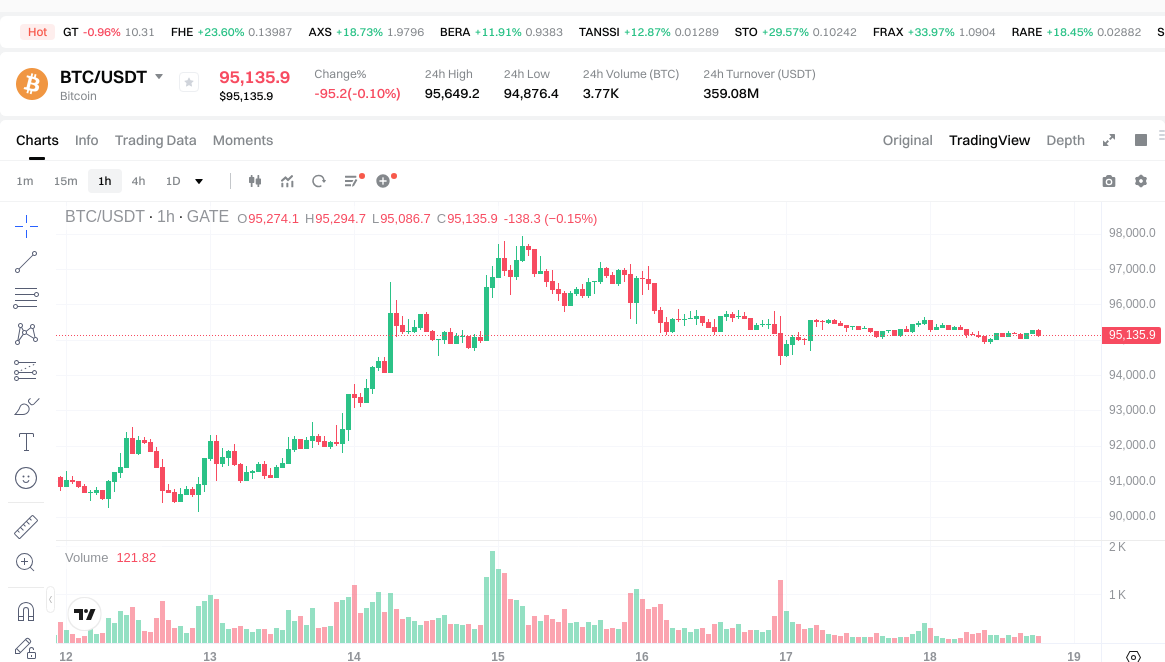
These whales wield tremendous influence over the crypto market, as their vast holdings can drive major price swings and market volatility—whether through sophisticated trading strategies or routine buy and sell activity. For example, a single whale selling 1,000 BTC in one transaction can trigger an immediate price drop due to the sudden surge in supply.
Most whales are large institutional investors—such as investment funds and asset managers—early Bitcoin adopters who bought in at extremely low prices, or specialized firms like hedge funds with billions under management. One of the most famous and controversial whale strategies is Bitcoin short selling (shorting): an advanced tactic that lets them profit from falling prices, providing an edge in any market condition.
What Is Bitcoin Whale Shorting?
Shorting Bitcoin—also known as short selling—is an advanced trading strategy where investors bet that Bitcoin’s price will decline in the near or distant future. Unlike traditional investing, which involves buying low and selling high, shorting reverses the process: you sell high first, then buy back low later.
This involves borrowing Bitcoin from an exchange or broker, or using derivative products such as futures or perpetual contracts, and selling it immediately at the prevailing high price. The trader then waits for the price to drop, repurchases the same amount at a lower price, returns the borrowed Bitcoin to the lender, and keeps the difference as profit.
How Does Shorting Work?
Here’s a step-by-step breakdown of the shorting process:
-
Borrow Bitcoin or Derivatives: Whales borrow Bitcoin directly from lending platforms or use advanced derivatives like Futures or Perpetual Contracts, allowing them to open short positions without holding the underlying asset.
-
Sell at a High Price: They sell the borrowed Bitcoin immediately at the current high market price, or open a short position in the derivatives market at a price they expect will fall.
-
Repurchase at a Lower Price: If the price drops as expected, they buy back the same amount of Bitcoin at the new, lower price or close their short position at a lower level.
-
Realize Profit: The difference between the initial high sale and the lower repurchase price—minus borrowing and trading fees—is net profit.
For instance, if a whale borrows 100 BTC at $50,000 each and sells immediately ($5 million), and the price later drops to $40,000, they can buy back 100 BTC for only $4 million, netting a $1 million profit before fees.
This strategy carries substantial risk: if the price rises instead, losses can be theoretically unlimited—Bitcoin’s price can climb indefinitely, while profit is capped (since it can’t fall below zero).
High Leverage Trading: A Double-Edged Sword
Whales frequently use high leverage to magnify their trading positions and potential returns. Leverage enables traders to control positions much larger than their actual capital.
For example, with 10x leverage, a trader with $10,000 can open a $100,000 position. With 50x or even 100x leverage, massive positions can be managed with minimal margin. A mere 1% price move can generate a 10% or 50% return on invested capital, depending on the leverage ratio.
Risks of High Leverage
Although leverage can multiply profits dramatically, it also greatly increases the risk of liquidation—potentially wiping out invested capital in seconds.
When the market moves against a trader’s position, their margin can be lost almost instantly. For instance, at 50x leverage, just a 2% adverse move is enough to liquidate the entire position and lose 100% of the margin. This is why high leverage is considered a double-edged sword: it can deliver huge profits in minutes, or erase capital in moments.
Whales, with their vast experience and large capital reserves, are better equipped to manage these risks than retail traders, and often use advanced risk management tools and automated trading systems to safeguard their positions. Still, even whales are not immune to disastrous losses—especially during periods of extreme market volatility and mass liquidations.
Popular Whale Shorting Strategies
Bitcoin whales deploy a range of sophisticated methods to profit from shorting and steer market prices in their favor. Leading strategies include:
1. Order Book Spoofing
Spoofing involves whales placing enormous fake sell orders in the order book to give the false impression of overwhelming selling pressure. Other traders see these large orders as a signal of strong intent to dump huge amounts of Bitcoin.
This can spark panic among smaller traders and retail investors, prompting them to sell quickly to avoid losses—driving the price down. Once the price drops as planned, the whale cancels their spoof orders (never intended to execute) and buys Bitcoin at the lower price, or profits from their short positions.
This tactic is unethical and illegal in regulated financial markets, but it still occurs in less regulated crypto markets.
2. Targeting Stop-Loss Clusters
Whales capitalize on predictable retail trading patterns by targeting clusters of stop-loss orders set at specific price levels—often at major support or round numbers.
They push the price down temporarily by selling large volumes, triggering thousands of stop-losses at once. This sets off a cascade effect, where each wave of triggered stops drives the price lower and activates more stops.
After causing a sharp, sudden drop, whales buy Bitcoin at steep discounts, locking in large profits from their short positions while retail traders absorb heavy losses.
3. Bear Raids
A bear raid is a coordinated action, where multiple whales or large investors sell massive amounts of Bitcoin simultaneously or in rapid succession, causing a steep, sudden price drop akin to a collapse.
This tactic is most effective during periods of low liquidity—like weekends or off-hours—when few buyers are present. The goal is to trigger mass panic and force others to sell at low prices.
Bear raids often coincide with the spread of negative news or alarming rumors about Bitcoin or the broader crypto market, amplifying the impact and deepening market panic. After prices have plunged, whales return to buy at discounted levels, securing substantial profits.
Exploiting Market Inefficiencies
Beyond direct tactics, whales exploit structural weaknesses and inefficiencies in digital asset markets:
-
Liquidity Gaps: Whales take advantage of low-liquidity periods—like overnight hours or holidays—to execute large trades that have outsized effects on prices. When liquidity is thin, a single large order can move the market significantly, presenting opportunities for arbitrage and manipulation.
-
Retail High-Leverage Positions: Retail traders often use extremely high leverage (50x–100x) without fully grasping the risks, making them highly vulnerable to liquidation cascades. Whales know where these positions are clustered and target those levels to trigger mass liquidations in their favor.
-
Predictable Behavior: Whales utilize advanced analytics and market data to analyze retail sentiment and trading patterns, anticipating how crowds will respond to events or price moves. They exploit this predictability by taking contrarian positions or provoking exaggerated reactions.
Funding Rates in Whale Strategies
Funding rates in derivatives markets—especially perpetual swaps—are key indicators and strategic tools for whales in shorting decisions.
Funding rates are regular payments (usually every 8 hours) exchanged between traders holding long and short positions in perpetual contracts. When funding rates are positive and high, long positions pay shorts, signaling excessive market optimism and a prevailing bet on price increases.
This setup creates prime opportunities for whales to short Bitcoin: an overbullish market often precedes a correction, high funding rates provide steady income for holding shorts, and crowded long positions are ripe for mass liquidation if trends reverse.
Conversely, when funding rates are deeply negative (shorts pay longs), whales may view it as time to close shorts or even go long, since excessive pessimism can precede a price rebound.
Liquidation Cascades: Manipulation in Action
Liquidation cascades occur when waves of stop-losses or margin calls are triggered in succession, causing rapid, dramatic price drops in short timeframes.
Here’s how it works: once the price falls to a critical level, the weakest long positions (highest leverage, lowest margin) are forcibly liquidated, meaning Bitcoin is automatically sold. This selling pushes prices even lower, triggering further liquidations, and so the cascade unfolds.
Whales target these "liquidation zones"—price levels with heavy concentrations of high-leverage positions—by analyzing open interest distribution data.
Once a cascade begins, it can accelerate rapidly and form sharp "wicks" on price charts, as prices tumble and then bounce quickly. Whales profit from these violent swings by holding short positions or buying Bitcoin at flash-crash discounts.
Retail Trader Weaknesses
Whales exploit common vulnerabilities among retail traders, making them susceptible to manipulation:
-
Excessive Leverage: Retail traders frequently use extreme leverage (50x–125x) seeking fast, outsized gains, often unaware how easily they can be liquidated. Even minor price moves can wipe out their capital.
-
Clustered Stop-Losses: Most retail traders place stop-losses at obvious levels—round numbers ($40,000, $45,000) or well-known technical support. This clustering allows whales to easily identify and target those levels for triggering liquidations.
-
Emotional Trading: Retail traders are prone to impulsive decisions driven by market sentiment, fear, greed, or FOMO. They often buy at tops out of greed and sell at bottoms out of panic—the opposite of sound strategy. Whales profit from these predictable emotional patterns.
-
Lack of Experience: Many retail traders enter the market with limited knowledge of market mechanics, risk management, or advanced strategies, leaving them unable to spot manipulation or defend themselves effectively.
Ethical and Regulatory Issues
Whale-driven shorting strategies and related tactics aren’t explicitly illegal in most regulated crypto jurisdictions, but they often operate in ethical and legal gray areas.
Tactics like spoofing and coordinated bear raids are considered market manipulation and are banned in regulated financial markets. However, with crypto regulation still emerging in many regions, enforcement against these practices is limited or nonexistent.
Calls for stronger crypto market regulation are growing globally to protect retail investors from manipulation. Some regions have already imposed rules, such as banning extreme leverage or mandating greater platform transparency.
Ethically, many view whales exploiting retail weaknesses and manipulating markets for profit as unfair and detrimental to market integrity and investor trust, potentially hindering the healthy, long-term growth of the crypto sector.
Major Whale Shorting Events in Bitcoin
Bitcoin’s market history includes several high-profile whale shorting episodes—some resulting in vast profits, others in heavy losses.
One notable case featured a whale using 40x leverage to open a huge short position during extreme market volatility, timing their moves perfectly to exploit market weaknesses and pocket millions in days.
Conversely, some whales have suffered massive losses when the market unexpectedly rallied against their shorts. For example, during sudden price surges (short squeezes), hundreds of millions in short positions were liquidated in hours—demonstrating that even whales aren’t immune to risk.
These cases illustrate the high-risk nature of leveraged shorting—even for the largest, most sophisticated market participants.
Macroeconomic Factors and Whale Strategies
Whale strategies are deeply affected by macroeconomic factors and global events. Major economic developments can dramatically shift Bitcoin prices, shaping the timing and effectiveness of shorting tactics.
For instance, inflation data—whether above or below forecasts—can swing Bitcoin’s price sharply. Interest rate decisions by central banks like the Federal Reserve or ECB directly impact capital flows into risk assets like Bitcoin.
Smart whales closely monitor these macro factors and incorporate them into their strategies, increasing shorts ahead of bearish economic announcements or closing positions before bullish events.
Major geopolitical events, regulatory changes in key countries, and news of institutional Bitcoin adoption are all critical factors whales consider in shorting plans.
DeFi Platform Vulnerabilities
Decentralized finance (DeFi) platforms are not immune to whale manipulation and shorting strategies. In some respects, DeFi can be even more exposed to certain types of manipulation.
Low-liquidity decentralized platforms can be exploited by highly skilled, well-funded traders. On some smaller DeFi lending or trading platforms (DEXs), whales can move prices with ease due to shallow markets.
Some DeFi protocols also suffer from weaknesses in liquidation mechanisms or price oracles, which whales can exploit to trigger unfair liquidations or temporarily manipulate asset prices for profit.
Furthermore, most DeFi platforms are unregulated and decentralized, with limited or no user protections and few options for recourse in cases of manipulation or exploitation.
Nonetheless, many DeFi projects are working to strengthen protocols and boost liquidity, making manipulation more costly and difficult.
Conclusion: Navigating a Whale-Dominated Market
For retail traders, understanding the complex strategies and tactics of Bitcoin whales is essential for survival and success in this highly competitive and volatile market.
Recognizing shorting methods—such as spoofing, stop-loss targeting, and bear raids—empowers retail traders to make smarter, more cautious decisions and better shield themselves from manipulation.
Key takeaways for retail traders:
- Avoid excessive leverage: Moderate or zero leverage greatly reduces liquidation risk.
- Set strategic stop-losses: Avoid obvious levels; use less predictable or trailing stop orders.
- Practice strict risk management: Never risk more than a small fraction of your capital on one trade.
- Trade on analysis, not emotion: Build a clear strategy and maintain discipline regardless of market sentiment.
- Stay informed: Track funding rates, liquidation levels, and market data that signal whale activity.
As the crypto market matures, regulation and investor protections should improve. For now, staying vigilant and using robust risk management remain crucial in a whale-driven trading environment.
Awareness of major players and their tactics doesn’t mean avoiding the market; it means engaging wisely and cautiously, focusing on long-term strategies rather than risky short-term speculation that leaves you vulnerable to whale manipulation.
FAQ
Who are Bitcoin whales, and how much Bitcoin do they typically hold?
Bitcoin whales are individuals or entities holding 1,000 BTC or more. These wallets contain substantial amounts of Bitcoin and can significantly influence market movement through large trades.
How do whales manipulate Bitcoin prices through short positions?
Major investors open short positions and sell large volumes of Bitcoin at market price, triggering liquidations for other traders and pushing prices lower. They then close positions for profit.
How does whale market manipulation impact regular investors?
Whale activity can lead to sharp price swings and significant losses for everyday investors, as whales control trading volumes and sway smaller traders’ decisions, eroding market trust.
How can you spot signs of large-scale whale selling and market manipulation?
Monitor for sharp price drops, sudden spikes in trading volume, and the absence of supporting news. Track whale activity on the blockchain, watch for large wallet outflows, and use volume and volatility indicators to detect potential manipulation.
How can small investors protect their assets in a whale-dominated market?
Diversify your portfolio, use stop-loss and limit orders, and avoid emotional trading to defend assets against whale manipulation and maintain financial stability.
Are there regulatory mechanisms in the Bitcoin market to prevent whale manipulation?
The Bitcoin market lacks robust regulatory mechanisms to prevent whale manipulation. Oversight is weaker than in traditional markets, information transparency is limited, and there are no routine circuit breakers to curb extreme volatility.
What are some common whale short-selling strategies in Bitcoin?
Whales use tactics such as triggering liquidations of smaller traders’ open positions by pumping prices before a sharp drop, and leveraging high-margin short selling during periods of market weakness.
* The information is not intended to be and does not constitute financial advice or any other recommendation of any sort offered or endorsed by Gate.