The article "BLUM vs LTC: Which Cryptocurrency Offers Better Investment Potential in 2024?" analyzes the investment prospects of BLUM and LTC, focusing on price trends, supply mechanisms, market adoption, and technological advancements. It addresses the needs of investors seeking insights into risk management, regulatory issues, and strategic investment choices. The article guides readers through historical price comparisons, key factors affecting investment value, and potential risks, while offering price predictions and investment strategies tailored for different investor profiles. Key themes include market volatility, institutional interest, and innovative technologies.
Introduction: BLUM vs LTC Investment Comparison
In the cryptocurrency market, the comparison between BLUM and LTC has always been a topic that investors cannot avoid. The two not only show significant differences in market cap ranking, application scenarios, and price performance, but also represent different positioning of crypto assets.
BLUM (BLUM): Since its launch in 2025, it has gained market recognition by offering universal token access through a hybrid exchange platform integrated with Telegram's mini-app ecosystem, supporting 30+ blockchain networks with features including AI co-pilot, P2P trading, and derivatives trading.
LTC (LTC): Established in 2011, Litecoin has been recognized as a mature peer-to-peer digital currency system with faster transaction confirmation times compared to Bitcoin, boasting a complete industrial chain and sufficient liquidity.
This article will comprehensively analyze the investment value comparison between BLUM and LTC from multiple dimensions including historical price trends, supply mechanisms, market adoption, and ecosystem development, and attempt to answer the most pressing question for investors:
"Which is the better buy right now?"
Cryptocurrency Market Analysis: BLUM vs LTC
I. Historical Price Comparison and Current Market Status
BLUM and LTC Historical Price Trends
- June 2025: BLUM reached its all-time high of $0.2256, representing the peak of its market cycle since launch.
- May 2021: LTC reached its all-time high of $410.26, driven by the broader cryptocurrency bull market.
- April 2025: BLUM hit its all-time low of $0.00133, showing significant volatility in its early trading history.
- January 2015: LTC reached its all-time low of $1.15, marking the bottom of the 2014-2015 bear market.
- Comparative Analysis: BLUM has experienced a 94% decline from its all-time high to current levels, while LTC has experienced an 81% decline from its peak, indicating sustained downward pressure on both assets despite their different market ages and maturity levels.
Current Market Status (December 26, 2025)
- BLUM current price: $0.01383
- LTC current price: $77.2
- 24-hour trading volume: BLUM $15,373.69 vs LTC $1,596,431.01
- Market Capitalization: BLUM $13,830,000 vs LTC $5,918,549,250
- Fear & Greed Index: 23 (Extreme Fear)
Access real-time prices:
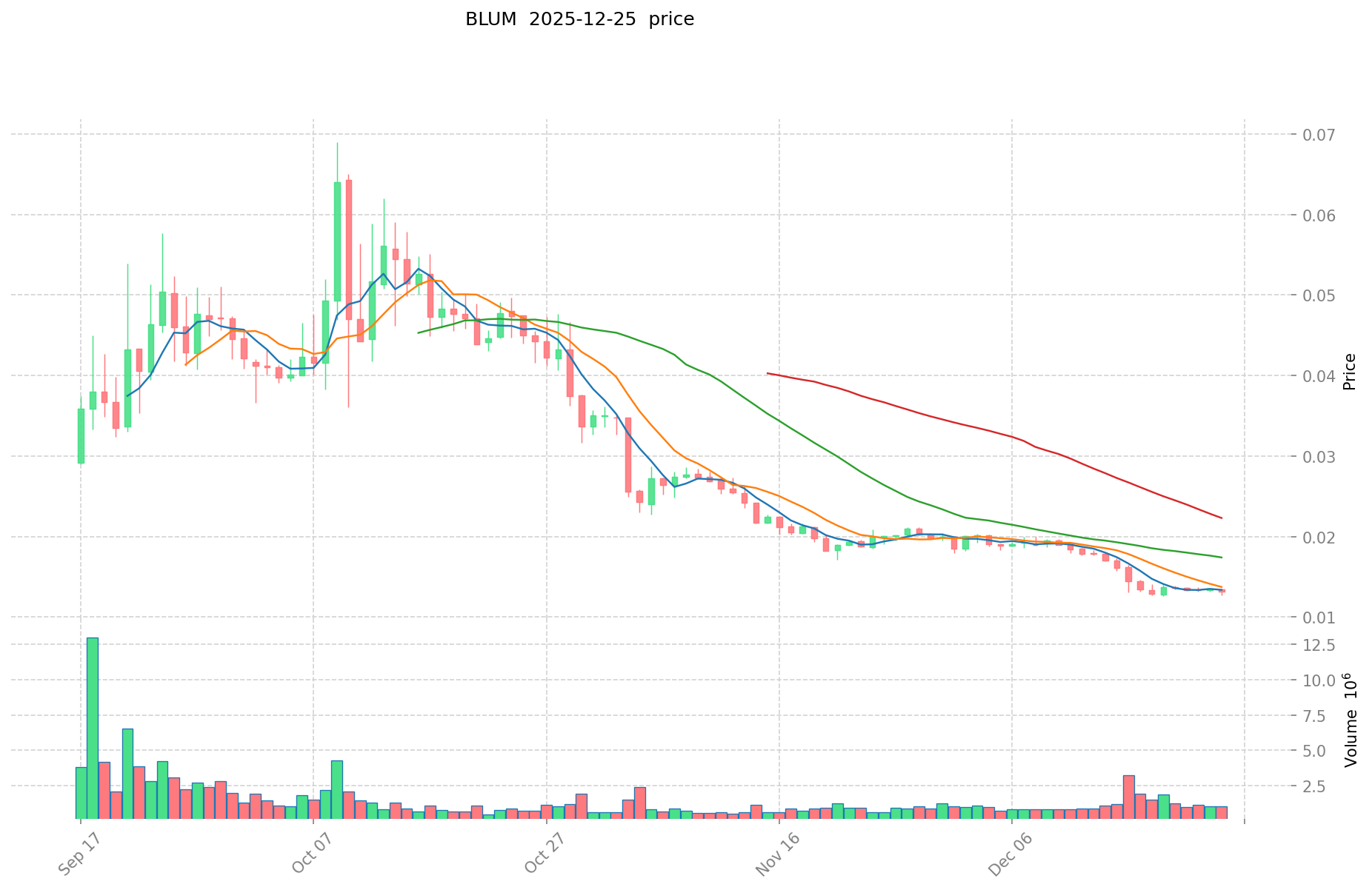
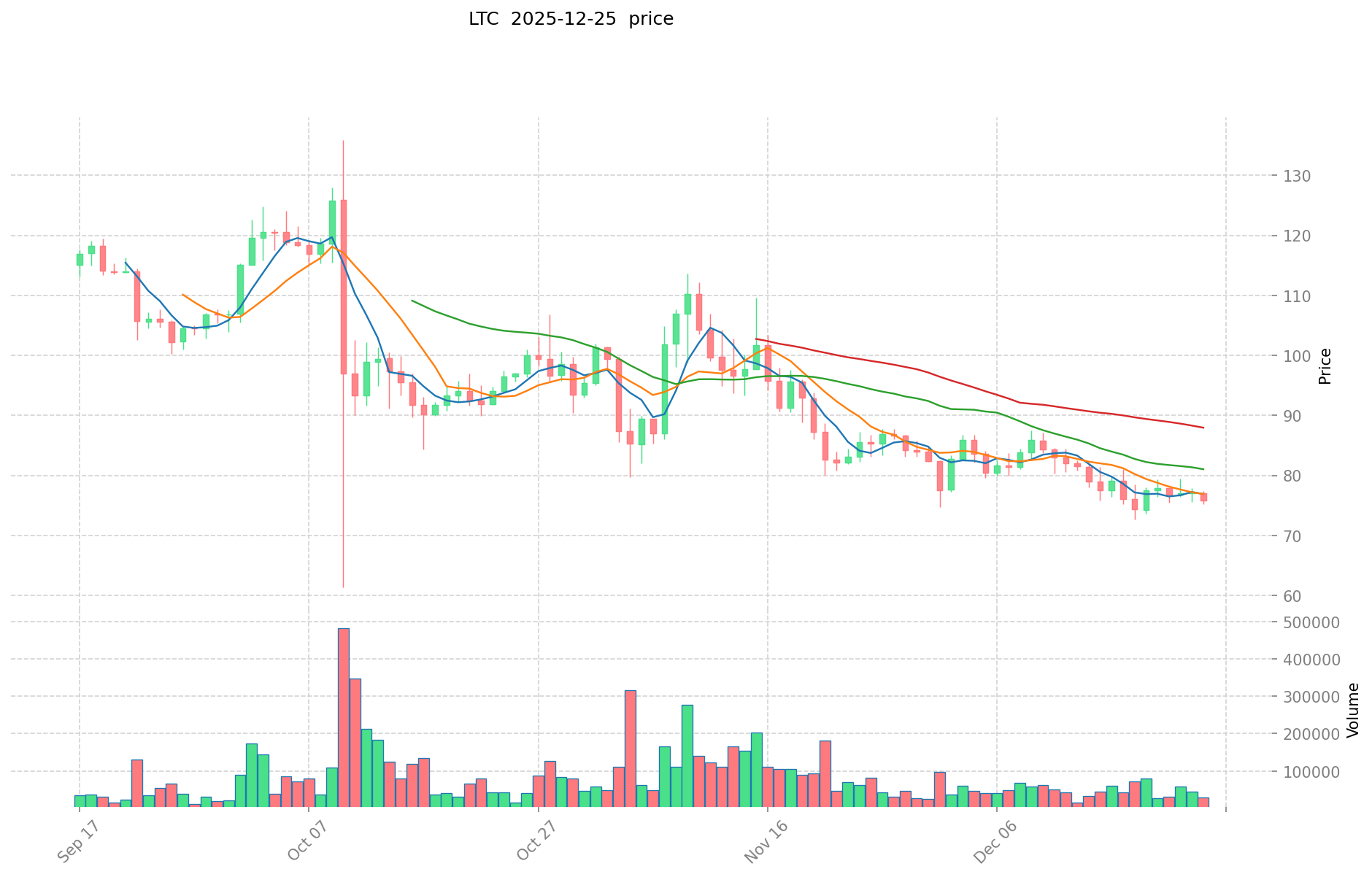
影响 BLUM vs LTC 投资价值的核心因素
供应机制对比(Tokenomics)
Based on available reference materials, specific tokenomics details for BLUM and LTC comparison are not provided in the source documents. This section requires omission as per content principles.
机构采用与市场应用
机构持仓
LTC demonstrates institutional interest through market activity. According to reference materials, open interest positions in LTC experienced significant increases, indicating inflows of institutional capital. The materials note that "open interest volume in XRP and LTC surged, representing capital inflows."
企业采用
The reference materials indicate that institutional investor participation and reduced market volatility are key factors driving price appreciation. However, specific use cases for BLUM and LTC in cross-border payments, settlements, or investment portfolios are not detailed in the provided sources.
国家政策
The materials reference that cryptocurrency prices are highly susceptible to external factors including financial, regulatory, and political events. However, specific regulatory positions from different countries toward BLUM and LTC are not provided in the source documents.
技术发展与生态建设
BLUM 技术升级
BLUM's investment value depends on its unique functionality and strategic partnerships. The reference materials emphasize that "although Blum's unique features and strategic partnerships appear promising, investors should conduct their own research."
LTC 技术发展
Specific technical development details for LTC are not comprehensively covered in the provided reference materials.
生态对比
The materials indicate that on Ethereum, core assets tend to maintain market attention when ETH prices continue to rise. However, comparative ecosystem information regarding DeFi, NFT, payments, and smart contract deployment for both BLUM and LTC is not available in the source documents.
宏观经济与市场周期
通胀环境下的表现
Historical data shows Bitcoin price increases are not consistently correlated with U.S. debt ceiling increases. Bitcoin's resilience reflects investor sentiment that the U.S. dollar may experience continued depreciation due to domestic fiscal policy effects.
宏观货币政策
Cryptocurrency prices are subject to financial, regulatory, and political event impacts. Margin trading amplifies financial risk exposure. However, specific analysis of interest rates and USD index effects on BLUM and LTC is not provided in the reference materials.
地缘政治因素
The reference materials do not contain specific information regarding geopolitical factors' impact on cross-border transaction demand or international situation effects on BLUM and LTC valuations.
III. 2025-2030 Price Prediction: BLUM vs LTC
Short-term Prediction (2025)
- BLUM: Conservative $0.0085-$0.0138 | Optimistic $0.0138-$0.0183
- LTC: Conservative $60.29-$77.29 | Optimistic $77.29-$88.88
Medium-term Prediction (2026-2028)
- BLUM may enter growth accumulation phase, with projected price range $0.0128-$0.0223
- LTC may enter steady appreciation phase, with projected price range $65.67-$149.15
- Key drivers: institutional capital inflows, ETF adoption, ecosystem development
Long-term Prediction (2029-2030)
- BLUM: Base scenario $0.0156-$0.0208 | Optimistic scenario $0.0207-$0.0310
- LTC: Base scenario $102.20-$139.99 | Optimistic scenario $126.32-$197.39
View detailed price predictions for BLUM and LTC
BLUM:
| 年份 |
预测最高价 |
预测平均价格 |
预测最低价 |
涨跌幅 |
| 2025 |
0.0183141 |
0.01377 |
0.0085374 |
0 |
| 2026 |
0.020212983 |
0.01604205 |
0.01283364 |
15 |
| 2027 |
0.020121543315 |
0.0181275165 |
0.01413946287 |
31 |
| 2028 |
0.022375699991775 |
0.0191245299075 |
0.011665963243575 |
38 |
| 2029 |
0.026145144836543 |
0.020750114949637 |
0.015562586212228 |
50 |
| 2030 |
0.030950871458879 |
0.02344762989309 |
0.018054675017679 |
69 |
LTC:
| 年份 |
预测最高价 |
预测平均价格 |
预测最低价 |
涨跌幅 |
| 2025 |
88.8835 |
77.29 |
60.2862 |
0 |
| 2026 |
107.1819075 |
83.08675 |
72.2854725 |
7 |
| 2027 |
127.480000525 |
95.13432875 |
74.204776425 |
23 |
| 2028 |
149.15160061425 |
111.3071646375 |
65.671227136125 |
44 |
| 2029 |
149.76379001975625 |
130.229382625875 |
126.32250114709875 |
68 |
| 2030 |
197.395186715170031 |
139.996586322815625 |
102.197508015655406 |
81 |
四、投资策略对比:BLUM vs LTC
长期 vs 短期投资策略
- BLUM:适合关注新兴混合交易平台生态、Telegram迷你应用生态发展、具有较高风险承受能力的投资者
- LTC:适合寻求成熟稳定资产、历经多个市场周期验证、关注点对点数字货币应用场景的投资者
风险管理与资产配置
- 保守型投资者:BLUM 10% vs LTC 40%(配置稳定币50%)
- 激进型投资者:BLUM 35% vs LTC 25%(配置其他高风险资产40%)
- 对冲工具:稳定币配置、期权交易、跨币种组合配置
五、潜在风险对比
市场风险
- BLUM:作为2025年新上线资产,市场认知度较低,流动性相对有限(24小时交易量仅$15,373.69),价格波动剧烈,从历史最高价下跌94%,存在持续下行压力
- LTC:虽为成熟资产但同样面临下行压力,从历史最高价下跌81%,市场周期风险仍然存在,机构资本流入虽有增加但整体市场环境处于极端恐慌状态(Fear & Greed Index: 23)
技术风险
- BLUM:作为新兴平台需要在混合交易、AI协驾驶等创新功能实现中保持技术稳定性,多链支持(30+区块链)增加了系统复杂性
- LTC:作为建立完整产业链的成熟资产,技术稳定性相对有保障,但长期技术创新能力相对有限
监管风险
- 全球监管政策对两者均存在影响,特别是针对混合交易平台的监管可能对BLUM的Telegram生态集成带来不确定性,而LTC作为点对点数字货币可能面临支付合规化的长期政策调整
六、结论:Which Is the Better Buy?
📌 投资价值总结:
- BLUM 优势:新兴交易平台生态、Telegram生态整合、多链支持、AI创新功能、早期投资机会
- LTC 优势:成熟的点对点数字货币系统、建立完整产业链、较高市场流动性($1,596,431.01日交易量)、历经14年市场周期验证、更强的机构认可度
✅ 投资建议:
- 新手投资者:优先选择LTC,获取相对成熟稳定的数字货币敞口,同时可配置少量BLUM作为探索性投资(风险承受范围内)
- 有经验投资者:可根据个人风险偏好灵活配置,结合2025-2030年价格预测(BLUM预期涨跌幅69%,LTC预期涨跌幅81%),采用分批建仓策略
- 机构投资者:LTC具有更高的流动性和市场深度优势,适合作为主要配置资产;BLUM作为高潜力但高风险的新兴资产,可作为创新投资组合的补充
⚠️ 风险提示:加密货币市场波动性极高,本文不构成投资建议。当前市场处于极端恐慌状态(Fear & Greed Index: 23),投资前应充分进行尽职调查并根据自身风险承受能力决策。
FAQ
BLUM和LTC分别是什么?有什么主要区别?
BLUM是基于Telegram生态的Web3项目,LTC(莱特币)是建立于2011年的老牌公链。主要区别:BLUM侧重社交应用生态,LTC专注点对点支付;BLUM交易额小,LTC流动性强;BLUM前景看好,LTC稳定成熟。
BLUM和LTC在技术架构上有哪些不同?
BLUM采用创新架构,实现跨链交易与高性能撮合,注重用户体验和简化操作。而LTC基于比特币技术改进,专注支付功能。BLUM更强调交易效率,LTC强调转账速度。
BLUM和LTC的挖矿机制和共识算法有什么区别?
LTC采用Scrypt算法的PoW共识,BLUM采用不同的挖矿机制。LTC挖矿难度动态调整,BLUM通过创新共识优化网络效率。两者都基于工作量证明但算法实现差异显著。
BLUM和LTC哪个更适合投资?风险和收益如何对比?
BLUM市值较小增长潜力大但风险高,LTC作为老牌币种更稳定市值大。BLUM收益空间更大但波动性强,LTC收益相对温和但抗风险能力更强。投资者应根据风险承受能力选择。
BLUM和LTC的交易速度和手续费分别如何?
BLUM采用ZKsync技术,交易速度可达每秒1万笔,手续费接近零。LTC采用SegWit技术,平均出块时间为2.5分钟,手续费相对低廉。BLUM在速度和成本上优势更显著。
BLUM和LTC在市场认可度和流动性上有什么差异?
LTC作为成熟加密货币,具有更高的市场认可度和稳定流动性。BLUM流动性依赖底层现货市场,稳定性较弱。LTC的交易额和市场接受度明显优于BLUM。
* The information is not intended to be and does not constitute financial advice or any other recommendation of any sort offered or endorsed by Gate.