This comprehensive guide compares BMT and SOL as blockchain investment assets across multiple critical dimensions. BMT, a specialized supply auditing utility token launched in 2024, ranks #1456 with a $5.79M market cap, while SOL, a high-performance Layer 1 platform from 2017, ranks #6 globally with a $72.48B market cap. The article analyzes historical price trends, tokenomics mechanisms, institutional adoption, technical ecosystems, and price projections through 2031 to help investors determine optimal asset allocation. It addresses key considerations for different investor profiles—from novice to institutional—covering investment strategies, risk management, technical and regulatory challenges, and market positioning. Current price data from Gate exchange shows BMT at $0.02262 and SOL at $128.05, with detailed forecasts and actionable investment frameworks for portfolio diversification.
Introduction: BMT vs SOL Investment Comparison
In the cryptocurrency market, the comparison between BMT and SOL remains a key consideration for investors. The two assets demonstrate notable differences in market cap ranking, application scenarios, and price performance, representing distinct positioning within the crypto asset landscape.
Bubblemaps (BMT): Launched in 2024, this token has carved out a niche as a supply auditing tool specifically designed for DeFi tokens and NFTs. Currently ranking #1456 by market capitalization, BMT represents a specialized utility token addressing transparency needs in decentralized finance.
Solana (SOL): Founded by former engineers from Qualcomm, Intel, and Dropbox in late 2017, Solana has established itself as a high-performance blockchain protocol emphasizing scalability without compromising decentralization or security. Ranking #6 globally with a market share of 2.48%, SOL has become one of the most traded cryptocurrencies by volume and market capitalization.
This article will comprehensively analyze the investment value comparison between BMT and SOL across multiple dimensions: historical price trends, supply mechanisms, institutional adoption, technical ecosystem, and future projections. We aim to address the question most relevant to investors:
"Which is the better buy right now?"
I. Historical Price Comparison and Current Market Status
Historical Price Trends of BMT (Coin A) and SOL (Coin B)
-
2020: SOL launched through a public auction at $0.22, raising $1.76 million. During the first three months of trading, SOL price fluctuated between $0.50 and $1.5, before experiencing a rally that peaked at $4.735 in August 2020.
-
2021: SOL demonstrated remarkable performance with price surging over 2,500% in Q1 alone, making it one of the best-performing digital assets during that period. After several months of relatively flat performance, SOL experienced another price surge and reached a peak of $253 in November 2021.
-
2025: BMT reached its historical high of $0.3262 on March 18, 2025. SOL achieved its all-time high of $293.31 on January 19, 2025.
-
Comparative Analysis: During the recent market cycle, BMT declined from its high of $0.3262 to a low of $0.01687 (recorded on October 10, 2025), representing significant volatility. Meanwhile, SOL experienced a decrease from its peak of $293.31, with current levels showing substantial correction from historical highs.
Current Market Situation (2026-01-28)
- BMT Current Price: $0.02262
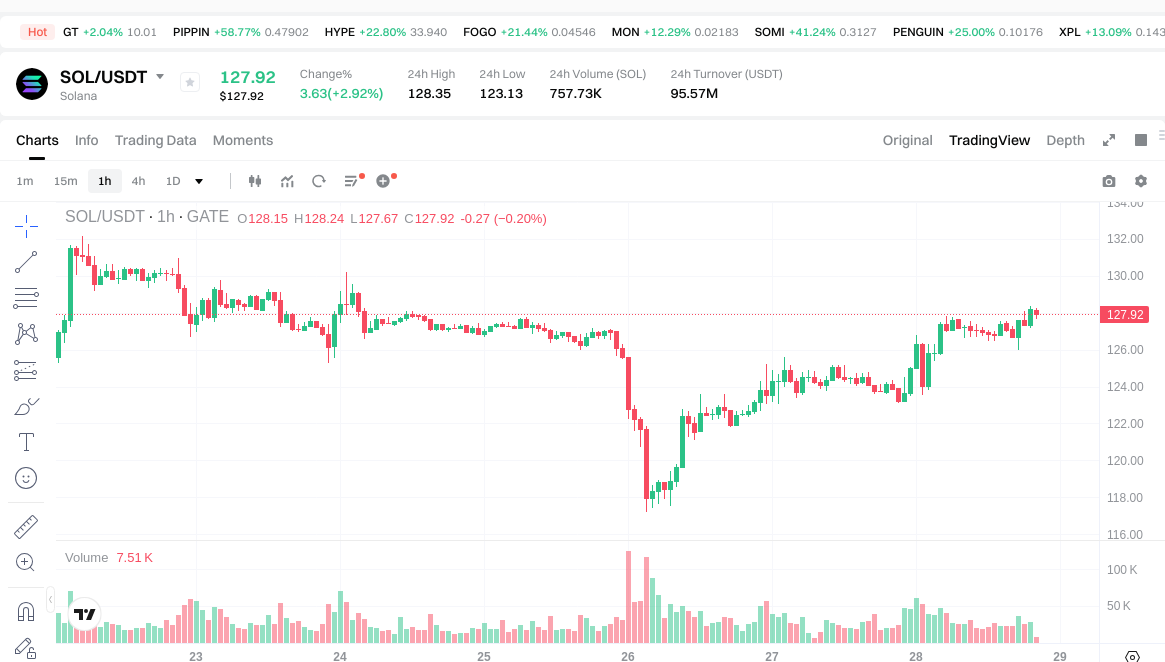
- SOL Current Price: $128.05
- 24-Hour Trading Volume: BMT $333,710.53 vs SOL $95,153,329.35
- Market Cap: BMT $5,794,811.96 vs SOL $72,485,088,554.33
- Market Sentiment Index (Fear & Greed Index): 29 (Fear)
View Real-Time Prices:
- Check BMT Current Price Market Price
- Check SOL Current Price Market Price

II. Core Factors Influencing BMT vs SOL Investment Value
Supply Mechanism Comparison (Tokenomics)
- BMT: The token's supply mechanism and distribution model are designed to support Bubblemaps' visualization platform, with value potentially influenced by user adoption and platform utility.
- SOL: Solana employs an inflationary supply model with staking mechanisms, where network validators and delegators receive rewards, creating ongoing token issuance alongside network activity.
- 📌 Historical Pattern: Supply mechanisms can shape price dynamics through inflation rates, token unlocks, and staking participation levels, which may affect circulating supply and market liquidity over time.
Institutional Adoption and Market Application
- Institutional Holdings: Both assets may attract different institutional interest levels based on their respective use cases and market positioning.
- Enterprise Adoption: BMT serves specialized blockchain analytics and transparency functions, while SOL supports broader ecosystem applications including decentralized finance and high-throughput transaction processing.
- Regulatory Landscape: Different jurisdictions may approach utility tokens and smart contract platforms with varying regulatory frameworks, potentially affecting accessibility and adoption.
Technology Development and Ecosystem Building
- BMT Technology Positioning: Bubblemaps focuses on blockchain visualization tools and on-chain data transparency analysis, serving niche analytical needs within the crypto ecosystem.
- SOL Technology Evolution: Solana's development centers on network performance optimization, validator infrastructure, and ecosystem expansion across multiple sectors.
- Ecosystem Comparison: SOL demonstrates broader ecosystem deployment across DeFi protocols, NFT marketplaces, payment solutions, and smart contract applications, while BMT maintains specialized positioning in blockchain analytics and transparency tools.
Macroeconomic Environment and Market Cycles
- Inflation Environment Performance: Digital assets may exhibit varying characteristics during different macroeconomic conditions, influenced by their utility profiles and market positioning.
- Macroeconomic Monetary Policy: Interest rate adjustments, dollar index movements, and liquidity conditions may influence crypto asset valuations through multiple transmission channels.
- Geopolitical Factors: Cross-border transaction demands, international regulatory developments, and regional adoption patterns may affect both assets differently based on their respective use cases and geographic distribution.
III. 2026-2031 Price Forecast: BMT vs SOL
Short-term Forecast (2026)
- BMT: Conservative $0.0197 - $0.0226 | Optimistic $0.0226 - $0.0240
- SOL: Conservative $85.77 - $128.02 | Optimistic $128.02 - $161.31
Mid-term Forecast (2028-2029)
- BMT may enter a gradual growth phase, with estimated price range of $0.0257 - $0.0383
- SOL may enter a volatile expansion phase, with estimated price range of $147.43 - $248.57
- Key drivers: institutional capital inflows, ETF developments, ecosystem growth
Long-term Forecast (2030-2031)
- BMT: Baseline scenario $0.0233 - $0.0420 | Optimistic scenario $0.0420 - $0.0503
- SOL: Baseline scenario $158.16 - $232.59 | Optimistic scenario $232.59 - $341.91
View detailed price predictions for BMT and SOL
Disclaimer
BMT:
| Year |
Predicted High Price |
Predicted Average Price |
Predicted Low Price |
Price Change |
| 2026 |
0.0239666 |
0.02261 |
0.0196707 |
0 |
| 2027 |
0.029809024 |
0.0232883 |
0.012808565 |
2 |
| 2028 |
0.0318583944 |
0.026548662 |
0.02575220214 |
17 |
| 2029 |
0.038256621942 |
0.0292035282 |
0.01606194051 |
29 |
| 2030 |
0.05025781185579 |
0.033730075071 |
0.02327375179899 |
49 |
| 2031 |
0.049552853286806 |
0.041993943463395 |
0.033595154770716 |
85 |
SOL:
| Year |
Predicted High Price |
Predicted Average Price |
Predicted Low Price |
Price Change |
| 2026 |
161.3052 |
128.02 |
85.7734 |
0 |
| 2027 |
198.187762 |
144.6626 |
138.876096 |
12 |
| 2028 |
248.56651245 |
171.425181 |
147.42565566 |
33 |
| 2029 |
226.795514463 |
209.995846725 |
193.196178987 |
63 |
| 2030 |
246.78711907122 |
218.395680594 |
126.66949474452 |
70 |
| 2031 |
341.9093577539367 |
232.59139983261 |
158.1621518861748 |
81 |
IV. Investment Strategy Comparison: BMT vs SOL
Long-term vs Short-term Investment Strategies
-
BMT: May appeal to investors focused on specialized blockchain analytics tools and transparency solutions within the DeFi ecosystem, particularly those seeking exposure to niche utility tokens with specific use cases in on-chain data visualization.
-
SOL: May suit investors seeking exposure to established high-performance blockchain infrastructure with broader ecosystem applications across DeFi, NFTs, and payment solutions, potentially offering diversified utility within the smart contract platform sector.
Risk Management and Asset Allocation
-
Conservative Investors: Consider limiting exposure to smaller market cap assets like BMT (5-10%) while maintaining larger allocation to established platforms like SOL (15-25%), with remainder in diversified crypto holdings and stablecoins.
-
Aggressive Investors: May explore higher allocation ratios such as BMT (15-25%) and SOL (25-40%), accepting increased volatility for potential growth opportunities, while maintaining appropriate risk management protocols.
-
Hedging Tools: Stablecoin reserves for liquidity management, derivatives instruments where available, and cross-asset diversification strategies to manage correlation risks.
V. Potential Risk Comparison
Market Risks
-
BMT: Lower market capitalization ($5.79 million) and limited trading volume ($333,710.53 daily) may result in higher price volatility and liquidity constraints during market stress periods. The specialized nature of its use case may limit broader adoption momentum.
-
SOL: Despite substantial market capitalization ($72.48 billion) and trading volume ($95.15 million daily), the asset remains subject to crypto market cycle dynamics, competitive pressures from alternative Layer 1 platforms, and ecosystem development uncertainties.
Technical Risks
-
BMT: Platform adoption rates, user engagement metrics, and competitive positioning within blockchain analytics tools may influence long-term utility value. Technical development progress and feature expansion require ongoing evaluation.
-
SOL: Network performance optimization, validator infrastructure stability, and scalability implementation remain key technical considerations. Historical network disruptions have highlighted infrastructure resilience challenges requiring continued technical development.
Regulatory Risks
- Evolving regulatory frameworks across different jurisdictions may affect both assets differently based on their classification and use cases. Utility tokens focused on analytics tools versus smart contract platforms may face distinct regulatory considerations. Cross-border operational compliance and securities law interpretations represent ongoing uncertainties affecting market accessibility and institutional participation.
VI. Conclusion: Which Is the Better Buy?
📌 Investment Value Summary:
-
BMT Characteristics: Specialized positioning in blockchain transparency and analytics tools, serving niche market segments within DeFi ecosystem. Lower market capitalization presents both higher volatility risk and potential growth opportunity within its specific use case domain.
-
SOL Characteristics: Established high-performance blockchain infrastructure with substantial ecosystem deployment across multiple sectors. Larger market capitalization and trading volume provide relative liquidity advantages, while maintaining exposure to broader smart contract platform competition and technical development requirements.
✅ Investment Considerations:
-
Novice Investors: May benefit from focusing on more established assets with greater liquidity and broader ecosystem adoption, while limiting exposure to lower market cap specialized tokens until developing deeper market understanding and risk tolerance assessment.
-
Experienced Investors: Could evaluate portfolio diversification strategies incorporating both established infrastructure platforms and specialized utility tokens, implementing appropriate position sizing based on individual risk parameters and market cycle positioning.
-
Institutional Investors: May prioritize assets with substantial liquidity profiles, regulatory clarity, and established operational track records, while conducting thorough due diligence on technical infrastructure, governance mechanisms, and ecosystem sustainability metrics.
⚠️ Risk Disclosure: Cryptocurrency markets exhibit substantial volatility characteristics. This analysis does not constitute investment advice. Market participants should conduct independent research, assess personal risk tolerance, and consider consulting qualified financial advisors before making investment decisions.
VII. FAQ
Q1: What are the main differences between BMT and SOL as investment assets?
BMT and SOL serve fundamentally different purposes in the crypto ecosystem. BMT is a specialized utility token launched in 2024, ranking #1456 by market cap ($5.79 million), focused on blockchain transparency and supply auditing tools for DeFi tokens and NFTs. SOL, ranking #6 globally with a market cap of $72.48 billion, is an established Layer 1 blockchain protocol emphasizing high-performance transaction processing and broad ecosystem applications. The key differences lie in market maturity, liquidity ($333,710 daily volume for BMT vs $95.15 million for SOL), use case scope, and risk-return profiles—BMT offers niche utility with higher volatility, while SOL provides infrastructure-level exposure with relatively greater market stability.
Q2: How do the supply mechanisms of BMT and SOL affect their long-term value?
SOL employs an inflationary supply model with staking mechanisms where validators and delegators receive rewards, creating ongoing token issuance tied to network activity and security. This mechanism incentivizes network participation while gradually increasing circulating supply. BMT's supply mechanism is designed to support its visualization platform, with value potentially influenced by user adoption rates and platform utility growth. The fundamental difference is that SOL's tokenomics directly correlate with blockchain security and validation economics, while BMT's value proposition centers on analytics tool adoption. Both mechanisms affect circulating supply dynamics, but SOL's model has demonstrated multi-year operational track record whereas BMT represents newer tokenomics implementation.
Q3: What price performance can investors expect from BMT and SOL through 2031?
Based on analytical projections, BMT shows conservative estimates ranging from $0.0197-$0.0226 in 2026, potentially reaching $0.0233-$0.0503 by 2031 under optimistic scenarios—representing potential 85% growth from current levels. SOL's conservative forecasts suggest $85.77-$161.31 in 2026, with long-term projections of $158.16-$341.91 by 2031, indicating potential 81% growth under optimistic conditions. However, these projections assume various ecosystem developments, institutional adoption trends, and favorable macroeconomic conditions. BMT's smaller market cap creates higher percentage movement potential but with correspondingly greater downside risk, while SOL's established position offers more predictable growth trajectories within the Layer 1 blockchain competitive landscape.
Q4: Which asset is more suitable for different investor profiles?
For novice investors, SOL may present more appropriate initial exposure due to its established market position, greater liquidity ($95.15 million daily volume), and broader ecosystem adoption across DeFi, NFTs, and payment solutions. The asset's #6 global ranking provides relative stability within crypto market dynamics. Experienced investors might consider portfolio diversification incorporating both assets—allocating 15-25% to SOL for infrastructure exposure and 5-10% to BMT for specialized analytics utility, depending on risk tolerance. Institutional investors typically prioritize SOL's substantial liquidity profile, operational track record since 2017, and regulatory clarity over newer, lower-cap specialized tokens. BMT suits investors specifically seeking exposure to blockchain transparency tools and willing to accept higher volatility for niche market positioning.
Q5: What are the primary technical risks associated with each asset?
SOL faces technical risks related to network performance optimization, validator infrastructure stability, and scalability implementation. Historical network disruptions have highlighted infrastructure resilience challenges requiring continued technical development, though the protocol has demonstrated recovery capabilities and ongoing improvements. BMT's technical risks center on platform adoption rates, user engagement metrics within blockchain analytics markets, and competitive positioning against alternative transparency tools. The platform's success depends on continued feature expansion and maintaining relevance within evolving DeFi security requirements. Additionally, BMT's lower trading volume creates liquidity risk during market stress periods, while SOL faces competitive pressure from alternative Layer 1 platforms deploying similar high-performance architectures.
Q6: How do regulatory considerations differ between BMT and SOL?
Regulatory frameworks may treat these assets differently based on their classification and use cases. SOL, as a smart contract platform token, faces scrutiny regarding its potential classification as a security in certain jurisdictions, affecting exchange listings, institutional custody solutions, and retail accessibility. The asset's broad utility across DeFi protocols and payment applications creates complex regulatory considerations across multiple jurisdictional frameworks. BMT, positioned as a specialized analytics utility token, may encounter different regulatory pathways focused on data services and transparency tools rather than financial infrastructure. However, evolving global crypto regulations introduce uncertainty for both assets regarding cross-border operations, securities law interpretations, and compliance requirements that could affect market accessibility and institutional participation rates.
Q7: What market conditions favor BMT versus SOL performance?
SOL tends to perform strongly during broad crypto market rallies, institutional adoption waves, and periods emphasizing Layer 1 blockchain competition and ecosystem expansion. The asset benefits from macroeconomic conditions favoring risk assets, declining interest rates, and increased liquidity in digital asset markets. Its correlation with broader crypto market cycles means performance often aligns with Bitcoin and Ethereum trends. BMT may outperform during periods emphasizing DeFi security concerns, transparency requirements, and specialized tooling adoption within decentralized finance. Market conditions favoring niche utility tokens, increased focus on on-chain analytics, and growing demand for supply auditing tools could disproportionately benefit BMT. However, BMT's smaller market cap makes it more susceptible to both positive and negative sentiment swings within its specific market segment.
Q8: Should investors hold both BMT and SOL, or choose one?
Portfolio construction depends on individual risk tolerance, investment timeframes, and diversification objectives. Holding both assets provides exposure to different value propositions—SOL offers established infrastructure positioning with broader ecosystem applications, while BMT represents specialized analytics utility with higher risk-return characteristics. A diversified approach might allocate larger positions to SOL (15-25% of crypto portfolio) for relative stability and liquidity, with smaller BMT allocation (5-10%) for niche exposure, assuming appropriate risk management. However, investors with lower risk tolerance or limited crypto market experience might focus exclusively on SOL until developing deeper understanding of smaller-cap token dynamics. The decision ultimately requires assessment of correlation benefits, rebalancing requirements, and alignment with overall investment strategy rather than binary selection between assets.
* The information is not intended to be and does not constitute financial advice or any other recommendation of any sort offered or endorsed by Gate.