This comprehensive guide compares Bitcoin SV (BSV) and Chainlink (LINK), two distinct cryptocurrency assets serving different ecosystem functions. BSV, launched in 2018, operates as an enterprise-grade scalable blockchain for data management and micropayments, while LINK, an Ethereum-based token introduced in 2017, provides critical decentralized oracle infrastructure for DeFi protocols. The article analyzes historical price trends, tokenomic differences, institutional adoption patterns, and technical ecosystems to help investors understand their respective value propositions. Current market data shows BSV trading at $20.06 and LINK at $14.083, with detailed price forecasts through 2031 available on Gate. Whether you're a beginner building a diversified portfolio or an experienced investor evaluating tactical allocations, this analysis addresses key differences in supply mechanisms, regulatory risks, and ecosystem potential to inform your investment decision.
Introduction: BSV vs LINK Investment Comparison
In the cryptocurrency market, the comparison between BSV vs LINK has been a topic of ongoing interest among investors. Both assets differ significantly in market cap ranking, application scenarios, and price performance, representing distinct positioning within the crypto asset landscape.
BitcoinSV (BSV): Launched in 2018 following a hard fork from Bitcoin Cash, BSV aims to fulfill the original Bitcoin protocol vision as described in Satoshi Nakamoto's white paper, positioning itself as a scalable peer-to-peer electronic cash system with enterprise-level blockchain capabilities.
ChainLink (LINK): Introduced in 2017 as an ERC20 token on the Ethereum blockchain, LINK serves as the payment mechanism for Chainlink node operators, establishing itself as a critical infrastructure component for connecting off-chain data to blockchain networks.
This article will provide a comprehensive analysis of BSV vs LINK investment value comparison, focusing on historical price trends, supply mechanisms, institutional adoption, technical ecosystems, and future projections, attempting to address the question investors care about most:
"Which is the better buy right now?"
I. Historical Price Comparison and Current Market Status
BitcoinSV (BSV) and Chainlink (LINK) Historical Price Trends
- 2021: BSV reached a notable price level of $489.75 in April, representing a significant peak during the broader cryptocurrency market rally of that period.
- 2021: LINK achieved its historical high of $52.70 in May, driven by increased adoption of oracle services and expanding ecosystem partnerships.
- Comparative Analysis: During the recent market cycle, BSV declined from its peak of $489.75 to a low of $17.06 recorded in December 2025, while LINK experienced a similar downturn, falling from $52.70 to $0.148183, though this low was recorded earlier in November 2017.
Current Market Status (2026-01-15)
- BSV Current Price: $20.06
- LINK Current Price: $14.083
- 24-Hour Trading Volume: BSV $266,705.61 vs LINK $5,847,412.19
- Market Sentiment Index (Fear & Greed Index): 48 (Neutral)
View real-time prices:
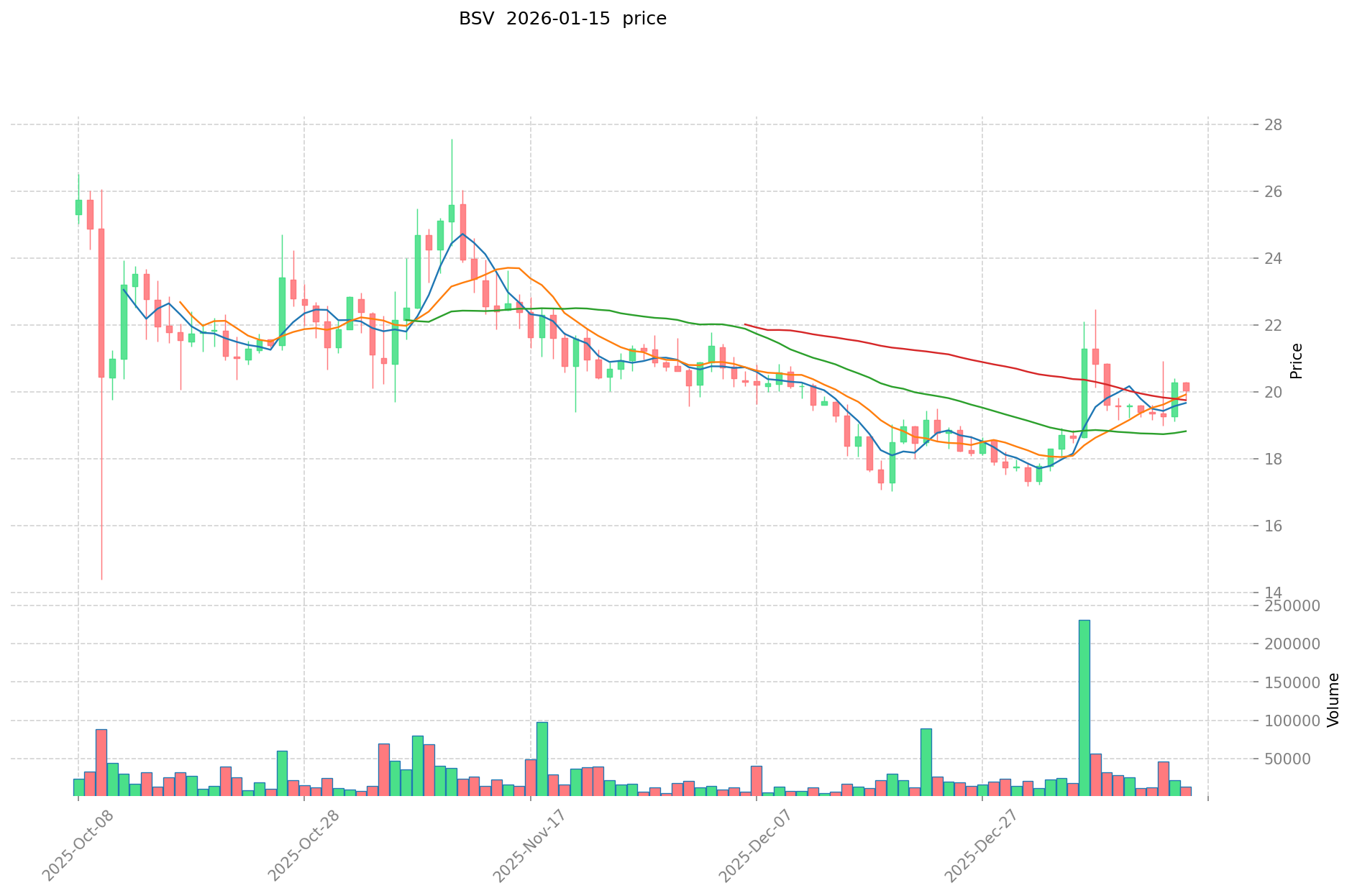
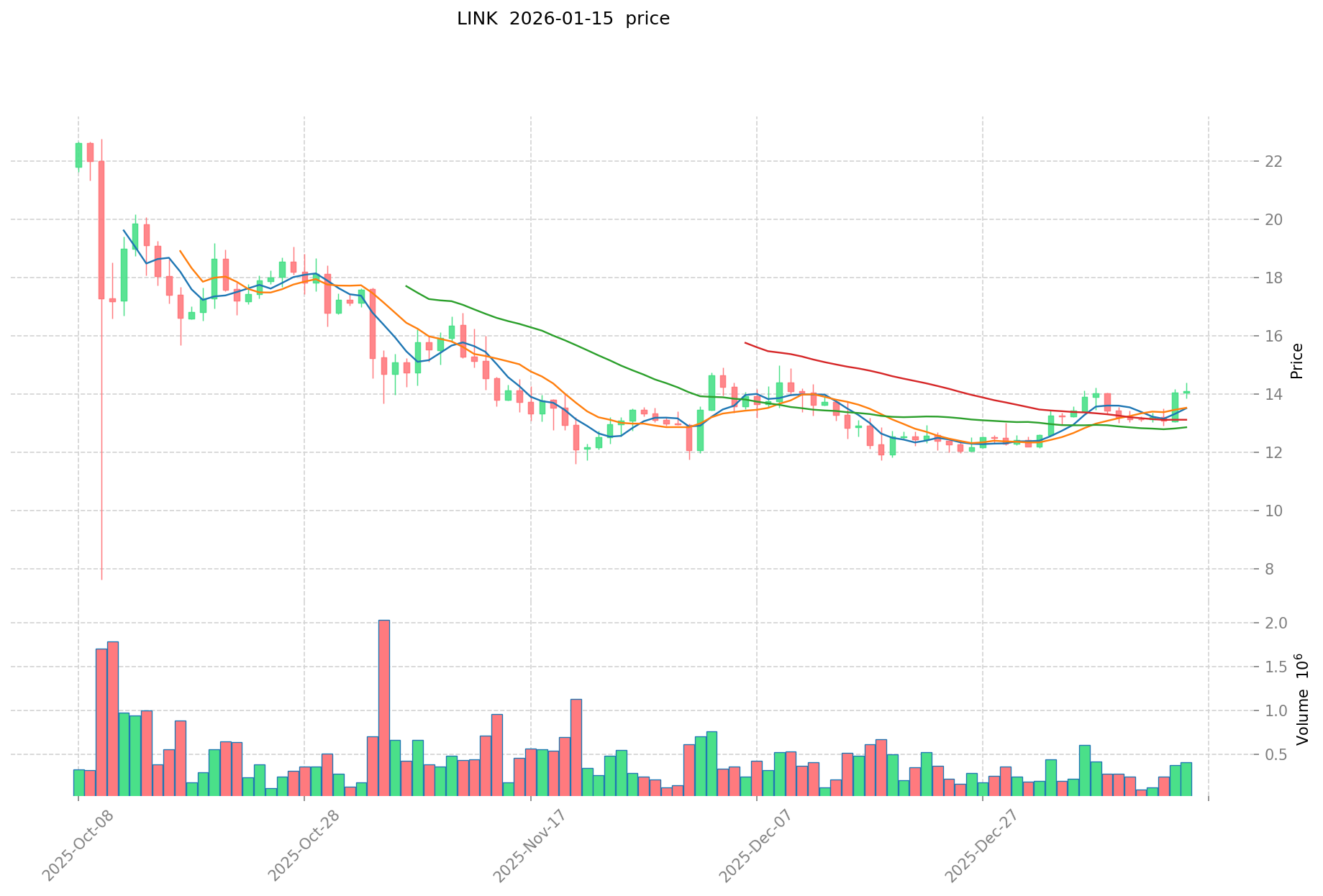
II. Core Factors Influencing BSV vs LINK Investment Value
Supply Mechanism Comparison (Tokenomics)
- BSV: Employs a fixed supply model similar to Bitcoin's original vision, with a capped maximum supply designed to maintain scarcity over time.
- LINK: Features a predetermined total supply with gradual token release mechanisms that balance network incentives and market circulation.
- 📌 Historical Pattern: Supply mechanisms play a role in shaping price cycles, with scarcity models potentially supporting value appreciation during periods of increased adoption.
Institutional Adoption and Market Applications
- Institutional Holdings: Market participants continue to evaluate both assets based on factors including liquidity, regulatory clarity, and infrastructure maturity.
- Enterprise Adoption: BSV emphasizes real-world applications in data management and micropayments, while LINK focuses on decentralized oracle services connecting blockchain networks with external data sources.
- National Policies: Regulatory approaches vary across jurisdictions, with some regions developing frameworks for digital asset custody and trading while others maintain restrictive stances.
Technological Development and Ecosystem Building
- BSV Technical Development: Focuses on scalability improvements and expanding use cases in data storage and enterprise applications.
- LINK Technical Evolution: Continues development of oracle network infrastructure to support decentralized finance protocols and cross-chain data transmission.
- Ecosystem Comparison: BSV emphasizes payment solutions and data applications, while LINK concentrates on DeFi integration, smart contract data feeds, and cross-chain interoperability.
Macroeconomic Environment and Market Cycles
- Performance in Inflationary Environments: Digital assets may serve different roles in portfolio diversification strategies during various economic conditions.
- Macroeconomic Monetary Policy: Interest rate adjustments, U.S. dollar index movements, and central bank policies can influence risk appetite across cryptocurrency markets.
- Geopolitical Factors: Cross-border transaction demand and international regulatory developments continue to shape the operational environment for digital assets.
III. 2026-2031 Price Forecast: BSV vs LINK
Short-term Forecast (2026)
- BSV: Conservative $17.71-$20.13 | Optimistic $20.13-$27.38
- LINK: Conservative $9.44-$14.09 | Optimistic $14.09-$14.79
Mid-term Forecast (2028-2029)
- BSV may enter a growth phase with estimated price range of $16.43-$41.07 in 2028, potentially reaching $20.77-$40.48 by 2029
- LINK may experience moderate expansion with projected price range of $16.05-$18.93 in 2028, advancing to $15.58-$23.28 by 2029
- Key drivers: institutional capital inflows, ETF developments, ecosystem expansion
Long-term Forecast (2030-2031)
- BSV: Baseline scenario $34.44-$47.30 (2030) | Optimistic scenario $38.74-$58.75 (2031)
- LINK: Baseline scenario $17.92-$21.42 (2030) | Optimistic scenario $14.08-$30.88 (2031)
View detailed price predictions for BSV and LINK
Disclaimer
BSV:
| Year |
Predicted High Price |
Predicted Average Price |
Predicted Low Price |
Price Change |
| 2026 |
27.3768 |
20.13 |
17.7144 |
0 |
| 2027 |
34.917498 |
23.7534 |
20.902992 |
18 |
| 2028 |
41.0696286 |
29.335449 |
16.42785144 |
46 |
| 2029 |
40.48291962 |
35.2025388 |
20.769497892 |
75 |
| 2030 |
47.3034115125 |
37.84272921 |
34.4368835811 |
88 |
| 2031 |
58.750837098525 |
42.57307036125 |
38.7414940287375 |
112 |
LINK:
| Year |
Predicted High Price |
Predicted Average Price |
Predicted Low Price |
Price Change |
| 2026 |
14.7945 |
14.09 |
9.4403 |
0 |
| 2027 |
19.352615 |
14.44225 |
14.0089825 |
2 |
| 2028 |
18.9251244 |
16.8974325 |
16.052560875 |
19 |
| 2029 |
23.284661985 |
17.91127845 |
15.5828122515 |
27 |
| 2030 |
21.4218890262 |
20.5979702175 |
17.920234089225 |
46 |
| 2031 |
30.8845965441195 |
21.00992962185 |
14.0766528466395 |
49 |
IV. Investment Strategy Comparison: BSV vs LINK
Long-term vs Short-term Investment Strategies
- BSV: May appeal to investors interested in enterprise blockchain applications, data management solutions, and scalable payment infrastructure development over extended timeframes.
- LINK: May suit investors seeking exposure to decentralized finance infrastructure, oracle network services, and cross-chain data connectivity with focus on protocol adoption cycles.
Risk Management and Asset Allocation
- Conservative Investors: BSV: 30-40% vs LINK: 30-40% (with remainder in established digital assets or stablecoins)
- Aggressive Investors: BSV: 40-50% vs LINK: 40-50% (with tactical rebalancing based on market conditions)
- Hedging Instruments: Stablecoin allocations for capital preservation, derivatives for volatility management, cross-asset diversification across multiple protocols
V. Potential Risk Comparison
Market Risks
- BSV: Subject to price fluctuations influenced by adoption rates of enterprise solutions, competitive positioning among payment-focused protocols, and broader market sentiment toward scalability-focused networks.
- LINK: Experiences price movements correlated with DeFi sector performance, oracle service demand cycles, and competition from alternative data connectivity solutions.
Technical Risks
- BSV: Faces considerations around network scalability implementation, maintaining decentralization while expanding throughput, and ensuring long-term infrastructure stability.
- LINK: Encounters challenges related to oracle network security, node operator distribution, potential smart contract vulnerabilities in connected protocols, and cross-chain integration complexities.
Regulatory Risks
- Global regulatory frameworks continue evolving with varying approaches to digital assets. BSV may face scrutiny as a payment-oriented network, while LINK could encounter regulatory considerations related to data services and DeFi infrastructure provision. Jurisdictional differences in classification, taxation, and operational requirements affect both assets differently based on their primary use cases.
VI. Conclusion: Which Is the Better Buy?
📌 Investment Value Summary:
- BSV Characteristics: Focuses on enterprise-scale blockchain applications, emphasizes scalability for data management and micropayments, maintains fixed supply economics similar to original Bitcoin protocol design.
- LINK Characteristics: Serves as critical infrastructure for decentralized oracle services, enables blockchain connectivity with external data sources, plays foundational role in DeFi ecosystem development.
✅ Investment Considerations:
- Beginning Investors: Consider starting with established positions in both assets as part of a diversified portfolio, maintaining significant stablecoin reserves, and focusing on understanding fundamental differences in use cases before concentrating holdings.
- Experienced Investors: May evaluate tactical allocation adjustments based on enterprise adoption metrics for BSV and DeFi protocol integration trends for LINK, while monitoring technical development milestones and ecosystem expansion indicators.
- Institutional Participants: Could assess both assets within broader digital infrastructure strategies, considering factors including liquidity profiles, regulatory clarity in relevant jurisdictions, custody solutions availability, and alignment with portfolio mandates.
⚠️ Risk Notice: Cryptocurrency markets demonstrate substantial volatility. This content does not constitute investment advice. Participants should conduct independent research and consider their risk tolerance, financial circumstances, and investment objectives before making allocation decisions.
VII. FAQ
Q1: What are the main differences between BSV and LINK in terms of their core functionality?
BSV focuses on scalable blockchain infrastructure for enterprise applications and micropayments, while LINK provides decentralized oracle services that connect blockchain networks with external data sources.
BSV (BitcoinSV) was created to fulfill the original Bitcoin protocol vision with an emphasis on high-throughput data management and payment processing capabilities. It positions itself as an enterprise-grade blockchain solution for real-world applications. In contrast, LINK (Chainlink) serves as critical infrastructure in the decentralized finance ecosystem, enabling smart contracts to securely access off-chain data through its oracle network. This fundamental difference means BSV competes in the scalability and payment solutions space, while LINK operates as a middleware layer connecting blockchain protocols to external information sources.
Q2: Which asset has demonstrated better price resilience during market downturns?
Both assets experienced significant drawdowns from their historical peaks, though comparing their resilience requires examining relative percentage declines and recovery patterns rather than absolute price changes.
BSV declined from its April 2021 peak of $489.75 to $17.06 in December 2025, representing approximately a 96.5% drawdown. LINK fell from its May 2021 high of $52.70 to $14.083 as of January 2026, showing greater price retention relative to its peak. However, market conditions, liquidity profiles, and fundamental developments differ between the assets, making direct resilience comparisons context-dependent. Both assets remain subject to broader cryptocurrency market cycles and sector-specific adoption trends.
Q3: How do institutional adoption patterns differ between BSV and LINK?
LINK has achieved broader integration within the decentralized finance infrastructure, while BSV focuses on enterprise blockchain applications and data management solutions.
LINK's institutional relevance stems primarily from its role in supporting DeFi protocols, providing oracle services that enable smart contract functionality across multiple blockchain networks. This has resulted in widespread protocol integration and developer adoption within the decentralized application ecosystem. BSV's institutional focus targets enterprise use cases including data storage, payment processing, and blockchain-based business solutions. The institutional adoption trajectories differ based on each asset's primary value proposition—LINK serving as DeFi infrastructure versus BSV providing enterprise blockchain capabilities.
Q4: What are the key supply mechanism differences that could affect long-term price dynamics?
BSV employs a fixed supply cap similar to Bitcoin's original design, while LINK features a predetermined total supply with gradual release mechanisms.
BSV's fixed supply model creates scarcity dynamics comparable to Bitcoin, potentially supporting value appreciation during periods of increased adoption, assuming demand growth outpaces available supply. LINK's supply distribution balances network incentives for node operators with market circulation considerations, releasing tokens gradually to support ecosystem development. These tokenomic differences mean BSV may exhibit price behavior influenced primarily by adoption-driven scarcity, while LINK's price dynamics incorporate both demand factors and programmatic supply releases designed to incentivize network participation.
Q5: Which asset offers better exposure to DeFi sector growth?
LINK provides direct exposure to decentralized finance infrastructure development through its oracle network services, while BSV focuses on alternative blockchain applications outside the primary DeFi ecosystem.
Chainlink has established itself as fundamental infrastructure for DeFi protocols, providing the data connectivity that enables various decentralized financial applications. Its oracle services support lending platforms, decentralized exchanges, derivatives protocols, and cross-chain applications. Investors seeking DeFi sector exposure would find LINK more directly aligned with this growth trajectory. BSV's value proposition centers on scalable blockchain solutions for enterprise data management and payment systems, offering exposure to different adoption scenarios including business process optimization and micropayment infrastructure rather than DeFi protocol development.
Q6: How do regulatory considerations differ between these two assets?
BSV may face regulatory scrutiny as a payment-oriented network similar to other cryptocurrency payment systems, while LINK could encounter regulatory considerations related to data services and DeFi infrastructure provision.
Regulatory frameworks vary significantly across jurisdictions, with different approaches to classifying and regulating digital assets based on their primary functions. BSV's positioning as a scalable payment and data management solution subjects it to regulatory frameworks governing payment systems, money transmission, and potentially securities laws depending on jurisdiction. LINK's role as DeFi infrastructure may encounter regulatory considerations related to financial services provision, data transmission, and the regulatory status of protocols it supports. Neither asset operates in a fully clarified global regulatory environment, and jurisdictional differences create varying compliance requirements that could affect operational parameters and market access.
Q7: What portfolio allocation strategy might balance exposure to both assets?
Conservative investors might consider 30-40% allocation to each asset with remaining capital in established cryptocurrencies or stablecoins, while aggressive investors could allocate 40-50% to each with tactical rebalancing based on market conditions.
Portfolio construction should reflect individual risk tolerance, investment timeframe, and conviction in each asset's value proposition. Conservative approaches emphasize capital preservation through diversification across multiple asset types, maintaining significant stablecoin reserves for volatility management. Aggressive strategies concentrate holdings in BSV and LINK based on stronger conviction in their respective growth trajectories, accepting higher volatility in exchange for potential upside. Both approaches benefit from periodic rebalancing to maintain target allocations as price movements cause drift, and from continuous monitoring of fundamental developments affecting each asset's adoption trajectory and competitive positioning.
Q8: Which asset shows more promising price projections for 2030-2031?
Price forecasts suggest both assets could experience growth by 2030-2031, with BSV projecting a baseline scenario of $34.44-$47.30 for 2030 and LINK projecting $17.92-$21.42, though such projections carry substantial uncertainty.
Long-term price predictions indicate potential appreciation for both assets under various scenarios, with BSV's optimistic 2031 projection reaching $38.74-$58.75 and LINK's optimistic scenario targeting $14.08-$30.88. However, these forecasts depend on numerous assumptions regarding adoption rates, competitive dynamics, technological development, regulatory evolution, and macroeconomic conditions. The substantial spread between conservative and optimistic scenarios reflects inherent uncertainty in long-term cryptocurrency price modeling. Investors should treat such projections as indicative of potential trajectories rather than reliable predictions, recognizing that actual outcomes may differ significantly based on developments in technology adoption, market structure, and broader economic conditions.
* The information is not intended to be and does not constitute financial advice or any other recommendation of any sort offered or endorsed by Gate.