This comprehensive comparison analyzes BTX and UNI as investment opportunities in cryptocurrency markets. BTX, launched in December 2025, represents emerging IP rights infrastructure through License-to-Earn and Vault-to-Earn mechanisms, while UNI serves as an established decentralized finance governance token since 2020. The analysis examines historical price trends, market capitalization rankings, and trading volumes—BTX trades at $0.009402 with $13,680 daily volume versus UNI at $3.963 with $5.9M volume. Key comparisons include tokenomics, institutional adoption, technological development, and macroeconomic factors. Price projections through 2031 suggest BTX ranges from $0.009 to $0.018 and UNI from $2.96 to $7.94 across different scenarios. The article addresses risk management, regulatory considerations, and suitable investment strategies for conservative, aggressive, and institutional investors operating within current extreme fear market conditions on Gate exchange.
Introduction: Investment Comparison Between BTX and UNI
In the cryptocurrency market, the comparison between BeatSwap (BTX) and Uniswap (UNI) represents a compelling case study of contrasting crypto asset positioning. These two tokens differ significantly in market capitalization ranking, application scenarios, and price performance, each representing distinct value propositions within the digital asset ecosystem.
BTX (BeatSwap): Launched in 2025, this token positions itself as a full-stack IP rights RWA platform that transforms digital content into verifiable on-chain assets. Through its License-to-Earn (L2E) mechanism, real user interaction data—such as plays, views, and engagement—is recorded on-chain as licensing events, enabling users to earn BTX based on their transparent contributions. The platform also features a Vault-to-Earn (V2E) mechanism for capturing future IP value.
UNI (Uniswap): Emerging in 2020, UNI serves as the governance token of the first automated market-making protocol built on the Ethereum blockchain. It has established itself as a cornerstone of decentralized finance infrastructure, ranking 39th by market capitalization with a circulating supply representing approximately 63.44% of its maximum supply.
This article will provide a comprehensive analysis comparing BTX and UNI across several dimensions: historical price trends, supply mechanisms, institutional adoption patterns, technological ecosystems, and future projections. We aim to address the question many investors are asking:
"Which is the better buy right now?"
By examining these factors, readers will gain insights into how these two assets—one representing emerging IP monetization infrastructure and the other established DeFi utility—compare as potential investment opportunities in the current market environment.
I. Historical Price Comparison and Current Market Status
BeatSwap (BTX) and Uniswap (UNI) Historical Price Trends
-
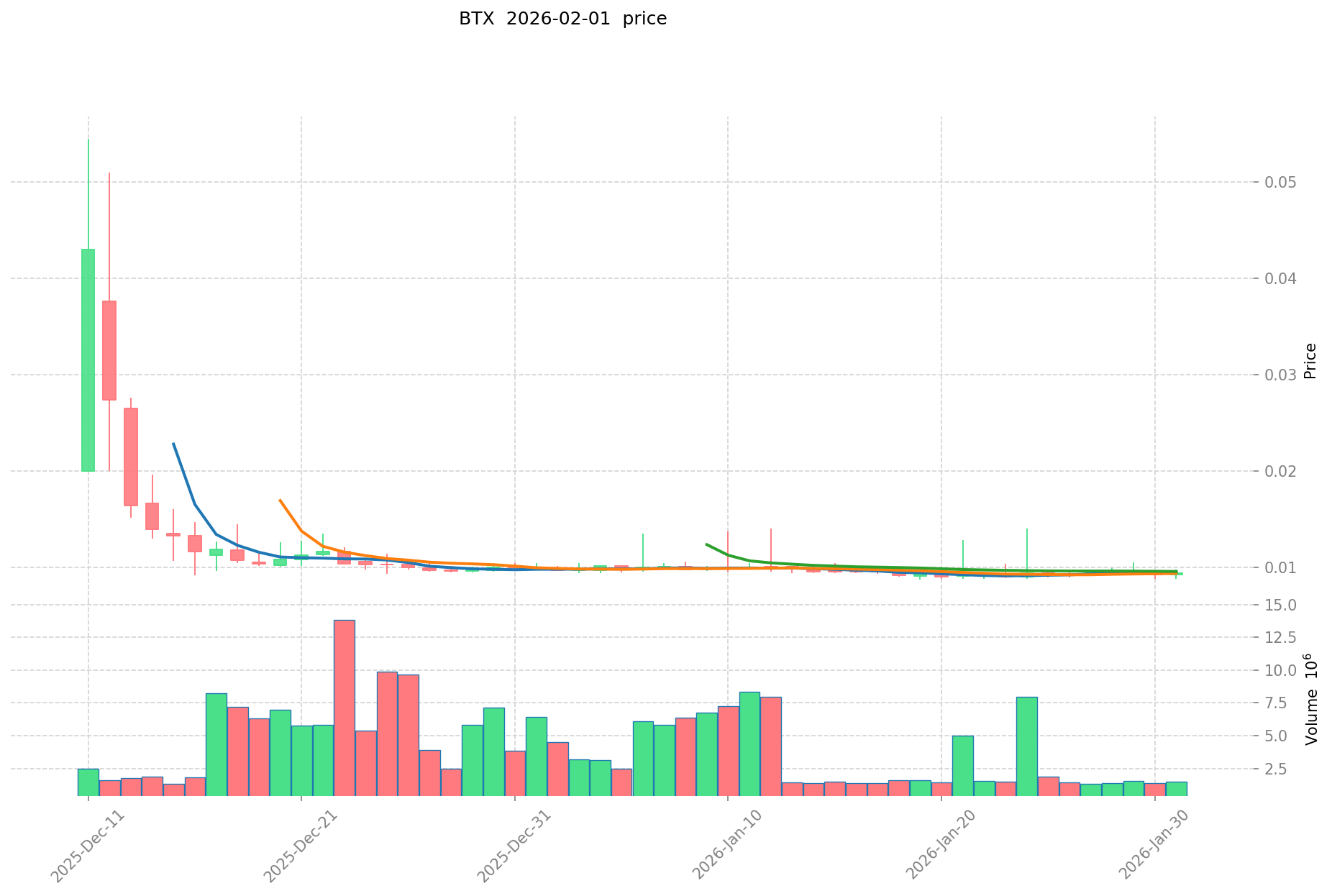
2025: BeatSwap (BTX) experienced notable volatility following its launch in December 2025, with price movements influenced by initial market positioning and early adoption phases. The token recorded an all-time high of $0.05451 on December 11, 2025.
-
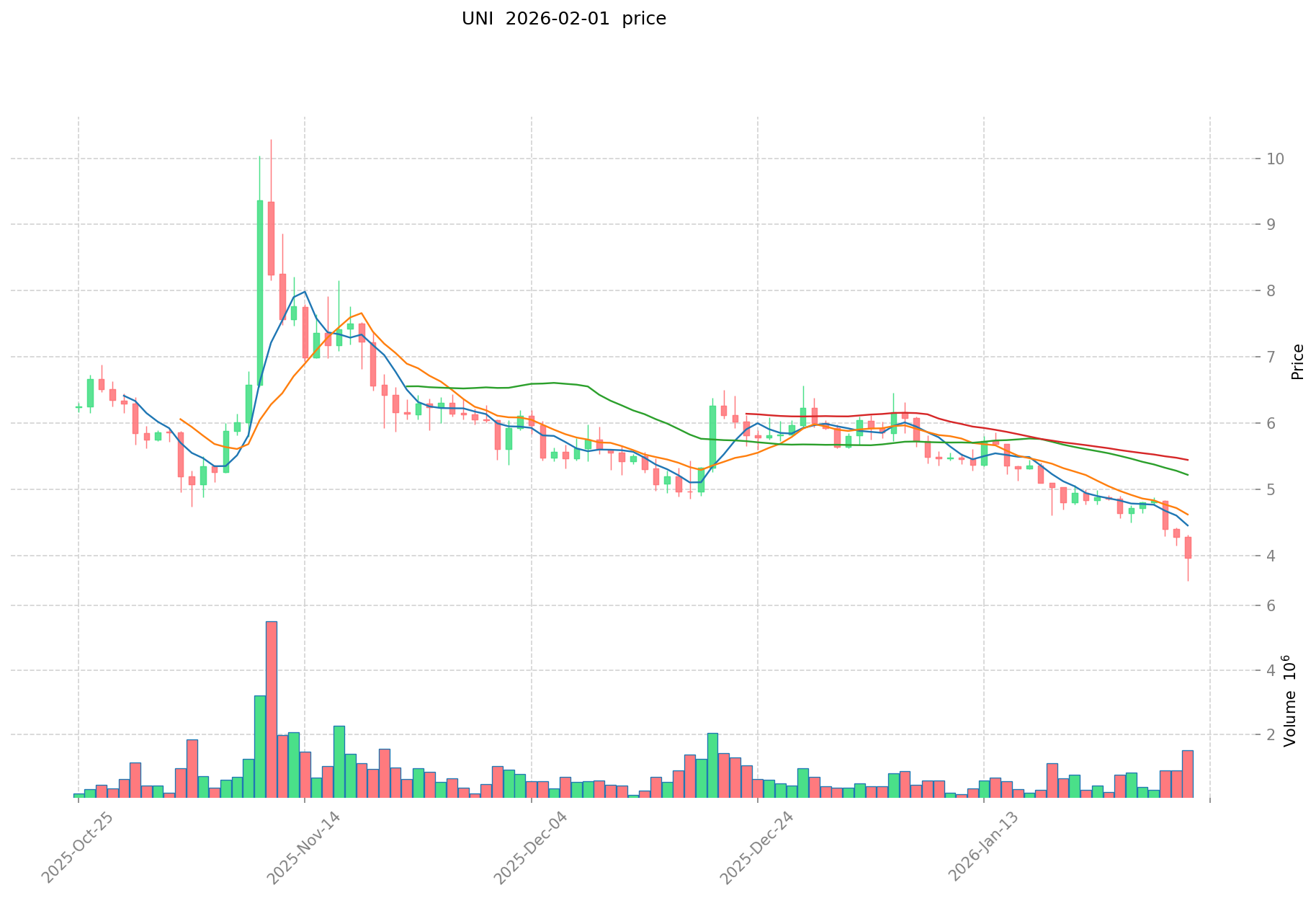
2021: Uniswap (UNI) reached its all-time high of $44.92 on May 3, 2021, driven by the launch of Uniswap V3 on the Ethereum mainnet, which brought significant protocol upgrades and increased trading activity across the decentralized exchange ecosystem.
-
Comparative Analysis: During different market cycles, BTX has traded between its all-time high of $0.05451 and all-time low of $0.0087 (recorded on January 19, 2026), while UNI has experienced broader price fluctuations, moving from its peak of $44.92 down to a historical low of $1.03 (recorded on September 17, 2020). The significant price range difference reflects varying market capitalizations, adoption levels, and project maturity stages.
Current Market Status (February 01, 2026)
- BeatSwap (BTX) Current Price: $0.009402
- Uniswap (UNI) Current Price: $3.963
- 24-Hour Trading Volume: BTX $13,680.12 vs UNI $5,939,052.28
- Market Sentiment Index (Fear & Greed Index): 20 (Extreme Fear)
View real-time prices:
II. Core Factors Influencing BTX vs UNI Investment Value
Supply Mechanism Comparison (Tokenomics)
-
BTX: The available materials do not provide specific information about BTX's supply mechanism or tokenomics structure. Without concrete data on total supply, emission schedule, or distribution model, a detailed assessment cannot be made.
-
UNI: The reference materials do not contain information regarding UNI's supply mechanism, whether it follows a fixed supply model, deflationary structure, or other token distribution approaches.
-
📌 Historical Pattern: Supply mechanisms typically play a role in shaping price cycles through scarcity dynamics and emission schedules, though specific historical data for these assets is not available in the provided materials.
Institutional Adoption and Market Application
-
Institutional Holdings: The provided materials do not contain comparative data on institutional preference or holdings between BTX and UNI.
-
Enterprise Adoption: Information regarding the application of BTX or UNI in cross-border payments, settlement systems, or investment portfolios is not present in the reference materials.
-
National Policies: The materials do not address regulatory attitudes or policy frameworks from different jurisdictions toward either BTX or UNI.
Technology Development and Ecosystem Building
-
BTX Technology Upgrades: According to the materials, BTX is noted for its innovative extraction processes, though specific technical upgrades and their potential impact on value proposition are not detailed.
-
UNI Technology Development: The materials indicate that UNI focuses on decentralized finance, but detailed information about specific technological developments and their implications is not provided.
-
Ecosystem Comparison: The reference materials do not contain specific information comparing the implementation status of DeFi applications, NFT integration, payment systems, or smart contract deployment between BTX and UNI.
Macroeconomic Environment and Market Cycles
-
Performance in Inflationary Environment: The provided materials do not contain data or analysis regarding the anti-inflation properties or performance characteristics of either BTX or UNI during inflationary periods.
-
Macroeconomic Monetary Policy: Information about how interest rate changes, US dollar index movements, or other monetary policy factors affect BTX and UNI is not available in the reference materials.
-
Geopolitical Factors: The materials note that both companies face competition and evolving market dynamics, and mention regulatory environment as a factor, but do not provide specific analysis of cross-border transaction demand or international situation impacts on either asset.
III. 2026-2031 Price Prediction: BTX vs UNI
Short-term Prediction (2026)
- BTX: Conservative $0.00911024 - $0.009392 | Optimistic $0.009392 - $0.01183392
- UNI: Conservative $3.1736 - $3.967 | Optimistic $3.967 - $4.40337
Mid-term Prediction (2028-2029)
- BTX may enter a gradual growth phase, with projected prices ranging from $0.0091720251546 to $0.015705522525
- UNI may enter a moderate expansion phase, with projected prices ranging from $3.09252527057 to $6.18505054114
- Key drivers: institutional capital flows, ETF developments, ecosystem expansion
Long-term Prediction (2030-2031)
- BTX: Baseline scenario $0.009023765021964 - $0.0141349702725 | Optimistic scenario $0.0141349702725 - $0.0180927619488
- UNI: Baseline scenario $2.955835653610806 - $5.7957561835506 | Optimistic scenario $5.7957561835506 - $7.940185971464322
View detailed price predictions for BTX and UNI
Disclaimer
BTX:
| Year |
Predicted High Price |
Predicted Average Price |
Predicted Low Price |
Price Change |
| 2026 |
0.01183392 |
0.009392 |
0.00911024 |
0 |
| 2027 |
0.011143608 |
0.01061296 |
0.0064739056 |
12 |
| 2028 |
0.01425055204 |
0.010878284 |
0.01055193548 |
15 |
| 2029 |
0.015705522525 |
0.01256441802 |
0.0091720251546 |
33 |
| 2030 |
0.0180927619488 |
0.0141349702725 |
0.01215607443435 |
50 |
| 2031 |
0.016758420755076 |
0.01611386611065 |
0.009023765021964 |
71 |
UNI:
| Year |
Predicted High Price |
Predicted Average Price |
Predicted Low Price |
Price Change |
| 2026 |
4.40337 |
3.967 |
3.1736 |
0 |
| 2027 |
4.64555535 |
4.185185 |
3.7666665 |
5 |
| 2028 |
4.6802923855 |
4.415370175 |
3.48814243825 |
11 |
| 2029 |
6.18505054114 |
4.54783128025 |
3.09252527057 |
14 |
| 2030 |
6.2250714564062 |
5.366440910695 |
4.23948831944905 |
35 |
| 2031 |
7.940185971464322 |
5.7957561835506 |
2.955835653610806 |
46 |
IV. Investment Strategy Comparison: BTX vs UNI
Long-term vs Short-term Investment Strategies
-
BTX: May appeal to investors interested in emerging IP monetization infrastructure and early-stage digital content ecosystems. The token's License-to-Earn (L2E) and Vault-to-Earn (V2E) mechanisms represent novel approaches to on-chain asset verification, potentially attracting participants focused on innovative use cases in the intellectual property space.
-
UNI: May suit investors seeking exposure to established decentralized finance infrastructure. As a governance token for an automated market-making protocol with significant historical trading volume ($5,939,052.28 on February 01, 2026), UNI represents participation in a mature DeFi ecosystem with proven operational track record since 2020.
Risk Management and Asset Allocation
-
Conservative Investors: Consideration of allocation strategies should account for the significant differences in market maturity, liquidity levels (BTX 24-hour volume: $13,680.12 vs UNI: $5,939,052.28), and price volatility ranges. Conservative approaches typically favor assets with established trading history and deeper liquidity.
-
Aggressive Investors: Higher-risk tolerance portfolios might explore exposure to emerging protocols like BTX while maintaining positions in established infrastructure tokens like UNI. The current market sentiment index of 20 (Extreme Fear) suggests cautious market conditions that warrant careful position sizing.
-
Hedging Tools: Portfolio risk management may include stablecoin allocations, derivatives instruments where available, and diversification across different protocol categories to mitigate concentration risk.
V. Potential Risk Comparison
Market Risk
-
BTX: The token exhibits substantial price volatility, having traded between $0.0087 (January 19, 2026) and $0.05451 (December 11, 2025) within a relatively short timeframe. Limited trading volume ($13,680.12 on February 01, 2026) may indicate liquidity constraints that could amplify price movements during market stress periods.
-
UNI: Despite broader historical price fluctuations ($1.03 to $44.92), UNI demonstrates significantly higher trading volume and market depth. The token's current price of $3.963 represents substantial distance from its all-time high of $44.92, reflecting sector-wide adjustments in DeFi valuations.
Technology Risk
-
BTX: As a platform focused on IP rights and on-chain asset verification, technical execution risks include smart contract security, scalability of the L2E mechanism, and successful implementation of the Vault-to-Earn system. The materials note innovative extraction processes but do not provide detailed technical specifications.
-
UNI: The materials indicate a focus on decentralized finance infrastructure but do not provide specific information regarding network stability, protocol upgrade risks, or technical vulnerabilities that might affect the governance token's value proposition.
Regulatory Risk
- Both assets operate within evolving regulatory frameworks for digital assets. The materials note that regulatory environment represents a factor affecting market dynamics, though specific jurisdictional approaches or policy developments are not detailed in the provided information. Compliance requirements for IP tokenization (BTX) and decentralized exchange operations (UNI) may differ significantly across regions.
VI. Conclusion: Which Is the Better Buy?
📌 Investment Value Summary:
-
BTX Characteristics: Represents exposure to emerging IP monetization infrastructure with innovative on-chain mechanisms (L2E and V2E). The token launched in December 2025, positioning itself within the digital content and rights management sector. Price predictions suggest potential ranges from $0.009023765021964 to $0.0180927619488 by 2030-2031 under various scenarios.
-
UNI Characteristics: Provides participation in established DeFi infrastructure with a governance role in automated market-making protocols. The token maintains significantly higher liquidity metrics and represents a mature project with operational history since 2020. Price predictions indicate potential ranges from $2.955835653610806 to $7.940185971464322 by 2030-2031 across different scenarios.
✅ Investment Considerations:
-
Newer Market Participants: May benefit from focusing on assets with established liquidity, proven operational track records, and clearer risk parameters. The substantial difference in trading volumes ($13,680.12 vs $5,939,052.28) represents a key consideration for position entry and exit capabilities.
-
Experienced Market Participants: Might evaluate portfolio allocation across different protocol categories, considering the distinct value propositions of IP infrastructure versus DeFi governance. The current market sentiment index of 20 (Extreme Fear) suggests careful assessment of entry timing and position sizing.
-
Institutional Participants: Should conduct comprehensive due diligence on protocol mechanics, liquidity depth, regulatory positioning, and alignment with investment mandates. The materials do not provide specific institutional holding data, highlighting the importance of independent research.
⚠️ Risk Disclosure: Cryptocurrency markets demonstrate high volatility characteristics. This analysis does not constitute investment advice. Market participants should conduct independent research, consider individual risk tolerance, and consult qualified financial professionals before making investment decisions.
VII. FAQ
Q1: What is the primary difference between BTX and UNI in terms of their core functions?
BTX operates as an IP rights RWA platform focused on transforming digital content into on-chain assets through License-to-Earn (L2E) and Vault-to-Earn (V2E) mechanisms, while UNI functions as a governance token for a decentralized exchange protocol. BTX represents emerging infrastructure in the intellectual property monetization space, launched in December 2025, whereas UNI has established itself since 2020 as a cornerstone of decentralized finance infrastructure, enabling holders to participate in protocol governance decisions for automated market-making operations.
Q2: How do the current liquidity levels compare between BTX and UNI?
UNI demonstrates substantially higher liquidity with a 24-hour trading volume of $5,939,052.28 compared to BTX's $13,680.12 as of February 01, 2026. This significant disparity (approximately 434 times higher for UNI) reflects the maturity difference between the two protocols. Higher liquidity typically facilitates easier position entry and exit, reduces slippage during trades, and provides more stable price discovery mechanisms—factors particularly relevant for investors managing larger positions or requiring flexibility in trade execution.
Q3: What are the projected price ranges for BTX and UNI by 2030?
Based on prediction models, BTX shows a baseline scenario range of $0.009023765021964 to $0.0141349702725 by 2031, with an optimistic scenario reaching up to $0.0180927619488. UNI's projections indicate a baseline range of $2.955835653610806 to $5.7957561835506 by 2031, with an optimistic scenario extending to $7.940185971464322.
These projections incorporate varying market conditions, adoption patterns, and ecosystem development scenarios. However, cryptocurrency price predictions carry substantial uncertainty and should not be relied upon as sole investment determinants.
Q4: Which token experienced greater historical volatility relative to its price range?
BTX has demonstrated more extreme relative volatility, trading between an all-time low of $0.0087 (January 19, 2026) and an all-time high of $0.05451 (December 11, 2025)—representing a ratio of approximately 6.3:1 within a short timeframe. UNI's historical range spans from $1.03 (September 17, 2020) to $44.92 (May 3, 2021)—a ratio of approximately 43.6:1 over a longer period. When adjusted for operational duration, BTX's shorter history with significant price swings suggests higher immediate volatility risk, while UNI's broader range reflects multi-year market cycles across different phases of the cryptocurrency market's development.
Q5: What market sentiment conditions currently affect both BTX and UNI?
As of February 01, 2026, the market sentiment index stands at 20, indicating "Extreme Fear" conditions. This sentiment level typically reflects heightened risk aversion among market participants, often associated with reduced trading activity, downward price pressure, and increased caution in portfolio allocation decisions. Both BTX (current price: $0.009402) and UNI (current price: $3.963) operate within this challenging sentiment environment, which may influence investor behavior, liquidity dynamics, and short-term price movements regardless of individual project fundamentals.
Q6: What are the key technological risks specific to each token?
BTX faces execution risks related to its IP monetization infrastructure, including smart contract security for the L2E and V2E mechanisms, scalability of on-chain asset verification systems, and successful implementation of digital content tokenization processes. UNI's technological considerations center on decentralized exchange protocol stability, governance mechanism effectiveness, and the ongoing development of automated market-making infrastructure. While BTX represents newer, untested technology in the IP space, UNI's risks involve maintaining competitiveness within an increasingly crowded DeFi ecosystem and managing protocol upgrades across a large user base.
Q7: Which investment strategy better suits different investor profiles when comparing BTX and UNI?
Conservative investors may find UNI more suitable due to its established operational track record since 2020, significantly higher liquidity ($5.9M vs $13.7K daily volume), and proven DeFi infrastructure positioning.
Aggressive investors with higher risk tolerance might consider BTX exposure for potential early-stage gains in emerging IP monetization sectors, while maintaining UNI positions for diversification. Institutional participants typically require deeper liquidity, clearer regulatory positioning, and established operational history—factors where UNI currently demonstrates advantages. The substantial maturity difference (UNI: 6 years operational vs BTX: launched December 2025) represents a fundamental consideration across all investor categories when evaluating risk-adjusted return expectations.
Q8: How do regulatory considerations differ between BTX and UNI?
Both assets operate within evolving digital asset regulatory frameworks, but face distinct compliance landscapes. BTX's focus on IP rights tokenization and digital content on-chain verification may encounter intellectual property law intersections, content licensing regulations, and jurisdiction-specific rules governing asset-backed tokens. UNI's decentralized exchange governance role involves securities regulation considerations, automated market-making compliance requirements, and potential classification issues across different regulatory regimes. The materials indicate that regulatory environment represents a factor affecting both assets, though specific jurisdictional approaches vary. Investors should recognize that regulatory clarity for established DeFi protocols like UNI may differ substantially from emerging IP infrastructure platforms like BTX, potentially affecting long-term operational viability and market access across different regions.
* The information is not intended to be and does not constitute financial advice or any other recommendation of any sort offered or endorsed by Gate.