This comprehensive analysis examines Cathie Wood's bullish outlook on cryptocurrency market recovery, predicting a reversal of the current liquidity crisis within weeks. The article details three critical factors alleviating liquidity constraints: the Federal Reserve ending quantitative tightening, government cash circulation normalization, and anticipated interest rate cuts. ARK Invest demonstrates conviction through aggressive accumulation strategies, deploying over $93 million in crypto-linked equities during market weakness. The piece addresses Bitcoin's long-term potential despite recent price corrections and defends AI investments against bubble concerns. Covering Federal Reserve policy shifts, market dynamics on trading platforms like Gate, and strategic positioning, this outlook serves institutional and retail investors seeking clarity on crypto market timing, recovery catalysts, and portfolio allocation strategies during volatile periods.
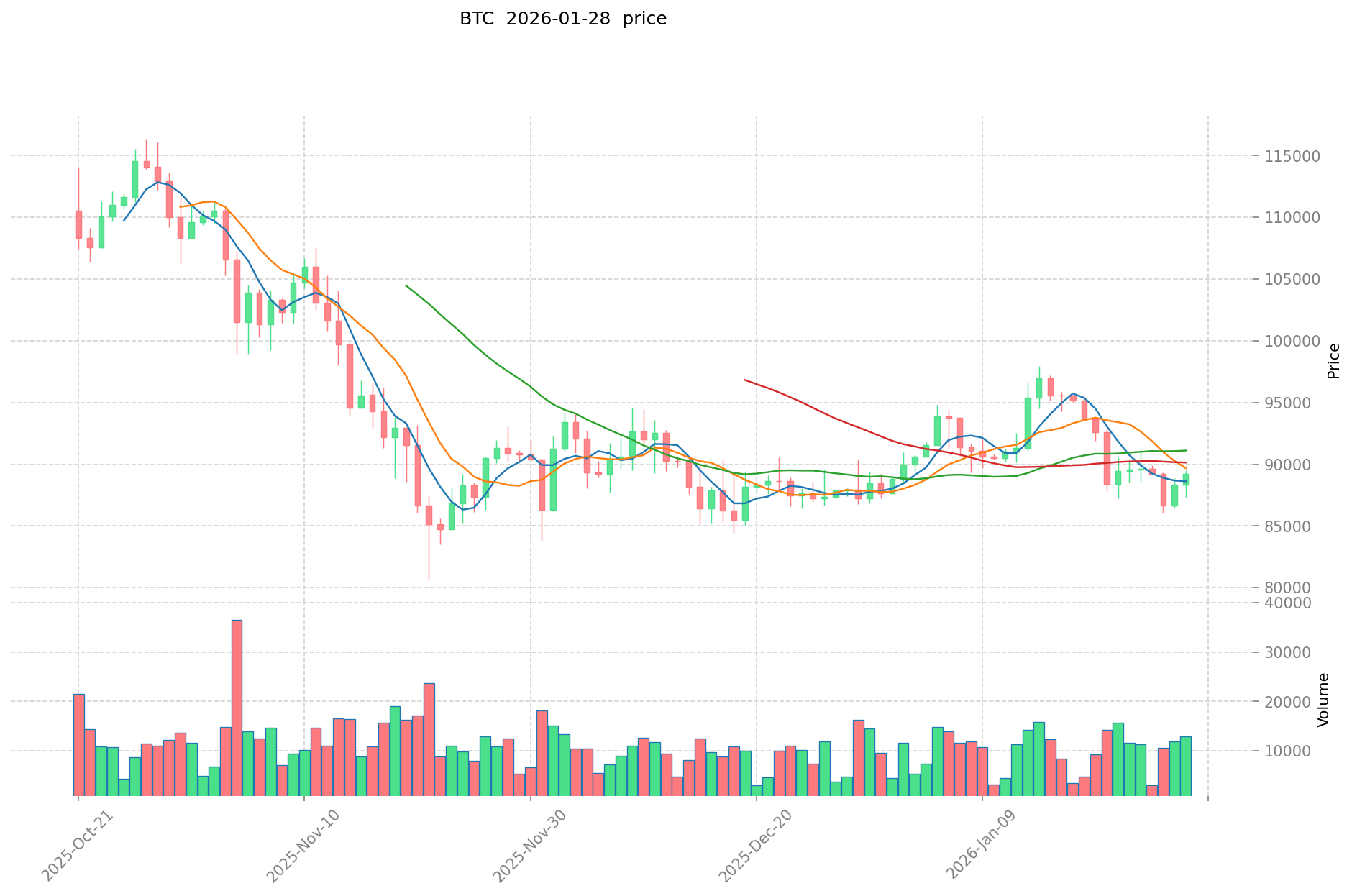
ARK Invest CEO Cathie Wood has made a bold forecast regarding the ongoing liquidity squeeze affecting cryptocurrency and artificial intelligence markets. According to Wood, this challenging period is expected to reverse within weeks, driven by three anticipated Federal Reserve policy shifts before year-end. Her prediction comes at a critical time when digital asset markets are experiencing significant pressure, with Bitcoin trading below $88,000 after falling from its peak of $126,000 observed earlier in the year.
Despite the current market downturn, ARK Invest has maintained an aggressive buying strategy, demonstrating strong conviction in the long-term potential of crypto-linked equities. The firm deployed over $93 million in a single trading session during a recent week, strategically accumulating positions in beaten-down digital asset stocks. This contrarian approach reflects Wood's belief that the current liquidity constraints are temporary and will be resolved through a combination of Federal Reserve policy adjustments and renewed government spending.
Wood's analysis, shared during a recent ARK market webinar, identified three specific liquidity constraints that she expects to ease rapidly. These include quantitative tightening, Treasury cash buildup from government operations, and elevated interest rates. The cryptocurrency markets have been particularly sensitive to these liquidity conditions, with crypto-linked equities facing their sharpest monthly declines since early in the previous year. However, Wood views this downturn as a temporary phenomenon that will reverse as the Federal Reserve implements anticipated policy changes.
Federal Reserve Policy Shifts and Inflation Dynamics
Wood expects the Federal Reserve to end its quantitative tightening program at an upcoming meeting in the near future, which would immediately alleviate one of the primary pressure points affecting market liquidity. The quantitative tightening process, which involves reducing the Fed's balance sheet by not reinvesting proceeds from maturing securities, has been a significant factor constraining liquidity across financial markets. The anticipated end of this program would mark a substantial shift in monetary policy direction.
The government operations that previously caused Treasury General Account cash buildup have concluded, returning substantial funds to circulation. This development represents the second liquidity constraint that Wood believes is already resolving. "We think that source of a liquidity squeeze is behind us," Wood stated during the webinar, emphasizing that this particular pressure point has already begun to ease. The return of these funds to circulation should provide additional support for risk assets, including cryptocurrencies and growth equities.
Interest rates remain the third constraint on market liquidity, but Wood anticipates another rate cut in the coming months as economic data continues to weaken. "We think we will get another cut in the near future, and that the Fed will shift from what seems to be a hawkish tone right now back into a more dovish tone as we approach that date," she explained. This expected policy pivot reflects Wood's view that inflation pressures are moderating more rapidly than many market participants currently anticipate.
Inflation expectations embedded in ten-year Treasury yields have declined to approximately 2.5% over the past several months, while real-time monitoring from Trueflation shows similar levels. These declining inflation expectations provide the Federal Reserve with greater flexibility to ease monetary policy without risking a resurgence of inflationary pressures. Additionally, oil prices breaking below $60 per barrel for West Texas Intermediate crude have added significant deflationary pressure to the broader economy.
The housing market, which represents a substantial component of inflation calculations, has also shown signs of cooling. New home prices have declined for approximately one year, while existing home price inflation has dropped to just 1.5%. These developments in the housing sector are particularly significant given its large weight in consumer price indices. "We would not be surprised to see a real break in inflation once the tariffs have passed through over the next year," Wood predicted, suggesting that the disinflationary trend could accelerate further.
Strategic Accumulation During Market Weakness
Cryptocurrency markets have demonstrated exceptional sensitivity to liquidity conditions throughout the recent period, with Bitcoin plunging below $90,000 for the first time since several months prior. This 30% drawdown from the previous record of $125,100 triggered substantial outflows from US Bitcoin funds, with $254 million exiting in a single day during a particularly volatile trading session.
 The magnitude of these outflows reflects the heightened risk aversion among investors as liquidity conditions tightened.
Average spot ETF investors now find themselves underwater, with a flow-weighted cost basis calculated at around $89,600. This underwater position for the average investor creates a psychological overhang on the market, as many holders are sitting on unrealized losses. However, Wood views this as a temporary situation that will reverse as liquidity conditions improve and institutional adoption of cryptocurrency continues to accelerate.
Wood emphasized cryptocurrency's unique role as a liquidity barometer during the webinar, noting its tendency to lead broader market movements. "It is interesting watching the crypto ecosystem really be a leading indicator when liquidity is ebbing and flowing," she observed. This characteristic makes cryptocurrency markets particularly valuable for understanding broader liquidity dynamics across financial markets, as digital assets tend to respond more quickly to changes in liquidity conditions than traditional asset classes.
ARK Invest has responded to the market downturn by accelerating purchases across a range of crypto-linked equities, adding $42 million in companies including Bullish, Circle Internet Group, and BitMine Immersion Technologies during a single trading day. This aggressive buying demonstrates Wood's conviction that current prices represent attractive entry points for long-term investors. The firm's strategy of accumulating positions during periods of market weakness has been a consistent element of its investment approach.
The firm's combined cryptocurrency exposure through its flagship ETFs surpassed $2.15 billion as of early in the recent period, spanning holdings in major platforms like a leading cryptocurrency exchange, a popular trading platform, Circle, and Bullish. ARK maintains its highest crypto allocation in ARKF at 29%, followed by ARKW at 25.7% and ARKK at 17.7%. These substantial allocations reflect Wood's belief that cryptocurrency represents a transformative technology with significant long-term growth potential.
Wood's dip-buying strategy extends her conviction that "the restructuring of the financial ecosystem is also in the first inning." This perspective suggests that despite the significant growth already seen in cryptocurrency markets, the transformation of the financial system through blockchain technology and digital assets is still in its very early stages. Wood believes that the current market downturn represents a temporary setback in a much longer-term trend toward digital financial infrastructure.
Artificial Intelligence Investment Thesis Defended
Wood has firmly rejected suggestions that artificial intelligence investments have entered bubble territory, drawing clear distinctions between current market conditions and the technology and telecommunications bubble that occurred two decades ago. Her defense of AI investments comes amid growing skepticism from some market observers who question whether the substantial capital being deployed into AI infrastructure will generate adequate returns.
"In the tech and telecom bubble, sure, you had some value investors saying this doesn't make sense. No one was listening to them," she recalled, highlighting a key difference between then and now. In the current environment, there is substantial debate and skepticism about AI valuations, which Wood views as evidence that markets are not in a euphoric bubble phase. The presence of active debate and concern about valuations suggests a more measured approach to AI investments compared to the irrational exuberance that characterized previous technology bubbles.
Enterprise productivity gains from AI adoption remain somewhat elusive despite research from prestigious institutions questioning corporate returns on AI investments. However, Wood emphasized that transformation "is hard work and it will take time." This perspective acknowledges that the benefits of AI adoption may take longer to materialize than some investors initially expected, but maintains that the long-term potential remains substantial.
One major data analytics platform demonstrated 123% growth in its US commercial business during a recent quarter, which Wood cited as evidence of a strategic imperative driving AI adoption. "There is a strategic imperative now, and it will take time," Wood stated, emphasizing that companies are increasingly viewing AI capabilities as essential for competitive survival rather than as optional enhancements. This shift from viewing AI as experimental to viewing it as strategically necessary represents a fundamental change in corporate attitudes.
Brett Swift, ARK's director of research, explained how AI exposure fits into total portfolio approaches increasingly adopted by institutional allocators. "If you don't have a meaningful exposure there, you're missing that idiosyncratic risk," Swift argued, suggesting that failing to allocate to AI represents a form of portfolio risk in itself. As AI becomes increasingly central to economic activity, portfolios without AI exposure may underperform as the technology reshapes industries and creates new sources of economic value.
Long-Term Bitcoin Price Outlook Remains Bullish
Wood has adjusted her Bitcoin price target for the end of the decade downward from $1.5 million to $1.2 million after reassessing the competitive dynamics between Bitcoin and stablecoins in emerging markets. This revision reflects a more nuanced understanding of how different cryptocurrency categories are being adopted for different use cases across global markets.
"Stablecoins are usurping part of the role that we thought Bitcoin would play," she explained during a recent television appearance, referencing their rapid scaling to nearly $300 billion in total market capitalization. Stablecoins, which are cryptocurrencies pegged to traditional currencies like the US dollar, have proven particularly popular in emerging markets where they provide a stable store of value and medium of exchange without the volatility associated with Bitcoin.
However, a prominent Bitcoin advocate and founder of a major corporate Bitcoin holder disputed Wood's competitive framing, arguing that Bitcoin and stablecoins serve fundamentally different purposes in the cryptocurrency ecosystem. He contended that Bitcoin functions as "digital capital" while stablecoins operate as "digital finance," suggesting that the two asset categories are complementary rather than competitive. "No rich person wants to buy the currency instead of an equity or a real estate or a capital asset," he countered during a television appearance, emphasizing Bitcoin's role as a long-term store of value rather than a transactional currency.
ARK analyst David Bujnicki detailed the model revision process, explaining that emerging-market safe-haven assumptions were reduced to 20% of their original levels based on blockchain analytics data. This adjustment reflects empirical evidence showing that stablecoins have captured a larger share of the emerging market use case than initially anticipated. The revision demonstrates ARK's commitment to updating its models based on observed market developments rather than maintaining static assumptions.
Despite this downward revision, gold's market capitalization surge from $17 trillion to $28 trillion partially offset the adjustment, leaving Wood's bull case at approximately 1,100% upside from current price levels. This substantial upside projection reflects Wood's continued belief that Bitcoin will capture an increasing share of the store-of-value market currently dominated by gold, even after accounting for stablecoin competition in certain use cases. The revised target still represents one of the most bullish long-term price forecasts from a major institutional investor, underscoring Wood's conviction in Bitcoin's transformative potential as digital capital.
FAQ
What is a cryptocurrency liquidity crisis and what impact does it have on the market?
A crypto liquidity crisis occurs when buyers and sellers are insufficient, making it difficult to execute trades at reasonable prices and increasing market volatility. This severely impacts markets, potentially causing sharp price swings and eroding investor confidence.
Why does Cathie Wood believe the cryptocurrency liquidity crisis will reverse within weeks?
Cathie Wood expects the liquidity crisis to reverse due to the Fed likely ending quantitative tightening in December and the resolution of the US government shutdown, which will gradually restore market liquidity.
What risks does cryptocurrency liquidity shortage bring to investors?
Liquidity shortage makes it difficult for investors to quickly buy or sell, causing significant price volatility and slippage. This increases trading risks and potential losses from unfavorable execution prices.
During a liquidity crisis, how should investors adjust their investment strategy?
Prioritize liquidity management and reduce exposure to volatile assets. Increase cash reserves, focus on stable high-quality investments, and diversify across liquid markets. Position for opportunities as liquidity normalizes.
Has the crypto market experienced similar liquidity crises historically? How were they resolved?
Yes, notably the 2020 COVID crash ($1.2B liquidations, BTC fell 50%) and 2022 FTX collapse ($1.6B liquidations). Resolution came through insurance fund deployment, exchange compensation programs, market stabilization via institutional buying, and time. The 2025 October crisis ($193B liquidations) resolved fastest through exchange bailouts and rapid DeFi resilience, recovering 70% in 48 hours.
* The information is not intended to be and does not constitute financial advice or any other recommendation of any sort offered or endorsed by Gate.