This comprehensive guide compares CELO and GRT, two distinct blockchain utility tokens serving different ecosystems. CELO focuses on mobile-first financial inclusion with stablecoin integration for underserved populations, currently ranked #412 with a price of $0.1387. GRT provides decentralized infrastructure for blockchain data indexing and querying, ranking #137 at $0.04315. The article examines historical price trajectories, both declining over 98% from peaks, alongside current market status and 30-day performance showing recovery momentum. It analyzes core investment factors including supply mechanisms, institutional adoption, technical development, and macroeconomic influences affecting both assets. The analysis presents price forecasts through 2031, investment strategies for different investor profiles, comprehensive risk assessments, and actionable insights for traders and institutional investors on Gate and other platforms.
Introduction: Investment Comparison Between CELO and GRT
In the cryptocurrency market, the comparison between CELO vs GRT has been a topic of ongoing interest for investors. Both assets exhibit notable differences in market capitalization ranking, application scenarios, and price performance, representing distinct positioning within the crypto ecosystem.
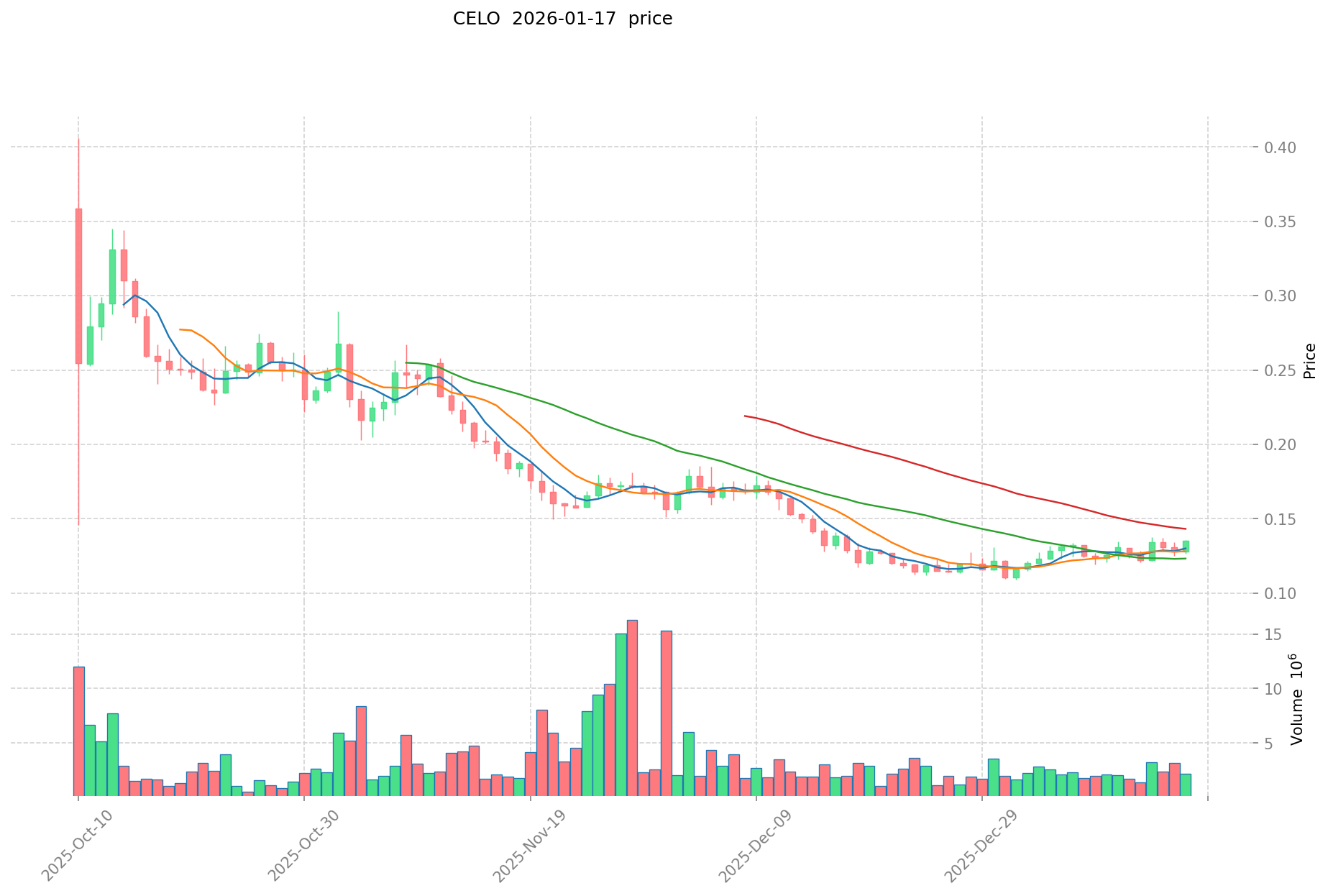
CELO (CELO): Launched in 2020, this open platform has gained recognition for its focus on financial inclusion, aiming to make financial tools accessible to anyone with a mobile phone. As of January 18, 2026, CELO ranks #412 by market capitalization, with a current price of $0.1387 and a circulating supply of approximately 592 million tokens.
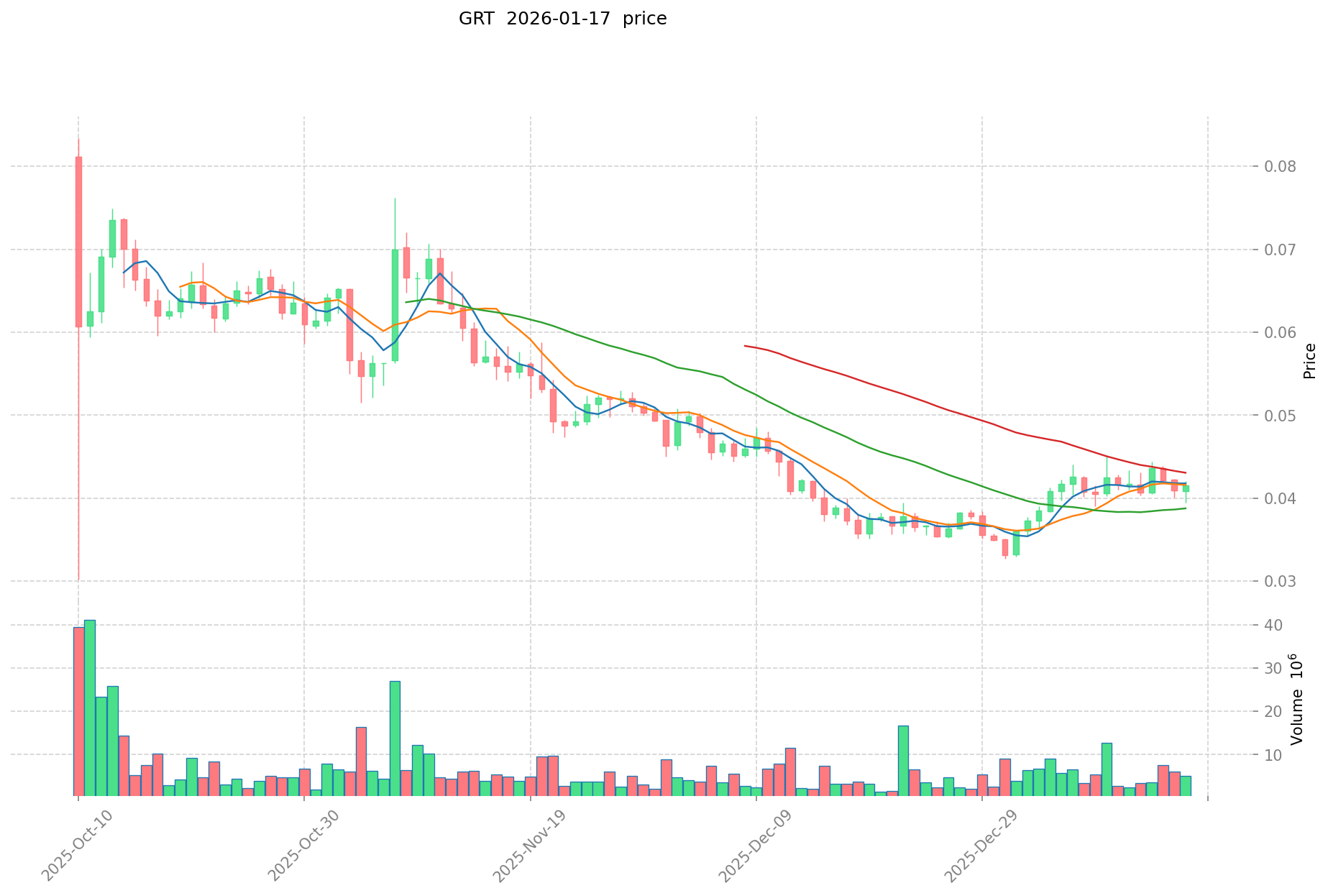
GRT (GRT): Introduced in December 2020, The Graph has established itself as a decentralized protocol for indexing and querying blockchain data, primarily serving the Ethereum ecosystem. Currently ranked #137 with a price of $0.04315, GRT maintains a significantly larger market presence with a circulating supply exceeding 10.6 billion tokens.
This article will provide a comprehensive analysis of CELO vs GRT investment value comparison, examining historical price trends, supply mechanisms, institutional adoption, technical ecosystems, and future outlook. We aim to address the key question that concerns investors:
"Which represents a more suitable investment opportunity based on current market conditions?"
Both assets have experienced notable volatility over the past year, with CELO showing a -78.52% annual change and GRT declining -79.77%. Recent 30-day performance indicates renewed interest, with CELO up 14.32% and GRT gaining 19.79%, suggesting evolving market dynamics that warrant closer examination.
I. Historical Price Comparison and Current Market Status
CELO (Coin A) and GRT (Coin B) Historical Price Trends
- 2021: CELO reached its all-time high of $9.82 on August 30, 2021, driven by increased adoption in the mobile-first DeFi ecosystem.
- 2021: GRT achieved its historical peak of $2.84 on February 12, 2021, supported by growing demand for blockchain data indexing services in the expanding Web3 infrastructure.
- Comparative Analysis: During the 2021-2026 market cycle, CELO declined from its peak of $9.82 to $0.1387, representing a 98.59% drawdown, while GRT fell from $2.84 to $0.04315, marking a 98.48% decline.
Current Market Status (2026-01-18)
- CELO Current Price: $0.1387
- GRT Current Price: $0.04315
- 24-Hour Trading Volume: CELO $342,607 vs GRT $218,336
- Market Sentiment Index (Fear & Greed Index): 50 (Neutral)
View real-time prices:
II. Core Factors Influencing CELO vs GRT Investment Value
Supply Mechanism Comparison (Tokenomics)
- CELO: The available materials do not provide specific details about CELO's supply mechanism or tokenomics structure.
- GRT: GRT serves as the core utility token within The Graph ecosystem, coordinating roles among indexers, curators, delegators, and consumers. The materials mention GRT's function in the protocol but do not specify its supply mechanism details.
- 📌 Historical Pattern: Supply mechanisms may influence price cycles through token distribution schedules, emission rates, and demand dynamics, though specific historical data for these tokens is not detailed in the provided materials.
Institutional Adoption and Market Applications
- Institutional Holdings: The materials reference crypto venture capital (VC) firms focusing on cryptocurrency and blockchain investments but do not specify institutional preference between CELO and GRT.
- Enterprise Adoption: CELO demonstrates a mobile-first design with a focus on financial inclusion, particularly in underserved regions. The project addresses accessibility barriers through simplified addressing and stablecoin integration (cUSD, cEUR), with notable activity in South America. GRT functions as infrastructure for blockchain data querying, enabling developers to efficiently access structured on-chain data across dApps and multi-chain ecosystems.
- National Policies: The materials discuss digital currency development and regulatory considerations in the broader context but do not provide specific policy positions regarding CELO or GRT.
Technical Development and Ecosystem Building
- CELO Technical Features: CELO employs blockchain technology to expand financial inclusion and accessibility. Its mobile-oriented approach and stablecoin emphasis directly address entry barriers for populations traditionally underserved by financial systems.
- GRT Technical Development: The Graph operates as infrastructure for blockchain data indexing, often described as functioning like a search engine for blockchain networks. It enables efficient querying of structured on-chain data for decentralized applications across multiple blockchain networks.
- Ecosystem Comparison: The materials indicate CELO's focus on mobile payments and remittances, particularly in South American markets. GRT's ecosystem centers on data infrastructure services for developers building decentralized applications. Specific comparative data on DeFi integration, NFT applications, payment implementations, or smart contract deployment depth is not provided in the available materials.
Macroeconomic Environment and Market Cycles
- Performance in Inflationary Environments: The materials discuss digital currency significance in the digital economy era and its impact on financial systems, monetary policy, and payment systems. However, specific comparative analysis of CELO versus GRT performance under inflationary conditions is not available.
- Macroeconomic Monetary Policy: The materials reference how interest rates, monetary policy, and economic factors influence digital assets broadly, but do not provide specific comparative analysis for CELO and GRT regarding these variables.
- Geopolitical Factors: CELO's design addresses cross-border financial inclusion challenges. The materials mention international financial coordination and digital currency development trends but do not offer specific analysis of how geopolitical events differentially impact CELO versus GRT investment considerations.
III. 2026-2031 Price Forecast: CELO vs GRT
Short-term Forecast (2026)
- CELO: Conservative 0.1257-0.1381 | Optimistic 0.1381-0.1671
- GRT: Conservative 0.0228-0.0431 | Optimistic 0.0431-0.0539
Medium-term Forecast (2028-2029)
- CELO may enter a consolidation phase, with projected price range of 0.1598-0.1864
- GRT may enter an expansion phase, with projected price range of 0.0394-0.0914
- Key drivers: institutional capital inflows, ETF developments, ecosystem growth
Long-term Forecast (2030-2031)
- CELO: Baseline scenario 0.1719-0.2158 | Optimistic scenario 0.2526-0.3194
- GRT: Baseline scenario 0.0465-0.0860 | Optimistic scenario 0.0945-0.0998
View detailed price predictions for CELO and GRT
Disclaimer
CELO:
| Year |
Predicted High Price |
Predicted Average Price |
Predicted Low Price |
Price Change |
| 2026 |
0.167101 |
0.1381 |
0.125671 |
0 |
| 2027 |
0.17701658 |
0.1526005 |
0.0915603 |
9 |
| 2028 |
0.1796413086 |
0.16480854 |
0.1598642838 |
18 |
| 2029 |
0.186002918244 |
0.1722249243 |
0.098168206851 |
24 |
| 2030 |
0.25255062899352 |
0.179113921272 |
0.17194936442112 |
29 |
| 2031 |
0.319431767196484 |
0.21583227513276 |
0.205040661376122 |
55 |
GRT:
| Year |
Predicted High Price |
Predicted Average Price |
Predicted Low Price |
Price Change |
| 2026 |
0.0538625 |
0.04309 |
0.0228377 |
0 |
| 2027 |
0.070775325 |
0.04847625 |
0.0470219625 |
12 |
| 2028 |
0.067377139875 |
0.0596257875 |
0.03935301975 |
38 |
| 2029 |
0.09144210771 |
0.0635014636875 |
0.047626097765625 |
47 |
| 2030 |
0.094515578552475 |
0.07747178569875 |
0.053455532132137 |
79 |
| 2031 |
0.09975267126571 |
0.085993682125612 |
0.04643658834783 |
99 |
IV. Investment Strategy Comparison: CELO vs GRT
Long-term vs Short-term Investment Strategies
- CELO: May appeal to investors focused on mobile-first financial inclusion initiatives and payment accessibility in underserved markets, particularly those interested in stablecoin integration and remittance applications in regions like South America.
- GRT: May suit investors seeking exposure to blockchain data infrastructure development, supporting the growth of decentralized applications and multi-chain ecosystem expansion through indexing and querying services.
Risk Management and Asset Allocation
- Conservative Investors: A balanced approach might consider diversification across both assets, with allocation decisions based on individual risk tolerance, investment horizon, and assessment of each project's fundamentals and market positioning.
- Aggressive Investors: Portfolio construction should account for volatility profiles, with consideration given to position sizing relative to overall risk exposure and market cycle dynamics.
- Hedging Tools: Investors may consider stablecoin reserves for liquidity management, derivatives instruments where available, and cross-asset diversification strategies to manage downside exposure.
V. Potential Risk Comparison
Market Risks
- CELO: The asset has experienced notable price volatility, with significant drawdowns from historical peaks. Market liquidity considerations may impact execution, with 24-hour trading volumes of $342,607 as of January 18, 2026. Price performance shows susceptibility to broader cryptocurrency market cycles.
- GRT: Similar to CELO, GRT has demonstrated substantial volatility with significant declines from peak valuations. Trading volume of $218,336 over 24 hours may present liquidity considerations. Performance correlates with broader market sentiment and adoption trends in blockchain data infrastructure.
Technical Risks
- CELO: Network scalability and operational stability considerations exist for any blockchain-based platform focused on mobile accessibility and financial services delivery.
- GRT: As infrastructure for blockchain data indexing, technical considerations include network performance, data accuracy, and the ability to scale across multiple blockchain ecosystems efficiently.
Regulatory Risks
- Global regulatory developments concerning digital assets, cross-border payments, and blockchain-based financial services may impact both projects differently. CELO's focus on financial inclusion and payment systems may face scrutiny regarding money transmission regulations, while GRT's data infrastructure role may encounter considerations related to information services and blockchain protocol classification. Evolving regulatory frameworks across jurisdictions continue to present uncertainty for both assets.
VI. Conclusion: Which Is the Better Buy?
📌 Investment Value Summary:
- CELO Characteristics: Focuses on mobile-first financial accessibility with emphasis on underserved populations, integrates stablecoin functionality (cUSD, cEUR), and targets payment and remittance use cases particularly in South American markets. Currently ranked #412 by market capitalization with recent 30-day performance showing 14.32% gains.
- GRT Characteristics: Provides blockchain data indexing infrastructure serving developers across decentralized application ecosystems, functions across multiple blockchain networks, and supports Web3 data accessibility. Ranked #137 by market capitalization with 30-day performance indicating 19.79% growth.
✅ Investment Considerations:
- Beginning Investors: Should carefully evaluate individual risk tolerance, conduct thorough due diligence on both projects' fundamentals, and consider starting with smaller position sizes while gaining familiarity with cryptocurrency market dynamics and volatility patterns.
- Experienced Investors: May assess comparative positioning within respective market segments (financial inclusion versus data infrastructure), evaluate technical roadmaps and ecosystem development trajectories, and consider portfolio diversification strategies aligned with broader cryptocurrency exposure goals.
- Institutional Participants: Might examine liquidity profiles, custody solutions availability, regulatory compliance frameworks, and alignment with institutional investment mandates regarding blockchain technology exposure and sector diversification objectives.
⚠️ Risk Disclosure: Cryptocurrency markets exhibit extreme volatility and substantial risk of capital loss. This content does not constitute investment advice, financial guidance, or recommendations to buy, sell, or hold any digital assets. Investors should conduct independent research, consult qualified financial advisors, and carefully assess their financial situation and risk capacity before making any investment decisions.
VII. FAQ
Q1: What are the primary differences between CELO and GRT in terms of their core functionality?
CELO focuses on mobile-first financial inclusion and payment accessibility, while GRT provides blockchain data indexing infrastructure. CELO operates as a platform designed to make financial tools accessible to anyone with a mobile phone, emphasizing stablecoin integration (cUSD, cEUR) for payments and remittances, particularly targeting underserved populations in regions like South America. In contrast, GRT functions as decentralized infrastructure for indexing and querying blockchain data, serving developers who need efficient access to on-chain information across multiple blockchain networks for building decentralized applications.
Q2: Which asset has shown better recent performance despite significant historical declines?
GRT has demonstrated slightly stronger recent momentum with 19.79% gains over 30 days compared to CELO's 14.32%, though both have experienced severe long-term declines. From their respective all-time highs, CELO has declined 98.59% (from $9.82 to $0.1387) while GRT has fallen 98.48% (from $2.84 to $0.04315). The recent 30-day performance suggests renewed market interest in both assets, with GRT showing marginally stronger short-term recovery dynamics as of January 18, 2026.
Q3: How do the market capitalizations and rankings of CELO and GRT compare?
GRT maintains a significantly higher market ranking at #137 compared to CELO's #412 position. Despite GRT's lower price point of $0.04315 versus CELO's $0.1387, GRT commands a larger market presence due to its substantially higher circulating supply exceeding 10.6 billion tokens compared to CELO's approximately 592 million tokens. This difference in market positioning reflects GRT's broader adoption within the blockchain data infrastructure sector versus CELO's more niche focus on mobile financial inclusion.
Q4: What are the key risk factors investors should consider for each asset?
Both assets face significant market volatility, liquidity constraints, and regulatory uncertainty. CELO's 24-hour trading volume of $342,607 and GRT's $218,336 indicate relatively limited liquidity that may impact execution for larger positions. CELO faces specific risks related to financial services regulation, cross-border payment oversight, and adoption challenges in underserved markets. GRT encounters technical risks associated with data accuracy, network scalability across multiple blockchains, and competition within the blockchain infrastructure sector. Both assets remain highly susceptible to broader cryptocurrency market cycles and regulatory developments.
Q5: Which asset might be more suitable for different investor profiles?
The suitability depends on investment objectives and sector preferences rather than a universal recommendation. CELO may appeal to investors interested in financial inclusion initiatives, mobile payment innovation, and stablecoin-integrated platforms targeting emerging markets. GRT might suit those seeking exposure to blockchain data infrastructure, Web3 development tools, and multi-chain ecosystem growth. Conservative investors should consider diversification across both assets based on individual risk tolerance, while aggressive investors must account for the extreme volatility profiles of both assets. Beginning investors should start with smaller positions and conduct thorough due diligence regardless of choice.
Q6: What do the long-term price forecasts suggest for CELO versus GRT through 2031?
Price forecasts indicate different trajectories with CELO showing potentially higher percentage growth from current levels. By 2031, CELO's optimistic scenario projects prices reaching $0.3194 (a 130% increase from current levels), while GRT's optimistic forecast suggests $0.0998 (a 131% increase). However, these forecasts carry significant uncertainty given the assets' historical volatility and the unpredictable nature of cryptocurrency markets. The baseline scenarios project more modest growth, with CELO reaching $0.2158 and GRT achieving $0.0860 by 2031. Investors should treat these projections as reference points rather than definitive predictions.
Q7: How do institutional adoption patterns differ between CELO and GRT?
Available information indicates different institutional positioning based on each project's core functionality. CELO targets enterprise adoption through mobile-first financial services and cross-border payment solutions, with notable activity in South American markets addressing financial inclusion challenges. GRT positions itself as infrastructure for developers and applications requiring blockchain data access, serving the broader Web3 ecosystem development needs. However, specific institutional holdings data and comparative analysis of venture capital preferences between the two assets are not detailed in available materials, making direct institutional adoption comparisons challenging.
Q8: What macroeconomic factors might differently impact CELO and GRT investment performance?
Macroeconomic impacts may diverge based on each asset's use case positioning. CELO's focus on financial inclusion, mobile payments, and remittances may make it more sensitive to international money transfer regulations, emerging market economic conditions, and monetary policies affecting cross-border transactions. GRT's infrastructure role might correlate more closely with overall blockchain adoption rates, developer activity levels, and Web3 ecosystem expansion influenced by technology investment cycles. Both assets remain exposed to broader cryptocurrency market dynamics, regulatory developments, and monetary policy shifts affecting digital asset valuations, though specific comparative performance data under various macroeconomic scenarios is limited in available materials.
* The information is not intended to be and does not constitute financial advice or any other recommendation of any sort offered or endorsed by Gate.