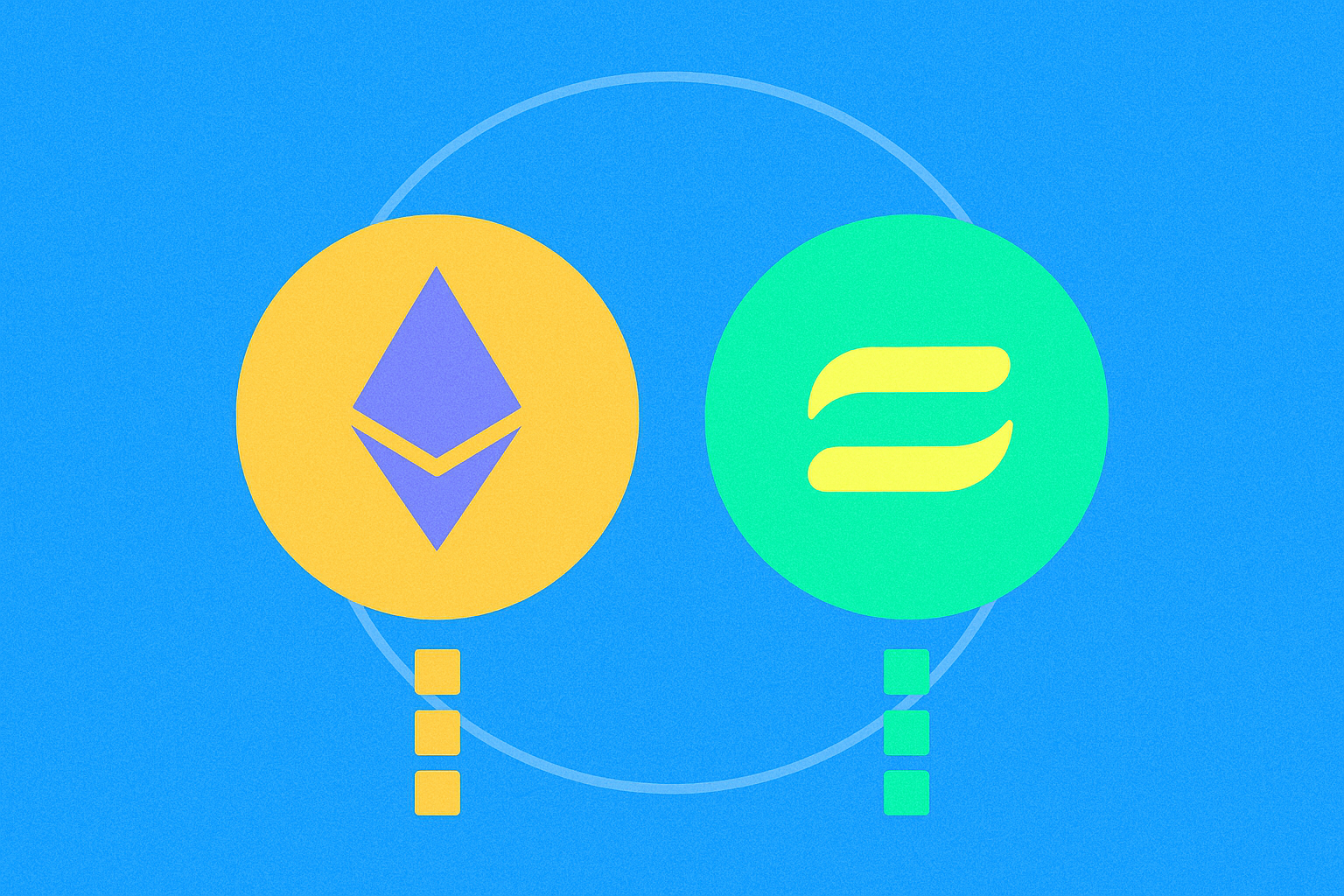
Delve into the specifics of Testnet in blockchain: Monad vs Ethereum. Discover the concept of testnet, how blockchain testnets function, and the distinctions between testnet and mainnet. Access step-by-step instructions for using both Ethereum and Monad testnets. Review a comprehensive comparison of EVM technology, throughput, transaction fees, and investment opportunities offered by these top Layer-1 platforms.
Executive Summary
As blockchain technology accelerates, comparing and evaluating various platforms is now more critical than ever. Two standout projects drawing intense community interest are Ethereum—the world’s leading smart contract platform—and Monad, a next-generation, high-performance Layer-1 blockchain.
Core Focus:
- Ethereum acts as the decentralized “world computer,” delivering a secure, stable foundation for thousands of global applications. With more than eight years of continuous operation, Ethereum has cemented its role as the backbone of the Web3 ecosystem.
- Monad is a newly launched Layer-1 blockchain aiming for extremely high throughput (targeting over 10,000 TPS) while maintaining full Ethereum Virtual Machine (EVM) compatibility. This enables developers to migrate applications from Ethereum to Monad with minimal friction.
Key Technology Differences:
The most important distinction lies in transaction processing architecture. Ethereum uses sequential execution, strictly processing transactions one by one. This ensures strong predictability and security, but imposes scalability limits.
Monad, by contrast, leverages advanced parallel execution—allowing the network to handle thousands of transactions simultaneously. This architecture draws on expertise from high-frequency trading systems and maximizes the potential of modern multi-core hardware.
Accessibility:
Ethereum is widely integrated across top global exchanges, supporting a range of products from spot and futures trading to staking and yield farming. ETH boasts some of the highest liquidity in the market, with daily trading volumes in the billions of dollars.
Monad remains in its pre-mainnet phase, with its testnet already delivering 5,000 TPS under real-world conditions. Trading of the MON token on major exchanges will depend on mainnet rollout and subsequent listings.
What Is Monad?
Monad is a next-generation Layer-1 blockchain utilizing an optimized Proof-of-Stake consensus, engineered to deliver a high-performance environment for decentralized applications (dApps). Monad’s defining feature is its full compatibility with the Ethereum Virtual Machine (EVM), enabling Ethereum developers to deploy applications on Monad without code rewrites.
Funding and Team:
The project has raised $244 million from leading venture capital firms including Paradigm, Coinbase Ventures, and Electric Capital. This substantial capital base provides long-term support for technology development and ecosystem growth.
Co-founders Keone Hon and James Hunsaker both have extensive backgrounds at Jump Trading, one of the world’s top high-frequency trading firms. Their expertise in performance optimization, latency reduction, and building scalable systems directly informs Monad’s technical strategy.
Development Progress:
Monad’s testnet recently launched, demonstrating throughput up to 5,000 TPS in testing—well above current Ethereum mainnet performance. The mainnet is expected to go live in 2025, a key milestone for the project.
Token Utility:
The MON token plays several essential roles in the Monad ecosystem:
- Transaction fees: Users pay MON as gas for transactions
- Staking: Validators stake MON to secure the network and earn rewards
- Governance: Holders participate in key protocol decisions through voting
The private sale price of $0.025 per token set an initial reference point; the actual market value will be determined post-mainnet launch and public listing.
What Is Ethereum?
Launched in 2015 by Vitalik Buterin and co-founders, Ethereum was the first blockchain platform to support smart contracts (smart contracts) with full Turing completeness. Today, Ethereum is the world’s second-largest cryptocurrency by market cap, second only to Bitcoin.
Key Innovations:
The Ethereum Virtual Machine (EVM) is a revolutionary breakthrough that set the standard for decentralized application development. Developers write code once and deploy globally, fueling explosive growth in:
- DeFi (Decentralized Finance): Lending protocols, DEXs, stablecoins
- NFTs (Non-Fungible Tokens): Digital art, virtual real estate, gaming assets
- DAOs (Decentralized Autonomous Organizations): New models for community governance
Ether (ETH) Functions:
Ether is the native asset of Ethereum and central to its ecosystem:
- Medium of payment: Used for transaction (gas) and computation fees
- Collateral: ETH is a primary collateral in DeFi protocols such as MakerDAO, Aave, Compound
- Store of value: Many see ETH as a long-term reserve asset
- Staking: Since The Merge, users can stake ETH to secure the network and earn passive income
The Merge—A Historic Shift:
In 2022, Ethereum completed The Merge, moving from Proof-of-Work to Proof-of-Stake. This upgrade delivered major benefits:
- Reduced energy consumption by 99.95%
- Cut new ETH issuance by ~90%, introducing deflationary pressure
- Enhanced security and resistance to 51% attacks
Future Roadmap:
Ethereum’s roadmap includes major upgrades such as:
- Danksharding: Scaling via data availability sampling
- Account Abstraction: Improving UX with smart contract wallets
- Statelessness: Lowering node storage requirements to boost decentralization
These upgrades aim for throughput in the tens of thousands of TPS via layer-2 solutions while maintaining layer-1 security and decentralization.
Key Similarities
Despite major differences in architecture and approach, Monad and Ethereum share foundational features that put them in direct competition in the high-performance blockchain segment.
| Feature |
Details |
| EVM Compatibility |
Both chains support smart contracts written in Solidity, Ethereum’s primary language. Developers can use the same tools (Hardhat, Truffle, Remix), libraries (Web3.js, Ethers.js), and codebases across both systems. This compatibility reduces migration barriers and enables reuse of audited code. |
| Smart Contract Functionality |
Both are general-purpose programmable blockchains, supporting complex decentralized applications—DeFi protocols, NFT marketplaces, gaming platforms, and enterprise solutions. |
| Decentralization Commitment |
Both projects build on globally distributed validator networks to protect ledger integrity and resist censorship. No central authority can control network operations. Actual decentralization may differ due to hardware and validator requirements. |
| Primary Use Cases |
Both target leadership in DeFi, NFTs, digital collectibles, on-chain gaming, and enterprise applications requiring high throughput. |
| PoS Consensus Mechanism |
Both Ethereum (post-Merge) and Monad use Proof-of-Stake variants, allowing validators to stake native tokens for network security. This method is more energy efficient than Proof-of-Work and enables faster finality. |
Major Differences
Monad and Ethereum differ not just on the surface, but in technical architecture, design philosophy, and development strategy—resulting in distinct advantages, disadvantages, and application scenarios.
Technology
Transaction Processing Architecture:
The main technical difference: Ethereum’s EVM is single-threaded, processing one transaction at a time in strict order. Each transaction must wait for the previous to complete.
This makes state changes predictable and code easier to debug—developers don’t worry about race conditions or concurrent modifications. But it limits performance, especially as network demand rises, leading to congestion and high gas fees.
Monad utilizes advanced parallel execution, processing thousands of non-conflicting transactions at once. The system analyzes dependencies and automatically schedules transactions for maximum parallelism. This approach is inspired by high-frequency trading systems where hardware efficiency is critical.
Optimistic Execution:
Monad also implements optimistic execution, assuming most transactions do not conflict and running them in parallel, verifying, and rolling back as needed. This significantly boosts throughput in practice.
Processing Speed and Transaction Fees
MON and ETH differ sharply in performance, directly impacting user experience and application scope.
Throughput:
The Ethereum mainnet currently handles about 15–30 TPS, with roughly 12-second block times. Upgrades have helped, but throughput remains a constraint for high-demand applications.
Monad aims for over 10,000 TPS on mainnet, with its testnet already reaching 5,000 TPS. This 300x improvement enables entirely new application categories.
Finality and Latency:
Monad optimizes for fast finality—a 1-second block time with single-slot finality means near-instant confirmations, essential for gaming and high-frequency trading.
Transaction Fees:
At peak times, Ethereum gas fees can hit tens or hundreds of dollars per transaction, making many use cases uneconomical.
Monad’s higher throughput keeps fees extremely low, even under heavy load. Average fees may remain below $0.01, enabling micro-transactions, on-chain gaming, and fully on-chain order book DEXs.
Example:
A DEX using an order book model on Ethereum faces high costs for every order placement, modification, or cancellation. On Monad, the same DEX could operate at a fraction of the cost, delivering a user experience closer to centralized exchanges.
Adoption and Ecosystem
Ethereum’s Network Advantage:
Ethereum’s network effect is its greatest edge. Over nearly a decade, it has built:
- Developer Community: Tens of thousands proficient in Solidity and EVM
- Infrastructure: Hundreds of mature tools, libraries, and frameworks
- DApps Ecosystem: Thousands of live applications, with TVL in the tens of billions
- Liquidity: Crypto’s deepest pools
- Brand Recognition: A truly global brand
New dApps on Ethereum can instantly integrate with other protocols, access deep liquidity, and connect to millions of active wallets.
Monad’s Challenge:
Monad starts with no ecosystem—a major but not insurmountable challenge. Its strategy:
- EVM Compatibility: Reduce friction for Ethereum developers
- Performance Advantage: Attract projects requiring high throughput unavailable on Ethereum
- Grant Programs: Deploy $244 million to incentivize Monad-based development
- Strategic Partnerships: Work with leading protocols to bootstrap liquidity and user growth
History shows new blockchains can attract developers through technology, incentives, and timing—Solana built a thriving ecosystem years after Ethereum.
Security and Reliability
Ethereum’s Track Record:
Ethereum has operated for nearly a decade, securing hundreds of billions in assets and surviving many real-world stress tests:
- Withstood major attacks and exploit attempts
- Recovered from incidents like The DAO hack via hard fork
- Maintained near-100% uptime under extreme conditions
With over a million globally distributed validators, Ethereum is among the most decentralized and secure networks. A 51% attack is prohibitively expensive and impractical.
Monad’s Security Challenge:
Monad uses MonadBFT—a customized, optimized Byzantine Fault Tolerance variant—balancing speed and security. While theoretically sound, real-world security will only be proven after sustained mainnet operation.
Note: Monad validator nodes require much higher hardware specs than Ethereum (due to parallel computation), which could impact decentralization—fewer entities can run nodes, increasing concentration risk.
Transparency and Open Source:
Both projects are open-source, with public codebases for community review and contribution. Ethereum, however, benefits from more reviewers and a longer operational history.
Trading Liquidity
Liquidity is crucial for crypto assets. The gap between MON and ETH remains large.
Ethereum—Global Liquidity Leader:
ETH is among the most liquid crypto assets:
- Trading Volume: $15–20 billion traded daily
- Exchange Coverage: Listed on all top global exchanges
- Trading Pairs: Hundreds with both fiat and crypto
- Derivatives: Deep futures and options markets with billions in open interest
- Institutional Access: Products like Ethereum ETFs for easy institutional entry
High liquidity means large ETH trades don’t cause major price swings.
Monad—Pre-Liquidity Phase:
Monad’s token isn’t yet listed, so there’s no secondary liquidity. Future liquidity depends on:
- Mainnet launch success
- Listing on leading exchanges
- Adoption by market makers
- DeFi ecosystem growth on Monad
New Layer-1 projects typically take months to years to build significant liquidity, starting with centralized exchanges and expanding to DEXs and derivatives.
Investment Performance and ROI Potential
Ethereum—A Mature Asset:
Ethereum has survived multiple market cycles, delivering strong returns for long-term holders. From an ICO price of $0.31 in 2014 to nearly $5,000, ETH has surged over 16,000x. Even at current valuations, ETH is a core crypto portfolio holding.
Key drivers of ETH’s future price:
- Adoption: Growth in users, transactions, and DeFi TVL
- Institutional Demand: Rising interest from financial institutions
- Staking Yield: 4–5% APR from staking supports ETH demand
- Deflationary Pressure: Fee burns (EIP-1559) and reduced issuance post-Merge
- Macro Conditions: Global crypto and economic trends
Many analysts view ETH as “internet bonds”—yield assets with lower risk than newer altcoins.
Monad—High-Risk, High-Reward:
Monad is a classic early-stage/venture-style investment:
- Upside Potential: Early investors could see large returns if Monad succeeds
- High Risks: Technical, adoption, competition, and regulatory risks
- Illiquidity: No easy exit until secondary market trading opens
The $0.025 private sale price is a reference; public listing values will depend on:
- Market sentiment at launch
- Testnet and mainnet success
- Ecosystem development speed
- Comparisons with other Layer-1s
Investors should carefully weigh risk/reward and only invest what they can afford to lose in early-stage projects like Monad.
Practical Trading and Investment
To participate in the Layer-1 blockchain sector, investors should understand market entry strategies.
Accessing Ethereum:
Ethereum is available on all reputable global exchanges with several options:
- Spot Trading: Direct ETH buys/sells with deep liquidity
- Futures and Derivatives: Trade leveraged contracts for hedging or speculation
- Staking Services: Many platforms offer 4–5% annual ETH staking
- DeFi Integration: Use ETH for lending, liquidity provision, and yield farming
To get started:
- Register on top exchanges and complete KYC
- Deposit via bank transfer, card, or crypto
- Trade with web or mobile app interfaces
- Consider self-custody by withdrawing to a personal wallet
Getting Ready for Monad:
With Monad’s mainnet yet to launch, interested investors should:
- Follow official channels: Website, Twitter, Discord
- Join the testnet: Try the tech and potentially qualify for airdrops
- Research thoroughly: Read the whitepaper, technical docs, and understand tokenomics
- Wait for mainnet: Assess real-world performance before major allocation
- Diversify: Avoid concentrating capital in any early-stage project
Which Project Should You Choose?
There’s no single right answer to “MON or ETH?”—the choice depends entirely on your goals, risk tolerance, and time horizon.
Ethereum suits:
- Safety-first investors: Seeking lower-risk crypto exposure
- Long-term holders: Bullish on Web3 and foundational assets
- Income seekers: Interested in staking returns
- Risk-averse profiles: Uncomfortable with extreme altcoin volatility
- Liquidity needs: Wanting to trade at any time, with ease
Ethereum is the “blue-chip” of smart contract platforms, with a proven track record and clear market leadership.
Monad suits:
- Early adopters: Eager for new, high-tech projects
- High-risk tolerance: Willing to risk more for potentially higher returns
- Tech enthusiasts: Interested in new blockchain architectures
- Diversification: Seeking exposure to Layer-1 alternatives
- Long-term patient capital: Ready to hold for years as the thesis unfolds
Monad is a speculative investment in the future of high-performance blockchains, based on a belief that demand for throughput will surge.
Combined Strategy:
Many investors split their allocation:
- Core position: Majority in ETH and established Layer-1s
- Satellite position: Minority allocation to Monad as a speculative play
For example: 70–80% in ETH and established Layer-1s, 20–30% in new projects like Monad.
Important Note:
This analysis is for informational and educational purposes only—not financial advice. The crypto market is highly volatile and risky. You could lose your entire investment. Always:
- Do your own research (DYOR)
- Only invest what you can afford to lose
- Diversify your portfolio
- Consult a financial advisor if needed
Conclusion
Competition among Layer-1 blockchains is a main driver of crypto innovation. Comparing Ethereum and Monad reveals two distinct philosophies for building the decentralized future.
Ethereum stands for stability, proven security, and the most robust ecosystem. As the “world computer,” Ethereum is evolving with technical upgrades and layer-2 scaling, aiming for massive throughput without sacrificing decentralization.
Monad brings a fresh, performance-first approach with its advanced parallel architecture. If Monad delivers on its mainnet and ecosystem, it could enable use cases impossible on current blockchains.
Both projects deserve close attention from investors and users. Ethereum offers a stable entry point to smart contract platforms, while Monad represents disruptive technology with higher risk.
As blockchain advances, technical diversity is a positive force—driving competition, innovation, and ecosystem growth. Choosing among platforms isn’t an “either/or” decision, but about matching each project’s strengths to your specific needs.
FAQ
What are MON and ETH? What are the main technical differences?
MON is Monad blockchain’s token, an EVM-compatible Layer-1 with high throughput (10,000 TPS). ETH is Ethereum’s token, the leading Layer-1 blockchain. Monad focuses on scalability and Ethereum compatibility via parallel execution.
What are MON’s pros and cons compared to ETH?
MON advantages: high performance (10,000 TPS), full EVM compatibility, fast block times. Drawbacks: not yet proven on mainnet, fierce competition, unclear tokenomics. ETH advantages: mature infrastructure, large user base, proven security. Drawbacks: slower and more expensive transactions.
From an investment perspective, which is better for long-term holding, MON or ETH?
ETH is better for long-term investment thanks to its established history and broad recognition. MON is promising but lacks real-world validation.
How do MON and ETH differ in ecosystem applications?
MON Protocol targets high-performance Layer-1 infrastructure and DeFi use cases with scalability. Ethereum (ETH) is the top smart contract platform, supporting a broader spectrum of decentralized applications.
What risks should you consider when investing in MON or ETH?
MON’s risks include low float, high FDV, market competition, and potential sell pressure from future token unlocks. ETH is more stable but sensitive to macroeconomic swings.
How do MON and ETH compare in liquidity and trading depth?
ETH has higher liquidity and trading volume due to its established market position. Monad Protocol has demonstrated strong network activity, with over 1.6 million daily transactions. ETH remains the market depth leader.
How should you allocate investment between MON and ETH?
Consider: MON offers superior parallel EVM technology and 10,000 TPS, but technical risks remain unproven on mainnet; ETH is mature and secure. High-risk investors might allocate 20–30% to MON and 70–80% to ETH for balance. Or wait 3–6 months for MON’s stability before deciding.
* The information is not intended to be and does not constitute financial advice or any other recommendation of any sort offered or endorsed by Gate.