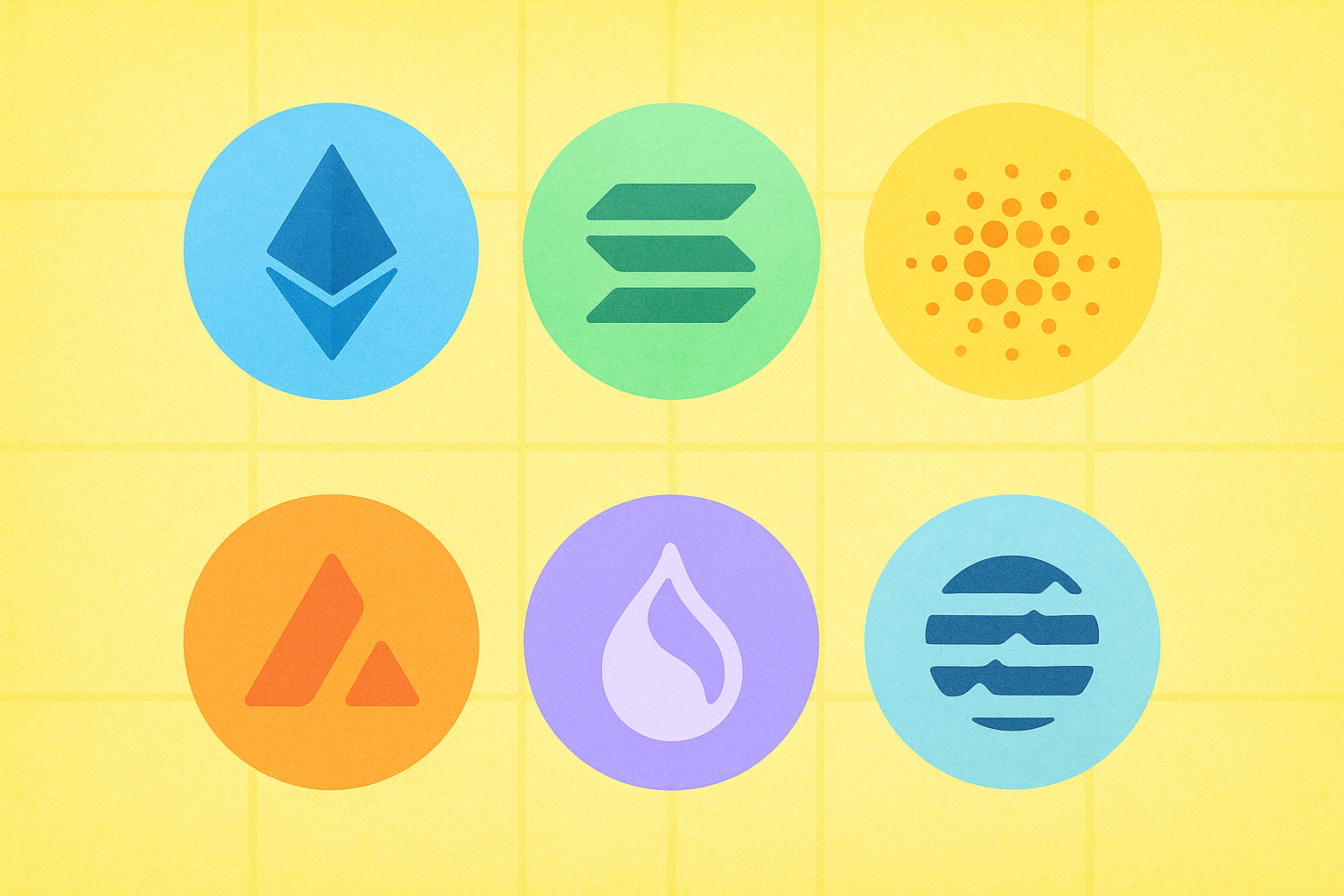
Comparison of Key Layer 1 Networks Listed on Domestic Exchanges | Speed and Fees for Cryptocurrencies Such as Sui and Solana

2026-02-02 05:31:41
ADA
Altcoins
Blockchain
Crypto Ecosystem
DeFi
Ethereum
GameFi
Layer 2
Solana
Web 3.0
Article Rating : 4.5
half-star
16 ratings
Compares transaction throughput, gas costs, and application scenarios for leading Layer 1 blockchains, including Ethereum, Solana, Cardano, Avalanche, Sui, and Aptos. Also provides details on available trading pairs at Japanese exchanges and staking options. This is a must-read selection guide for investors and developers evaluating Layer 1 chains.
Comparison of Key Layer 1 Networks Listed on Domestic Exchanges | Speed and Fees for Cryptocurrencies Such as Sui and Solana

What Is a Layer 1 Blockchain?

A Layer 1 blockchain is a standalone blockchain network that processes transactions and executes smart contracts independently. As the foundational layer of blockchain technology, it provides the core infrastructure on which various applications and services are built.

Prominent examples of Layer 1 blockchains include Bitcoin, Ethereum, and Solana. Each network utilizes its own consensus mechanism and technical architecture, optimized for specific uses and goals. Layer 1 chains are distinguished by their high security and decentralization. Because they operate independently, they are less reliant on external components and offer robust security.

However, Layer 1 chains face scalability challenges as transaction volumes rise, which can result in network congestion and higher fees. To address this, solutions such as Layer 2 protocols have been introduced—Ethereum, for example, employs Layer 2 solutions to boost throughput and lower transaction costs. Layer 2 technologies supplement Layer 1 by enabling faster and more affordable transactions while reducing the operating load on the base network.

Analytics firm CoinGecko reports that native tokens for Layer 1 blockchains have seen substantial growth in recent years. Major assets like BTC and ETH have reached new all-time highs, while other tokens have surged in niche markets. This growth is fueled by rising demand across diverse sectors such as DeFi, NFT, and blockchain gaming.

When evaluating investments or considering development on a Layer 1 blockchain, it is critical to assess its security, scalability, and ecosystem growth potential holistically. It is essential to carefully analyze each network’s technical features, developer community activity, and real-world use cases.

Key Specs Comparison Table: Major Layer 1 Projects Listed on Japanese Exchanges

The table below summarizes TPS (transactions per second), gas fees (transaction fees), main use cases, and listing status on Japanese exchanges for each project. This allows a quick comparison of performance and characteristics across leading Layer 1 blockchains.

Project (Token) Consensus / Technology Performance (Approx. TPS) Transaction Fee (Gas) Main Use Cases / Sectors Status on Japanese Exchanges
Ethereum (ETH) PoS (Casper), EVM Approx. 15–30 TPS (L1); thousands of TPS possible with L2 Several dollars to tens of dollars (highly variable); e.g., approx. $0.61 (about ¥90) General-purpose (DeFi, NFT, and more) Listed on nearly all major exchanges
Solana (SOL) PoH + PoS (TowerBFT), Sealevel parallel execution Measured: 3,000–4,000 TPS; Theoretical: 65,000 TPS Extremely low (<1¢); e.g., approx. $0.00038/tx High-speed apps: DeFi, NFT, gaming GMO Coin, bitFlyer, and several other exchanges
Cardano (ADA) PoS (Ouroboros), EUTXO model Tens of TPS (expandable with Hydra in the future) Low to medium (a few to several dozen yen); e.g., about $0.1/tx (approx. 0.34 ADA) Academically oriented DeFi, NFT, ID authentication Early listing on bitFlyer and other major exchanges
Avalanche (AVAX) PoS (Avalanche consensus), multi-chain model Peak measured: approx. 405 TPS; theoretical: 4,500+ TPS Low (a few yen), less expensive than Ethereum DeFi, NFT, gaming, enterprise (subnets) Listed on several domestic exchanges
Sui (SUI) DPoS + parallel execution, Move language Up to approx. 300,000 TPS (test); practical: several thousand TPS Very low (<$0.01); e.g., approx. $0.0023/tx Gaming, NFT (dynamic assets), high-speed DeFi Listed on several domestic exchanges
Aptos (APT) PoS (improved BFT), parallel processing (Block-STM) Several thousand to over 10,000 TPS (actual: 13.3k TPS) Very low (<$0.01); e.g., approx. $0.005/tx DeFi, gaming, social (Move language security) Listed on several domestic exchanges

*TPS indicates both theoretical maximum and observed network values. Gas fees are recent approximate averages. Exchange rate: $1 ≈ ¥130.

This comparison shows that each Layer 1 chain offers a different technical approach and performance profile. Ethereum stands out for its versatility and mature ecosystem, but it faces challenges with processing speed and transaction fees. In contrast, newer chains like Solana and Sui deliver high throughput and low fees, though their ecosystems are less established than Ethereum’s. When investing or developing, it is essential to understand these distinctions and choose solutions that match your objectives.

* The information is not intended to be and does not constitute financial advice or any other recommendation of any sort offered or endorsed by Gate.
Related Articles
How to Mine Ethereum in 2025: A Complete Guide for Beginners

How to Mine Ethereum in 2025: A Complete Guide for Beginners

This comprehensive guide explores Ethereum mining in 2025, detailing the shift from GPU mining to staking. It covers the evolution of Ethereum's consensus mechanism, mastering staking for passive income, alternative mining options like Ethereum Classic, and strategies for maximizing profitability. Ideal for beginners and experienced miners alike, this article provides valuable insights into the current state of Ethereum mining and its alternatives in the cryptocurrency landscape.

2025-08-14 05:18:10
Ethereum 2.0 in 2025: Staking, Scalability, and Environmental Impact

Ethereum 2.0 in 2025: Staking, Scalability, and Environmental Impact

Ethereum 2.0 has revolutionized the blockchain landscape in 2025. With enhanced staking capabilities, dramatic scalability improvements, and a significantly reduced environmental impact, Ethereum 2.0 stands in stark contrast to its predecessor. As adoption challenges are overcome, the Pectra upgrade has ushered in a new era of efficiency and sustainability for the world's leading smart contract platform.

2025-08-14 05:16:05
What is Ethereum: A 2025 Guide for Crypto Enthusiasts and Investors

What is Ethereum: A 2025 Guide for Crypto Enthusiasts and Investors

This comprehensive guide explores Ethereum's evolution and impact in 2025. It covers Ethereum's explosive growth, the revolutionary Ethereum 2.0 upgrade, the thriving $89 billion DeFi ecosystem, and dramatic reductions in transaction costs. The article examines Ethereum's role in Web3 and its future prospects, offering valuable insights for crypto enthusiasts and investors navigating the dynamic blockchain landscape.
2025-08-14 04:08:30
How does Ethereum's blockchain technology work?

How does Ethereum's blockchain technology work?

The blockchain technology of Ethereum is a decentralized, distributed ledger that records transactions and smart contract executions across a computer network (nodes). It aims to be transparent, secure, and resistant to censorship.
2025-08-14 05:09:48
What are smart contracts and how do they work on Ethereum?

What are smart contracts and how do they work on Ethereum?

Smart contracts are self-executing contracts with the terms of the agreement directly written into code. They automatically execute when predefined conditions are met, eliminating the need for intermediaries.
2025-08-14 05:16:12
Ethereum Price Analysis: 2025 Market Trends and Web3 Impact

Ethereum Price Analysis: 2025 Market Trends and Web3 Impact

As of April 2025, Ethereum's price has soared, reshaping the cryptocurrency landscape. The ETH price forecast 2025 reflects unprecedented growth, driven by Web3 investment opportunities and blockchain technology's impact. This analysis explores Ethereum's future value, market trends, and its role in shaping the digital economy, offering insights for investors and tech enthusiasts alike.
2025-08-14 04:20:41
Recommended for You
Gate Ventures Insights: DeFi 2.0—Curator Strategy Layers Rise as RWA Emerges as a New Foundational Asset

Gate Ventures Insights: DeFi 2.0—Curator Strategy Layers Rise as RWA Emerges as a New Foundational Asset

Gain access to proprietary analysis, investment theses, and deep dives into the projects shaping the future of digital assets, featuring the latest frontier technology analysis and ecosystem developments.
2026-03-18 11:44:58
Gate Ventures Weekly Crypto Recap (March 16, 2026)

Gate Ventures Weekly Crypto Recap (March 16, 2026)

Stay ahead of the market with our Weekly Crypto Report, covering macro trends, a full crypto markets overview, and the key crypto highlights.
2026-03-16 13:34:19
Gate Ventures Weekly Crypto Recap (March 9, 2026)

Gate Ventures Weekly Crypto Recap (March 9, 2026)

Stay ahead of the market with our Weekly Crypto Report, covering macro trends, a full crypto markets overview, and the key crypto highlights.
2026-03-09 16:14:07
Gate Ventures Weekly Crypto Recap (March 2, 2026)

Gate Ventures Weekly Crypto Recap (March 2, 2026)

Stay ahead of the market with our Weekly Crypto Report, covering macro trends, a full crypto markets overview, and the key crypto highlights.
2026-03-02 23:20:41
Gate Ventures Weekly Crypto Recap (February 23, 2026)

Gate Ventures Weekly Crypto Recap (February 23, 2026)

Stay ahead of the market with our Weekly Crypto Report, covering macro trends, a full crypto markets overview, and the key crypto highlights.
2026-02-24 06:42:31
Gate Ventures Weekly Crypto Recap (February 9, 2026)

Gate Ventures Weekly Crypto Recap (February 9, 2026)

Stay ahead of the market with our Weekly Crypto Report, covering macro trends, a full crypto markets overview, and the key crypto highlights.
2026-02-09 20:15:46