This comprehensive analysis compares CPOOL and CRO, two distinct cryptocurrency assets with different market positioning. CPOOL operates as a decentralized capital markets ecosystem for institutional borrowers, while CRO functions as a broader blockchain platform partnered with Crypto.com, serving over 100 million potential users across DeFi and Gaming. The article examines historical price trends, current market status, tokenomics, trading volumes, and long-term forecasts through 2031. CRO demonstrates superior liquidity with significantly higher trading volume and price stability, making it suitable for conservative investors. CPOOL offers emerging DeFi infrastructure potential but carries higher volatility and liquidity risks. Investment recommendations vary by experience level, with novice investors favored toward CRO and experienced investors potentially balancing both assets based on risk tolerance and portfolio objectives.
Introduction: Investment Comparison Between CPOOL and CRO
In the cryptocurrency market, the comparison between CPOOL vs CRO has become a topic of interest for investors. These two assets exhibit distinct differences in market cap ranking, application scenarios, and price performance, representing different positioning within the crypto asset landscape.
Clearpool (CPOOL): Launched in 2021, it has gained market recognition through its positioning as a decentralized capital markets ecosystem, enabling institutional borrowers to access uncollateralized liquidity directly from DeFi.
Cronos (CRO): Since its launch in 2018, it has been positioned as a leading blockchain ecosystem partnering with Crypto.com and representing an addressable user base of over a hundred million people globally, focusing on DeFi and Gaming.
This article will provide a comprehensive analysis of CPOOL vs CRO investment value comparison, examining historical price trends, supply mechanisms, institutional adoption, technical ecosystems, and future outlook, aiming to address the question that investors care about most:
"Which is the better buy right now?"
I. Historical Price Comparison and Current Market Status
Historical Price Trends of CPOOL (Coin A) and CRO (Coin B)
- 2021: CPOOL reached its all-time high of $2.55 on November 17, 2021, during the broader cryptocurrency market rally. The token launched in October 2021 at $0.3, experiencing substantial initial growth.
- 2021: CRO achieved its all-time high of $0.965407 on November 24, 2021, coinciding with peak market sentiment and ecosystem expansion activities.
- 2023: CPOOL recorded its historical low of $0.01599962 on October 17, 2023, representing a decline of approximately 99.4% from its peak.
- 2019: CRO established its all-time low of $0.0121196 on February 8, 2019, during its early development phase.
- Comparative Analysis: Throughout the 2021-2023 market cycle, CPOOL declined from $2.55 to $0.016, experiencing more pronounced volatility, while CRO demonstrated relatively moderate fluctuations, declining from $0.965407 to its 2019 low before recovering.
Current Market Status (January 22, 2026)
- CPOOL Current Price: $0.02711
- CRO Current Price: $0.09237
- 24-Hour Trading Volume: CPOOL $112,965.05 vs CRO $577,167.60
- Market Sentiment Index (Fear & Greed Index): 20 (Extreme Fear)
View real-time prices:
- Check CPOOL current price Market Price
- Check CRO current price Market Price
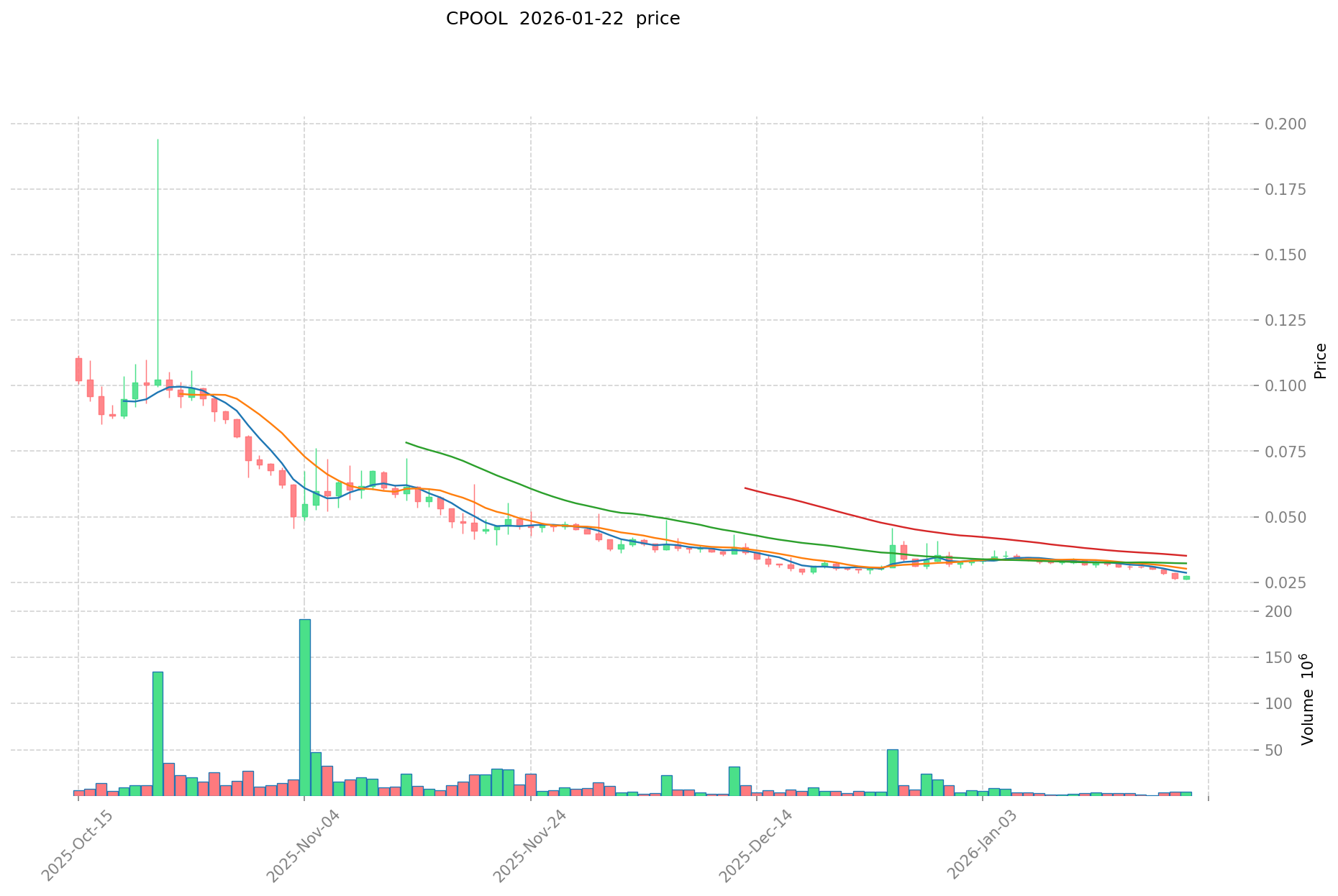
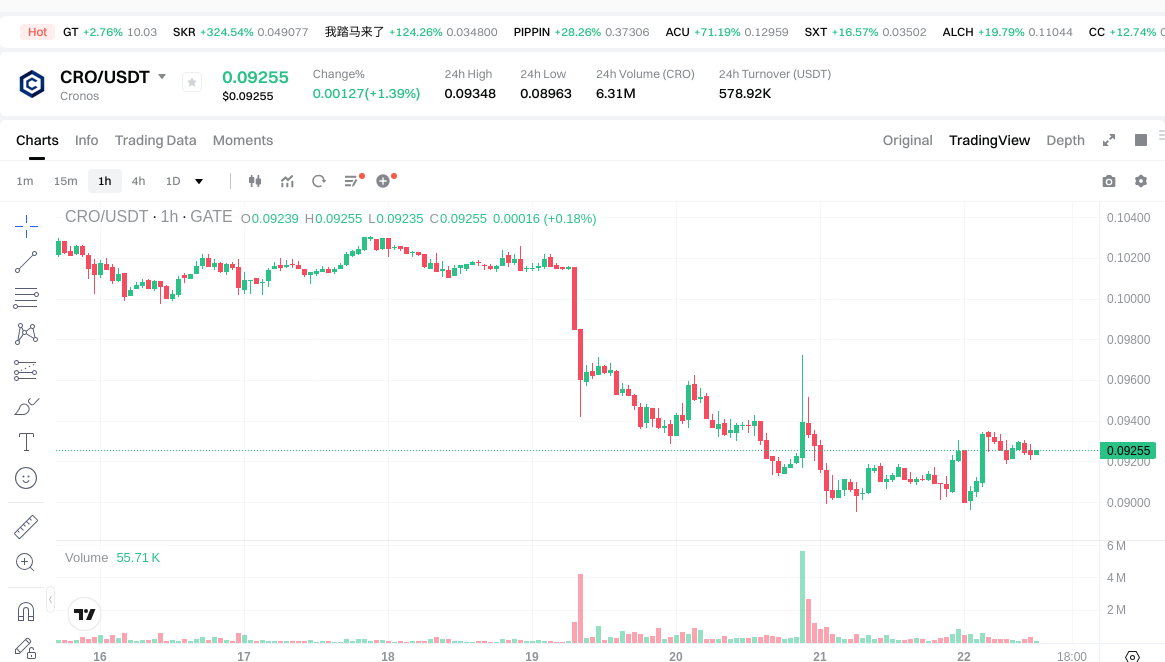
II. Core Factors Influencing CPOOL vs CRO Investment Value
Supply Mechanism Comparison (Tokenomics)
Due to insufficient reference materials, specific supply mechanism details for CPOOL and CRO cannot be determined at this time. Generally speaking, supply mechanisms such as fixed supply models, deflationary designs, or halving mechanisms may influence token price cycles through scarcity effects and market expectations.
Institutional Adoption and Market Application
Institutional Holdings: Current reference materials do not provide specific data on institutional preference between CPOOL and CRO.
Enterprise Adoption: Information regarding the application of CPOOL and CRO in cross-border payments, settlements, or investment portfolios is not available in the provided materials.
National Policies: Regulatory attitudes toward these two assets across different jurisdictions are not documented in the current reference materials.
Technology Development and Ecosystem Building
CPOOL Technical Upgrades: Specific information about CPOOL's technological developments and their potential impact is not available in the reference materials.
CRO Technical Development: Details regarding CRO's technical evolution and potential implications are not provided in the current materials.
Ecosystem Comparison: Comparative data on DeFi, NFT, payment solutions, and smart contract implementations for both tokens is not available in the provided reference materials.
Macroeconomic Factors and Market Cycles
Performance in Inflationary Environments: The reference materials do not contain sufficient data to assess which asset demonstrates stronger inflation-hedging properties.
Macroeconomic Monetary Policy: The specific impact of interest rates and the US Dollar Index on CPOOL and CRO cannot be determined from the available materials.
Geopolitical Factors: Information regarding how cross-border transaction demand and international situations affect these two assets is not documented in the current reference materials.
III. 2026-2031 Price Forecast: CPOOL vs CRO
Short-term Forecast (2026)
- CPOOL: Conservative $0.0222 - $0.0271 | Optimistic $0.0271 - $0.0323
- CRO: Conservative $0.0878 - $0.0924 | Optimistic $0.0924 - $0.1321
Mid-term Forecast (2028-2029)
- CPOOL may enter a gradual growth phase, with estimated price range of $0.0169 - $0.0464
- CRO may enter a moderate expansion phase, with estimated price range of $0.0857 - $0.1819
- Key drivers: institutional capital inflows, ETF developments, ecosystem expansion
Long-term Forecast (2030-2031)
- CPOOL: Base scenario $0.0374 - $0.0501 | Optimistic scenario $0.0433 - $0.0668
- CRO: Base scenario $0.1561 - $0.2226 | Optimistic scenario $0.1827 - $0.2760
View detailed price predictions for CPOOL and CRO
Disclaimer
CPOOL:
| Year |
Predicted High Price |
Predicted Average Price |
Predicted Low Price |
Price Change |
| 2026 |
0.0322609 |
0.02711 |
0.0222302 |
0 |
| 2027 |
0.0329508495 |
0.02968545 |
0.0228577965 |
9 |
| 2028 |
0.0441585911475 |
0.03131814975 |
0.016911800865 |
15 |
| 2029 |
0.046418195651962 |
0.03773837044875 |
0.026039475609637 |
39 |
| 2030 |
0.050073156829923 |
0.042078283050356 |
0.037449671914817 |
55 |
| 2031 |
0.066809793913203 |
0.04607571994014 |
0.043311176743731 |
70 |
CRO:
| Year |
Predicted High Price |
Predicted Average Price |
Predicted Low Price |
Price Change |
| 2026 |
0.1320891 |
0.09237 |
0.0877515 |
0 |
| 2027 |
0.1515098925 |
0.11222955 |
0.0774383895 |
21 |
| 2028 |
0.1687932432 |
0.13186972125 |
0.0857153188125 |
42 |
| 2029 |
0.18190109349225 |
0.150331482225 |
0.0992187782685 |
62 |
| 2030 |
0.222595825730557 |
0.166116287858625 |
0.156149310587107 |
79 |
| 2031 |
0.275985600648319 |
0.194356056794591 |
0.182694693386915 |
110 |
IV. Investment Strategy Comparison: CPOOL vs CRO
Long-term vs Short-term Investment Strategies
- CPOOL: May suit investors interested in decentralized capital markets and institutional DeFi adoption, with a focus on long-term ecosystem development potential in uncollateralized lending protocols.
- CRO: May appeal to investors seeking exposure to a broader blockchain ecosystem with established partnerships and a large addressable user base across DeFi and Gaming sectors.
Risk Management and Asset Allocation
- Conservative Investors: CPOOL 30% vs CRO 70% - prioritizing the more established ecosystem with higher trading volume
- Aggressive Investors: CPOOL 50% vs CRO 50% - balancing between emerging DeFi infrastructure and established blockchain platforms
- Hedging Tools: Stablecoin allocation for volatility management, options strategies for downside protection, cross-asset portfolio diversification
V. Potential Risk Comparison
Market Risk
- CPOOL: Characterized by lower trading volume ($112,965.05 in 24 hours), which may result in higher price volatility and liquidity constraints during market stress periods. Historical data shows significant price fluctuation from $2.55 to $0.016.
- CRO: Demonstrates higher trading volume ($577,167.60 in 24 hours) suggesting improved liquidity conditions, though still subject to broader cryptocurrency market sentiment, currently reflected in the Extreme Fear index reading of 20.
Technical Risk
- CPOOL: Network scalability considerations and operational stability factors related to decentralized capital markets infrastructure.
- CRO: Ecosystem dependency on partnership networks, potential technical challenges associated with DeFi and Gaming integration, and platform security considerations.
Regulatory Risk
Global regulatory frameworks continue to evolve regarding decentralized finance protocols and blockchain ecosystems, potentially affecting both assets differently based on their specific use cases and jurisdictional exposure.
VI. Conclusion: Which Is the Better Buy?
📌 Investment Value Summary:
- CPOOL Advantages: Positioned in the emerging decentralized capital markets sector, targeting institutional borrowers seeking uncollateralized liquidity, representing a niche but potentially high-growth DeFi infrastructure segment.
- CRO Advantages: Benefits from established ecosystem partnerships with Crypto.com, access to over a hundred million potential users globally, higher current trading volume suggesting improved liquidity, and broader application across DeFi and Gaming sectors.
✅ Investment Recommendations:
- Novice Investors: Consider starting with CRO due to its higher liquidity, established ecosystem, and larger user base, which may provide more stability for initial cryptocurrency exposure.
- Experienced Investors: May evaluate both assets based on risk tolerance and portfolio diversification goals, potentially allocating to CPOOL for exposure to institutional DeFi lending markets while maintaining CRO positions for ecosystem diversity.
- Institutional Investors: Conduct thorough due diligence on both assets' technical infrastructure, regulatory compliance frameworks, and long-term ecosystem sustainability before making allocation decisions.
⚠️ Risk Warning: The cryptocurrency market exhibits extreme volatility. This article does not constitute investment advice. Investors should conduct independent research and consider their financial situation, risk tolerance, and investment objectives before making any investment decisions.
VII. FAQ
Q1: What are the main differences between CPOOL and CRO in terms of market positioning?
CPOOL focuses on decentralized capital markets for institutional borrowers seeking uncollateralized liquidity, while CRO operates as a broader blockchain ecosystem with partnerships across DeFi and Gaming sectors serving over a hundred million potential users globally. CPOOL, launched in 2021, represents a specialized niche in institutional DeFi lending infrastructure, whereas CRO, launched in 2018, has established itself as a comprehensive blockchain platform partnered with Crypto.com. The fundamental difference lies in their target markets: CPOOL addresses institutional capital needs in decentralized finance, while CRO provides infrastructure for diverse applications including consumer-facing services, gaming platforms, and decentralized financial products. This positioning distinction significantly influences their adoption patterns, liquidity profiles, and growth trajectories.
Q2: How do the trading volumes of CPOOL and CRO compare, and what does this indicate?
CRO demonstrates significantly higher trading volume at $577,167.60 compared to CPOOL's $112,965.05 in 24-hour trading activity. This approximately 5x difference in trading volume indicates that CRO possesses superior liquidity conditions, suggesting easier entry and exit positions with potentially lower slippage during transactions. Higher trading volume typically correlates with greater market participation, improved price discovery mechanisms, and reduced volatility risk during normal market conditions. For investors, this volume differential suggests that CRO may offer more favorable trading conditions, particularly for larger position sizes, while CPOOL's lower volume indicates a more illiquid market that may experience sharper price movements and wider bid-ask spreads.
Q3: What were the historical price peaks for CPOOL and CRO, and how have they performed since?
CPOOL reached its all-time high of $2.55 on November 17, 2021, while CRO achieved its peak of $0.965407 on November 24, 2021, both occurring during the 2021 cryptocurrency market rally. From these peaks, CPOOL declined to a historical low of $0.01599962 in October 2023, representing approximately a 99.4% decrease, while CRO's historical low of $0.0121196 occurred earlier in February 2019. As of January 22, 2026, CPOOL trades at $0.02711, still significantly below its 2021 peak, while CRO trades at $0.09237. This historical performance indicates that CPOOL experienced more extreme volatility with a steeper decline from its peak, while CRO has demonstrated relatively more stable price action, though both assets remain well below their historical highs.
Q4: What are the projected price ranges for CPOOL and CRO through 2031?
For 2026, CPOOL is projected to trade between $0.0222-$0.0323, while CRO is expected to range from $0.0878-$0.1321. By 2028-2029, CPOOL's estimated range extends to $0.0169-$0.0464, while CRO may trade between $0.0857-$0.1819. Long-term forecasts for 2030-2031 suggest CPOOL could reach $0.0374-$0.0668 under optimistic scenarios, while CRO may achieve $0.1561-$0.2760. These projections indicate that CRO maintains consistently higher absolute price levels across all timeframes, though both assets show potential for gradual appreciation. The forecasts suggest CRO's price change could reach up to 110% by 2031 compared to CPOOL's 70% increase from 2026 levels. However, these projections depend heavily on market conditions, ecosystem development, institutional adoption, and broader cryptocurrency market cycles.
Q5: Which asset is more suitable for conservative versus aggressive investors?
For conservative investors, a portfolio allocation of 30% CPOOL and 70% CRO is recommended, prioritizing CRO's established ecosystem, higher trading volume, and larger user base for greater stability. This allocation emphasizes the more liquid and established asset while maintaining limited exposure to CPOOL's institutional DeFi potential. For aggressive investors, a balanced 50% CPOOL and 50% CRO allocation may be appropriate, providing equal exposure to both emerging DeFi infrastructure and established blockchain platforms. Conservative investors benefit from CRO's superior liquidity conditions and broader ecosystem diversification, reducing exposure to CPOOL's higher volatility and lower trading volume. Aggressive investors willing to accept higher risk for potentially greater returns may find CPOOL's positioning in institutional decentralized lending markets appealing, though this requires tolerance for significant price fluctuations and liquidity constraints.
Q6: What are the primary risks associated with investing in CPOOL versus CRO?
CPOOL faces market risk characterized by lower trading volume, resulting in higher price volatility and potential liquidity constraints during market stress, as evidenced by its historical 99.4% decline from peak prices. CRO, while demonstrating improved liquidity with higher trading volume, remains subject to broader cryptocurrency market sentiment, currently reflected in the Extreme Fear index of 20. Technical risks for CPOOL include network scalability and operational stability concerns related to decentralized capital markets infrastructure, while CRO faces ecosystem dependency on partnership networks and potential challenges in DeFi and Gaming integration. Both assets face regulatory risk as global frameworks continue to evolve regarding decentralized finance protocols and blockchain ecosystems, potentially affecting them differently based on their specific use cases and jurisdictional exposure. Investors should particularly note CPOOL's liquidity risk given its significantly lower trading volume compared to CRO.
Q7: How does current market sentiment affect CPOOL and CRO investment decisions?
The current Market Sentiment Index stands at 20, indicating "Extreme Fear" in the cryptocurrency market as of January 22, 2026. This extreme fear condition typically suggests that market participants are highly risk-averse, potentially creating opportunities for contrarian investors but also indicating heightened volatility and downside risk. In such environments, lower-liquidity assets like CPOOL face amplified risks as reduced trading activity can exacerbate price declines, while higher-liquidity assets like CRO may demonstrate relatively better resilience due to improved market depth. Extreme fear conditions often precede market bottoms, but timing such reversals remains highly uncertain. Investors should approach both assets with caution during extreme fear periods, potentially considering dollar-cost averaging strategies rather than lump-sum investments, implementing strict stop-loss measures, and maintaining sufficient stablecoin reserves for volatility management and opportunistic purchases during further price declines.
Q8: What role do institutional adoption and ecosystem development play in the CPOOL vs CRO comparison?
Institutional adoption represents a critical factor differentiating these assets, though specific institutional holdings data is not currently available in the reference materials. CPOOL's positioning targets institutional borrowers seeking uncollateralized liquidity in decentralized capital markets, suggesting its value proposition centers on institutional DeFi adoption and the growth of institutional participation in decentralized lending protocols. CRO's ecosystem development benefits from established partnerships with Crypto.com and access to over a hundred million potential users globally, providing a broader foundation for ecosystem expansion across DeFi and Gaming sectors. The success of CPOOL depends heavily on institutional acceptance of decentralized lending infrastructure and regulatory clarity for institutional DeFi participation, while CRO's trajectory relates more closely to consumer adoption, gaming industry integration, and the expansion of Crypto.com's user base. Investors should monitor institutional DeFi trends for CPOOL and partnership announcements, user growth metrics, and ecosystem expansion initiatives for CRO when evaluating long-term investment potential.
* The information is not intended to be and does not constitute financial advice or any other recommendation of any sort offered or endorsed by Gate.