The Crypto Fear & Greed Index is a vital sentiment analysis tool that quantifies market emotions on a 0-100 scale, combining six weighted factors including volatility, trading volume, social media sentiment, market surveys, Bitcoin dominance, and Google Trends data. This comprehensive index enables traders and investors to identify potential market extremes, timing entry and exit points more effectively by understanding whether fear or greed is driving market behavior. The article explores how extreme fear readings historically precede significant market bottoms and recovery opportunities, while extreme greed often signals potential market tops. It provides practical strategies for navigating fear-dominated conditions through dollar-cost averaging, portfolio diversification, and disciplined emotional management. The index functions as a descriptive sentiment gauge rather than a predictive tool, working best when combined with technical analysis, fundamental research, and macro-economic assessment. Historical
What is the Crypto Fear & Greed Index?
The Crypto Fear & Greed Index is a widely utilized analytical tool that quantifies market sentiment within the cryptocurrency ecosystem. This comprehensive indicator measures emotions ranging from extreme fear to extreme greed on a scale from 0 to 100, where lower scores indicate fear-driven market conditions and higher scores reflect greed-dominated sentiment.
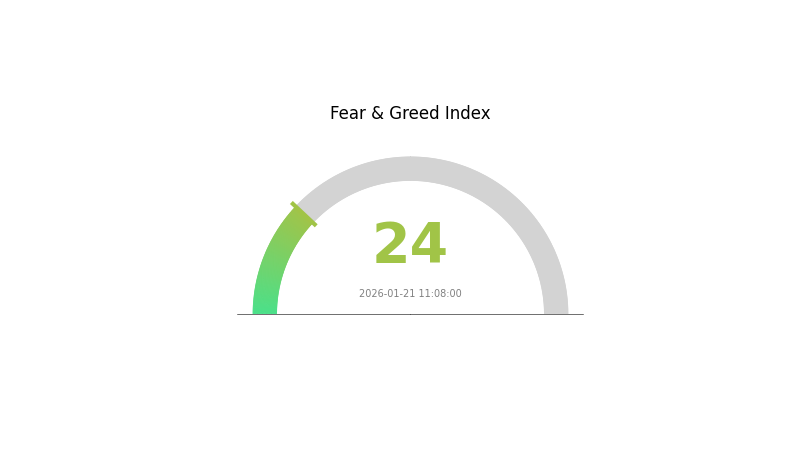
By providing clear insights into the emotional state of the cryptocurrency market, the index enables traders and investors to make more informed and strategic decisions. Understanding whether market participants are driven by fear or greed can help identify potential entry and exit points, making this tool invaluable for both short-term traders and long-term investors. The index serves as a psychological barometer, revealing the collective mindset of market participants and helping to identify potential market extremes that often precede significant price movements.
How is the Crypto Fear & Greed Index Calculated?
The Crypto Fear & Greed Index employs a sophisticated methodology that combines multiple weighted factors to generate a comprehensive sentiment score. Each component contributes specific insights into different aspects of market psychology:
-
Volatility (25%): This component compares current market volatility and maximum drawdowns against average values recorded over the previous 30 and 90-day periods. Higher volatility typically correlates with increased fear, as investors become uncertain about price stability and future trends.
-
Market Trading Volume (25%): This factor analyzes current trading volume levels and momentum patterns. Unusually high buying volume often indicates greed, while declining volume during price drops suggests fear-driven selling pressure.
-
Social Media Sentiment (15%): This metric tracks mentions, hashtags, and engagement levels related to cryptocurrencies across major platforms such as Twitter. The analysis examines both the volume and tone of discussions to gauge public sentiment.
-
Market Surveys (15%): This component incorporates results from sentiment surveys conducted among cryptocurrency investors and traders, providing direct insight into investor psychology and expectations.
-
Bitcoin Dominance (10%): This factor examines Bitcoin's market share relative to other cryptocurrencies. Increasing Bitcoin dominance often suggests fear, as investors flee to the perceived safety of the market leader during uncertain times.
-
Google Trends Data (10%): This metric analyzes search trends for Bitcoin-related terms and queries. Spikes in search interest often correlate with increased public attention and can indicate growing greed or fear depending on market context.
The index undergoes daily updates, providing a real-time snapshot of prevailing market sentiment and allowing investors to track emotional shifts as they occur.
Why is the Crypto Fear & Greed Index Important?
The Crypto Fear & Greed Index serves multiple critical functions in cryptocurrency investment analysis:
-
Emotional Insights: The index helps investors identify whether fear or greed is primarily driving market behavior at any given time. This awareness enables more rational decision-making by counteracting emotional biases that often lead to poor investment choices.
-
Decision-Making Support: By providing objective sentiment data, the index assists in determining whether assets should be bought, sold, or held based on prevailing sentiment trends. Contrarian investors often use extreme readings as signals for potential market reversals.
-
Market Timing: The index highlights potential opportunities during periods of extreme fear or extreme greed. Historically, extreme fear has often preceded market bottoms, while extreme greed has frequently signaled market tops, making these readings particularly valuable for strategic positioning.
-
Risk Management: Understanding market sentiment helps investors adjust position sizes and risk exposure appropriately. During periods of extreme greed, reducing exposure may be prudent, while extreme fear might present accumulation opportunities for those with appropriate risk tolerance.
Historical Significance of Extreme Fear Levels
Historical analysis reveals that extreme fear levels on the Crypto Fear & Greed Index have frequently coincided with significant market bottoms and periods of maximum pessimism. During these phases of widespread panic and capitulation, long-term investors have often found opportunities to accumulate quality assets at substantially reduced prices.
Notable examples include major market corrections where fear readings dropped below 20, followed by substantial recoveries in subsequent months. These patterns demonstrate how extreme sentiment often marks inflection points in market cycles. However, it remains crucial to understand that extreme fear provides no guarantee of immediate market recovery or reversal. Markets can remain in fear-dominated conditions for extended periods, and prices may continue declining even as fear readings reach extreme levels. Therefore, extreme fear should be viewed as one component of a comprehensive analysis rather than a standalone trading signal.
Strategies for Navigating Periods of Extreme Fear
Successfully managing investments during fear-dominated market conditions requires disciplined approaches and rational decision-making:
-
Avoid Emotional Selling: Maintain focus on long-term investment goals and resist impulsive decisions driven by short-term market panic. Fear-based selling often results in realizing losses at the worst possible times, missing subsequent recoveries.
-
Gradual Accumulation: Implement dollar-cost averaging (DCA) strategies to build positions systematically over time. This approach reduces the impact of short-term volatility and eliminates the need to perfectly time market bottoms.
-
Diversify Your Portfolio: Reduce concentration risk by spreading investments across different cryptocurrencies, blockchain sectors, and asset classes. Diversification helps cushion against extreme movements in individual assets.
-
Utilize Multiple Analytical Tools: Combine insights from the Crypto Fear & Greed Index with other analytical methods, including technical analysis, fundamental analysis, and on-chain metrics. This multi-faceted approach provides more robust decision-making frameworks.
-
Maintain Adequate Liquidity: Keep sufficient cash reserves to take advantage of opportunities that emerge during extreme fear periods without being forced to sell existing positions at unfavorable prices.
Correlation Between Market Sentiment and Price Movements
The relationship between sentiment readings and price movements follows recognizable patterns:
-
Extreme Fear Conditions: During these periods, prices typically experience downward pressure as selling intensifies and investors rush to exit positions. Fear becomes self-reinforcing as declining prices trigger additional selling, creating cascading effects. Market participants often overestimate downside risks and undervalue long-term potential during these phases.
-
Extreme Greed Conditions: Conversely, prices often rise substantially during greed-dominated periods as buying activity accelerates and investors display increased risk appetite. FOMO (fear of missing out) drives additional capital into the market, sometimes pushing valuations to unsustainable levels.
While the index effectively reflects current sentiment conditions, it functions as a descriptive rather than predictive tool. Sentiment readings indicate the present emotional state of the market but cannot reliably forecast future price directions or timing of reversals. Successful investors use sentiment data to inform their strategies while recognizing its limitations.
The Role of Macro-Economic Factors in Market Fear
Broader economic conditions significantly influence cryptocurrency market sentiment and fear levels:
-
Central Bank Monetary Policy: Restrictive monetary policies, such as interest rate increases and quantitative tightening, often amplify market fear. Higher rates increase the opportunity cost of holding non-yielding assets like cryptocurrencies and can trigger risk-off sentiment across financial markets.
-
Rising Government Bond Yields: Elevated yields on government bonds provide attractive risk-free alternatives, leading to reduced risk appetite among investors. Capital flows often shift from speculative assets toward safer fixed-income securities during these periods.
-
Geopolitical Tensions: International conflicts, trade disputes, and political instability can significantly intensify fear and volatility across cryptocurrency markets. These events create uncertainty that drives investors toward perceived safe-haven assets.
-
Regulatory Developments: Announcements of new regulations or enforcement actions can trigger fear-driven selloffs, particularly when regulatory clarity remains uncertain or when authorities take aggressive stances toward cryptocurrency activities.
Behavioral Patterns During Fear-Driven Markets
Different investor categories exhibit distinct behavioral patterns during periods of elevated market fear:
-
Retail Investors: Individual investors often demonstrate emotion-driven behavior, with many panic-selling holdings during market downturns. This group typically exhibits herd mentality, amplifying price movements in both directions. Retail investors frequently capitulate near market bottoms, selling to more sophisticated buyers.
-
Institutional Investors: Professional investment entities and institutional players often view fear-driven markets as strategic accumulation opportunities. These sophisticated participants typically maintain longer time horizons and employ systematic approaches that enable them to acquire assets at depressed valuations. Institutional buyers often provide price support during extreme fear periods, ultimately contributing to market stabilization.
-
Long-Term Holders: Experienced cryptocurrency holders who maintain conviction in long-term value propositions often use extreme fear periods to increase positions. This group demonstrates patience and discipline, recognizing that temporary market dislocations create asymmetric opportunity-to-risk ratios.
Limitations of the Crypto Fear & Greed Index
While valuable, the Crypto Fear & Greed Index has several important limitations that users should understand:
-
Not a Predictive Tool: The index reflects current sentiment conditions rather than forecasting future price movements. Sentiment can remain extreme for extended periods, and reversals may not occur when expected.
-
Bitcoin-Centric Focus: The index's heavy emphasis on Bitcoin-related data may not fully capture sentiment dynamics affecting smaller alternative cryptocurrencies (altcoins). Altcoin markets sometimes exhibit independent sentiment patterns that diverge from Bitcoin.
-
Short-Term Orientation: Daily updates make the index particularly suited for short-term analysis and trading decisions. Longer-term investors may find that daily fluctuations introduce noise that obscures more significant trend developments.
-
Lagging Indicators: Some index components, such as survey data, may lag actual market conditions, potentially reducing the timeliness of sentiment readings during rapidly evolving situations.
-
Susceptibility to Manipulation: Social media sentiment components could potentially be influenced by coordinated campaigns or bot activity, though the multi-factor approach helps mitigate this risk.
Examples of Market Recovery Following Extreme Fear
Historical market cycles provide instructive examples of recoveries following extreme fear periods:
During past major market downturns, the Crypto Fear & Greed Index frequently registered readings in the single digits, reflecting widespread capitulation and maximum pessimism among market participants. In several notable instances, these extreme fear readings preceded significant market recoveries. Following these fear-dominated periods, Bitcoin and other major cryptocurrencies eventually achieved new all-time highs in subsequent months and years, rewarding investors who maintained conviction during difficult market conditions.
These historical patterns illustrate the cyclical nature of cryptocurrency markets and demonstrate how extreme sentiment often marks important inflection points. However, each market cycle presents unique characteristics, and past patterns provide no guarantee of future outcomes. The timing and magnitude of recoveries vary significantly across different market cycles.
Conclusion
The Crypto Fear & Greed Index represents a powerful analytical tool for understanding and quantifying market sentiment within the cryptocurrency ecosystem. By synthesizing multiple data sources into a single, accessible metric, the index provides valuable insights into the emotional forces driving market behavior at any given time.
However, the index should never be used in isolation as a sole decision-making criterion. Effective cryptocurrency investing requires combining sentiment analysis with other analytical methodologies, including technical analysis, fundamental research, on-chain metrics, and macro-economic assessment. By maintaining a rational, disciplined approach and integrating multiple analytical perspectives, investors can navigate the inherently volatile cryptocurrency market more effectively and make more informed strategic decisions. Understanding market sentiment through tools like the Crypto Fear & Greed Index contributes to a comprehensive investment framework that balances emotional awareness with objective analysis.
FAQ
What is the Crypto Fear & Greed Index and how is it calculated?
The Crypto Fear & Greed Index measures market sentiment by analyzing factors like volatility, trading volume, momentum, social media trends, and market dominance. It ranges from 0 (extreme fear) to 100 (extreme greed), helping investors gauge whether the market is overheated or presents buying opportunities based on collective emotional positioning.
How to use the Fear & Greed Index to guide my cryptocurrency investment decisions?
Buy when the index shows extreme fear(below 25)indicating undervalued assets, and consider taking profits during extreme greed(above 75). Use it alongside technical analysis and market fundamentals to time entries and exits effectively for optimal returns.
What investment strategies should be adopted when the Fear and Greed Index is at different levels?
At extreme fear (0-25), consider accumulating quality assets at discounted prices. At fear (25-45), maintain cautious buying. At neutral (45-55), balance positions carefully. At greed (55-75), consider taking profits strategically. At extreme greed (75-100), reduce exposure to manage risk.
What do high (greed) and low (fear) Crypto Fear & Greed Index readings mean?
High index readings indicate market greed—investors are optimistic and aggressive, often driving prices upward. Low readings signal fear—market pessimism dominates, typically pushing prices downward. The index reflects collective sentiment and market psychology.
How accurate is the Fear & Greed Index in predicting cryptocurrency market reversals?
The Fear & Greed Index shows moderate accuracy in identifying potential market turning points. When extreme fear (below 25) or greed (above 75) occurs, reversals often follow within weeks. However, it works best combined with technical analysis, as sentiment alone doesn't guarantee precise timing. Historical data suggests 60-70% accuracy in signaling major market shifts.
Set clear investment goals and stick to a predetermined strategy regardless of market sentiment. Use dollar-cost averaging to reduce emotional decisions. Establish stop-loss and take-profit levels in advance. Monitor Fear & Greed Index as reference data, not trading signals. Diversify portfolio and focus on long-term fundamentals rather than short-term price fluctuations. Regular portfolio reviews help maintain discipline.
* The information is not intended to be and does not constitute financial advice or any other recommendation of any sort offered or endorsed by Gate.