This comprehensive guide explores the optimal timing for altcoin trading and understanding altcoin season dynamics. The article analyzes current market conditions including Bitcoin's performance, regulatory breakthroughs, and institutional capital movements. Discover how macroeconomic factors, Federal Reserve policies, and the Fear and Greed Index influence altcoin trading opportunities. The report covers trending altcoins like Monad and Kaspa, institutional investment patterns, and upcoming market-moving events on Gate exchange and beyond. Designed for traders seeking to navigate altcoin season effectively, this analysis provides actionable insights into market cycles, emerging opportunities, and strategic entry points. Learn how to identify altcoin season indicators and optimize trading decisions during volatile market phases.
Table of Contents
This comprehensive analysis covers the key developments in the cryptocurrency market, including macroeconomic policies, regulatory trends, trending tokens, institutional movements, upcoming events, and new market listings. The report provides insights into market dynamics, regulatory changes, and strategic opportunities for investors and traders in the digital asset space.
Market Overview
Key Highlights
Macroeconomic Environment
Expectations for a Federal Reserve interest rate cut in December have surged significantly, driving a notable recovery in the cryptocurrency market. This shift in monetary policy outlook has been catalyzed by several factors, including weaker-than-expected retail sales data and subdued wholesale inflation figures. The cancellation of the U.S. Q3 GDP estimate has introduced additional uncertainty and volatility into financial markets, creating both challenges and opportunities for digital asset traders.
The Securities and Exchange Commission has streamlined its ETF approval process, accompanied by increasingly positive regulatory signals. These developments are substantially enhancing institutional confidence in digital assets, as evidenced by growing interest from traditional financial institutions in cryptocurrency investment products. The regulatory clarity is particularly significant for institutional investors who have been waiting for a more defined framework before committing substantial capital to the crypto space.
Cryptocurrency Market Dynamics
The cryptocurrency market experienced a sharp correction during the reporting period, with Bitcoin declining 4.4% to $97,474 and Ethereum falling 9.3% to $3,144. This downturn was primarily driven by continuous ETF outflows and heightened risk-averse sentiment among investors. The persistent outflows from spot Bitcoin ETFs indicate a temporary shift in institutional positioning, possibly related to year-end portfolio rebalancing or profit-taking after the strong rally in previous months.
Most major altcoins followed the downward trend, with Solana (SOL), Ripple (XRP), and Kaspa (KAS) leading the declines. However, Quant (QNT) bucked the trend with a 4.4% gain, supported by momentum in cross-chain interaction developments and renewed interest in interoperability solutions. The divergence in altcoin performance highlights the importance of project-specific fundamentals and technological developments in the current market environment.
Institutional fund outflows and thin liquidity conditions have amplified market volatility, creating a challenging trading environment. The combination of reduced market depth and heightened uncertainty has led to wider bid-ask spreads and increased price sensitivity to large transactions.
Near-Term Outlook
Several key events are expected to influence market direction in the near term. The release of the U.S. Personal Consumption Expenditures (PCE) Price Index is particularly crucial for Federal Reserve interest rate expectations. This inflation metric is the Fed's preferred gauge and will significantly impact market sentiment regarding the timing and magnitude of potential rate cuts.
A leading exchange is set to launch spot trading for FLUID and WMTX tokens, expanding the range of available digital assets for traders. This expansion reflects the ongoing maturation of the cryptocurrency market infrastructure and the growing demand for diverse investment options.
The Reserve Bank of New Zealand is widely expected to announce a 25 basis point interest rate cut, which could influence global risk sentiment and capital flows into emerging markets and digital assets. Central bank policy decisions in major economies often have spillover effects on cryptocurrency markets through their impact on liquidity conditions and risk appetite.
Fear and Greed Index
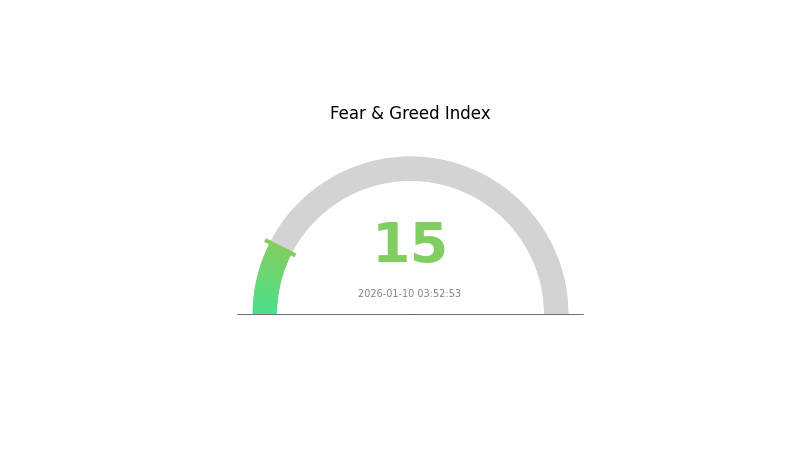
- Current Reading: 15 (Extreme Fear)
- Annual Percentage: 98.00%
The extreme fear reading suggests that market participants are highly risk-averse, which historically has often preceded market bottoms and presented buying opportunities for contrarian investors.
Total Cryptocurrency Market Capitalization
- Value: $3.02 Trillion
- Change: +0.38%
Despite recent volatility, the total market capitalization remains above the psychologically important $3 trillion level, indicating underlying strength in the broader crypto market.
Total Market Trading Volume
- Value: $139.27 Billion
- Change: +12.92%
The significant increase in trading volume suggests heightened market activity and engagement, which can be interpreted as increased interest from both retail and institutional participants.
Altcoin Season Index
- Quarterly Percentage: 27.27%
- Score: 25/100
The low altcoin season index indicates that Bitcoin is currently outperforming most altcoins, suggesting a flight to quality within the cryptocurrency market.
Total Open Interest in Derivatives Market
- Value: $4.64 Billion
- Change: +3.32%
Futures Contracts
- Value: $785.39 Billion
- Change: +1.86%
The growth in derivatives market activity reflects increasing sophistication in cryptocurrency trading and growing institutional participation in crypto futures markets.
Industry Updates
Macroeconomic Policy Developments
-
Federal Reserve Rate Cut Expectations: The probability of a Federal Reserve interest rate cut in December has soared above 80%, driving a strong Bitcoin recovery to $87,000 and pushing total cryptocurrency market capitalization above $3 trillion. This shift in expectations reflects growing concerns about economic growth and the Fed's commitment to supporting the economy through accommodative monetary policy. The anticipated rate cut is expected to increase liquidity in financial markets and reduce the opportunity cost of holding non-yielding assets like Bitcoin.
-
U.S. GDP Estimate Cancellation: The U.S. Bureau of Economic Analysis canceled the Q3 2025 GDP estimate due to an extended 43-day government shutdown, creating uncertainty in financial markets and increasing volatility in cryptocurrency trading. This unprecedented situation has forced market participants to rely on alternative economic indicators and has highlighted the fragility of traditional economic data collection systems. The data vacuum has increased the importance of real-time market indicators and sentiment analysis in cryptocurrency trading.
-
U.S. Budget Deficit: The U.S. budget deficit for October reached $284 billion, exceeding expectations and bolstering risk appetite in cryptocurrency markets as investors anticipate looser monetary policy and increased liquidity. The persistent fiscal imbalances in the United States continue to support the narrative of Bitcoin as a hedge against currency debasement and fiscal irresponsibility. The growing deficit also raises questions about the long-term sustainability of current fiscal policies and the potential need for monetary accommodation.
-
Australian Inflation Data: Australia's October CPI rose to 3.8% year-over-year, higher than forecasts, prompting the Reserve Bank of Australia to delay anticipated rate cuts. This development supported the Australian dollar and limited cryptocurrency investment flows from the region. The divergence in monetary policy trajectories between major central banks creates opportunities for currency arbitrage and influences capital flows into digital assets.
-
U.S. Economic Data: Recent U.S. economic data, including weak retail sales and low wholesale inflation, have reinforced market expectations for Federal Reserve rate cuts, supporting optimistic sentiment and increased leverage in the cryptocurrency sector. The combination of slowing growth and moderating inflation provides an ideal backdrop for risk assets, as it suggests the Fed has room to ease policy without reigniting inflationary pressures.
Cryptocurrency Regulatory Trends
-
SEC No-Action Letter for Fuse: The Securities and Exchange Commission granted a no-action letter to the Solana-based DePIN project Fuse, allowing the project to distribute FUSE tokens with regulatory protection. This landmark decision signals a more positive regulatory approach from the United States, enhancing market confidence for compliant DePIN projects and utility tokens. The no-action letter provides a template for other projects seeking regulatory clarity and demonstrates the SEC's willingness to work with innovative blockchain projects that prioritize compliance.
-
XRP ETF Launches: Franklin Templeton and Grayscale launched XRP-backed ETFs on NYSE Arca, marking a major milestone in the integration of altcoins into U.S. regulated markets. This move enhances institutional access to XRP and could drive broader acceptance of altcoin ETFs. The successful launch of these products demonstrates growing regulatory comfort with cryptocurrency investment vehicles beyond Bitcoin and Ethereum, potentially opening the door for additional altcoin ETFs in the future.
-
VanEck BNB ETF Amendment: VanEck amended its proposed spot BNB ETF filing, removing staking features to increase the likelihood of SEC approval. This reflects a cautious approach by issuers to meet U.S. regulatory standards and could accelerate the listing of new altcoin ETFs. The decision to exclude staking functionality addresses SEC concerns about securities classification while still providing investors with exposure to BNB price movements.
-
SEC Post-Shutdown Guidance: New SEC guidance following the shutdown clarifies the ETF registration process, enabling faster approval of cryptocurrency ETFs under standard listing criteria. This regulatory streamlining is expected to accelerate the launch of new ETFs and support market expansion. The clarified procedures reduce uncertainty for issuers and provide a more predictable path to market for new cryptocurrency investment products.
-
U.S. Bank Stablecoin Trial: A U.S. bank has begun testing stablecoin issuance on the Stellar blockchain, partnering with PwC and the Stellar Development Foundation. This initiative explores the use of regulated stablecoins in banking and could potentially enhance the adoption of blockchain-based payments within institutions. The involvement of a traditional bank and a major consulting firm lends credibility to stablecoin technology and suggests growing acceptance of blockchain solutions in mainstream finance.
Trending Tokens
-
Monad (MON): Monad has surged 48.7% in 24 hours with trading volume reaching $1.19 billion. The rally was driven by its mainnet launch, strong funding, and EVM compatibility, positioning it as a high-throughput Layer 1 competitor. Monad's innovative parallel execution engine promises to deliver significantly higher transaction speeds than existing EVM-compatible chains while maintaining full compatibility with Ethereum's developer ecosystem. The project's strong backing from prominent venture capital firms and its technical innovations have generated substantial interest from both developers and investors.
-
Kaspa (KAS): Kaspa has gained 11.8% in 24 hours with volume of $112 million, supported by its scalable PoW Layer 1 architecture and recent network upgrades that increased block speed to 10 blocks per second. Kaspa's unique blockDAG structure allows for parallel block creation, potentially solving the blockchain trilemma of scalability, security, and decentralization. The project's focus on maintaining proof-of-work consensus while achieving high throughput has attracted attention from miners and investors seeking alternatives to traditional blockchain architectures.
-
Quant (QNT): Quant has risen 11.6% in 24 hours with volume of $35 million, driven by renewed interest in interoperability solutions and increased development activity on its Overledger network. Quant's technology enables seamless communication between different blockchain networks, addressing one of the most significant challenges in the cryptocurrency ecosystem. The growing recognition of interoperability as a critical infrastructure component has positioned Quant as a key player in the multi-chain future of blockchain technology.
Institutional Money Movements
-
Metaplanet Bitcoin-Backed Loan: Metaplanet secured a $130 million loan backed by Bitcoin reserves, raising total credit facility usage to $230 million. The funds are allocated for additional BTC purchases and yield strategies. This innovative financing structure demonstrates the growing acceptance of Bitcoin as collateral in traditional lending markets and reflects institutional confidence in Bitcoin's long-term value proposition. The ability to leverage Bitcoin holdings without selling them allows companies to maintain exposure while accessing liquidity for operational needs and strategic investments.
-
Large Bitcoin Options Strategy: A whale executed a bullish condor options strategy on 20,000 BTC on Deribit, representing a $1.7 billion bet that Bitcoin will end the year between $106,000 and $112,000. This sophisticated options strategy indicates strong conviction among large traders regarding Bitcoin's year-end price trajectory. The use of options rather than spot positions suggests that institutional participants are increasingly employing complex derivatives strategies to express their market views while managing risk.
-
Ethereum Whale Accumulation: A cryptocurrency whale returned to the market after a three-month absence, purchasing 1,110 ETH for $3.25 million at $2,933 per ETH, while retaining $67.8 million in DAI for potential additional purchases. This accumulation pattern suggests that sophisticated investors view current price levels as attractive entry points. The strategic approach of deploying capital gradually while maintaining substantial reserves demonstrates disciplined risk management and confidence in Ethereum's long-term prospects.
-
Bitmine Ethereum Acquisition: Bitmine purchased 28,625 ETH worth $82.11 million, bringing its total digital asset holdings to $11.8 billion, including 3,629,701 ETH and 192 BTC. This substantial acquisition by a mining company reflects the industry's diversification beyond Bitcoin and growing recognition of Ethereum's value proposition. The company's significant Ethereum holdings position it to benefit from potential price appreciation and staking rewards.
-
BlackRock Bitcoin Deposit: BlackRock deposited 4,471 BTC worth $390.8 million to a leading exchange, signaling continued institutional activity in the digital asset market. While large deposits to exchanges can sometimes indicate selling pressure, they can also reflect portfolio rebalancing, collateral management, or preparation for derivatives trading. BlackRock's ongoing engagement with cryptocurrency markets underscores the growing mainstream acceptance of digital assets among traditional asset managers.
Events to Monitor
Late November (Week 1)
- U.S. PCE Price Index for September 2025 release, a key factor for Fed interest rate outlook
- Reserve Bank of New Zealand expected to announce a 25 basis point rate cut
- Leading exchange launches spot trading for FLUID and WMTX tokens
Late November (Week 2)
- Kinetiq Token Generation Event kicks off, attracting attention in the DeFi and token markets
Late November (Week 3)
- Eurozone November inflation data release, potentially impacting EUR markets and cryptocurrency
- Tectum Cash token IDO launches on KingdomStarter
Late November (Week 4)
- Hyperliquid unlocks 10 million tokens (~$314 million, 3.6% of supply), raising concerns about market impact
Early December
- Vechain network upgrade at block 23,414,400
- Hyperliquid strategy launches with $300 million HYPE token purchase
- Aztec Network token auction begins
These events represent critical milestones that could significantly influence market sentiment and price action across the cryptocurrency ecosystem. Investors and traders should monitor these developments closely and adjust their strategies accordingly.
Phemex Market Focus
Recent Listings
-
November 24th - Monad: Monad is a high-performance Layer 1 blockchain designed to address the scalability limitations of existing networks, particularly Ethereum, while maintaining full compatibility with the Ethereum Virtual Machine. The project's innovative approach to parallel transaction execution and optimized consensus mechanism positions it as a potential game-changer in the blockchain scalability race. Monad's architecture allows developers to deploy existing Ethereum applications without modification while benefiting from significantly improved performance characteristics.
-
November 22nd - BOBUSDT Futures Contract: The BOBUSDT futures contract is a USDT-margined linear contract that supports hedge mode, allowing simultaneous long and short positions. This flexibility enables sophisticated trading strategies including spread trading, arbitrage, and risk management techniques. The availability of hedge mode is particularly valuable for market makers and professional traders who need to manage complex position structures while maintaining market-neutral exposure.
These new listings expand the range of trading opportunities available to market participants and reflect the platform's commitment to providing access to innovative blockchain projects and flexible trading instruments. The careful selection of projects and trading products demonstrates a focus on quality and utility rather than simply maximizing the number of available assets.
FAQ
What are the main trends in the current cryptocurrency market?
Current cryptocurrency market trends include robust growth driven by decentralized finance adoption, institutional investment expansion, and central bank digital currency development. Bitcoin maintains strong popularity, regulatory clarity advances, blockchain integration with payment systems accelerates, and digital asset mainstream adoption continues to expand globally.
What are the important policy changes and regulatory trends in the cryptocurrency industry in 2024?
In 2024, US cryptocurrency regulation focused on financial stability, investor protection, and combating illegal activities. The SEC and CFTC strengthened oversight of stablecoins and DeFi platforms. Key areas include enhanced anti-money laundering compliance, stablecoin reserve requirements, and regulatory coordination with international bodies.
Bitcoin, Ethereum and other mainstream cryptocurrencies price performance recently?
As of January 10, 2026, Bitcoin stands at $95,734.9 and Ethereum at $3,199.91. Both experienced significant recent declines amid market volatility. Bitcoin fell over 2% in 24 hours, while Ethereum dropped 11.38% in seven days. Market sentiment remains cautious.
What is the current status of the total market capitalization and trading volume in the cryptocurrency market?
As of January 2026, the cryptocurrency market cap reaches approximately $2.12 trillion, with Bitcoin at $1.76 trillion and Ethereum at $360.4 billion, representing 71.1% market dominance. Daily trading volumes remain robust, with futures and options exceeding $900 billion, reflecting strong market liquidity and sustained institutional participation.
How should beginners understand and enter the cryptocurrency market?
Start by learning basic concepts like blockchain, Bitcoin, and Ethereum. Choose a reputable platform, complete identity verification, and begin with small investments. Study technical and fundamental analysis, adopt a long-term holding strategy, and gradually build your trading knowledge and experience.
What are the main risks of cryptocurrency investment?
Cryptocurrency investment carries several key risks: extreme price volatility can lead to significant losses, smart contract vulnerabilities and coding flaws pose technical threats, security breaches and hacking incidents endanger fund safety, regulatory uncertainty affects market stability, and liquidity risks may prevent timely asset liquidation during market downturns.
How is the latest development in emerging fields such as DeFi, NFT, and Layer2?
Layer2 scaling solutions continue optimizing transaction costs and speed. DeFi innovation drives new protocol development. NFT and metaverse applications advance steadily with differentiated market sentiment. Ethereum ecosystem remains highly active with ongoing technical upgrades.
What changes have occurred in institutional investors' attitudes toward the cryptocurrency market?
Institutional investors remain cautiously optimistic about cryptocurrency, with notably stronger confidence in Bitcoin than the broader market. Bitcoin receives 47.3% positive sentiment compared to 33.2% for the overall crypto sector, reflecting growing institutional recognition of digital assets' long-term value and market maturation.
* The information is not intended to be and does not constitute financial advice or any other recommendation of any sort offered or endorsed by Gate.