This comprehensive analysis compares DAI and LINK as DeFi investment alternatives across multiple dimensions. DAI, the largest decentralized stablecoin, maintains $1.00 parity through overcollateralization mechanisms, serving as stable-value infrastructure for decentralized finance protocols. LINK, a leading oracle network solution with 68% DeFi market share, features fixed 1 billion token supply and expanding institutional partnerships including Swift and DTCC. The comparison examines historical price trends, tokenomics, institutional adoption patterns, technical ecosystem development, and macroeconomic sensitivities. DAI prioritizes capital preservation and DeFi utility over appreciation potential, while LINK offers growth potential aligned with blockchain infrastructure adoption cycles. Investment recommendations vary by investor profile—conservative investors should allocate 70-80% DAI and 20-30% LINK, while experienced investors can adjust based on portfolio objectives. Long-term LINK forecasts project $
Introduction: DAI vs LINK Investment Comparison
In the cryptocurrency market, the comparison between DAI vs LINK has consistently been a topic investors cannot avoid. The two not only exhibit significant differences in market cap ranking, application scenarios, and price performance, but also represent distinct crypto asset positioning.
DAI: Launched in 2017, it has gained market recognition as the largest decentralized stablecoin on Ethereum, serving as fundamental infrastructure for decentralized finance (DeFi) by providing low-volatility economic freedom.
LINK: Since its launch in 2017, it has been recognized for its role in connecting blockchain smart contracts with off-chain data, becoming one of the widely adopted oracle network solutions in the blockchain ecosystem.
This article will comprehensively analyze the investment value comparison of DAI vs LINK through historical price trends, supply mechanisms, institutional adoption, technological ecosystems, and future forecasts, attempting to answer the question investors care about most:
"Which is the better buy right now?"
I. Historical Price Comparison and Current Market Status
DAI and LINK Historical Price Trends
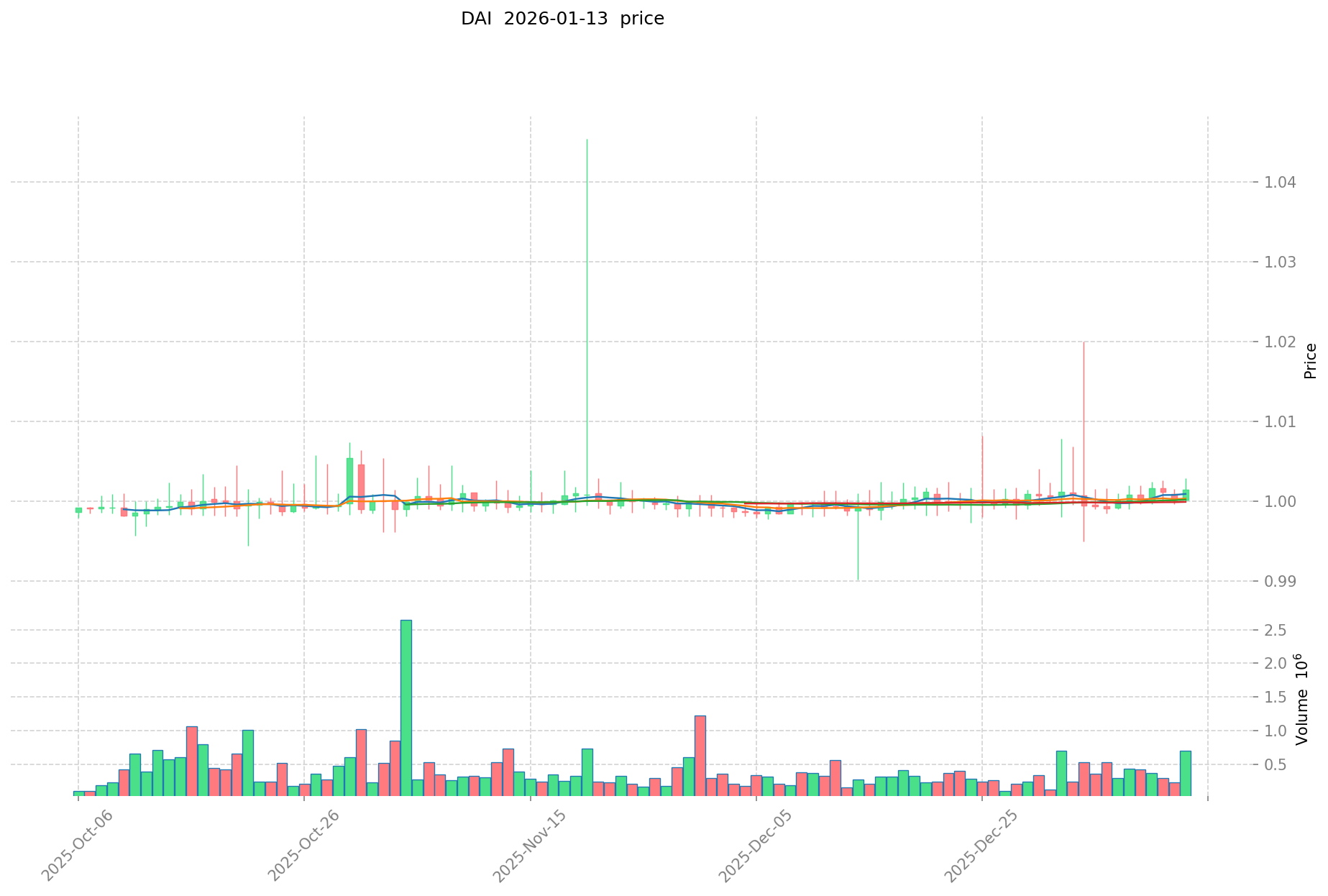
- 2020: DAI experienced price fluctuations during market volatility, reaching a historical high of $1.22 in March 2020, coinciding with broader cryptocurrency market turbulence.
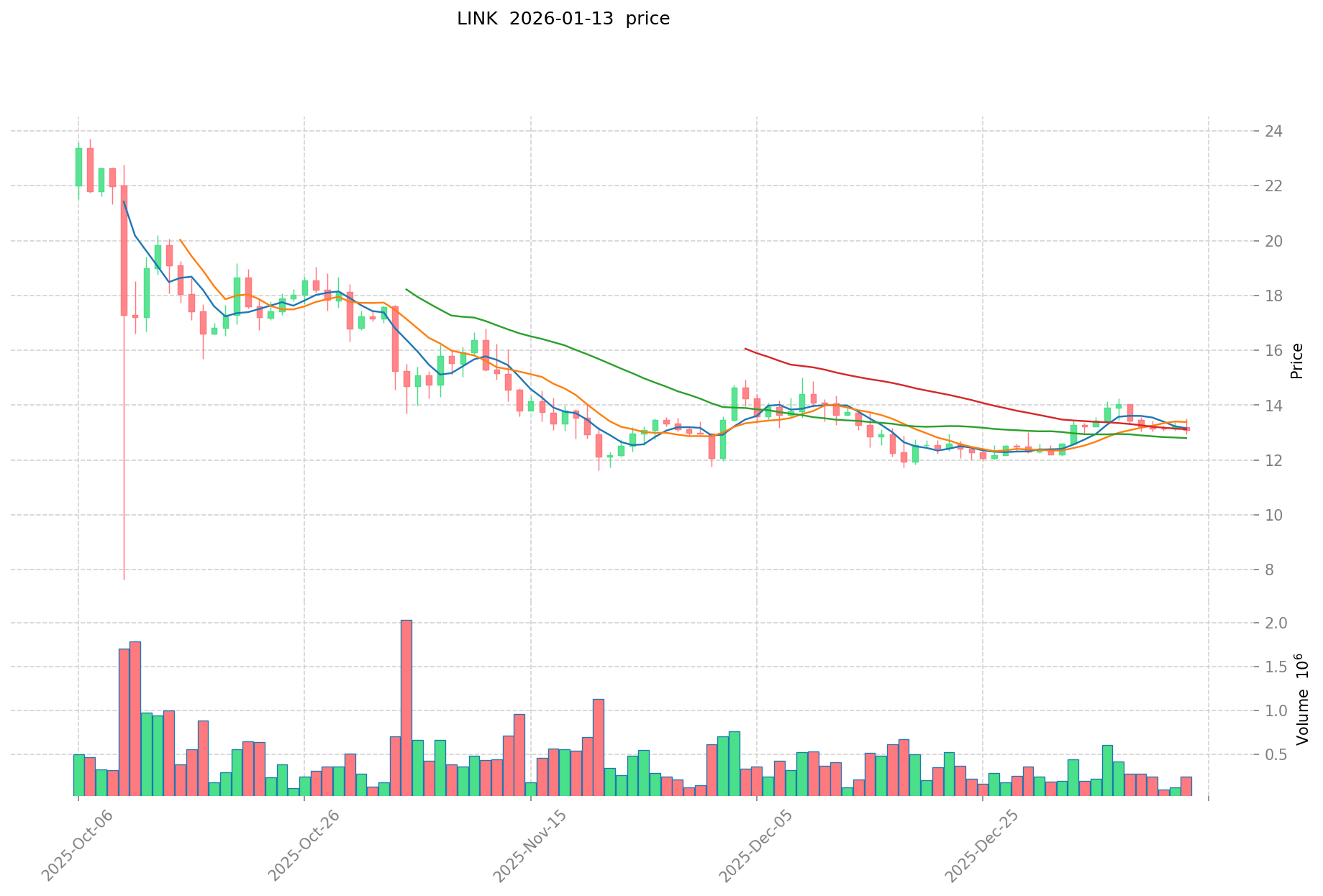
- 2021: LINK benefited from increased adoption of decentralized oracle solutions, with its price reaching a historical high of $52.7 in May 2021, reflecting strong market momentum during the bull cycle.
- Comparative Analysis: During the 2021-2023 market cycle, DAI maintained relative stability around its $1.00 peg, demonstrating its function as a stablecoin, while LINK experienced significant volatility, declining from its peak of $52.7 to lower levels, reflecting broader market corrections.
Current Market Status (2026-01-13)
- DAI Current Price: $1.00098
- LINK Current Price: $13.267
- 24-Hour Trading Volume: DAI $499,987.96 vs LINK $2,483,306.26
- Market Sentiment Index (Fear & Greed Index): 26 (Fear)
View real-time prices:
II. Core Factors Influencing DAI vs LINK Investment Value
Supply Mechanism Comparison (Tokenomics)
-
DAI: Operates as an algorithmic stablecoin with supply dynamically adjusted through collateralization mechanisms in the MakerDAO protocol. Supply expands or contracts based on collateral deposit and withdrawal activity, maintaining price stability around $1 USD.
-
LINK: Features a fixed maximum supply of 1 billion tokens, with distribution allocated across ecosystem development, node operators, and strategic partnerships. The protocol has implemented a token reserve program that may influence circulating supply dynamics.
-
📌 Historical Pattern: DAI's supply mechanism prioritizes price stability over appreciation potential, while LINK's fixed supply model combined with increasing network utilization may create supply-demand imbalances that influence price cycles.
Institutional Adoption and Market Application
-
Institutional Holdings: LINK has attracted attention from institutional participants focused on blockchain infrastructure investment, particularly given its partnerships with financial institutions including Swift and DTCC. DAI serves primarily as a functional asset within DeFi protocols rather than an institutional investment vehicle.
-
Enterprise Adoption: DAI functions predominantly within decentralized finance platforms, with approximately 50% locked in protocols like Compound. LINK's Cross-Chain Interoperability Protocol (CCIP) positions it as critical infrastructure for enterprise blockchain applications, real-world asset (RWA) tokenization, and cross-chain settlement solutions.
-
National Policy: Both assets face evolving regulatory frameworks. Stablecoins like DAI encounter scrutiny regarding reserve transparency and systemic risk implications. LINK, as infrastructure-layer technology, may benefit from clearer regulatory pathways as oracle services become recognized as essential blockchain components.
Technical Development and Ecosystem Construction
-
DAI Technical Framework: Functions through overcollateralization mechanisms managed by MakerDAO governance. Stability maintenance depends on collateral diversity, liquidation mechanisms, and governance parameter adjustments.
-
LINK Technical Evolution: Has expanded beyond basic oracle functionality to include CCIP for cross-chain messaging, staking mechanisms for network security, and integration with institutional financial infrastructure. The protocol has established dominant market positioning with reported 68% market share in DeFi oracle services.
-
Ecosystem Comparison: DAI integration concentrates primarily in DeFi lending protocols and liquidity pools. LINK ecosystem extends across DeFi data feeds, NFT dynamic metadata, gaming randomness verification, and institutional blockchain implementations. LINK's broader application scope potentially offers more diverse value capture mechanisms.
Macroeconomic Environment and Market Cycles
-
Performance in Inflationary Conditions: DAI's stability mechanism targets $1 parity regardless of inflation, functioning as a transactional medium rather than inflation hedge. LINK's value proposition relates more to blockchain adoption cycles and may exhibit different sensitivity to macroeconomic conditions compared to traditional inflation hedges.
-
Macroeconomic Monetary Policy: Interest rate changes influence DeFi lending yields, affecting DAI utilization in protocols. LINK pricing shows correlation with broader cryptocurrency market movements, which demonstrate sensitivity to liquidity conditions and risk appetite influenced by central bank policies.
-
Geopolitical Factors: Cross-border transaction demand and international developments may indirectly influence both assets. DAI could see increased utilization in jurisdictions experiencing currency instability. LINK's infrastructure role may benefit from growing institutional blockchain adoption driven by efficiency improvements in international settlement systems.
III. 2026-2031 Price Forecast: DAI vs LINK
Short-term Forecast (2026)
- DAI: Conservative $1.00 | Optimistic $1.00
- LINK: Conservative $9.67-$13.25 | Optimistic $13.25-$18.02
Mid-term Forecast (2028-2029)
- DAI maintains its peg at approximately $1.00 throughout the forecast period
- LINK shows gradual appreciation potential, with projected ranges of $13.07-$17.81 in 2028 and $13.83-$19.29 in 2029
- Key drivers: institutional capital inflows, ETF developments, ecosystem expansion
Long-term Forecast (2030-2031)
- DAI: Baseline scenario $1.00 | Optimistic scenario $1.00
- LINK: Baseline scenario $15.82-$20.82 | Optimistic scenario $20.82-$26.86
View detailed price predictions for DAI and LINK
Disclaimer
DAI:
| Year |
Predicted High Price |
Predicted Average Price |
Predicted Low Price |
Price Change |
| 2026 |
1 |
1 |
1 |
0 |
| 2027 |
1 |
1 |
1 |
0 |
| 2028 |
1 |
1 |
1 |
0 |
| 2029 |
1 |
1 |
1 |
0 |
| 2030 |
1 |
1 |
1 |
0 |
| 2031 |
1 |
1 |
1 |
0 |
LINK:
| Year |
Predicted High Price |
Predicted Average Price |
Predicted Low Price |
Price Change |
| 2026 |
18.02136 |
13.251 |
9.67323 |
0 |
| 2027 |
17.0434362 |
15.63618 |
9.5380698 |
17 |
| 2028 |
17.810390829 |
16.3398081 |
13.07184648 |
23 |
| 2029 |
19.294862394885 |
17.0750994645 |
13.830830566245 |
28 |
| 2030 |
23.458625399303325 |
18.1849809296925 |
15.820933408832475 |
37 |
| 2031 |
26.860126082202307 |
20.821803164497912 |
13.534172056923643 |
56 |
IV. Investment Strategy Comparison: DAI vs LINK
Long-term vs Short-term Investment Strategies
-
DAI: Suitable for investors seeking capital preservation and transactional utility within DeFi protocols. The asset functions primarily as a medium of exchange and liquidity provision tool rather than an appreciation vehicle. Short-term holders utilize DAI for protocol participation, while long-term positioning focuses on sustained DeFi ecosystem engagement.
-
LINK: Suitable for investors focused on blockchain infrastructure growth and oracle network expansion. Long-term positioning aligns with anticipated institutional adoption cycles and cross-chain interoperability development. Short-term strategies may consider network utilization metrics and partnership announcements as catalysts.
Risk Management and Asset Allocation
-
Conservative Investors: DAI 70-80% vs LINK 20-30%. This allocation prioritizes capital stability while maintaining exposure to oracle infrastructure growth potential.
-
Aggressive Investors: DAI 20-30% vs LINK 70-80%. This configuration emphasizes growth-oriented positioning in blockchain infrastructure with minimal stablecoin allocation for liquidity management.
-
Hedging Instruments: Stablecoin reserves for volatility management, options contracts for downside protection, cross-asset portfolio diversification across different blockchain infrastructure sectors.
V. Potential Risk Comparison
Market Risk
-
DAI: Exposure to collateral composition changes, de-pegging events during extreme market conditions, and liquidity constraints in specific protocols. Dependency on governance decisions regarding collateral types and stability mechanisms.
-
LINK: Correlation with broader cryptocurrency market movements, sensitivity to blockchain adoption cycles, and competitive pressure from alternative oracle solutions. Price volatility influenced by market sentiment shifts and liquidity conditions.
Technical Risk
-
DAI: Collateralization mechanism vulnerabilities, smart contract dependencies across integrated protocols, governance attack vectors, and liquidation cascade scenarios during rapid market declines.
-
LINK: Network node centralization concerns, smart contract security considerations in oracle data delivery, cross-chain message relay vulnerabilities in CCIP implementation, and potential competition from emerging oracle protocols.
Regulatory Risk
- Different regulatory frameworks apply to each asset class. Stablecoin oversight may introduce reserve requirements, transparency mandates, or operational restrictions affecting DAI's governance structure. Infrastructure-layer protocols like LINK may face regulatory clarity as oracle services become recognized components of financial market infrastructure, though uncertainty remains regarding classification frameworks.
VI. Conclusion: Which Is the Better Buy?
📌 Investment Value Summary:
-
DAI Advantages: Price stability mechanism, established DeFi integration, functional utility in lending protocols, governance participation through MakerDAO, and consistent $1 parity maintenance.
-
LINK Advantages: Dominant oracle market positioning, expanding cross-chain functionality through CCIP, institutional partnership development, fixed supply tokenomics, and infrastructure-layer value capture across multiple blockchain applications.
✅ Investment Recommendations:
-
Beginner Investors: Consider DAI for capital preservation and DeFi protocol familiarization. LINK exposure should remain limited until understanding of oracle network dynamics develops.
-
Experienced Investors: Evaluate portfolio objectives—DAI for liquidity management and protocol participation, LINK for infrastructure growth positioning and blockchain adoption thesis.
-
Institutional Investors: Assess DAI integration within treasury management and DeFi yield strategies. LINK positioning may align with blockchain infrastructure investment mandates and cross-chain settlement infrastructure themes.
⚠️ Risk Disclosure: Cryptocurrency markets exhibit substantial volatility. This analysis does not constitute investment advice. Conduct independent research and consider risk tolerance before allocation decisions.
VII. FAQ
Q1: Is DAI a good long-term investment compared to LINK?
DAI is not designed as an appreciation-focused investment but rather as a stability-preserving asset, while LINK offers greater long-term growth potential tied to blockchain infrastructure adoption.
DAI maintains a consistent $1.00 peg through its collateralization mechanism, making it unsuitable for investors seeking capital appreciation. Its primary value lies in providing stability for DeFi protocol participation, liquidity provision, and capital preservation. In contrast, LINK's fixed supply of 1 billion tokens combined with expanding oracle network adoption, institutional partnerships (including Swift and DTCC), and Cross-Chain Interoperability Protocol (CCIP) development positions it for potential appreciation aligned with blockchain infrastructure growth cycles. Long-term LINK positioning correlates with the thesis that oracle services will become essential components of enterprise blockchain implementations and cross-chain settlement systems.
Q2: What are the main risks when investing in DAI versus LINK?
DAI faces collateralization and de-pegging risks, while LINK encounters market volatility and competitive pressure from alternative oracle solutions.
DAI's primary risks include collateral composition vulnerabilities, potential de-pegging events during extreme market conditions, smart contract dependencies across integrated protocols, and governance-related risks affecting stability mechanisms. The asset's stability depends on overcollateralization ratios and liquidation efficiency during rapid market declines. LINK's risk profile differs significantly, encompassing correlation with broader cryptocurrency market movements (reflected in price volatility from its $52.7 peak in 2021 to current $13.267), network node centralization concerns, smart contract security considerations in oracle data delivery, and emerging competition in the oracle services sector. Additionally, LINK investors face regulatory uncertainty regarding infrastructure-layer protocol classification, though this may resolve favorably as oracle services gain recognition as essential blockchain components.
Q3: How do macroeconomic conditions affect DAI and LINK differently?
DAI maintains its $1.00 peg regardless of macroeconomic conditions, functioning as a transactional medium, while LINK's value correlates with blockchain adoption cycles and demonstrates sensitivity to liquidity conditions influenced by monetary policy.
During inflationary periods, DAI's stability mechanism targets $1 parity without serving as an inflation hedge, instead providing predictable value for protocol participation. Interest rate changes primarily affect DAI through their impact on DeFi lending yields, influencing utilization rates across protocols like Compound where approximately 50% of DAI supply is locked. Conversely, LINK pricing exhibits correlation with cryptocurrency market movements that respond to central bank liquidity conditions and risk appetite shifts. Tightening monetary policy typically reduces speculative capital flows into growth-oriented infrastructure assets like LINK, while expansionary policies may support blockchain adoption investment. Geopolitical factors may indirectly benefit both assets—DAI through increased demand in jurisdictions experiencing currency instability, and LINK through institutional blockchain adoption driven by efficiency improvements in international settlement systems.
Q4: Should conservative investors hold DAI or LINK in their portfolio?
Conservative investors should allocate 70-80% to DAI for capital preservation with 20-30% LINK exposure for measured infrastructure growth participation.
This allocation prioritizes stability while maintaining exposure to blockchain infrastructure development. DAI's $1.00 peg maintenance provides predictable value preservation suitable for risk-averse strategies, functioning as both a liquidity management tool and DeFi protocol participation vehicle without appreciation expectations. The limited LINK allocation (20-30%) allows conservative investors to participate in potential oracle network expansion and institutional adoption without excessive volatility exposure. This configuration contrasts with aggressive investor strategies (70-80% LINK, 20-30% DAI) that emphasize growth positioning. Conservative investors should monitor DAI's collateral health metrics and LINK's network utilization indicators, utilizing the stablecoin component for rebalancing during volatility events while allowing the LINK position to capture long-term infrastructure adoption trends.
Q5: What are the key differences in institutional adoption between DAI and LINK?
DAI functions primarily as a DeFi protocol utility asset, while LINK has established institutional partnerships focused on enterprise blockchain infrastructure and financial market applications.
DAI's institutional relevance centers on its functional role within decentralized finance rather than direct institutional holdings—serving as collateral, liquidity provision medium, and transactional currency across lending protocols. Its governance structure through MakerDAO represents a decentralized decision-making model rather than traditional institutional investment positioning. LINK demonstrates substantially different institutional engagement, having established partnerships with financial infrastructure providers including Swift for cross-border payment messaging and DTCC for securities settlement exploration. The protocol's Cross-Chain Interoperability Protocol (CCIP) targets enterprise blockchain implementations, real-world asset tokenization, and institutional settlement systems. LINK's reported 68% market share in DeFi oracle services and expanding institutional use cases position it as infrastructure-layer technology with potential regulatory clarity pathways, whereas DAI faces stablecoin-specific oversight regarding reserve transparency and systemic risk implications.
Q6: How do supply mechanisms impact the investment potential of DAI versus LINK?
DAI's dynamic supply prioritizes price stability over appreciation, while LINK's fixed 1 billion token supply combined with increasing network utilization may create supply-demand imbalances influencing price cycles.
DAI operates through an algorithmic stablecoin mechanism where supply expands or contracts based on collateral deposits and withdrawals in the MakerDAO protocol, designed explicitly to maintain $1 parity rather than generate appreciation. This supply elasticity ensures functionality as a medium of exchange but eliminates scarcity-driven value accrual. LINK's tokenomics differ fundamentally—its fixed maximum supply establishes scarcity parameters while distribution across ecosystem development, node operators, and strategic partnerships creates defined allocation frameworks. As oracle network utilization expands through DeFi data feeds, cross-chain messaging, institutional implementations, and real-world asset integration, the fixed supply model may support price appreciation if demand growth outpaces circulating supply increases. The protocol's token reserve program introduces additional supply dynamics that may influence medium-term availability, though the hard cap provides long-term scarcity assurance absent in DAI's stability-focused model.
Q7: What price performance can investors expect from DAI and LINK through 2031?
DAI will maintain its $1.00 peg throughout the forecast period, while LINK shows gradual appreciation potential ranging from $13.25-$18.02 in 2026 to $20.82-$26.86 by 2031 under optimistic scenarios.
According to forecasting models, DAI's price stability mechanism ensures consistent $1.00 valuation across all projected timeframes (2026-2031), reflecting its designed function as a non-appreciating asset. This stability serves investors seeking capital preservation and protocol utility rather than growth. LINK demonstrates substantially different projections: short-term 2026 estimates range from conservative $9.67-$13.25 to optimistic $13.25-$18.02, mid-term 2028-2029 projections show $13.07-$19.29 ranges reflecting gradual appreciation, and long-term 2030-2031 forecasts extend to $15.82-$26.86 under baseline-to-optimistic scenarios. These projections incorporate factors including institutional capital inflows, potential ETF developments, CCIP ecosystem expansion, and broader blockchain adoption trends. Investors should recognize that LINK's appreciation potential correlates with infrastructure adoption cycles and faces volatility risks, while DAI's predictable $1.00 valuation eliminates both appreciation opportunity and volatility exposure.
Q8: Which asset is better for participation in DeFi protocols?
DAI is specifically designed for DeFi protocol participation through lending, liquidity provision, and transactional utility, while LINK serves primarily as infrastructure-layer technology with limited direct DeFi interaction functionality.
DAI's integration across decentralized finance platforms positions it as the optimal choice for direct protocol participation—approximately 50% of supply is locked in lending protocols like Compound, where it serves as both collateral and borrowing asset. Users can provide DAI liquidity to automated market makers, participate in yield farming strategies, and utilize it as stable-value collateral across numerous applications without exposure to price volatility that would affect position values. The asset's governance participation through MakerDAO adds an additional engagement layer for protocol decision-making. LINK's role in DeFi differs fundamentally—while oracle price feeds are essential infrastructure enabling DeFi protocols to function, LINK tokens themselves are not typically used as collateral, liquidity provision assets, or transactional mediums within these applications. LINK investment positioning focuses on oracle network value capture rather than direct DeFi protocol participation, making DAI the clear choice for investors seeking active engagement in lending, liquidity provision, and yield generation strategies within decentralized finance ecosystems.
* The information is not intended to be and does not constitute financial advice or any other recommendation of any sort offered or endorsed by Gate.