This comprehensive analysis compares DODO and TRX, two distinct blockchain platforms suited for different investment profiles. DODO operates as a decentralized exchange using the Proactive Market Maker algorithm since 2020, while TRX serves as an established blockchain infrastructure platform launched in 2017 with broader ecosystem applications. The article examines historical price trends, tokenomics, institutional adoption, technological developments, and risk factors across both assets. Current market data shows TRX at $0.29915 with stronger trading volume, while DODO trades at $0.01734 with significant price volatility. Through 2031, TRX projects higher absolute growth potential. Conservative investors should favor TRX allocation (70-80%), while experienced investors may diversify at 40-50% DODO ratios. Real-time pricing and detailed forecasts are available on Gate.
Introduction: DODO vs TRX Investment Comparison
In the cryptocurrency market, the comparison between DODO and TRX has become a topic of interest for investors. The two assets differ significantly in market cap ranking, application scenarios, and price performance, representing distinct positions within the crypto ecosystem.
DODO (DODO): Launched in 2020, this asset has positioned itself as next-generation on-chain liquidity infrastructure based on the Proactive Market Maker (PMM) algorithm. As a decentralized trading platform, it operates through a liquidity pool model with pure on-chain transactions.
TRON (TRX): Since its launch in 2017, TRON has established itself as a blockchain infrastructure platform. In May 2022, TRON announced the launch of USDD, a decentralized over-collateralized stablecoin, marking its entry into the decentralized stablecoin era. By October 2022, Dominica designated TRON as its official national blockchain infrastructure.
This article will analyze the investment value comparison between DODO and TRX across multiple dimensions including historical price trends, supply mechanisms, institutional adoption, technological ecosystems, and future projections, attempting to address the question that concerns investors most:
"Which is the better buy right now?"
I. Historical Price Comparison and Current Market Status
DODO and TRX Historical Price Trends
- 2021: DODO reached its all-time high of $8.38 on February 20, 2021, during the broader cryptocurrency market rally.
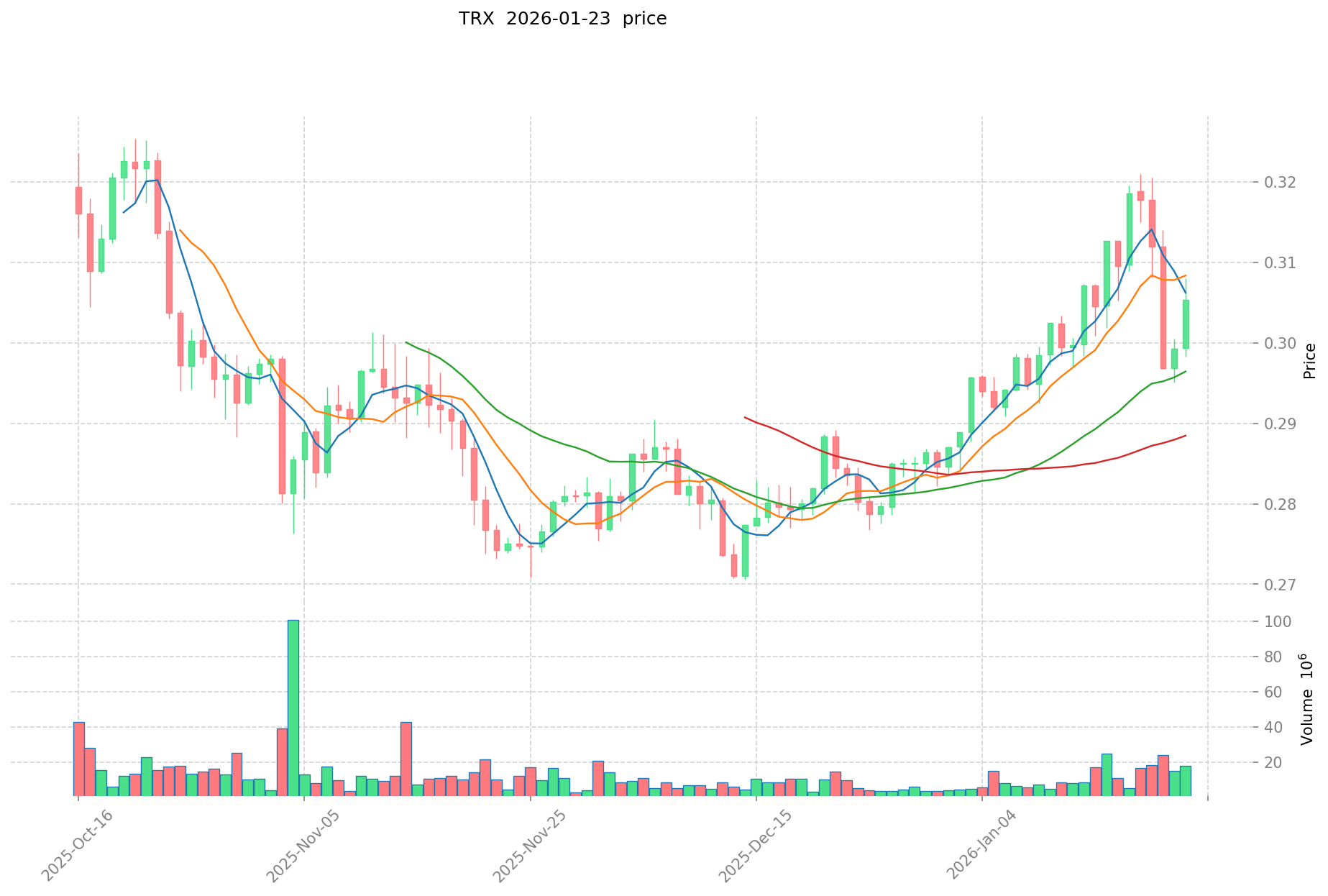
- 2024: TRX achieved its historical peak at $0.431288 on December 4, 2024, supported by ecosystem developments and increased adoption.
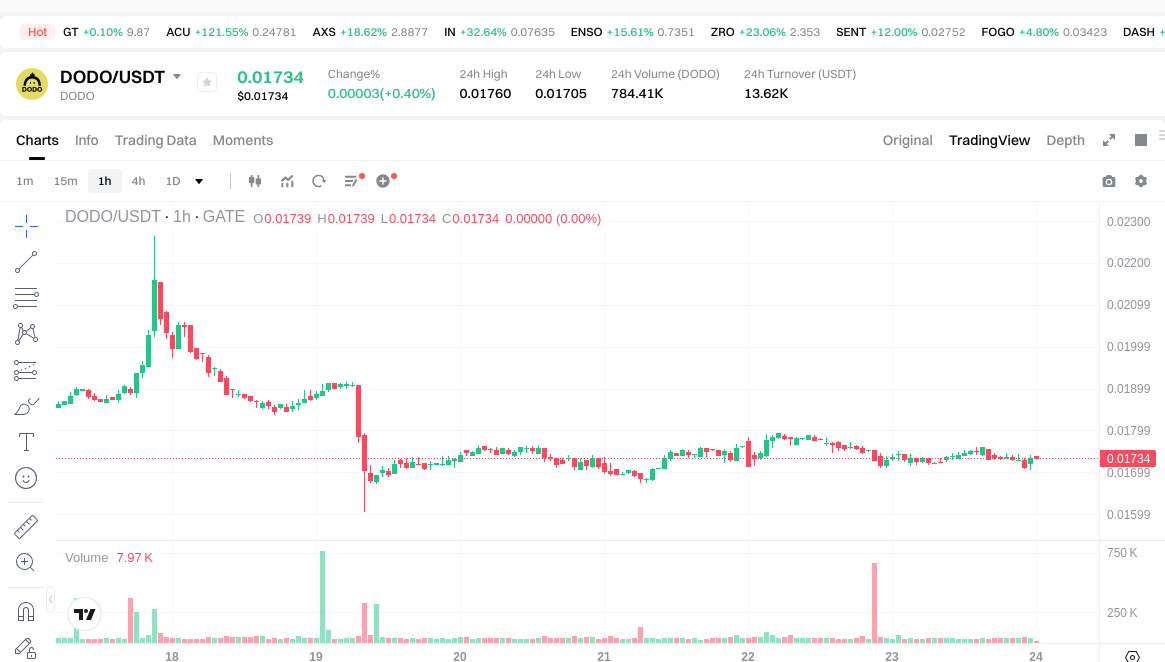
- 2025: DODO experienced significant price contraction, falling to its all-time low of $0.01663396 on December 19, 2025.
- Comparative Analysis: Over recent market cycles, DODO has declined from its peak of $8.38 to approximately $0.017, representing a substantial correction, while TRX has demonstrated relatively moderate volatility, trading near $0.299 after reaching its recent high.
Current Market Status (January 24, 2026)
- DODO Current Price: $0.01734
- TRX Current Price: $0.29915
- 24-Hour Trading Volume: DODO $13,592.94 vs TRX $5,307,848.10
- Market Sentiment Index (Fear & Greed Index): 24 (Extreme Fear)
View real-time prices:
- Check DODO current price Market Price
- Check TRX current price Market Price
II. Core Factors Affecting DODO vs TRX Investment Value
Supply Mechanism Comparison (Tokenomics)
Due to limited available data on the specific supply mechanisms of both assets, a detailed comparison cannot be provided at this time. Generally speaking, supply mechanisms such as fixed supply models, deflationary designs, or halving mechanisms can influence long-term price trends through their impact on circulating supply dynamics.
Institutional Adoption and Market Application
Institutional Holdings: Current data does not provide clear insights into institutional preference between these two assets.
Enterprise Adoption: Information regarding the specific applications of DODO and TRX in cross-border payments, settlement systems, or institutional investment portfolios is not available in the provided materials.
National Policies: Regulatory attitudes toward these assets vary across different jurisdictions, though specific policy details are not documented in the current reference materials.
Technology Development and Ecosystem Building
DODO Technology: Specific details about recent technical upgrades and their potential impact are not available in the provided materials.
TRX Technology: Current information does not include specific technical development milestones or upcoming upgrades.
Ecosystem Comparison: While both assets may have presence in DeFi, NFT, payment systems, and smart contract implementations, detailed comparative data on their respective ecosystem activities is not available in the reference materials.
Macroeconomic and Market Cycles
Performance in Inflationary Environments: Historical data comparing the anti-inflation properties of these assets is not available in the provided materials.
Macroeconomic Monetary Policy: The specific impacts of interest rates and the US Dollar Index on both DODO and TRX require further data analysis.
Geopolitical Factors: Cross-border transaction demands and international situations may influence both assets, though specific correlations are not documented in the current reference materials.
III. 2026-2031 Price Forecast: DODO vs TRX
Short-term Forecast (2026)
- DODO: Conservative range $0.0156 - $0.0173 | Optimistic range $0.0173 - $0.0206
- TRX: Conservative range $0.1615 - $0.2991 | Optimistic range $0.2991 - $0.4278
Mid-term Forecast (2028-2029)
- DODO may enter a gradual growth phase, with projected price range of $0.0145 - $0.0305
- TRX may enter an expansion phase, with projected price range of $0.3096 - $0.6393
- Key drivers: institutional capital inflows, ETF developments, ecosystem expansion
Long-term Forecast (2031)
- DODO: Baseline scenario $0.0260 - $0.0342 | Optimistic scenario $0.0342 - $0.0476
- TRX: Baseline scenario $0.5329 - $0.7202 | Optimistic scenario $0.7202 - $1.0154
View detailed price predictions for DODO and TRX
Disclaimer
Price predictions are subject to market volatility and various factors. This analysis is for informational purposes only and does not constitute investment advice.
DODO:
| Year |
Predicted High Price |
Predicted Average Price |
Predicted Low Price |
Price Change |
| 2026 |
0.0206346 |
0.01734 |
0.015606 |
0 |
| 2027 |
0.023544252 |
0.0189873 |
0.016518951 |
9 |
| 2028 |
0.0287087976 |
0.021265776 |
0.01573667424 |
22 |
| 2029 |
0.030484489896 |
0.0249872868 |
0.014492626344 |
43 |
| 2030 |
0.04077175587156 |
0.027735888348 |
0.01608681524184 |
59 |
| 2031 |
0.047612812732594 |
0.03425382210978 |
0.026032904803432 |
96 |
TRX:
| Year |
Predicted High Price |
Predicted Average Price |
Predicted Low Price |
Price Change |
| 2026 |
0.4277559 |
0.29913 |
0.1615302 |
0 |
| 2027 |
0.530626707 |
0.36344295 |
0.2144313405 |
21 |
| 2028 |
0.639259804755 |
0.4470348285 |
0.36656855937 |
49 |
| 2029 |
0.613756467789075 |
0.5431473166275 |
0.309593970477675 |
81 |
| 2030 |
0.861893319390348 |
0.578451892208287 |
0.549529297597873 |
93 |
| 2031 |
1.015443374177038 |
0.720172605799317 |
0.532927728291495 |
140 |
IV. Investment Strategy Comparison: DODO vs TRX
Long-term vs Short-term Investment Strategies
- DODO: May appeal to investors interested in decentralized exchange infrastructure and liquidity provision mechanisms, particularly those with higher risk tolerance given the asset's price volatility patterns
- TRX: May suit investors seeking exposure to established blockchain infrastructure platforms with broader ecosystem applications and relatively more moderate price fluctuations
Risk Management and Asset Allocation
- Conservative Investors: DODO 20-30% vs TRX 70-80%
- Aggressive Investors: DODO 40-50% vs TRX 50-60%
- Hedging Tools: Stablecoin allocation, options strategies, cross-asset portfolio diversification
V. Potential Risk Comparison
Market Risks
- DODO: Exposure to decentralized exchange sector volatility, liquidity fluctuations in DeFi markets, and sensitivity to overall cryptocurrency market sentiment
- TRX: Subject to blockchain platform competition dynamics, ecosystem adoption rates, and broader cryptocurrency market cycles
Technical Risks
- DODO: Platform scalability considerations, liquidity mechanism sustainability, and smart contract security factors
- TRX: Network performance under high transaction volumes, consensus mechanism resilience, and potential security vulnerabilities
Regulatory Risks
- Varying regulatory approaches across different jurisdictions may impact both assets differently, with decentralized exchange platforms and blockchain infrastructure facing distinct regulatory scrutiny in different regions
VI. Conclusion: Which Is the Better Buy?
📌 Investment Value Summary:
- DODO Advantages: Innovative liquidity provision mechanism through PMM algorithm, positioning in decentralized exchange infrastructure sector, potential for growth in DeFi ecosystem expansion
- TRX Advantages: Established blockchain platform with longer operational history, broader ecosystem applications including stablecoin integration, national-level blockchain infrastructure recognition in certain jurisdictions
✅ Investment Recommendations:
- Novice Investors: Consider starting with TRX due to its more established platform status and relatively moderate volatility patterns, while maintaining conservative position sizing
- Experienced Investors: May explore diversified allocation between both assets based on risk tolerance, with emphasis on ongoing monitoring of ecosystem developments and market conditions
- Institutional Investors: Should conduct comprehensive due diligence on both assets' technical architecture, regulatory compliance status, and ecosystem sustainability before making allocation decisions
⚠️ Risk Disclosure: Cryptocurrency markets exhibit extreme volatility. This analysis is for informational purposes only and does not constitute investment advice.
VII. FAQ
Q1: What are the main differences between DODO and TRX in terms of their core functionality?
DODO operates as a decentralized exchange (DEX) using the Proactive Market Maker (PMM) algorithm for on-chain liquidity provision, while TRX functions as a blockchain infrastructure platform with broader ecosystem applications including smart contracts and stablecoin integration. DODO launched in 2020 focuses specifically on solving liquidity challenges in DeFi trading, whereas TRX, established in 2017, has built a comprehensive blockchain ecosystem that includes payment systems, decentralized applications, and national-level infrastructure adoption (such as Dominica's designation in October 2022).
Q2: How do the current market positions of DODO and TRX compare?
TRX demonstrates significantly stronger market positioning with a current price of $0.29915 and 24-hour trading volume of $5,307,848.10, compared to DODO's price of $0.01734 and volume of $13,592.94 as of January 24, 2026. This substantial difference reflects TRX's more established market presence and broader adoption. Additionally, DODO has experienced severe price contraction from its all-time high of $8.38 (February 2021) to current levels, while TRX recently achieved its historical peak at $0.431288 in December 2024, indicating different market cycle performances.
Q3: What are the price projections for DODO and TRX through 2031?
For 2026, DODO's conservative forecast ranges from $0.0156 to $0.0173, with optimistic scenarios reaching $0.0206, while TRX projects $0.1615 to $0.2991 conservatively and up to $0.4278 optimistically. By 2031, DODO's baseline scenario estimates $0.0260 to $0.0342 (optimistic: $0.0476), whereas TRX projects $0.5329 to $0.7202 baseline (optimistic: $1.0154). These projections suggest TRX may offer higher absolute price growth potential, though both forecasts are subject to significant market volatility and should not be considered guaranteed outcomes.
Q4: Which asset is more suitable for conservative investors?
TRX appears more appropriate for conservative investors due to its established platform status, longer operational history since 2017, relatively moderate volatility patterns, and broader ecosystem applications. The recommended allocation for conservative investors suggests 70-80% TRX versus 20-30% DODO. TRX's national-level infrastructure recognition and integration with traditional use cases like stablecoin systems (USDD launched May 2022) provide additional stability factors compared to DODO's concentration in the decentralized exchange sector.
Q5: What are the primary risks associated with investing in DODO versus TRX?
DODO faces risks including decentralized exchange sector volatility, liquidity mechanism sustainability challenges, DeFi market fluctuations, platform scalability concerns, and smart contract security vulnerabilities. TRX encounters risks such as blockchain platform competition dynamics, ecosystem adoption rate uncertainties, network performance under high transaction volumes, and consensus mechanism resilience issues. Both assets face regulatory risks varying across jurisdictions, with decentralized exchange platforms and blockchain infrastructure facing distinct regulatory scrutiny in different regions.
Q6: How should experienced investors approach allocation between DODO and TRX?
Experienced investors may consider diversified allocation strategies based on their risk tolerance, with suggested ratios of 40-50% DODO versus 50-60% TRX for aggressive portfolios. This approach balances exposure to DODO's innovative liquidity provision mechanisms and potential DeFi ecosystem growth against TRX's established platform advantages and broader applications. Key considerations include ongoing monitoring of ecosystem developments, technical upgrades, market conditions, and implementing risk management tools such as stablecoin allocation, options strategies, and cross-asset portfolio diversification.
Q7: What factors should institutional investors evaluate before choosing between DODO and TRX?
Institutional investors should conduct comprehensive due diligence covering multiple dimensions: technical architecture analysis (PMM algorithm sustainability for DODO versus blockchain infrastructure scalability for TRX), regulatory compliance status across relevant jurisdictions, ecosystem sustainability and development roadmaps, liquidity depth and market-making capabilities, smart contract security audits, governance structures, and integration potential with existing institutional systems. Given the extreme volatility in cryptocurrency markets and the current market sentiment index of 24 (Extreme Fear), institutions should prioritize thorough risk assessment and consider phased entry strategies.
Q8: What role does the current market sentiment play in choosing between these assets?
The current Fear & Greed Index reading of 24 (Extreme Fear) as of January 24, 2026, suggests heightened caution in the broader cryptocurrency market. In such environments, TRX's more established position and moderate volatility patterns may provide relative stability, while DODO's higher risk profile could present both increased downside vulnerability and potential upside opportunity if sentiment shifts. Investors should consider that extreme fear conditions historically have preceded both extended downturns and eventual recoveries, making timing and risk management crucial regardless of asset selection.
* The information is not intended to be and does not constitute financial advice or any other recommendation of any sort offered or endorsed by Gate.














