This comprehensive article compares EDU (Open Campus) and XTZ (Tezos) as leading blockchain investment opportunities, analyzing their distinct positioning in the cryptocurrency market. EDU focuses on Web3 education protocol enabling content creator monetization, while XTZ operates as a self-amending blockchain with formal verification for enterprise applications. The comparison examines historical price trends, tokenomics, institutional adoption potential, and technical capabilities through 2031. EDU experienced extreme volatility with a 97% decline from its 2023 peak, while XTZ demonstrates relatively greater stability with established ecosystem spanning DeFi and NFT markets. Price forecasts suggest XTZ reaching $0.74-$1.17 by 2031, compared to EDU's $0.21-$0.35 range. The article provides tailored investment recommendations for novice, experienced, and institutional investors, emphasizing risk management and portfolio allocation strategies appropriate for each investor profile.
Introduction: Investment Comparison Between EDU and XTZ
In the cryptocurrency market, the comparison between EDU vs XTZ has become a topic of interest for investors. The two tokens differ significantly in market cap ranking, application scenarios, and price performance, representing distinct positioning within the crypto asset landscape.
EDU (Open Campus): Launched in 2023, this token has gained attention through its focus on Web3 education protocol, enabling teachers and creators to own and monetize educational content through tokenization.
XTZ (Tezos): Since its launch in 2017, Tezos has been recognized as a self-amending blockchain platform with formal verification capabilities, offering a universal and evolving cryptographic ledger system.
This article will provide a comprehensive analysis of EDU vs XTZ investment value comparison through historical price trends, supply mechanisms, institutional adoption, technical ecosystems, and future projections, attempting to address the question that concerns investors most:
"Which is the better buy right now?"
I. Historical Price Comparison and Current Market Status
EDU (Open Campus) and XTZ (Tezos) Historical Price Trends
- 2023: EDU reached a price peak of $1.55 on May 29, 2023, shortly after its mainnet launch in April 2023, driven by initial market enthusiasm for the Web3 education protocol platform.
- 2021: XTZ experienced significant price appreciation, reaching $9.12 on October 4, 2021, during the broader cryptocurrency market bull run and increased adoption of its self-amending blockchain technology.
- Comparative Analysis: During the 2023-2025 market cycle, EDU declined from its peak of $1.55 to a low of $0.042 in October 2025, representing a decline of approximately 97%. Meanwhile, XTZ fell from its 2021 peak of $9.12 to $0.35 in December 2018, and has shown more moderate volatility in recent periods.
Current Market Status (January 17, 2026)
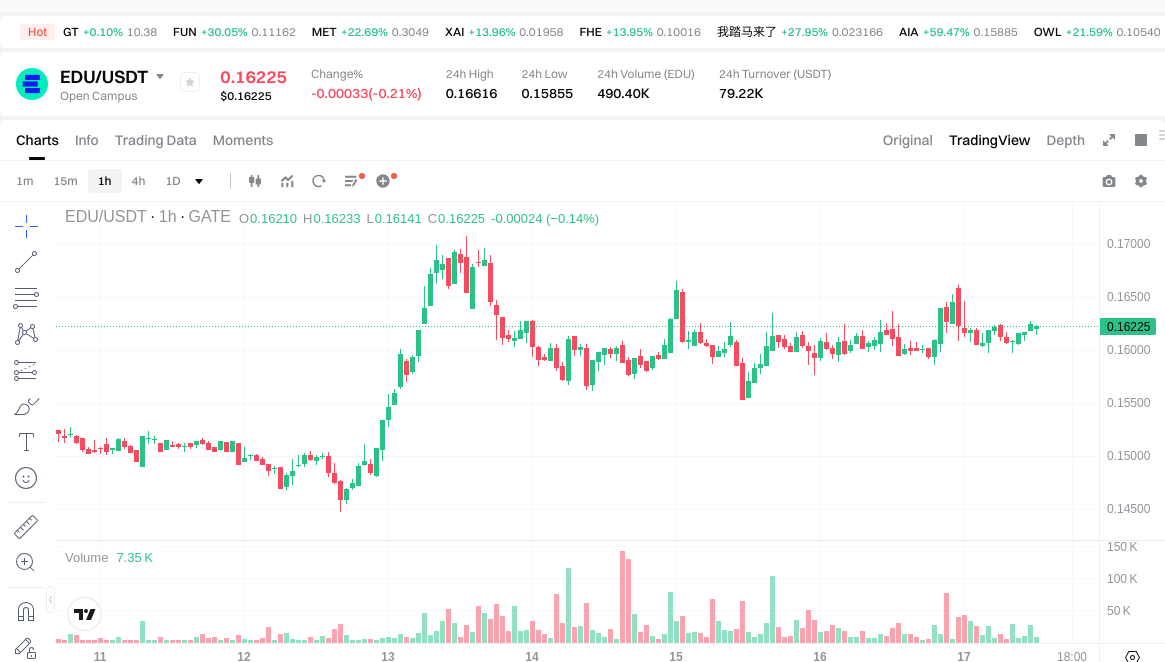
- EDU Current Price: $0.16248
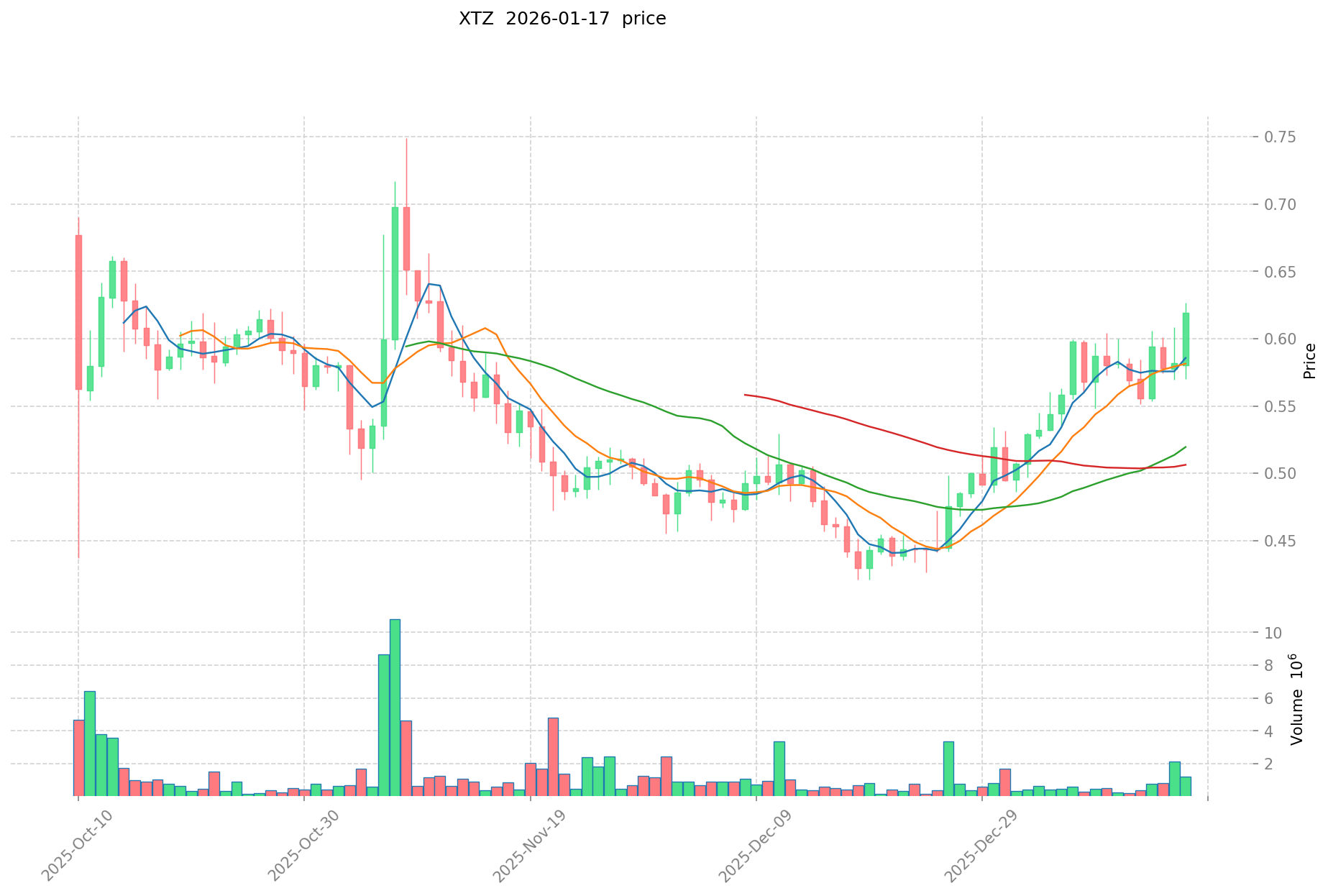
- XTZ Current Price: $0.6123
- 24-Hour Trading Volume: EDU recorded $78,199 compared to XTZ's $795,123
- Market Sentiment Index (Fear & Greed Index): 50 (Neutral)
View Real-Time Prices:
II. Core Factors Influencing EDU vs XTZ Investment Value
Supply Mechanism Comparison (Tokenomics)
-
XTZ: Tezos employs a Delegated Proof of Stake (DPoS) consensus mechanism where token holders can participate in network validation through staking or delegation to "bakers." This creates an inflationary supply model with staking rewards distributed to participants, incentivizing long-term holding and network security.
-
EDU: Specific tokenomics details for EDU are not provided in the reference materials.
-
📌 Historical Pattern: Supply mechanisms influence price cycles through inflation rates, staking yields, and token velocity. Networks with sustainable inflation models and staking incentives tend to maintain more stable validator participation and network security over time.
Institutional Adoption and Market Applications
-
Institutional Holdings: XTZ has positioned itself as a compliance-friendly blockchain, potentially attracting institutional interest through its formal governance structure and self-amending protocol. The reference materials indicate potential for institutional adoption if regulatory clarity emerges in markets like the EU and US.
-
Enterprise Adoption: XTZ has been applied in financial settlement, NFT markets, and enterprise blockchain solutions. Its focus on DeFi, digital asset tokenization (including NFTs and RWAs), and enterprise-grade applications demonstrates differentiated positioning. The protocol's formal verification capabilities make it suitable for financial-grade applications requiring high reliability.
-
National Policy: Reference materials suggest that if markets such as the EU and US formally recognize Tezos as a compliant blockchain, it would facilitate enterprise and institutional integration. Regulatory attitudes vary across jurisdictions and continue to evolve.
Technology Development and Ecosystem Building
-
XTZ Technology Upgrades: Tezos features a built-in self-amendment mechanism allowing protocol upgrades through on-chain proposals and voting, avoiding hard forks and reducing community fragmentation risks. This enables continuous evolution while maintaining protocol stability and predictability. The platform supports formal verification through mathematical methods to validate smart contract correctness, particularly suitable for financial-grade applications.
-
EDU Technology Development: Specific technical development details for EDU are not provided in the reference materials.
-
Ecosystem Comparison: XTZ has been applied in DeFi, NFT markets, and enterprise solutions. The protocol's low transaction fees and governance-friendly design support various application scenarios. The Tezos NFT ecosystem gained prominence as an environmentally conscious alternative, with platforms facilitating art, collectibles, and generative projects.
Macroeconomic Environment and Market Cycles
-
Performance in Inflationary Environments: The reference materials do not provide specific data comparing anti-inflation properties between EDU and XTZ.
-
Macroeconomic Monetary Policy: Both digital assets are influenced by broader cryptocurrency market trends, including interest rates and US dollar strength. XTZ price movements are affected by overall market sentiment, technology adoption rates, and competition from other blockchain platforms like Ethereum Layer 2 solutions and Solana.
-
Geopolitical Factors: Cross-border transaction demand and international situations impact cryptocurrency adoption broadly. Tezos positions itself for use cases requiring compliance, stability, and high reliability, which may appeal to certain cross-border and institutional applications as regulatory frameworks develop.
III. 2026-2031 Price Forecast: EDU vs XTZ
Short-term Forecast (2026)
- EDU: Conservative $0.10-$0.16 | Optimistic $0.16-$0.19
- XTZ: Conservative $0.57-$0.61 | Optimistic $0.61-$0.74
Mid-term Forecast (2028-2029)
- EDU may enter a consolidation phase with projected price range of $0.10-$0.27
- XTZ may enter an expansion phase with projected price range of $0.47-$0.93
- Key drivers: institutional capital inflows, ETF developments, ecosystem growth
Long-term Forecast (2030-2031)
- EDU: Baseline scenario $0.21-$0.29 | Optimistic scenario $0.29-$0.35
- XTZ: Baseline scenario $0.74-$1.02 | Optimistic scenario $1.02-$1.17
View detailed price predictions for EDU and XTZ
Disclaimer
Price forecasts are based on historical data analysis and market trends. Cryptocurrency markets are highly volatile and subject to various risk factors. These projections should not be considered as investment advice. Past performance does not guarantee future results.
EDU:
| Year |
Predicted High Price |
Predicted Average Price |
Predicted Low Price |
Price Change |
| 2026 |
0.1899027 |
0.16231 |
0.1022553 |
0 |
| 2027 |
0.2201329375 |
0.17610635 |
0.144407207 |
8 |
| 2028 |
0.2040632330625 |
0.19811964375 |
0.1010410183125 |
21 |
| 2029 |
0.26544069869625 |
0.20109143840625 |
0.160873150725 |
23 |
| 2030 |
0.340568460084825 |
0.23326606855125 |
0.209939461696125 |
43 |
| 2031 |
0.347169889824825 |
0.286917264318037 |
0.23240298409761 |
76 |
XTZ:
| Year |
Predicted High Price |
Predicted Average Price |
Predicted Low Price |
Price Change |
| 2026 |
0.739189 |
0.6109 |
0.568137 |
0 |
| 2027 |
0.86405696 |
0.6750445 |
0.4050267 |
10 |
| 2028 |
0.8618968176 |
0.76955073 |
0.7233776862 |
25 |
| 2029 |
0.929925102132 |
0.8157237738 |
0.473119788804 |
33 |
| 2030 |
1.16958474687444 |
0.872824437966 |
0.75935726103042 |
42 |
| 2031 |
1.062052776117028 |
1.02120459242022 |
0.735267306542558 |
66 |
IV. Investment Strategy Comparison: EDU vs XTZ
Long-term vs Short-term Investment Strategies
-
EDU: May be suitable for investors focusing on Web3 education protocol adoption and content creator monetization platforms. The token's historical volatility suggests higher risk profiles, potentially appealing to those with tolerance for significant price fluctuations and belief in educational technology transformation.
-
XTZ: May be suitable for investors seeking exposure to self-amending blockchain technology with formal verification capabilities. The platform's positioning in enterprise applications, DeFi, and compliance-friendly infrastructure may appeal to those prioritizing technical fundamentals and institutional adoption potential.
Risk Management and Asset Allocation
-
Conservative Investors: EDU 20-30% vs XTZ 70-80%. Conservative allocation favors XTZ due to its longer operational history, established ecosystem, and broader application scenarios in financial-grade solutions.
-
Aggressive Investors: EDU 40-50% vs XTZ 50-60%. Aggressive portfolios may increase EDU allocation for higher growth potential, while maintaining XTZ exposure for ecosystem stability and institutional adoption opportunities.
-
Hedging Tools: Stablecoin allocation for liquidity management, options strategies for downside protection, cross-asset diversification across different blockchain protocols to reduce concentration risk.
V. Potential Risk Comparison
Market Risks
-
EDU: The token demonstrated significant volatility with a decline of approximately 97% from its 2023 peak. Limited trading volume ($78,199 in 24-hour volume as of January 17, 2026) may contribute to liquidity constraints and price instability during market stress periods.
-
XTZ: Price movements are influenced by overall cryptocurrency market sentiment, competition from alternative blockchain platforms including Ethereum Layer 2 solutions and Solana, and broader macroeconomic factors affecting digital asset valuations. The token experienced substantial volatility historically, though with more moderate fluctuations in recent periods compared to newer protocols.
Technical Risks
-
EDU: Specific technical risk factors are not detailed in the reference materials. As a relatively newer protocol launched in 2023, potential concerns may include network maturity, scalability under increased adoption, and ecosystem development sustainability.
-
XTZ: The self-amending protocol design reduces hard fork risks but introduces governance complexity. Network stability depends on baker participation and stake distribution. While formal verification enhances security for financial applications, implementation complexity may limit developer adoption compared to more accessible platforms.
Regulatory Risks
-
Global Regulatory Impact: Both tokens operate in an evolving regulatory environment. XTZ's positioning as a compliance-friendly blockchain may provide advantages if jurisdictions such as the EU and US establish favorable frameworks for formally verified protocols. However, regulatory clarity remains uncertain across different markets.
-
Compliance Considerations: Enterprise and institutional adoption for both protocols depends significantly on regulatory developments. Stricter cryptocurrency regulations could impact market accessibility, while supportive frameworks may accelerate institutional integration, particularly for compliance-oriented platforms like Tezos.
VI. Conclusion: Which Is the Better Buy?
📌 Investment Value Summary
-
EDU Advantages: Focuses on Web3 education protocol with tokenization of educational content, enabling teachers and creators to monetize digital assets. The niche positioning in education technology may offer differentiation in specific use cases.
-
XTZ Advantages: Self-amending blockchain with formal verification capabilities, established ecosystem spanning DeFi, NFT markets, and enterprise applications. Longer operational history since 2017, governance-friendly design avoiding hard forks, and positioning for compliance-oriented institutional adoption.
✅ Investment Recommendations
-
Novice Investors: Consider starting with XTZ due to its more established ecosystem, longer operational track record, and broader application scenarios. Begin with conservative allocation and thorough research into blockchain fundamentals before committing capital.
-
Experienced Investors: Evaluate portfolio diversification strategies combining both assets based on risk tolerance. XTZ may serve as a core holding with exposure to established blockchain infrastructure, while EDU could represent a smaller allocation for those interested in education technology transformation.
-
Institutional Investors: XTZ may align better with institutional requirements given its formal verification capabilities, compliance positioning, and enterprise-grade application focus. Conduct comprehensive due diligence regarding regulatory frameworks, custody solutions, and risk management protocols.
⚠️ Risk Disclaimer: The cryptocurrency market exhibits high volatility. This analysis does not constitute investment advice. Past performance does not guarantee future results. Investors should conduct independent research and consult qualified financial advisors before making investment decisions.
VII. FAQ
Q1: What is the main difference between EDU and XTZ in terms of their core technology and use cases?
XTZ (Tezos) is a self-amending blockchain platform with formal verification capabilities designed for enterprise-grade applications, DeFi, and NFT markets, while EDU (Open Campus) focuses specifically on Web3 education protocol enabling content creator monetization. The fundamental distinction lies in their scope: Tezos operates as a general-purpose blockchain infrastructure with on-chain governance mechanisms that avoid hard forks, whereas EDU targets the education technology sector through tokenization of educational content. Tezos launched in 2017 with a proven track record in financial settlement and institutional applications, while EDU entered the market in 2023 with a specialized focus on empowering teachers and educational content creators through blockchain technology.
Q2: Which token shows better price stability based on historical performance?
XTZ demonstrates relatively better price stability compared to EDU based on historical volatility patterns. While XTZ experienced significant fluctuation from its 2021 peak of $9.12, it has shown more moderate volatility in recent periods with a current price of $0.6123 as of January 17, 2026. In contrast, EDU declined approximately 97% from its May 2023 peak of $1.55 to a low of $0.042 in October 2025, representing substantially higher volatility within a shorter timeframe. The 24-hour trading volume also reflects this difference, with XTZ recording $795,123 compared to EDU's $78,199, indicating greater liquidity and potentially more stable price discovery mechanisms for Tezos.
Q3: What are the regulatory advantages of XTZ over EDU for institutional investors?
XTZ positions itself as a compliance-friendly blockchain with significant regulatory advantages for institutional adoption. The platform's formal verification capabilities through mathematical validation make it particularly suitable for financial-grade applications requiring high reliability and regulatory scrutiny. Reference materials indicate that if markets such as the EU and US formally recognize Tezos as a compliant blockchain, it would facilitate enterprise and institutional integration significantly. The protocol's governance-friendly design, established operational history since 2017, and focus on enterprise blockchain solutions provide a more mature regulatory positioning compared to EDU, which lacks detailed compliance frameworks in the available materials and represents a newer market entrant with limited institutional track record.
Q4: How do the tokenomics and supply mechanisms differ between EDU and XTZ?
XTZ employs a Delegated Proof of Stake (DPoS) consensus mechanism with clear tokenomics: token holders can participate in network validation through staking or delegation to "bakers," creating an inflationary supply model with staking rewards that incentivize long-term holding and network security. This mechanism provides predictable inflation rates and encourages validator participation through financial incentives. Unfortunately, specific tokenomics details for EDU are not provided in the reference materials, making direct comparison challenging. However, the lack of transparent supply mechanism information for EDU represents a potential concern for investors conducting fundamental analysis, whereas XTZ's well-documented economic model offers greater transparency for investment decision-making.
Q5: What is the recommended portfolio allocation strategy for EDU vs XTZ?
Conservative investors should consider an allocation of 20-30% EDU versus 70-80% XTZ, favoring Tezos due to its longer operational history, established ecosystem, and broader application scenarios in financial-grade solutions. Aggressive investors may adopt a 40-50% EDU versus 50-60% XTZ allocation, increasing EDU exposure for higher growth potential while maintaining substantial XTZ holdings for ecosystem stability and institutional adoption opportunities. The rationale behind these recommendations centers on risk management: XTZ's more mature infrastructure and diverse use cases provide portfolio stability, while EDU's focused positioning in education technology offers growth potential with correspondingly higher volatility. Both allocation strategies should incorporate hedging tools such as stablecoin reserves for liquidity management and cross-asset diversification to reduce concentration risk.
Q6: Which token offers better long-term growth potential through 2031?
Based on price forecasts through 2031, XTZ demonstrates stronger long-term growth potential with projected baseline scenarios reaching $0.74-$1.02 and optimistic scenarios of $1.02-$1.17 by 2031, representing a 66% cumulative price change. EDU's long-term projections show baseline scenarios of $0.21-$0.29 and optimistic scenarios of $0.29-$0.35 by 2031, with a 76% cumulative price change from current levels. However, absolute price growth favors XTZ due to its higher starting valuation and more established market position. Key drivers supporting XTZ's growth potential include institutional capital inflows, ecosystem expansion across DeFi and enterprise applications, and potential ETF developments. EDU's growth depends heavily on Web3 education adoption rates and content creator platform expansion, representing a more specialized and therefore potentially higher-risk growth trajectory.
Q7: What are the primary risks specific to each token that investors should monitor?
EDU's primary risks include extreme historical volatility (97% decline from peak), limited liquidity with only $78,199 in 24-hour trading volume as of January 2026, and uncertain technical maturity given its 2023 launch date. The token's narrow focus on education protocol creates concentration risk dependent on Web3 adoption in the education sector. XTZ faces different risk profiles: competition from alternative blockchain platforms including Ethereum Layer 2 solutions and Solana, governance complexity inherent in its self-amending protocol design, and dependency on baker participation for network security. Both tokens face regulatory uncertainty, though XTZ's compliance-friendly positioning may provide advantages if favorable frameworks emerge. Market-wide risks affecting both include macroeconomic factors, cryptocurrency market sentiment cycles, and evolving regulatory landscapes across different jurisdictions.
Q8: For novice cryptocurrency investors, which token represents a better starting point?
XTZ represents a more suitable starting point for novice cryptocurrency investors due to several factors: longer operational history since 2017 providing more historical data for analysis, more established ecosystem with diverse applications across DeFi, NFTs, and enterprise solutions, higher liquidity reflected in substantially greater trading volumes, and clearer documentation of technical mechanisms and tokenomics. The platform's positioning in compliance-oriented applications and formal verification capabilities align with institutional-grade infrastructure, potentially offering greater stability for learning investors. EDU's extreme volatility, limited liquidity, and specialized focus on education technology require more sophisticated risk assessment and higher risk tolerance. Novice investors should prioritize understanding blockchain fundamentals through more established protocols like Tezos before exploring newer, specialized tokens with limited operational track records and higher volatility profiles.
* The information is not intended to be and does not constitute financial advice or any other recommendation of any sort offered or endorsed by Gate.