This article explores Elon Musk's transformative vision where traditional currency becomes obsolete, replaced by energy-based value systems anchored in technological abundance. Musk argues that energy represents the true fundamental currency, with Bitcoin serving as the ideal bridge between today's monetary systems and tomorrow's energy-centric economy, since proof-of-work mining directly converts physical energy into digital value. The article examines how Bitcoin's energy-intensive architecture—often criticized for environmental concerns—actually represents a strength that grounds digital assets in physical reality, making them resistant to government monetary manipulation. It addresses the ongoing debate between critics who view Bitcoin mining as wasteful and advocates who see it improving energy systems through renewable utilization and grid stabilization. While this energy-backed future remains speculative, the analysis demonstrates why Bitcoin's design principles align with emerging economic theories ab
Elon Musk has articulated a provocative vision of the future where traditional money becomes obsolete, replaced by energy-based value systems that fundamentally reshape how humanity measures wealth and allocates resources. In a podcast conversation with Indian entrepreneur and investor Nikhil Kamath, Musk outlined a scenario where technological abundance renders conventional currency irrelevant, while Bitcoin emerges as a bridge between today's monetary systems and tomorrow's energy-centric economy.
Musk's core thesis centers on the idea that "money disappears as a concept" in a world where artificial intelligence and robotics advance to the point where they can satisfy all human needs. He described this transformation as "kind of strange" but logically inevitable, explaining that when "anyone can have anything," society "no longer needs money as a database for labor allocation." This post-scarcity vision draws heavily from science fiction, particularly the Culture series by Scottish author Iain Banks, where advanced civilizations operate without traditional monetary systems because technology provides unlimited abundance.
The timing of Musk's predictions aligns with rapid developments in AI capabilities and automation technologies that are beginning to reshape labor markets and production systems. While this future remains speculative, the underlying logic reflects growing conversations about how societies might organize economic activity when machines can perform most productive tasks more efficiently than humans.
Energy Replaces Money in Musk's Future Vision and Bitcoin Fits the Model
Even in a world without traditional money, Musk argues that certain fundamental forms of value persist. He pointed to "some fundamental currencies, if you will, that are physics-based," before declaring that "energy is the true currency." This framing positions energy not as a commodity to be traded, but as the ultimate measure of economic power and productive capacity.
Musk then connected this energy-centric worldview directly to Bitcoin's underlying architecture. "This is why I say Bitcoin is based on energy," he explained, referencing the cryptocurrency's proof-of-work consensus mechanism. Bitcoin mining requires miners to expend real electricity and computational power to validate transactions and secure the network, creating a direct conversion of physical energy into digital value.
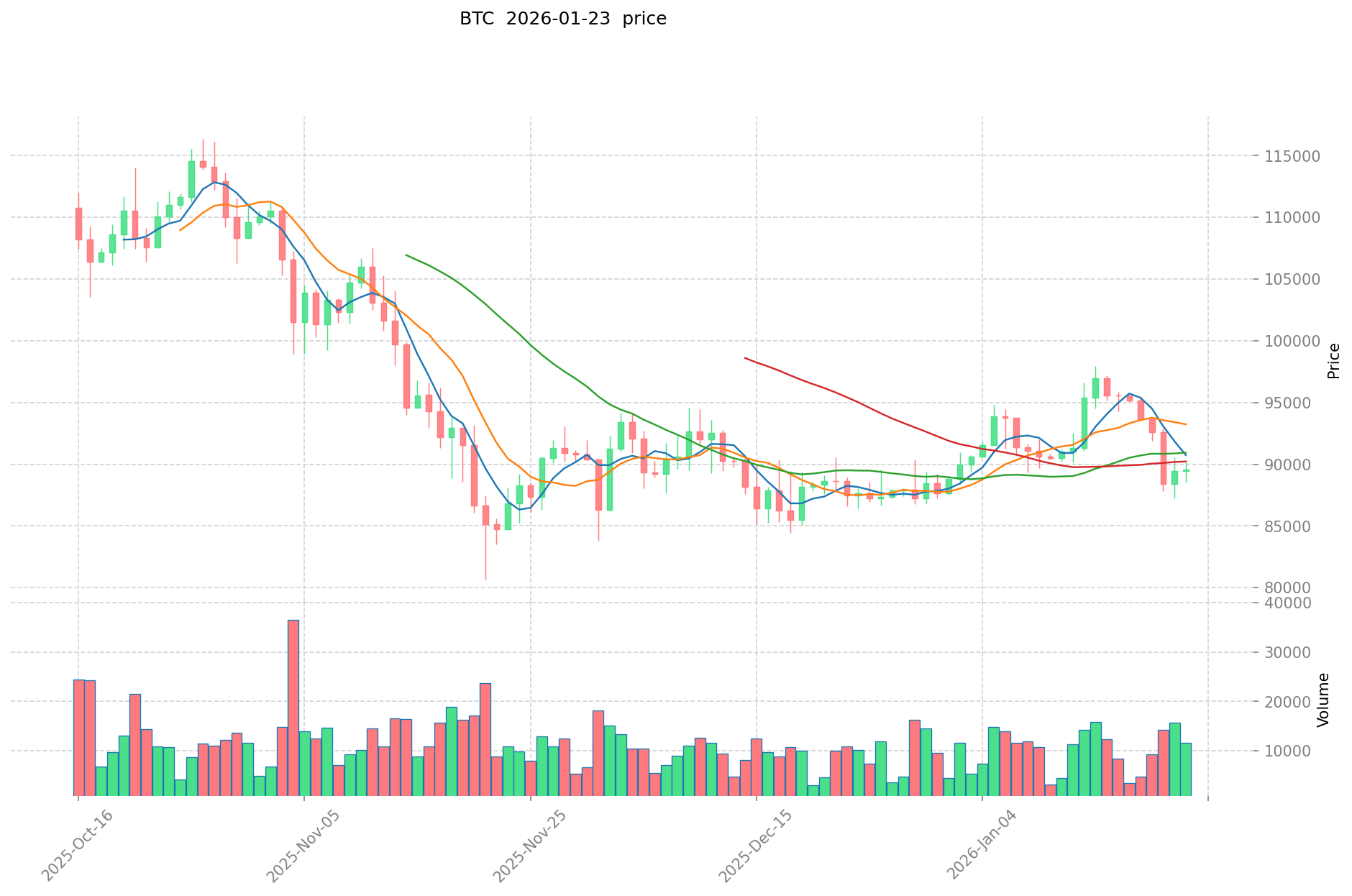 This design feature, often criticized for its environmental impact, becomes in Musk's view a fundamental strength that anchors digital assets to the physical world.
The proof-of-work model essentially transforms Bitcoin into a form of "crystallized energy," where each coin represents a verifiable expenditure of power that cannot be faked or inflated through policy decisions. This stands in stark contrast to fiat currencies, which governments can create through monetary policy without any physical constraint. In Musk's framework, Bitcoin already operates on principles that will become universal in a future energy-based economy, making it a potential survivor of the transition away from traditional money.
This perspective aligns with arguments from Bitcoin advocates who view the cryptocurrency as "digital energy" or "monetary energy storage," concepts that frame Bitcoin not just as a payment system but as a way to store productive capacity across time and space. The energy expenditure required to mine Bitcoin creates scarcity that mirrors the scarcity of energy itself, potentially making it more durable than currencies backed only by government authority.
Musk Frames Energy as the Ultimate Store of Power Outside Government Policy
Musk drew a sharp distinction between energy and political systems, emphasizing that "you can't legislate energy." Unlike fiat currencies that governments can print at will, or regulations that can be rewritten through political processes, energy generation follows physical laws that remain constant regardless of policy preferences. "You can't just, you know, pass a law and suddenly have a lot of energy," he noted, highlighting the fundamental difference between political power and thermodynamic reality.
He described energy generation as inherently difficult, stating it is "very difficult to generate energy, especially to harness energy in a useful way, to do useful work." This difficulty creates natural scarcity that cannot be overcome through legislation or monetary policy, making energy a more reliable foundation for value than systems dependent on institutional trust or political stability.
Looking ahead, Musk predicted that "we probably will just have energy, power generation as the de facto currency." In this scenario, the entities or nations that control the most efficient and abundant energy sources effectively control the strongest form of wealth. This shifts the basis of economic power from financial systems and central banks to engineering capabilities and resource access, fundamentally reordering geopolitical dynamics.
This energy-as-currency framework resonates with Bitcoin's existing model, where mining operations already compete based on their ability to access cheap, abundant electricity. The most profitable Bitcoin miners are those who can secure low-cost power, whether through renewable sources, stranded energy that would otherwise be wasted, or favorable regulatory environments. In Musk's vision, this dynamic simply becomes universal rather than limited to cryptocurrency networks.
The implications extend beyond Bitcoin to broader questions about monetary sovereignty and economic independence. If energy becomes the fundamental currency, nations with abundant renewable resources or advanced nuclear capabilities gain structural advantages that cannot be easily replicated or undermined through financial manipulation. This could reshape international relations around energy infrastructure rather than reserve currencies or trade agreements.
Regulators and Activists Still Clash Over Whether Bitcoin Hurts or Helps Energy Systems
Musk's energy-centric vision arrives amid ongoing debates about Bitcoin's environmental impact and its role in global energy systems. Bitcoin's energy consumption remains one of the most contested issues in policy circles, with environmental critics raising concerns about carbon footprints and potential strain on electrical grids, particularly in regions where fossil fuels dominate power generation.
Opponents argue that Bitcoin mining diverts electricity from more productive uses and accelerates climate change by incentivizing continued operation of coal and natural gas plants. Several jurisdictions have considered or implemented restrictions on cryptocurrency mining based on these environmental concerns, viewing the industry as an unnecessary drain on limited energy resources.
However, advocates present a different perspective, arguing that Bitcoin mining can actually improve energy systems rather than harm them. They point to mining operations that utilize renewable energy sources such as hydroelectric, solar, and wind power, often in locations where excess generation would otherwise be curtailed or wasted. Some mining facilities specifically target stranded energy resources, such as flared natural gas from oil fields, converting waste into productive use while reducing emissions.
Proponents also argue that Bitcoin mining can help stabilize electrical grids by providing flexible demand that can be quickly adjusted based on supply conditions. During periods of excess renewable generation, miners can absorb surplus power, while during peak demand periods, mining operations can shut down to free up capacity for essential services. This load-balancing function could become increasingly valuable as grids incorporate more intermittent renewable sources.
The debate reflects broader tensions about how societies should prioritize energy use and who gets to decide what constitutes a "legitimate" application of electrical power. Musk's framing of energy as the ultimate currency adds another dimension to these discussions, suggesting that Bitcoin's energy consumption might not be a bug but rather a feature that aligns with fundamental economic principles.
Musk did not provide a specific timeline for when this shift to an energy-based value regime might occur, and his scenario assumes levels of AI and robotic abundance that remain speculative. For the foreseeable future, national currencies and conventional payment systems continue to dominate trade, savings, and salaries across the global economy. Bitcoin currently functions primarily as an asset class and store of value, representing a long-term bet on a different kind of monetary order rather than a widely-used medium of exchange.
Nevertheless, Musk's vision offers a framework for thinking about how technological advancement might fundamentally reshape economic systems, and why cryptocurrencies built on energy-intensive proof-of-work models might prove more durable than critics expect. Whether energy truly becomes the universal currency remains to be seen, but the conversation highlights growing recognition that the relationship between energy, technology, and value is entering a period of profound transformation.
FAQ
Why does Elon Musk believe traditional currency will die?
Elon Musk believes traditional fiat currency will become obsolete due to inflation, centralized control, and inefficiency. He predicts energy-based Bitcoin will survive as a superior alternative with transparent, decentralized properties and limited supply that preserves value.
What is Energy-Based Bitcoin?
Energy-Based Bitcoin is a concept where Bitcoin's value and sustainability are directly tied to renewable energy production. It emphasizes using clean energy for mining, creating a symbiotic relationship between energy generation and cryptocurrency security, making Bitcoin more environmentally viable and economically efficient.
Why can Bitcoin survive compared to other cryptocurrencies?
Bitcoin survives due to its first-mover advantage, unmatched network security, highest transaction volume, and strongest decentralization. Its proven track record, limited supply of 21 million coins, and widespread adoption make it the most resilient and trusted cryptocurrency in the market.
What is Elon Musk's view on Bitcoin? What were his previous statements?
Elon Musk believes money will die and energy-based Bitcoin will survive. He previously supported Bitcoin, then questioned its environmental impact, and now advocates for Bitcoin as a sustainable, energy-backed currency that will outlast traditional money systems.
If traditional currency dies, what will replace it?
Energy-based Bitcoin and decentralized cryptocurrencies will emerge as primary alternatives. These digital assets backed by energy and blockchain technology offer transparent, borderless value transfer without central authorities, representing the future of global commerce.
What is the difference between energy-based Bitcoin and regular Bitcoin?
Energy-based Bitcoin emphasizes sustainable mining through renewable energy sources, reducing environmental impact. Regular Bitcoin uses traditional mining methods. Energy-based Bitcoin promotes cleaner operations while maintaining the same blockchain security and decentralization principles.
What impact does this prediction have on investing in Bitcoin?
Elon's prediction strengthens Bitcoin's long-term value thesis. As traditional money faces challenges, Bitcoin's energy-based model positions it as a superior store of value. This increases institutional and retail demand, potentially driving significant price appreciation for early investors in the coming years.
What do other experts think about Musk's theory on the death of money?
Economists remain divided. Some agree traditional fiat currency faces challenges from digital assets and inflation. Others argue money's fundamental role in economies persists. Most acknowledge Bitcoin's potential as a store of value, though debate continues on its viability as primary currency.
* The information is not intended to be and does not constitute financial advice or any other recommendation of any sort offered or endorsed by Gate.