This article explores Elon Musk's groundbreaking perspective on the future of money and Bitcoin's role in it. Musk envisions a post-scarcity economy where traditional currency becomes obsolete, replaced by energy as the true universal value metric. The article explains how Bitcoin's proof-of-work mechanism fundamentally ties digital value to physical energy expenditure, creating an energy-backed monetary system resistant to political manipulation. It examines the ongoing debate surrounding Bitcoin mining's environmental impact while highlighting how miners optimize energy resources. By analyzing Musk's philosophy that energy—rather than government policy—should determine economic value, this piece demonstrates why Bitcoin represents a living experiment in energy-based digital currency, positioning it as a potential bridge toward future economic systems on Gate and beyond.
The Vision of a Moneyless Future
Elon Musk has articulated a provocative vision of humanity's economic future, suggesting that traditional concepts of money may eventually become obsolete. In a podcast conversation with Indian entrepreneur and investor Nikhil Kamath, Musk explored the idea that "money disappears as a concept" in a sufficiently advanced civilization.
This perspective, which Musk himself acknowledged as "kind of strange," rests on the premise that technological advancement could fundamentally reshape how societies organize resources and labor. He argued that in a hypothetical future where "anyone can have anything," the traditional function of money as a medium of exchange and store of value would diminish significantly. In such a scenario, people would "no longer need money as a database for labor allocation," as the scarcity that gives currency its value would effectively disappear.
Musk's vision draws heavily on developments in artificial intelligence and robotics. He posited that "if AI and robotics are big enough to satisfy all human needs, then money is no longer... its relevance declines dramatically." This concept of post-scarcity economics has been explored extensively in science fiction, and Musk specifically cited the Culture series by Scottish author Iain Banks as a literary framework for understanding such a world. In Banks' fictional universe, advanced technology has eliminated material scarcity, rendering money unnecessary as "everyone can pretty much have whatever they want."
Energy as the Fundamental Currency
Despite envisioning a world without traditional money, Musk emphasized that certain forms of value would persist even in a post-scarcity economy. He identified energy as the fundamental unit of value that transcends economic systems and technological eras. "There are some fundamental currencies, if you will, that are physics-based," Musk explained, before declaring that "energy is the true currency."
This framing positions energy not merely as a commodity but as the ultimate measure of productive capacity and wealth. Unlike fiat currencies, which derive value from government backing and social consensus, energy represents tangible physical capability—the power to perform work, transform matter, and sustain life. In Musk's analysis, this physics-based foundation makes energy a more reliable and universal store of value than any human-created monetary system.
The connection to Bitcoin becomes apparent in this context. Musk stated, "This is why I say Bitcoin is based on energy." The cryptocurrency's proof-of-work consensus mechanism requires miners to expend substantial amounts of electricity and computational resources to validate transactions and secure the network.
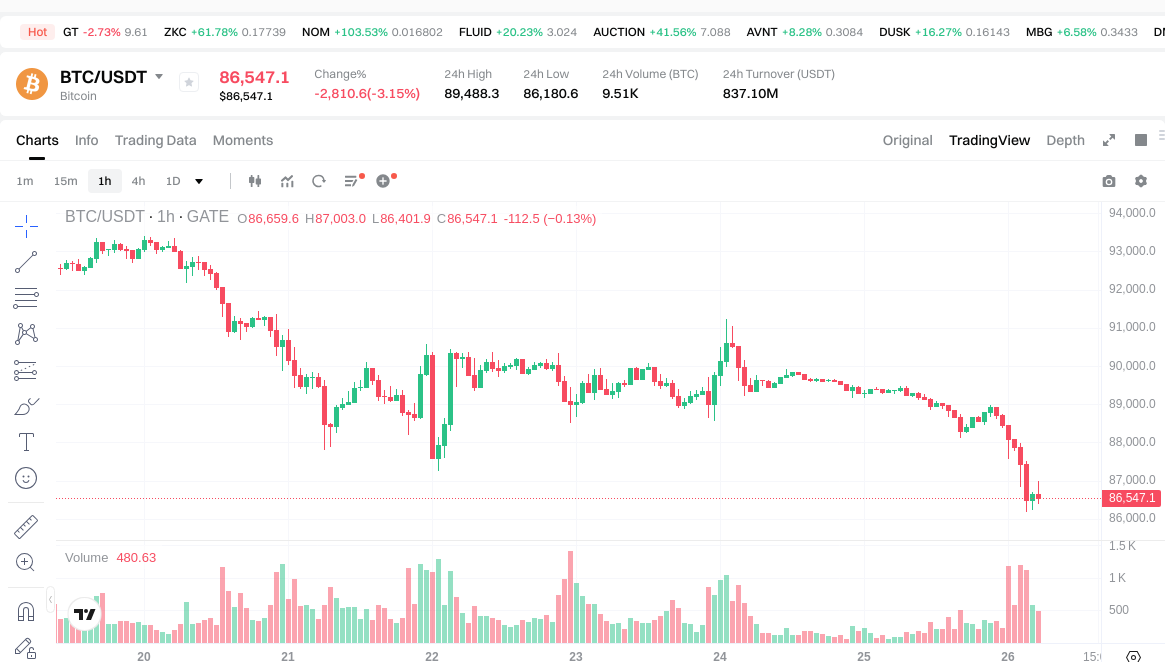 This design creates a direct link between digital value and physical energy expenditure, essentially converting electrical power into verifiable digital scarcity. For Musk, this energy-intensive process gives Bitcoin a fundamental grounding that distinguishes it from traditional fiat currencies, which can be created through policy decisions rather than physical work.
The Political Dimension of Energy-Based Value
Musk drew a sharp distinction between energy and conventional political power structures, emphasizing the constraints that physical reality places on energy production. "You can't legislate energy," he asserted. "You can't just pass a law and suddenly have a lot of energy." This observation highlights a key difference between energy-based value systems and fiat currency systems, where central banks can expand money supply through policy decisions.
He elaborated on the challenges inherent in energy production: "It's very difficult to generate energy, especially to harness energy in a useful way, to do useful work." This difficulty creates natural scarcity that cannot be circumvented through political or administrative means. In Musk's view, this makes energy a more honest and resilient foundation for value than government-issued currency.
Looking toward future economic systems, Musk suggested that "we probably will just have energy, power generation as the de facto currency." In such a paradigm, the entities or nations that control the most efficient and abundant energy sources would effectively possess the strongest "currency" and greatest economic power. This framework aligns closely with Bitcoin's existing architecture, where the cryptocurrency already functions as a system that converts energy expenditure into monetary value through its mining process.
Supporters of Bitcoin frequently argue that this energy-backed design creates a monetary system resistant to inflation and political manipulation. Unlike fiat currencies, which central banks can devalue through monetary expansion, Bitcoin's supply is mathematically limited, and creating new bitcoins requires demonstrable energy expenditure. This creates a form of digital scarcity that proponents believe more closely resembles physical commodities like gold than traditional paper money.
The Ongoing Debate Over Bitcoin's Energy Consumption
Musk's comments about energy and Bitcoin arrive amid continuing controversy over the cryptocurrency's environmental impact. Bitcoin's energy consumption remains one of the most contentious issues in cryptocurrency policy discussions, with stakeholders holding sharply divergent views on whether the network's power usage represents a problem or an opportunity.
Environmental critics express concern about Bitcoin mining's carbon footprint, particularly when miners rely on fossil fuel-based electricity sources. They worry about the strain that large-scale mining operations can place on electrical grids, especially in regions where power infrastructure is already stressed. Some policymakers have proposed restrictions or bans on cryptocurrency mining in response to these environmental concerns.
Conversely, Bitcoin advocates argue that mining operations can actually benefit energy systems in several ways. They point out that miners often locate facilities near stranded or underutilized energy sources, such as excess hydroelectric capacity or natural gas that would otherwise be flared. This flexibility allows mining to monetize energy that might otherwise go to waste. Additionally, some researchers suggest that Bitcoin mining can improve grid stability by providing flexible, interruptible load that helps balance supply and demand fluctuations in power networks.
The debate extends beyond environmental considerations to questions about the appropriate role of energy-intensive digital assets in the global economy. Some analysts see Bitcoin's energy consumption as justified by the value it provides as a decentralized, censorship-resistant monetary system. Others view the energy expenditure as wasteful, arguing that the same computational resources could be applied to more socially beneficial purposes.
The Path Forward for Energy-Based Digital Value
Musk did not provide a specific timeline for the transition to an energy-based value regime, and his scenario depends on achieving levels of artificial intelligence capability and robotic automation that remain largely theoretical. The vision of post-scarcity abundance driven by advanced AI and robotics represents an aspirational future rather than an imminent reality.
In the current economic landscape, national currencies and conventional payment systems continue to dominate commercial transactions, savings accounts, and salary payments. The existing financial infrastructure, built over centuries and deeply integrated with legal and regulatory frameworks, maintains its central role in global commerce.
However, Bitcoin and other cryptocurrencies have established themselves as alternative assets that operate alongside traditional monetary systems. Bitcoin trades as both a speculative investment and a long-term bet on a fundamentally different kind of monetary order—one based on cryptographic proof and energy expenditure rather than institutional trust and government backing.
The cryptocurrency's proof-of-work mechanism already embodies the energy-as-currency principle that Musk described, creating a living experiment in whether such a system can function at scale. As discussions about the future of money continue, Bitcoin's unique characteristics position it as a potential bridge between today's fiat-based economy and a hypothetical future where energy serves as the primary measure of value.
Whether Musk's vision of a moneyless, energy-centric future ultimately materializes remains uncertain, but his comments highlight the ongoing evolution in how technologists and entrepreneurs think about the fundamental nature of value, scarcity, and economic organization in an age of rapidly advancing technology.
FAQ
Why does Elon Musk believe traditional currency will die?
Elon Musk believes traditional fiat currency faces devaluation through constant monetary printing and inflation. He advocates for energy-backed Bitcoin as a superior alternative that provides true scarcity and value preservation through its finite supply and decentralized nature.
What is energy-based Bitcoin and how does it differ from regular Bitcoin?
Energy-based Bitcoin represents Bitcoin secured through renewable energy infrastructure, emphasizing sustainable mining practices. Unlike standard Bitcoin relying on mixed energy sources, it prioritizes proof-of-work validation powered by clean energy, reducing environmental impact while maintaining blockchain security and decentralization principles.
Why can Bitcoin survive in the monetary system compared to other cryptocurrencies?
Bitcoin dominates through first-mover advantage, highest market capitalization, and strongest network effects. Its decentralized security, limited supply of 21 million coins, and energy-based proof-of-work consensus make it the most trustworthy store of value. Institutional adoption and global recognition cement Bitcoin's position as digital gold in any future monetary system.
What is Elon Musk's attitude towards Bitcoin, and does he support it?
Elon Musk has shown mixed but generally supportive views on Bitcoin. He has praised Bitcoin's energy-efficient potential and suggested that energy-based Bitcoin will survive in a cashless future. While his stance has evolved over time, he recognizes Bitcoin's role in the cryptocurrency ecosystem and its technological significance.
What is the relationship between energy consumption and Bitcoin's value?
Bitcoin's energy consumption reflects its security and proof-of-work mechanism. Higher energy investment secures the network, increasing trust and scarcity value. As adoption grows, energy-backed Bitcoin becomes more valuable, creating a direct correlation between energy commitment and long-term price appreciation.
If traditional currency dies, can Bitcoin really become a replacement?
Yes. Bitcoin's decentralized, borderless nature and fixed supply make it ideal as money. Its energy-based consensus ensures security and value. As traditional systems falter, Bitcoin's scarcity and immutability position it as the ultimate store of value and medium of exchange for the future economy.
What impact does Elon Musk's prediction have on the cryptocurrency market?
Elon Musk's prediction strengthens Bitcoin's position as a store of value, driving institutional adoption and market confidence. Energy-based Bitcoin gains credibility, potentially increasing trading volume and long-term price appreciation as the market shifts toward sustainable, durable assets.
* The information is not intended to be and does not constitute financial advice or any other recommendation of any sort offered or endorsed by Gate.