This comprehensive guide compares ENS and LRC, two distinct Ethereum ecosystem tokens serving different purposes in Web3 adoption. ENS functions as a distributed naming system mapping human-readable names to blockchain identifiers, while LRC operates as a decentralized exchange protocol enabling custodial-free trading. Analyzing historical performance, ENS declined from $83.4 to $10.973, while LRC fell from $3.75 to $0.0554 as of January 2026. The article examines critical investment factors including tokenomics, institutional adoption, technology development, and macroeconomic influences. Price forecasts through 2031 suggest ENS ranging from $10-$31 and LRC from $0.034-$0.133 depending on scenarios. Investment strategies are tailored for different investor profiles, from conservative to aggressive allocations. Risk analysis covers market volatility, technical vulnerabilities, and regulatory uncertainties. Ideal for investors seeking data-driven insights on infrastructure-focused versus DEX-protocol cryptocur
Introduction: Investment Comparison Between ENS and LRC
In the cryptocurrency market, the comparison between ENS vs LRC has consistently been a topic of interest for investors. Both assets exhibit notable differences in market cap ranking, application scenarios, and price performance, representing distinct positioning within the crypto asset landscape.
ENS (ENS): Launched in 2017, it has gained market recognition through its role as a distributed naming system built on the Ethereum blockchain, mapping human-readable names to machine-readable identifiers.
LRC (LRC): Introduced in 2017, Loopring has positioned itself as an open, multi-party transaction protocol based on ERC20 and smart contracts, enabling decentralized exchange applications without asset custody or fund freezing.
This article will comprehensively analyze the investment value comparison of ENS vs LRC through historical price trends, supply mechanisms, institutional adoption, technical ecosystem, and future predictions, attempting to address the question investors care about most:
"Which is the better buy right now?"
I. Historical Price Comparison and Current Market Status
Historical Price Trends of ENS (Coin A) and LRC (Coin B)
- November 2021: ENS reached a notable price level of $83.4 following its token launch and initial distribution period.
- November 2021: LRC experienced significant price movement reaching $3.75 during the same period of heightened market activity.
- Comparative Analysis: During the 2021-2023 market cycle, ENS declined from $83.4 to $6.69, while LRC similarly decreased from $3.75 to $0.01963893.
Current Market Situation (2026-01-15)
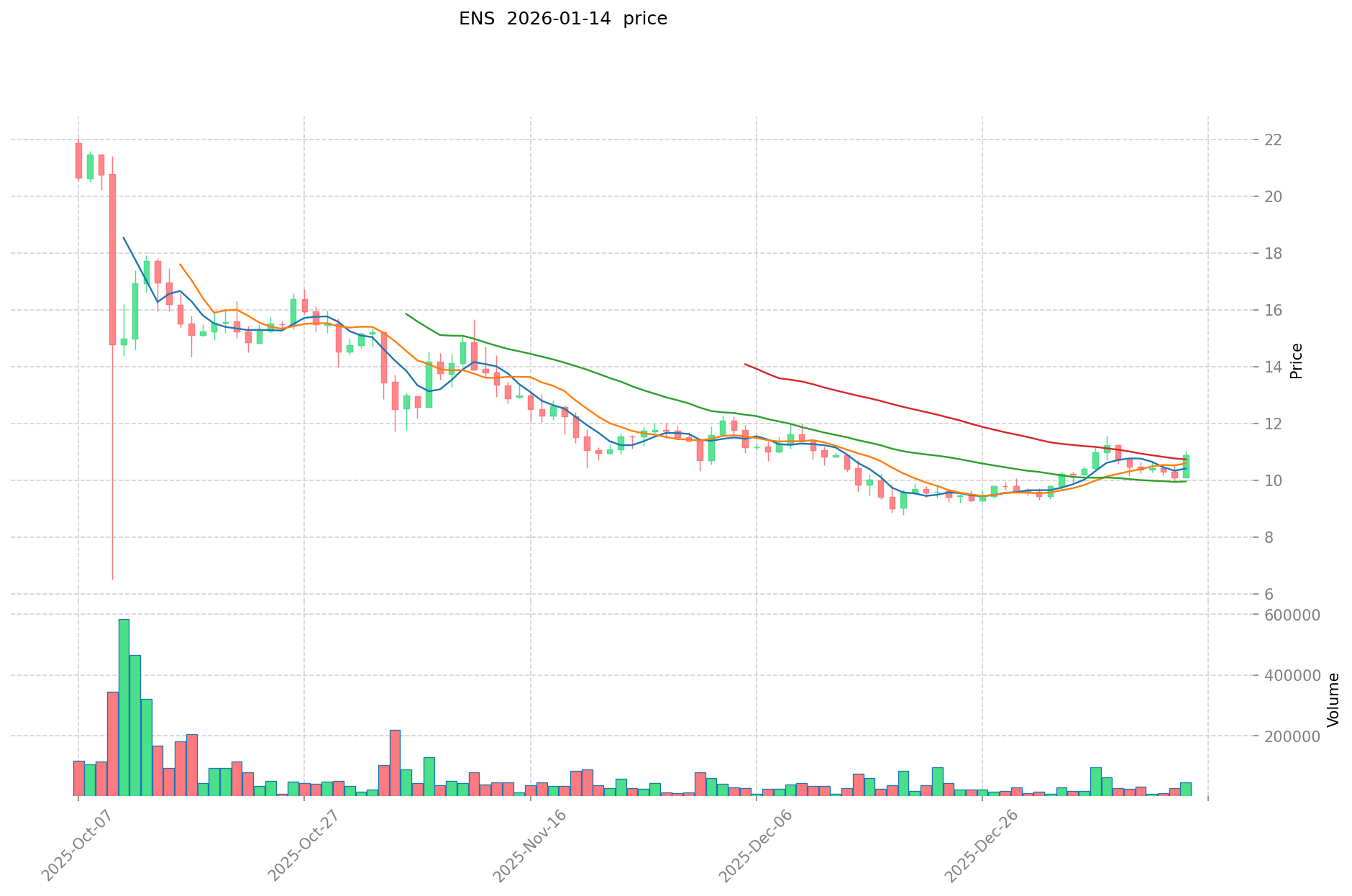
- ENS Current Price: $10.973
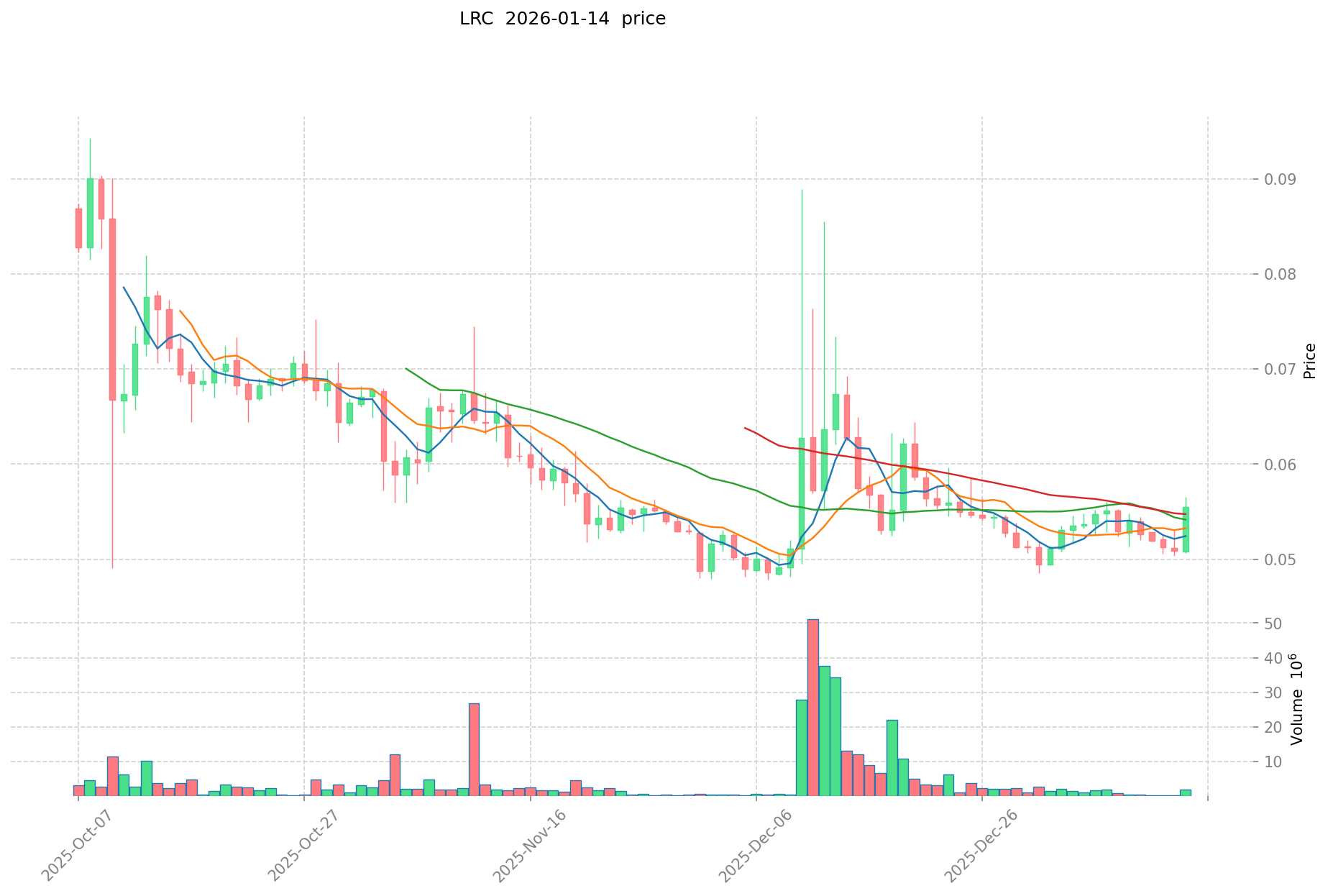
- LRC Current Price: $0.0554
- 24-Hour Trading Volume: ENS $818,009.60 vs LRC $187,989.22
- Market Sentiment Index (Fear & Greed Index): 48 (Neutral)
View real-time prices:
II. Core Factors Influencing ENS vs LRC Investment Value
Supply Mechanism Comparison (Tokenomics)
- LRC: Features a maximum supply mechanism with approximately 90% circulation ratio. The protocol generates revenue through transaction activities and distributes rewards to token holders.
- ENS: Supply mechanism information is not available in the provided materials.
- 📌 Historical Pattern: Supply mechanisms may influence price cycle dynamics through circulation adjustments and reward distribution models.
Institutional Adoption and Market Application
- Institutional Holdings: Information regarding institutional preference between ENS and LRC is not available in the provided materials.
- Enterprise Adoption: Application scenarios in cross-border payments, settlements, and investment portfolios remain under evaluation.
- National Policies: Regulatory attitudes toward both tokens vary across different jurisdictions and continue to evolve.
Technology Development and Ecosystem Building
- LRC Technology Development: LRC is associated with developments in the DeFi ecosystem, with ongoing evaluation of its market position and technical evolution from 2025 to 2030.
- ENS Technology Development: Specific technical upgrades and their potential impacts are not detailed in the provided materials.
- Ecosystem Comparison: Both tokens operate within DeFi environments, though specific implementation details in NFT, payment systems, and smart contract applications require further assessment.
Macroeconomic Environment and Market Cycles
- Performance in Inflationary Environments: The anti-inflation characteristics of both tokens require evaluation based on broader market conditions and macroeconomic factors.
- Macroeconomic Monetary Policy: Interest rates and dollar index movements may affect both tokens differently depending on their respective use cases and market positioning.
- Geopolitical Factors: Cross-border transaction demand and international situations may influence adoption patterns, though specific impacts vary by market segment.
III. 2026-2031 Price Forecast: ENS vs LRC
Short-term Forecast (2026)
- ENS: Conservative $10.43-$10.98 | Optimistic $10.98-$13.72
- LRC: Conservative $0.034-$0.055 | Optimistic $0.055-$0.080
Mid-term Forecast (2028-2029)
- ENS may enter a growth phase, with estimated prices ranging from $10.22 to $23.25
- LRC may enter an expansion phase, with estimated prices ranging from $0.053 to $0.120
- Key drivers: institutional capital inflows, ETF developments, ecosystem growth
Long-term Forecast (2030-2031)
- ENS: Baseline scenario $17.09-$22.32 | Optimistic scenario $22.32-$31.03
- LRC: Baseline scenario $0.067-$0.120 | Optimistic scenario $0.120-$0.133
View detailed price predictions for ENS and LRC
Disclaimer
ENS:
| Year |
Predicted High Price |
Predicted Average Price |
Predicted Low Price |
Price Change |
| 2026 |
13.72 |
10.976 |
10.4272 |
0 |
| 2027 |
16.0524 |
12.348 |
8.52012 |
12 |
| 2028 |
19.738278 |
14.2002 |
10.224144 |
29 |
| 2029 |
23.24785743 |
16.969239 |
9.33308145 |
54 |
| 2030 |
24.5324288223 |
20.108548215 |
17.09226598275 |
83 |
| 2031 |
31.0254790409235 |
22.32048851865 |
18.302800585293 |
103 |
LRC:
| Year |
Predicted High Price |
Predicted Average Price |
Predicted Low Price |
Price Change |
| 2026 |
0.0802285 |
0.05533 |
0.0337513 |
0 |
| 2027 |
0.08675744 |
0.06777925 |
0.0549011925 |
22 |
| 2028 |
0.1112664168 |
0.077268345 |
0.0556332084 |
39 |
| 2029 |
0.119719573743 |
0.0942673809 |
0.052789733304 |
70 |
| 2030 |
0.13267191187866 |
0.1069934773215 |
0.090944455723275 |
93 |
| 2031 |
0.130617637114087 |
0.11983269460008 |
0.067106308976044 |
116 |
IV. Investment Strategy Comparison: ENS vs LRC
Long-term vs Short-term Investment Strategies
- ENS: May be suitable for investors interested in blockchain infrastructure and domain naming system applications within the Ethereum ecosystem
- LRC: May appeal to investors focused on decentralized exchange protocols and DeFi trading infrastructure developments
Risk Management and Asset Allocation
- Conservative Investors: ENS 40% vs LRC 60% allocation may provide balanced exposure to different protocol types
- Aggressive Investors: ENS 60% vs LRC 40% allocation could emphasize naming system infrastructure potential
- Hedging Tools: stablecoin allocation, options strategies, cross-asset portfolio combinations
V. Potential Risk Comparison
Market Risks
- ENS: Price volatility related to Ethereum network adoption and domain registration demand fluctuations
- LRC: Trading volume sensitivity and competition from alternative decentralized exchange protocols
Technical Risks
- ENS: Scalability considerations and network stability dependencies on Ethereum infrastructure
- LRC: Protocol security considerations and potential technical vulnerabilities in smart contract implementations
Regulatory Risks
- Global regulatory frameworks may affect ENS and LRC differently based on their respective functions as naming systems and exchange protocols
VI. Conclusion: Which Is the Better Buy?
📌 Investment Value Summary:
- ENS Advantages: Established position in blockchain naming infrastructure, integration with Ethereum ecosystem, utility-driven demand model
- LRC Advantages: Revenue generation mechanism through transaction activities, reward distribution model for token holders, positioning in decentralized exchange sector
✅ Investment Recommendations:
- Novice Investors: Consider starting with smaller allocations to understand protocol mechanics and market dynamics before increasing positions
- Experienced Investors: Evaluate both tokens based on portfolio diversification needs, considering their different utility functions and market positioning
- Institutional Investors: Assess protocol fundamentals, liquidity profiles, and alignment with broader investment strategies in blockchain infrastructure
⚠️ Risk Disclaimer: Cryptocurrency markets exhibit significant volatility. This article does not constitute investment advice.
VII. FAQ
Q1: What are the main differences between ENS and LRC in terms of their core functionality?
ENS serves as a distributed naming system for the Ethereum blockchain, while LRC operates as a decentralized exchange protocol. ENS focuses on mapping human-readable names to machine-readable identifiers, functioning as blockchain infrastructure similar to DNS for the internet. LRC, on the other hand, enables decentralized trading through an open, multi-party transaction protocol based on ERC20 and smart contracts, allowing users to exchange assets without custodial intermediaries.
Q2: How have ENS and LRC performed historically during market cycles?
Both tokens experienced significant declines during the 2021-2023 market cycle. ENS decreased from $83.4 in November 2021 to $6.69, representing approximately a 92% decline, while LRC dropped from $3.75 to $0.01963893, reflecting a similar magnitude of correction. As of January 2026, ENS trades at $10.973 with 24-hour volume of $818,009.60, while LRC trades at $0.0554 with volume of $187,989.22, indicating both have partially recovered but remain significantly below their previous peaks.
Q3: What are the price forecasts for ENS and LRC through 2031?
Short-term (2026), ENS is projected between $10.43-$13.72, while LRC ranges from $0.034-$0.080. Mid-term (2028-2029), ENS may reach $10.22-$23.25, and LRC could range from $0.053-$0.120. Long-term (2030-2031), ENS baseline scenario suggests $17.09-$31.03, while LRC baseline projects $0.067-$0.133. These forecasts assume institutional capital inflows, ETF developments, and ecosystem growth as key drivers.
Q4: What are the primary risks associated with investing in ENS versus LRC?
ENS faces market risks related to Ethereum network adoption and domain registration demand fluctuations, plus technical risks regarding scalability and infrastructure dependencies. LRC encounters market risks from trading volume sensitivity and competition from alternative decentralized exchanges, along with technical risks involving protocol security and smart contract vulnerabilities. Both tokens are subject to evolving global regulatory frameworks that may impact their respective functions differently.
Q5: Which allocation strategy is recommended for different investor types comparing ENS and LRC?
Conservative investors might consider a 40% ENS / 60% LRC allocation for balanced exposure to different protocol types. Aggressive investors could opt for 60% ENS / 40% LRC to emphasize naming system infrastructure potential. Novice investors should start with smaller allocations to understand protocol mechanics before increasing positions, while institutional investors should assess protocol fundamentals, liquidity profiles, and alignment with broader blockchain infrastructure strategies.
Q6: How do the supply mechanisms of ENS and LRC differ, and what impact does this have?
LRC features a maximum supply mechanism with approximately 90% circulation ratio, generating revenue through transaction activities and distributing rewards to token holders. ENS supply mechanism details are not comprehensively available in current materials. The supply mechanism differences may influence price cycle dynamics through circulation adjustments and reward distribution models, potentially affecting long-term value accumulation patterns for holders of each token.
Q7: What role do institutional adoption and ecosystem development play in ENS vs LRC investment value?
Both tokens operate within DeFi environments but serve different functions. ENS benefits from its integration with Ethereum ecosystem and utility-driven demand from domain registration needs. LRC's value proposition centers on its revenue generation through decentralized exchange activities and reward distribution model. Specific institutional holdings data is limited, but enterprise adoption in cross-border payments, settlements, and investment portfolios continues to evolve for both tokens.
Q8: Should investors prioritize short-term trading or long-term holding when comparing ENS and LRC?
ENS may suit investors interested in blockchain infrastructure and domain naming system applications within the Ethereum ecosystem, potentially favoring longer holding periods aligned with network adoption growth. LRC may appeal to those focused on decentralized exchange protocols and DeFi trading infrastructure developments, which could offer both short-term trading opportunities tied to platform activity and long-term positioning in the DEX sector. Investment horizon should align with individual risk tolerance and conviction in each protocol's respective use case evolution.
* The information is not intended to be and does not constitute financial advice or any other recommendation of any sort offered or endorsed by Gate.