Learn how to leverage the standard deviation calculator to assess volatility in cryptocurrencies and Ethereum. These statistical tools are crucial for traders and investors on Gate, enabling them to enhance trading strategies through whale activity analysis and price movement evaluation.
Understanding Whale Activity in the Ethereum Market
Whales—entities or individuals holding significant quantities of cryptocurrency—play a pivotal role in shaping the Ethereum (ETH) market. These players typically manage ETH volumes that make up a substantial portion of the total circulating supply, giving them considerable power to influence price movements through their trades.
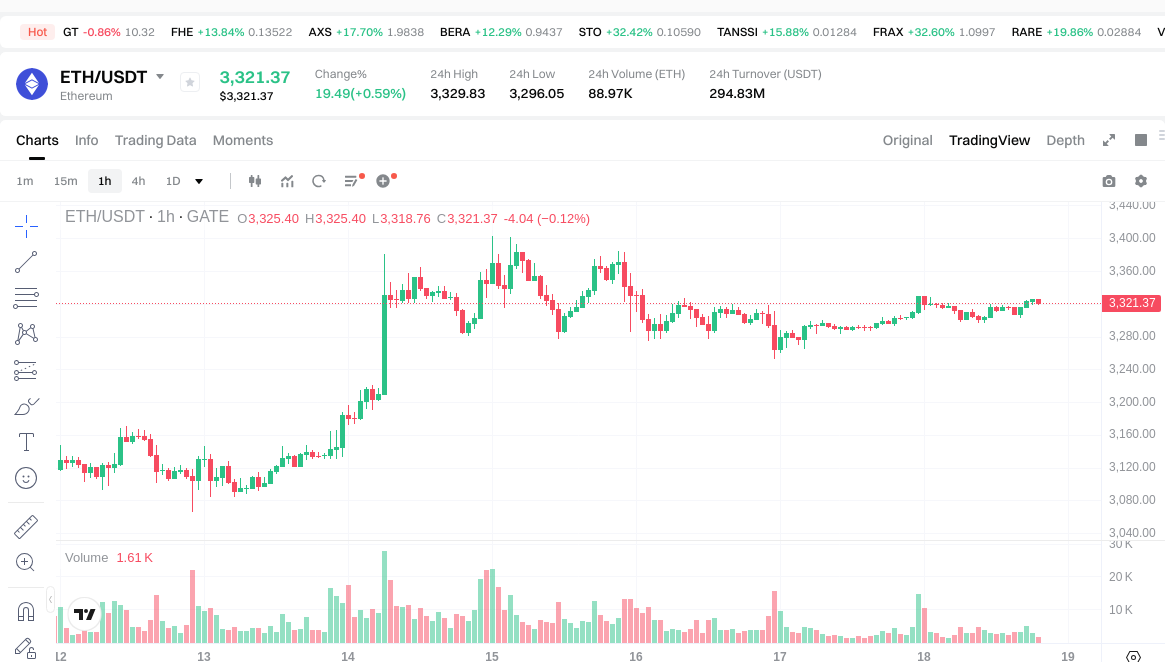
Their buying and selling actions can create substantial price swings, often triggering ripple effects across the broader crypto ecosystem. When a whale executes a high-volume transaction, the immediate impact on the order book can spark volatility that extends across multiple trading platforms and pairs. Understanding whale behavior is essential for both retail and institutional investors navigating Ethereum’s complexities, as it helps them anticipate potential price shifts and refine their investment strategies.
Whale activity analysis involves tracking large wallet movements, patterns of transfers between addresses, and the timing of major transactions relative to market cycles. On-chain analytics tools enable real-time tracking of these movements, providing valuable insights into the likely intentions of these major market participants.
What Is a Whale Sell-Off in Ethereum?
A whale sell-off occurs when a major Ethereum holder decides to liquidate a significant portion of their assets, typically involving thousands or even millions of ETH in a single transaction or a series of coordinated trades. On-chain analytics often reveal these events when large sums of ETH move from long-term storage wallets to exchanges.
Such actions can have immediate and far-reaching effects on the market, including:
-
Price Drops: Large sell orders can create substantial downward pressure on Ethereum’s price, especially when market liquidity is low. If selling volume overwhelms the market’s absorption capacity, prices may plunge swiftly within minutes or hours, presenting opportunities for technical traders but posing considerable risk to long-term holders.
-
Market Panic: Retail investors often respond emotionally to whale sell-offs, viewing them as signals of waning confidence in the asset. This can trigger additional selling driven by fear of further losses and heightened volatility, fueling a negative feedback loop that amplifies the initial price move.
-
Cascading Liquidations: In leveraged trading environments, whale sell-offs can trigger margin calls and force the liquidation of leveraged positions. When prices breach critical thresholds, these positions are automatically closed, generating further selling pressure, intensifying price swings, and potentially causing flash crashes.
The impact of a whale sell-off also depends on factors such as overall market sentiment, available liquidity, and whether the sale is perceived as strategic profit-taking or a sign of deeper concern about the asset.
Whale Accumulation and Selling Trends
Whale activity in the Ethereum market is defined by two primary behaviors—accumulation and selling—each reflecting different investment strategies and market perspectives. Market analysis highlights contrasting trends that reveal the sentiment of major holders:
-
Accumulation: Some whales accumulate large amounts of ETH during price corrections or market consolidation, signaling long-term confidence in the asset’s underlying value. This accumulation typically occurs during periods of low volatility or after significant price declines, as whales take advantage of lower prices to build their positions. Signs of accumulation include increases in large wallet addresses and decreased ETH balances on exchanges.
-
Selling: Other whales strategically sell substantial ETH holdings during price peaks or periods of high volatility, aiming to realize profits or rebalance their portfolios. Motivations for these sales include liquidity needs, capital reallocation, or concerns about short-term market conditions.
This divergence between accumulation and selling among whales creates complex market dynamics—some large holders are betting on future growth, while others are locking in gains. Such heterogeneity can lead to extended periods of price consolidation, where buying and selling pressures balance before a decisive trend emerges.
How Whale Activity Impacts Ethereum Price Volatility
Whale transactions are a primary driver of Ethereum’s price volatility, exerting outsized influence over the asset’s short- and mid-term trends:
-
Cascading Liquidations: Major whale sell-offs can trigger wave after wave of leveraged position liquidations, exponentially amplifying short-term price swings. As prices drop quickly following a whale sale, leveraged long traders may hit margin limits, forcing automatic position closures. This creates additional selling pressure, driving prices lower and potentially sparking a domino effect that results in double-digit losses within hours.
-
Market Sentiment: Whale activity heavily sways market sentiment, shaping narratives that spread through social channels and crypto media. When well-known whales or addresses tied to institutional funds move large ETH amounts, the crypto community often reads this as a signal of future price movement, prompting thousands of smaller traders to adjust their strategies.
-
Support and Resistance Levels: Whales frequently trade near key technical support or resistance levels, concentrating volume at these price zones. Large buy orders at support can establish a psychological “floor,” preventing further declines, while large sell orders at resistance can create “ceilings” that hinder upward breakouts.
Because whales can move markets, their trading patterns are closely monitored by algorithmic and quantitative traders, who program their strategies to react automatically to major whale moves, adding further complexity to market dynamics.
Key Support and Resistance Levels for Ethereum
Ethereum’s price is often guided by critical support and resistance levels, which emerge from technical analysis and clusters of historical trading volume:
-
Support Levels: Ethereum has tested pivotal support zones—areas where demand has historically outstripped supply, creating temporary or lasting price floors. These are typically identified via past lows, long-term moving averages, and high-volume price clusters. When prices approach support, buyers often step in, viewing the asset as undervalued and providing buying pressure that can reverse a downtrend.
-
Resistance Levels: Resistance zones act as psychological and technical barriers that prices struggle to breach. These often align with previous highs, round numbers, or areas where large sellers have historically entered the market. As Ethereum nears resistance, selling activity tends to increase, either for profit-taking or skepticism about the asset’s ability to sustain higher levels.
Precise identification of these levels requires multi-timeframe analysis and factors such as trading volume, price volume profiles, and convergence of technical indicators. Strong breakouts above resistance with high volume often mark the start of new uptrends, while support breakdowns may signal acceleration of declines.
Professional traders rely on these zones to set entry and exit points, place stop-losses, and identify favorable risk-reward opportunities. Whale activity frequently clusters around these pivotal levels, making them key targets for market analysis.
Institutional Adoption and Its Role in Ethereum Stability
Institutional interest in Ethereum has steadily increased, lending greater legitimacy and the potential for long-term price stability:
-
Spot ETH ETFs: The launch of spot Ethereum ETFs has attracted steady institutional capital flows, offering a regulated investment vehicle to traditional investors who previously avoided direct crypto exposure. These products allow pension funds, family offices, and wealth managers to allocate capital to Ethereum within compliance frameworks, significantly expanding the asset’s investor base.
-
Lower Exchange Supply: The supply of Ethereum on trading platforms has dropped to historic lows, signaling that investors are moving ETH to long-term storage in private wallets. With less ETH available for immediate trading, short-term volatility may decrease, but low liquidity can also magnify price moves during demand spikes.
Institutional players bring added sophistication through advanced trading strategies, stronger risk management, and longer investment horizons. They are less likely to panic-sell during short-term corrections, offering a stabilizing effect during turbulent periods.
Institutional involvement also brings greater regulatory scrutiny and infrastructure development, including institutional-grade custody, sophisticated derivatives, and risk management tools—all of which contribute to Ethereum’s market maturation.
Ethereum’s Role in DeFi, NFTs, and Smart Contracts
Ethereum remains a cornerstone of the blockchain ecosystem, powering a vast array of decentralized applications and breakthrough use cases:
-
DeFi (Decentralized Finance): Ethereum is home to the majority of DeFi protocols, including lending platforms, yield farms, aggregators, and decentralized stablecoins. The total value locked (TVL) in Ethereum-based DeFi protocols totals billions of dollars, reflecting strong market trust in the network’s security and utility. These protocols let users lend, borrow, trade, and earn yield on crypto assets without traditional intermediaries, transforming access to financial services.
-
NFTs (Non-Fungible Tokens): The NFT boom cemented Ethereum as the blockchain of choice for digital art, collectibles, gaming items, and virtual assets. With standards like ERC-721 and ERC-1155, Ethereum has developed a thriving ecosystem of marketplaces, wallets, and creation tools. Despite new competitors, Ethereum still leads in trading volume and cultural relevance.
-
Smart Contracts: Ethereum’s smart contract capabilities continue to drive innovation—from DAOs and decentralized identity to supply chain solutions. Its Solidity programming language and mature development environment attract global developers, reinforcing Ethereum’s network effect and market dominance.
This broad utility creates real demand for ETH beyond speculation, since the token is needed for gas, staking, and interacting with decentralized apps. The shift to Ethereum 2.0 and proof-of-stake has also introduced deflationary pressure through fee burns, potentially supporting long-term price appreciation.
Historical Price Trends and Seasonal Patterns
Ethereum’s price history reveals recurring seasonal trends that seasoned investors leverage for market timing:
-
September Corrections: Historically, Ethereum has seen price corrections in September—a pattern also seen in traditional markets. This may be tied to traders returning after summer, end-of-quarter portfolio rebalancing, and market psychology. Investors aware of these trends often adjust positions in anticipation of seasonal weakness.
-
Q4 and Q1 Performance: Ethereum often performs well in the fourth and first quarters, coinciding with increased optimism, new product launches, and protocol upgrades. These periods typically see higher on-chain activity, DeFi growth, and more media attention—all supporting upward price momentum.
However, seasonal patterns are not guarantees and should be weighed alongside fundamental, technical, and sentiment analysis. Macroeconomic events, regulatory changes, and technological shifts can override historical trends.
Sophisticated traders use seasonal analysis as one part of their toolkit, combining it with other indicators to identify favorable risk/reward setups and avoid periods of likely market weakness.
On-Chain Data Analysis and Market Sentiment
On-chain metrics provide unique insights into Ethereum’s market dynamics that traditional price analysis cannot reveal:
-
Wyckoff Accumulation Pattern: Technical analysis suggests Ethereum sometimes forms Wyckoff accumulation patterns, marked by informed investors absorbing supply during consolidation. This classic pattern identifies zones where “smart money” builds positions ahead of major rallies, creating opportunities for those who spot these setups.
-
Market Sentiment Divergence: There is often a clear split between retail and institutional sentiment at different market cycle stages. Retail investors may be overly optimistic at the top and pessimistic at the bottom, while institutions often act contrarily—accumulating in fearful conditions and distributing during euphoria. This divergence is visible in metrics like ETF flows, whale address changes, and social sentiment analysis.
Other key on-chain indicators include:
- Hash Rate & Network Security: Measures of fundamental blockchain health
- Active Addresses: Indicates network adoption and usage
- Transaction Value: Total economic throughput
- ETH in Staking: Amount of ETH locked up, tightening circulating supply
- Gas Fees: Reflects demand for block space and network activity
Blending these on-chain indicators with traditional price analysis provides a more complete view of Ethereum’s market health and likely price direction.
Peer-to-peer trading platforms are increasingly helping to limit the impact of whale activity on price volatility. By enabling direct trades between participants, these platforms distribute liquidity more evenly across different pools and protocols—reducing the influence any single player can exert.
They use automated market makers (AMMs) that set prices based on mathematical formulas, providing natural resistance to price manipulation by large traders. If a whale tries to execute a substantial trade, the AMM adjusts prices non-linearly, making it more expensive to fill the order and encouraging whales to split trades into smaller transactions over time.
Additionally, fragmented liquidity across multiple P2P platforms means a whale sale on one platform has only a partial effect, reducing contagion across the broader market. Arbitrageurs quickly exploit price gaps, helping balance prices and absorb liquidity shocks.
Blockchain transparency lets traders monitor whale movements in real time, allowing for proactive strategy adjustments and reducing surprise-driven market panics. On-chain analytics tools alert users to large ETH transfers, giving the market a chance to brace for volatility.
Conclusion: Navigating the Complexities of Whale Activity
Whale activity is a double-edged sword in Ethereum markets, offering both significant opportunities and substantial risks to investors of all sizes. While major whale moves can create profit opportunities for those who time the market or capitalize on short-term volatility, they also introduce significant uncertainty that can lead to sharp losses for the unprepared.
By understanding whale accumulation and selling trends, analyzing real-time on-chain data, and monitoring key technical support and resistance, investors can better navigate market complexity and position themselves for long-term success. The most effective approach is multifaceted, combining Ethereum’s fundamental value analysis, technical price pattern study, and on-chain whale behavior monitoring.
Successful investors also realize that whale activity is just one of many forces shaping Ethereum’s price. Technology upgrades, regulatory shifts, macroeconomic trends, and overall crypto sentiment all play crucial roles. Robust Ethereum strategies account for all these factors, emphasizing emotional discipline and rigorous risk management regardless of whales’ short-term actions.
As Ethereum’s market matures, driven by institutional adoption, infrastructure upgrades, and advanced analytics, the outsized impact of individual whales is gradually waning—creating a more balanced, efficient trading environment for all participants.
FAQ
What is an Ethereum Whale? How Are Large Holders Defined?
An Ethereum whale is an individual or entity holding a large amount of ETH—typically 10,000 or more coins. These large holders can significantly influence price volatility through large-scale trades.
What Impact Do Whale Sell-Offs (Dumps) Have on ETH Price?
Whale sell-offs can trigger short-term ETH price drops. The market response depends on the sale’s size and overall investor sentiment. Large-scale selling sharply increases volatility.
How Can You Monitor and Identify Large Transactions on the Ethereum Blockchain?
Use analytics platforms like Tokenview for real-time transaction tracking. Set transaction value thresholds, monitor whale addresses, and study asset movement patterns. Specialized tools allow filtering by value, time, and can flag major moves before they hit the price.
What Is the Relationship Between Whale Trades and Market Volatility?
Whale trades—large-volume transactions—cause major price swings. When whales move significant assets, they directly affect supply and demand, driving up volatility. Their actions often trigger chain reactions, influencing other investors and amplifying price moves.
Diversify your portfolio and use stop-loss orders to manage risk. Avoid concentrating capital in one asset. Track large transactions and adjust your strategy as needed to safeguard your capital.
Large ETH transfers often indicate preparation for trading or liquidity purposes. It may signal selling pressure, but not always—market context determines the true impact on price.
* The information is not intended to be and does not constitute financial advice or any other recommendation of any sort offered or endorsed by Gate.