This comprehensive analysis examines GEX token price forecasts amid anticipated Federal Reserve dovish policies and significant market liquidity trends. The article explores how Fed rate cuts and balance sheet expansion could catalyze Bitcoin rallies above $92,000, creating favorable conditions for crypto assets including GEX tokens. Key sections analyze Bitcoin's critical Fibonacci support at 0.382 level, on-chain indicators showing seller exhaustion, and dormant coin movements signaling renewed demand. Experts from London Crypto Club highlight the structural tailwinds from monetary expansion, while technical analysis on Gate and other platforms reveals the convergence of bullish signals. The guide addresses how loose liquidity environments historically boost risk assets, positioning GEX and similar tokens for potential appreciation as institutional capital flows into the crypto market during accommodative policy cycles.
Fed Poised for Dovish Surprise as Analysts Warn Liquidity Wave Is Coming
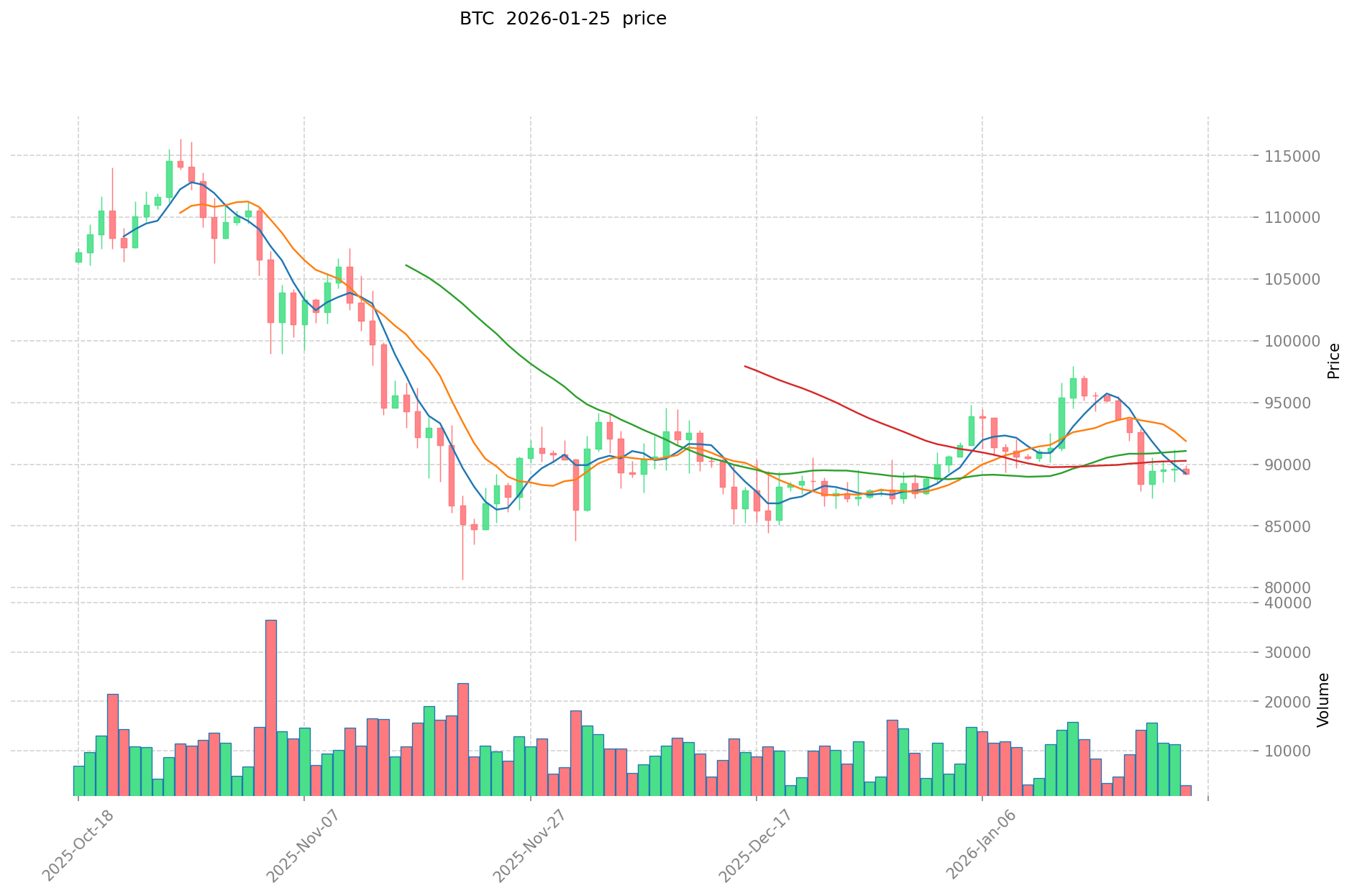
Bitcoin's recent climb above $92,000 has stirred fresh optimism among market watchers, who now believe that the upcoming Federal Reserve meeting could set off a far bigger rally. Analysts at the London Crypto Club suggest that a liquidity boost from the Fed in the near term may act as a powerful catalyst, potentially driving the world's largest cryptocurrency sharply higher.
David Brickell and Chris Mills, prominent analysts at the London Crypto Club, argue that the central bank is poised to deliver a "dovish surprise." They forecast that policymakers will inject liquidity through a creative bond-buying mechanism rather than explicit quantitative easing. This approach represents a strategic shift in monetary policy that could have profound implications for risk assets, particularly Bitcoin.
"We're moving into a continued rate-cutting cycle accompanied by balance sheet expansion as the Fed effectively turns on the money printers to monetize the deficit," they wrote in their analysis. "That's a powerful, structural tide to be swimming against moving forward."
The outlook comes at a particularly tense moment for crypto traders. Bitcoin's recent break above $92,000 follows two months of significant turbulence that erased almost all of the previous gains, leaving investors eager for a clear macro signal that could reset market direction. The volatility has created uncertainty, but many analysts view the current consolidation as a necessary phase before the next major move.
The Federal Open Market Committee's decision dominates the macro calendar for the period ahead. Policymakers are expected almost universally to cut rates by 25 basis points, marking a continuation of the accommodative monetary policy stance. Ed Yardeni of Yardeni Research echoed these broad market expectations, noting the widespread consensus among economists and market participants.
The CME FedWatch tool shows an 86% probability of a quarter-point cut, while prediction market Polymarket places the odds even higher at 94%. These high probabilities reflect strong market conviction that the Fed will continue its dovish trajectory.
Historically, lower interest rates have significantly benefited risk assets like Bitcoin by reducing the appeal of traditional bonds and increasing the flow of capital into higher-yielding or speculative markets. When the cost of borrowing decreases, investors often seek alternative investments that offer potentially higher returns, and cryptocurrencies have emerged as a favored destination for such capital flows. This relationship between monetary policy and Bitcoin's price action has become increasingly evident in recent years, with major rate decisions often coinciding with significant moves in the crypto market.
Furthermore, the expansion of the Fed's balance sheet through asset purchases effectively increases the money supply, which can lead to currency devaluation concerns. In such environments, Bitcoin's fixed supply of 21 million coins becomes increasingly attractive as a store of value, drawing comparisons to digital gold. The combination of rate cuts and balance sheet expansion creates what analysts describe as a "perfect storm" for Bitcoin appreciation.
Bitcoin Tests Key Fibonacci Support
Bitcoin (BTC) is currently trading at a pivotal technical level that analysts say could determine whether the market maintains its broader uptrend or slips back toward support levels established in earlier periods. The cryptocurrency's price action at this juncture has become a focal point for technical analysts who are closely monitoring key support and resistance zones.
Crypto trader Daan Crypto Trades highlighted that the 0.382 Fibonacci retracement zone represents the critical line that bulls must defend. Fibonacci retracement levels are widely used technical indicators that identify potential support and resistance levels based on the mathematical relationships discovered by the Italian mathematician Leonardo Fibonacci. The 0.382 level, in particular, is considered a key threshold in technical analysis, often serving as a battleground between buyers and sellers.
Daan warned that a breakdown below this crucial support could send BTC back to levels near $76,000, which were last seen several months ago. "It's also pretty much the last major support before testing the lows from earlier periods again, which would break this high time frame market structure," he explained. Such a breakdown would represent a significant shift in market sentiment and could trigger a cascade of selling pressure as stop-loss orders are activated.
The importance of this support level cannot be overstated, as it represents not just a technical marker but also a psychological threshold for many market participants. A sustained break below this level could invalidate the bullish market structure that has been building over recent months, potentially leading to a more prolonged correction phase.
Meanwhile, a key on-chain indicator known as "liveliness" is climbing again, even as Bitcoin's price action remains relatively subdued. Liveliness is a sophisticated metric that measures the ratio of the cumulative lifespan of spent coins to the cumulative lifespan of all coins. When this indicator rises, it suggests that coins that have been dormant for extended periods are beginning to move, which can signal renewed market activity and potential accumulation by long-term holders.
Analysts say the divergence between rising liveliness and subdued price action suggests renewed underlying demand, with dormant coins moving at levels not seen in years. This phenomenon is often interpreted as a sign that long-term holders, sometimes referred to as "smart money," may be re-entering the market or repositioning their holdings. Such movements typically precede significant price action, as these holders tend to have a longer-term perspective and stronger conviction in Bitcoin's value proposition.
Bitfinex, a major cryptocurrency exchange, reported that the market is showing clear signs of "seller exhaustion" following a period of heavy deleveraging and panic-driven exits by short-term holders. Seller exhaustion occurs when the selling pressure that has been weighing on prices begins to diminish, often because those who wanted to sell have already done so. This creates conditions where even modest buying pressure can lead to significant price appreciation.
The deleveraging process, which saw many overleveraged positions liquidated during the recent volatility, has helped to clear out weak hands from the market. Short-term holders, who are typically more prone to panic selling during market downturns, have largely exited their positions, leaving a more resilient holder base. This shift in the composition of Bitcoin holders toward those with longer time horizons and stronger conviction is generally viewed as a positive development for price stability and future appreciation.
Additionally, on-chain data reveals that the amount of Bitcoin held on exchanges has been declining, suggesting that investors are moving their holdings into cold storage for long-term holding rather than keeping them readily available for trading. This reduction in exchange balances is often interpreted as a bullish signal, as it indicates reduced selling pressure and increased conviction among holders.
The confluence of technical support at the Fibonacci level, rising liveliness indicators, and signs of seller exhaustion creates what many analysts view as a potentially explosive setup for Bitcoin. If the Fed delivers the expected dovish policy stance while Bitcoin successfully defends its key technical support, the stage could be set for a significant rally that takes the cryptocurrency to new highs. However, failure to hold these support levels could result in a more extended consolidation period or even a deeper correction before the next sustained upward move materializes.
FAQ
美联储流动性政策是如何影响比特币价格的?
美联储增加流动性通常导致美元贬值,促使投资者寻求价值储存资产。比特币作为稀缺资产,常因此受益。宽松政策预期推高比特币需求,分析师预测可能引发价格大幅上涨。
Bitcoin has typically rallied strongly during Fed easing cycles. QE periods and rate cuts have coincided with significant Bitcoin gains as investors sought alternative assets. Lower rates increased liquidity and reduced opportunity costs of holding non-yielding assets like Bitcoin, driving institutional and retail inflows.
Why does Bitcoin tend to rise in a loose liquidity environment?
In loose liquidity environments, increased money supply and lower interest rates encourage investors to seek higher returns. Bitcoin, as a scarce asset with fixed supply, becomes an attractive hedge against inflation and currency devaluation, driving demand and price appreciation.
What is the current liquidity policy stance of the Federal Reserve?
The Federal Reserve maintains an accommodative liquidity stance, with potential rate cuts and quantitative easing measures. This expansionary policy could increase capital flows into Bitcoin and crypto assets, supporting price appreciation.
Bitcoin typically demonstrates strong hedge properties during Fed policy shifts. When the Fed signals rate cuts or liquidity expansion, Bitcoin often rallies sharply as investors seek inflation protection. Historical data shows Bitcoin gains momentum during accommodative monetary policy periods, with potential for significant upside moves. During tightening cycles, Bitcoin may experience volatility but maintains long-term hedge value against currency debasement and geopolitical risks.
What is the causal relationship between abundant liquidity and Bitcoin price increases?
Abundant liquidity increases money supply and reduces borrowing costs, encouraging investors to seek higher returns in risk assets like Bitcoin. This capital inflow drives demand, pushing Bitcoin prices sharply higher as investors shift from traditional assets to crypto.
* The information is not intended to be and does not constitute financial advice or any other recommendation of any sort offered or endorsed by Gate.