An in-depth breakdown of the governance conflict between Fetch.ai and Ocean Protocol that led to the breakup of the AI-powered ASI alliance. The analysis covers FET token price declines, suspicions surrounding token management, legal proceedings, and a detailed assessment of the challenges and takeaways from decentralized AI partnerships.
Establishment and Objectives of the ASI Alliance
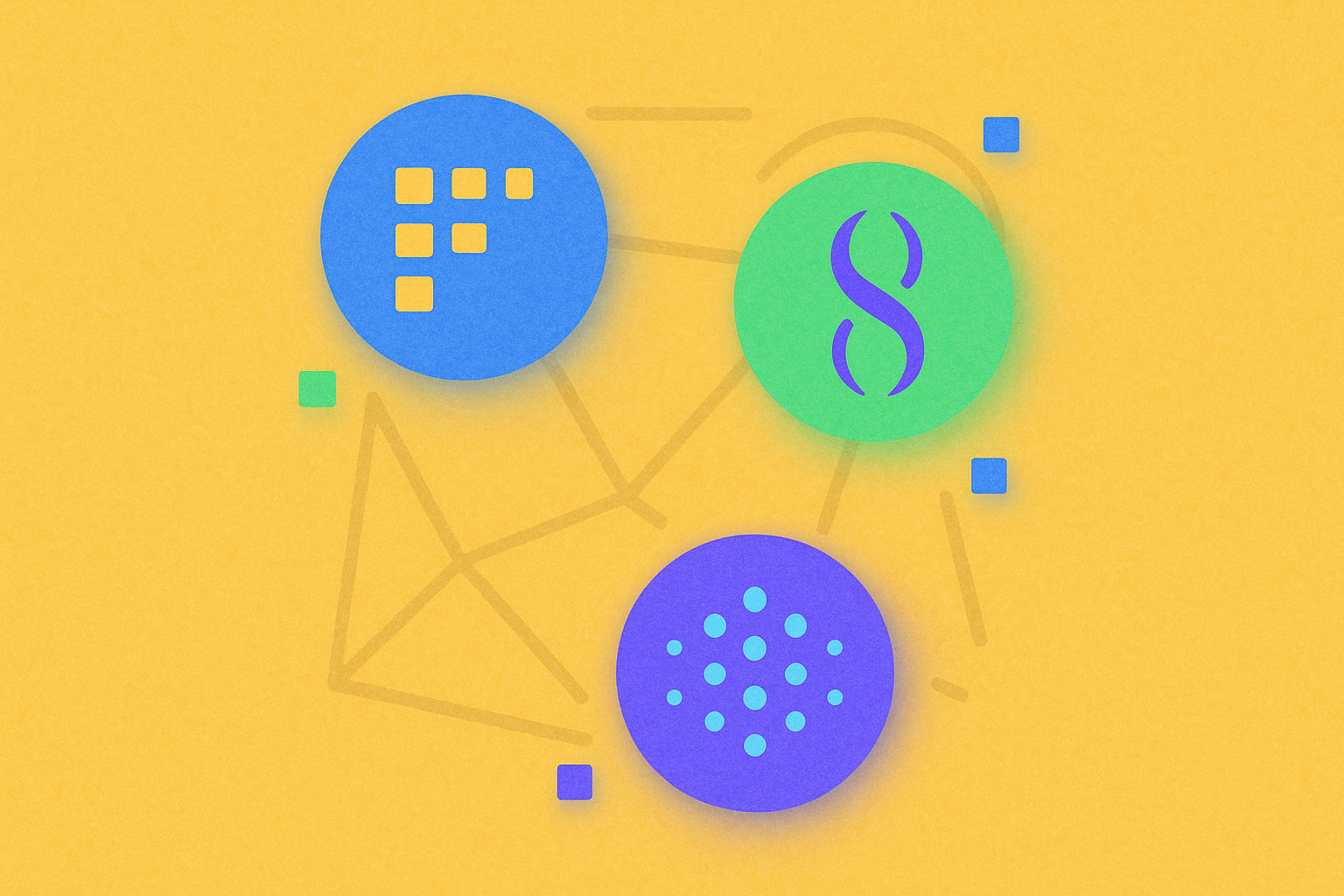
In 2024, the Artificial Superintelligence (ASI) Alliance was founded to unify Fetch.ai (FET), Ocean Protocol (OCEAN), and SingularityNET under a shared token framework. This alliance aimed to harness the unique strengths of each project to build a thriving ecosystem for decentralized AI development.
The alliance proposed the following division of roles:
-
Fetch.ai: Focuses on autonomous agents and decentralized machine learning, offering the foundational technologies for automated transactions and collaborative functions among AI agents. This enables efficient AI systems with minimal human involvement.
-
Ocean Protocol: Delivers advanced data-sharing infrastructure, ensuring both security and scalability for AI data. Ocean Protocol plays a pivotal role in granting access to large datasets essential for AI growth, while safeguarding data privacy.
-
SingularityNET: Serves as a decentralized AI marketplace, allowing developers and service providers to freely launch and exchange services. This drives innovation and collaborative advancement in AI technology.
The alliance set out to revolutionize the convergence of AI and blockchain by fostering interoperability, shared governance, and a unified vision for decentralized AI. Despite these bold ambitions, the ASI Alliance encountered major challenges and was ultimately dissolved, leaving valuable lessons for future decentralized partnerships.
Governance Disputes and Decentralization Challenges
Governance conflicts were a central factor in the ASI Alliance’s downfall. Although founded on decentralization principles, internal disputes over decision-making and token management exposed significant vulnerabilities in its structure.
Key Governance Issues
-
Fetch.ai’s Allegations: Fetch.ai accused Ocean Protocol of centralized control over community tokens, undermining the alliance’s decentralized governance. The core concern was that community voices were insufficiently considered in key decisions.
-
Ocean Protocol’s Response: Ocean Protocol refuted these claims, stating all actions followed governance policies. The team emphasized its commitment to transparency in financial management.
These disputes spotlighted broader challenges in merging decentralized projects with different governance models. The absence of unified decision-making and accountability mechanisms ultimately led to the alliance’s collapse—a classic case underscoring the need for robust governance in decentralized organizations.
Token Management Controversies and Market Impact
As tensions escalated, Fetch.ai alleged that Ocean Protocol converted 661 million OCEAN tokens into 286 million FET tokens, selling approximately 263 million FET on the open market. Fetch.ai attributed a sharp decline in FET prices, along with a loss of investor trust and market sentiment, to these actions.
Ocean Protocol's Response
Ocean Protocol denied the allegations, stressing that all token conversions were conducted transparently under its financial management policy. The team attributed the FET price drop to broader market trends, not specific actions, and pointed out that all transaction records are publicly accessible for community verification.
Market Impact
-
FET Token: The price plunged over 90% from its all-time high, causing severe losses for individual investors and undermining project credibility.
-
OCEAN Token: Despite recent price gains, volatility has increased. Uncertainty continues to affect trading volumes and market sentiment.
These events further eroded investor trust in both projects and highlighted the risks associated with decentralized partnerships. Large-scale token sell-offs and the need for transparent practices were brought into sharper focus.
Legal Actions and Class Action Lawsuits
In response to token management concerns, Fetch.ai CEO Humayun Sheikh announced intent to pursue legal measures, including a class action lawsuit. Sheikh also offered a $250,000 bounty to identify OceanDAO multisig wallet signers, escalating the dispute further.
Legal Implications
This legal battle has captured attention across the crypto community, raising critical questions about accountability and transparency in decentralized autonomous organizations (DAOs). Its outcome may set a precedent for future conflict resolution in similar scenarios.
Key issues include:
- DAO Legal Responsibility: Defining legal liability for decision-makers in decentralized organizations
- Token Holder Rights: Mechanisms to protect minority token holders
- Transparency Standards: Legal requirements for transparency in DAO operations
This case underscores the urgent need for comprehensive legal frameworks in the crypto asset sector.
Ocean Protocol’s Withdrawal from the ASI Alliance
In October 2025, Ocean Protocol officially exited the ASI Alliance, citing governance differences and legal constraints. The move drew further criticism over inadequate token management and lack of transparency.
Ocean Protocol’s Proposed Solutions
-
Token Buyback and Burn Program: Designed to restore confidence in OCEAN tokens, this initiative buys back tokens from the market and permanently removes them from circulation to increase scarcity and stabilize value.
-
Community Response: Some welcomed the plan, but many voiced skepticism about its long-term impact, emphasizing unresolved governance issues.
Ocean Protocol frames its withdrawal as a new chapter, signaling a shift toward independent project operations guided by its own vision.
Proposed Solutions and Settlement Negotiations
Media reports indicate that Fetch.ai and Ocean Protocol are negotiating a settlement to avoid prolonged litigation. Proposed measures include:
-
Fetch.ai’s Request: Seeks the return of 286 million FET tokens, equal to the total allegedly misappropriated and sold by Ocean Protocol.
-
Ocean Protocol’s Focus: Prioritizes stronger transparency and accountability in financial management, considering pre-disclosure of transactions and approval via community voting.
These efforts aim to address small token holders’ concerns and rebuild market confidence, though it remains uncertain if they will fully repair the dispute’s fallout.
Settlement negotiations could set new standards for decentralized project collaboration. Success would mark an important precedent for the industry.
Transparency and Accountability in DAO Governance
The ASI Alliance’s dissolution raised important questions about DAO governance. While decentralization is a key benefit of blockchain technology, the lack of clear accountability mechanisms can foster disputes and mismanagement.
Lessons for Future Partnerships
-
Transparency: Stakeholders must communicate openly and clearly. Major decisions should be disclosed to the community ahead of time, with sufficient room for discussion.
-
Robust Governance Structures: Unified decision-making frameworks can prevent disputes. Clear authority distribution, voting protocols, and dispute-resolution processes are essential.
-
Accountability Mechanisms: All actions must be traceable and compliant with community standards, including regular audits and independent third-party verification.
Additional governance essentials:
- Education and Engagement: Empower community members to understand and participate in governance
- Gradual Decentralization: Maintain some centralization at the outset, then progressively decentralize
- Legal Compliance: Design governance structures that meet global regulatory requirements
Broader Impact on Decentralized AI Collaboration
The ASI Alliance’s failure has affected the wider AI and blockchain ecosystem, highlighting the difficulties of integrating decentralized projects with varying governance models and token economics.
Key Takeaways for Future Projects
-
Prioritize Clear Governance Frameworks: Draft comprehensive governance documents before launch and secure consensus from all participants. Include decision-making protocols, voting rights, and dispute resolution mechanisms.
-
Encourage Open Communication and Stakeholder Collaboration: Hold regular community meetings, publish transparent reports, and establish open feedback channels.
-
Align Token Economics Strategies: Agree on unified policies for token issuance, allocation, and management in advance to minimize conflict.
Further lessons:
- Phased Integration: Deepen collaboration gradually rather than attempting full integration at once
- Risk Management: Maintain a degree of project independence to distribute alliance-wide risk
- Cultural Fit: Ensure not just technical compatibility but also shared organizational culture and vision
Community Response and Investor Sentiment
The crypto community reacted strongly to the Fetch.ai–Ocean Protocol dispute, dividing over questions of responsibility.
Community Sentiment
-
Support for Fetch.ai: Some community members back Fetch.ai’s legal actions, viewing Ocean Protocol’s behavior as opaque and detrimental to community interests.
-
Criticism of Both Projects: Others criticize both teams for their handling of the situation, arguing that public conflict damaged reputations and caused unnecessary investor losses.
Investor Concerns
Investor sentiment has suffered, with many doubting the long-term viability of decentralized AI collaborations. Restoring confidence demands that both Fetch.ai and Ocean Protocol demonstrate concrete commitment to transparency, accountability, and community engagement.
Key concerns:
- Asset Value Protection: Anxiety over losses from sharp token price swings
- Project Continuity: Doubts about both projects’ ability to succeed independently
- Regulatory Risk: Legal disputes may draw regulatory scrutiny and prompt stricter oversight
To improve the situation, both teams should:
- Provide Regular, Transparent Reports: Issue detailed updates on finances, development, and governance
- Engage with the Community: Increase direct communication with investors and users
- Implement Concrete Improvements: Demonstrate promises through action to rebuild trust over time
Conclusion
The Fetch.ai–Ocean Protocol dispute highlights the complexity and challenges of decentralized governance in crypto, serving as a cautionary tale for the industry. The ASI Alliance’s dissolution was a setback for AI and blockchain innovation, but also provided crucial lessons for future collaborations.
Addressing transparency, accountability, and governance issues is essential for decentralized projects to become more resilient and sustainable. This case shows that technical breakthroughs alone aren’t enough—organizational maturity and societal trust are also vital for decentralized ecosystem success.
To ensure the success of future decentralized AI partnerships, it’s critical to:
- Meticulous Advance Planning: Identify potential issues and establish resolution mechanisms before launching collaborations
- Continuous Improvement: Regularly review and adapt governance structures
- Community-First Approach: Always prioritize community interests in decision-making
Applying these lessons will help decentralized AI technologies realize their full potential and contribute to a fairer, more transparent digital economy.
FAQ
What is Fetch.ai? How does it differ from Ocean Protocol?
Fetch.ai is a decentralized AI platform designed to support the development of autonomous agents. Ocean Protocol is a decentralized marketplace focused on data trading. Fetch.ai specializes in AI execution, while Ocean Protocol centers on data distribution.
What is the role of the FET token and what functions does it serve?
The FET token is the core currency of the Artificial Superintelligence Alliance. It is used for AI agent fees, data sharing rewards, and as fuel for AI operations, playing a vital role in the expansion of the decentralized AI ecosystem.
What is the dispute between Fetch.ai and Ocean regarding FET tokens?
Fetch.ai’s CEO accused Ocean Protocol of secretly minting and converting tokens, sparking conflict over 286 million FET tokens (about $84 million). The dispute escalated to legal threats and on-chain accusations, imperiling ASI Alliance collaboration.
What is the value and future outlook for FET tokens in decentralized AI projects?
FET tokens serve as the foundation for decentralized AI. The CUDOS integration boosts access to computing resources. With the growth of decentralized AI markets, demand and value for FET are expected to increase steadily, making its post-2026 outlook highly positive.
How does Fetch.ai’s AI agent technology work?
Fetch.ai’s AI agent technology comprises autonomous programs running on a decentralized network. These agents pursue specific goals, securely share data using blockchain, execute automated tasks, and transact services with each other. FET tokens facilitate payments and rewards.
How does Ocean Protocol’s data marketplace differ from Fetch.ai’s platform?
Ocean Protocol offers a data marketplace, while Fetch.ai operates a marketplace for language models and AI infrastructure. Ocean specializes in data transactions; Fetch.ai focuses on providing AI solutions. Each serves distinct functions.
What are the risks and benefits of investing in FET tokens?
Benefits include the growth prospects of decentralized AI and the team’s track record. Risks involve market volatility and potential price drops due to intense competition.
What is the competitive landscape in the decentralized AI market?
The decentralized AI sector is growing rapidly and competition is fierce. In 2024, the market size is $75 million and is projected to reach $8.2943 billion by 2033, with an annual growth rate of 65.3%. Numerous projects are vying for leadership in this space.
* The information is not intended to be and does not constitute financial advice or any other recommendation of any sort offered or endorsed by Gate.