This comprehensive guide compares Flare Network (FLR) and Stacks (STX), two distinct blockchain platforms serving different market needs. FLR operates as an EVM-compatible Layer 1 blockchain focused on cross-chain data integration, while STX functions as a Bitcoin Layer 2 solution with smart contract capabilities. The article examines historical price performance, current market metrics, tokenomics, institutional adoption, and technical ecosystems. As of January 14, 2026, STX demonstrates superior trading volume ($1.09M) compared to FLR ($236K), indicating better liquidity. Price forecasts through 2031 suggest varying growth trajectories based on institutional adoption and ecosystem development. The analysis provides tailored investment recommendations for novice, experienced, and institutional investors, emphasizing risk management through diversified allocation strategies. Whether investors choose FLR for early-stage infrastructure potential or STX for established Bitcoin Layer 2 benefits depends on individ
Introduction: Investment Comparison Between FLR and STX
In the cryptocurrency market, the comparison between FLR vs STX has consistently been a topic that investors cannot overlook. The two projects differ notably in market cap ranking, application scenarios, and price performance, representing distinct positioning within the crypto asset landscape.
Flare Network (FLR): Since its emergence, this EVM-based Layer 1 blockchain has gained market recognition through its approach to providing decentralized access to data from other chains and the internet, supporting new use cases and monetization models.
Stacks (STX): Launched in October 2019, this project has been known for enabling a new type of decentralized internet where users maintain better control over their data, and has been referred to as the "Google" of blockchain with its three-layer architecture.
This article will provide a comprehensive analysis of the investment value comparison between FLR vs STX, examining historical price trends, supply mechanisms, institutional adoption, technical ecosystems, and future projections, attempting to address the question that concerns investors most:
"Which is the better buy right now?"
I. Historical Price Comparison and Current Market Overview
- 2023: Flare Network (FLR) reached its all-time high of $0.150073 on January 10, 2023, during the initial launch momentum of its mainnet and State Connector protocol deployment.
- 2024: Stacks (STX) achieved its historical peak of $3.86 on April 1, 2024, driven by increased adoption of Bitcoin-based smart contracts and DeFi applications on its Layer 2 network.
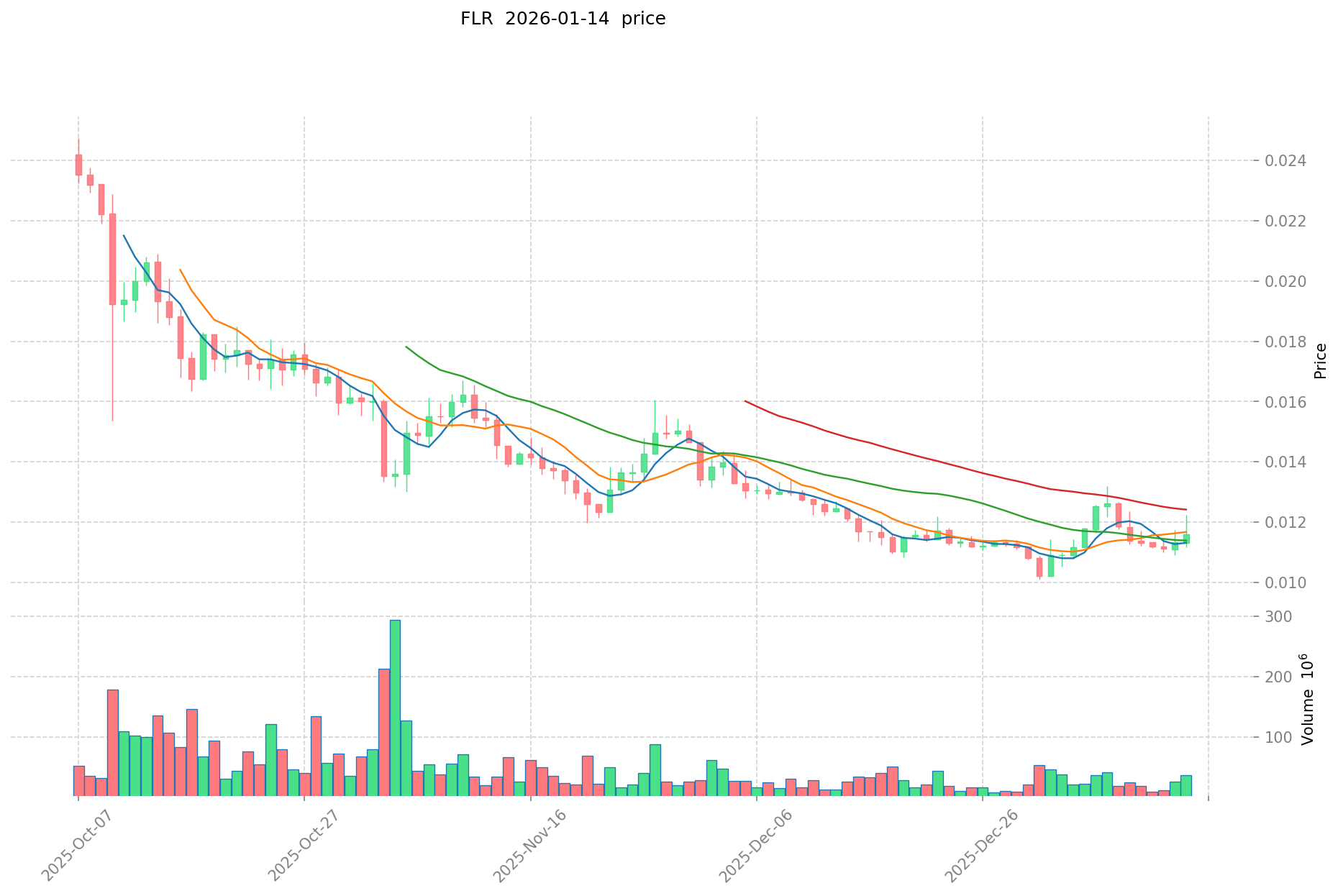
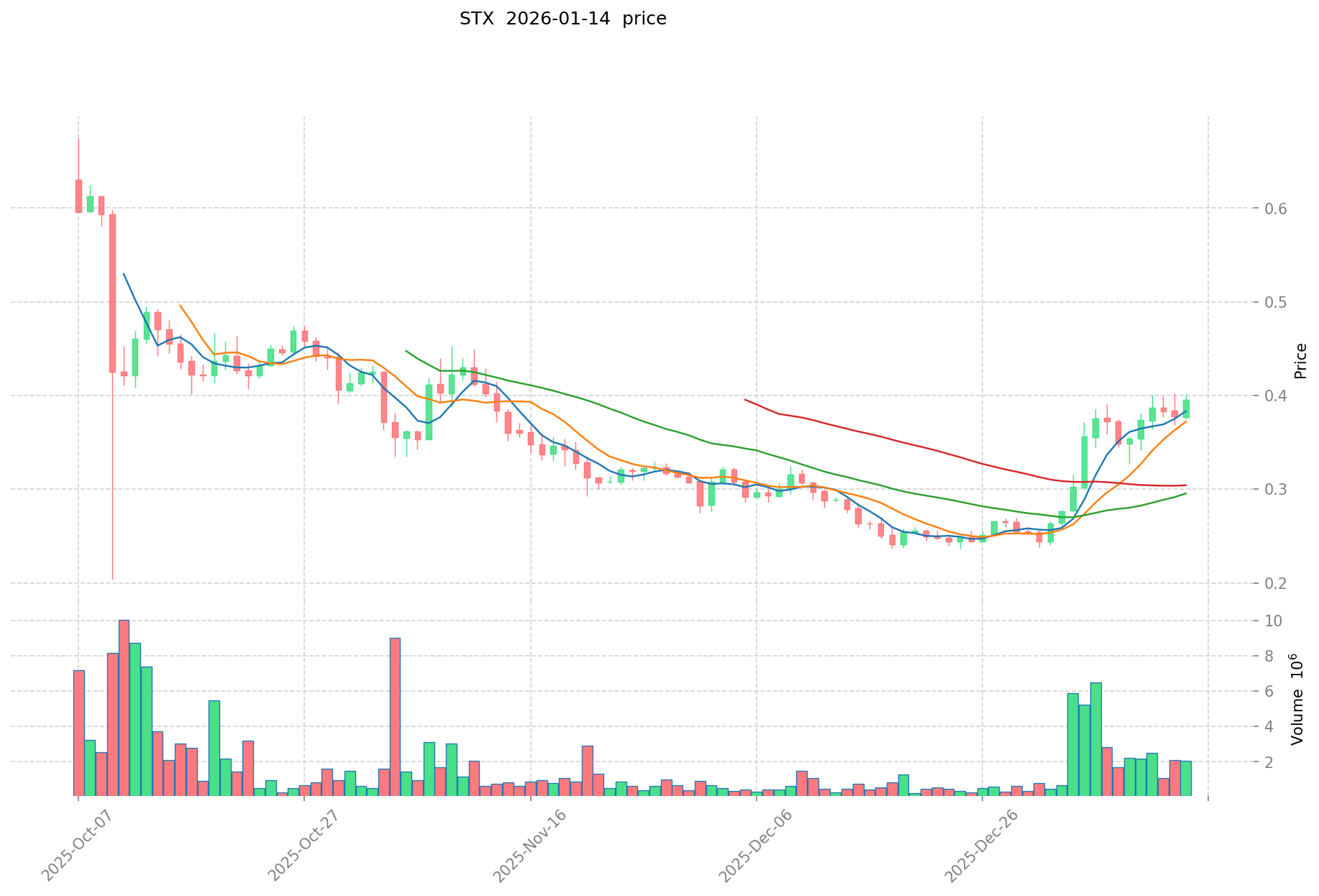
- Comparative Analysis: During the recent market correction cycle, FLR declined from its historical high of $0.150073 to current levels around $0.01168, representing a substantial decrease. In comparison, STX experienced a similar downward trajectory from $3.86 to approximately $0.3937, reflecting broader market volatility affecting both EVM-compatible Layer 1 and Bitcoin Layer 2 ecosystems.
Current Market Status (January 14, 2026)
- FLR Current Price: $0.01168
- STX Current Price: $0.3937
- 24-Hour Trading Volume: FLR recorded $236,297.26 compared to STX's $1,095,953.79, indicating higher liquidity and trading activity for the Stacks network.
- Market Sentiment Index (Fear & Greed Index): 48 (Neutral)
View real-time prices:
- Check FLR current price Market Price
- Check STX current price Market Price
II. Core Factors Influencing FLR vs STX Investment Value
Supply Mechanism Comparison (Tokenomics)
- FLR: Information regarding the specific supply mechanism for Flare (FLR) was not available in the provided materials.
- STX: Information regarding the specific supply mechanism for Stacks (STX) was not available in the provided materials.
- 📌 Historical Patterns: Supply mechanisms can influence price cycles through scarcity dynamics, emissions schedules, and burn mechanisms, though specific historical data for these assets was not available in the materials.
Institutional Adoption and Market Application
- Institutional Holdings: According to available information, both FLR and STX have been made available for trading to users in New York State through Coinbase's platform, including web and mobile applications for buying, selling, converting, sending, receiving, and storing these assets. However, specific institutional preference data was not detailed in the materials.
- Enterprise Adoption: Comparative data on FLR and STX adoption in cross-border payments, settlement systems, or investment portfolios was not provided in the reference materials.
- National Policies: The materials noted that regulatory attitudes vary across jurisdictions, with geopolitical and macroeconomic risks potentially serving as limiting factors for crypto asset price movements. Specific regulatory stances toward FLR or STX were not detailed.
Technology Development and Ecosystem Building
- FLR Technology Upgrades: Specific technical upgrade information for Flare was not available in the provided materials.
- STX Technology Development: Specific technical development details for Stacks were not available in the provided materials.
- Ecosystem Comparison: Comparative analysis of DeFi, NFT, payment systems, and smart contract implementation between FLR and STX was not detailed in the reference materials.
Macroeconomic Environment and Market Cycles
- Performance in Inflationary Environments: The materials indicated that Bitcoin's price movements and broader market trends significantly impact digital asset valuations. Macroeconomic factors, including inflation concerns reflected in commodity markets and central bank policies, influence the overall crypto market sentiment. However, specific inflation-hedging characteristics of FLR versus STX were not addressed.
- Macroeconomic Monetary Policy: Reference materials noted that interest rate expectations, energy price forecasts, and currency movements affect market dynamics. The U.S. Energy Information Administration's projections and Federal Reserve policy considerations were mentioned as relevant factors, though their specific impact on FLR and STX was not detailed.
- Geopolitical Factors: The materials referenced geopolitical risks and international developments as factors affecting market sentiment and cross-border transaction demand, though specific implications for FLR and STX were not elaborated.
III. 2026-2031 Price Forecast: FLR vs STX
Short-term Forecast (2026)
- FLR: Conservative $0.0066-$0.0117 | Optimistic $0.0117-$0.0173
- STX: Conservative $0.21-$0.39 | Optimistic $0.39-$0.47
Mid-term Forecast (2028-2029)
- FLR may enter a gradual growth phase, with estimated price range of $0.011-$0.021
- STX may enter a moderate expansion phase, with estimated price range of $0.45-$0.75
- Key drivers: institutional capital flows, ETF developments, ecosystem expansion
Long-term Forecast (2030-2031)
- FLR: Base scenario $0.015-$0.019 | Optimistic scenario $0.018-$0.024
- STX: Base scenario $0.50-$0.64 | Optimistic scenario $0.64-$0.97
View detailed price predictions for FLR and STX
Disclaimer
FLR:
| Year |
Predicted High Price |
Predicted Average Price |
Predicted Low Price |
Price Change |
| 2026 |
0.017316 |
0.0117 |
0.006552 |
0 |
| 2027 |
0.01944072 |
0.014508 |
0.0079794 |
24 |
| 2028 |
0.0185020524 |
0.01697436 |
0.0123912828 |
45 |
| 2029 |
0.020753701254 |
0.0177382062 |
0.010997687844 |
51 |
| 2030 |
0.02155546817424 |
0.019245953727 |
0.01462692483252 |
64 |
| 2031 |
0.024072838921731 |
0.02040071095062 |
0.017748618527039 |
74 |
STX:
| Year |
Predicted High Price |
Predicted Average Price |
Predicted Low Price |
Price Change |
| 2026 |
0.466956 |
0.3924 |
0.207972 |
0 |
| 2027 |
0.56287818 |
0.429678 |
0.24491646 |
9 |
| 2028 |
0.545905899 |
0.49627809 |
0.4615386237 |
26 |
| 2029 |
0.75037247208 |
0.5210919945 |
0.453350035215 |
32 |
| 2030 |
0.699305456619 |
0.63573223329 |
0.5403723982965 |
61 |
| 2031 |
0.967902325184025 |
0.6675188449545 |
0.500639133715875 |
69 |
IV. Investment Strategy Comparison: FLR vs STX
Long-term vs Short-term Investment Strategies
-
FLR: May be suitable for investors focused on EVM-compatible Layer 1 blockchain infrastructure and cross-chain data integration use cases. The token's positioning in decentralized data access and monetization models could appeal to those interested in emerging blockchain utility frameworks.
-
STX: May be suitable for investors interested in Bitcoin Layer 2 ecosystems and decentralized internet applications. The project's focus on user data control and smart contract functionality built on Bitcoin's security layer could attract those seeking Bitcoin-adjacent infrastructure opportunities.
Risk Management and Asset Allocation
-
Conservative Investors: FLR 30% vs STX 70% - Given STX's higher trading volume ($1,095,953.79 compared to FLR's $236,297.26) and more established market presence since October 2019, a conservative approach might favor greater allocation to STX.
-
Aggressive Investors: FLR 55% vs STX 45% - Investors with higher risk tolerance might consider increased FLR allocation based on its earlier development stage and potential growth trajectory, while maintaining significant STX exposure for diversification.
-
Hedging Tools: Stablecoin allocation for liquidity management, options strategies for downside protection, and cross-asset portfolio construction incorporating both EVM-compatible and Bitcoin Layer 2 ecosystems.
V. Potential Risk Comparison
Market Risk
-
FLR: Experiences considerable price volatility, with historical movement from $0.150073 to current levels around $0.01168. Trading volume of $236,297.26 suggests relatively lower liquidity compared to more established assets, which may amplify price fluctuations during market stress periods.
-
STX: Demonstrates substantial price movement patterns, declining from $3.86 to approximately $0.3937. Higher trading volume of $1,095,953.79 indicates better liquidity conditions, though broader market sentiment (currently at Fear & Greed Index of 48 - Neutral) continues to influence price dynamics.
Technical Risk
-
FLR: As an EVM-based Layer 1 blockchain, considerations include network scalability, validator decentralization, and the operational reliability of its State Connector protocol for cross-chain data integration.
-
STX: As a Bitcoin Layer 2 solution, technical considerations include the complexity of its three-layer architecture, dependency on Bitcoin's base layer security, and the execution stability of smart contracts built on this infrastructure.
Regulatory Risk
- Reference materials indicate that regulatory attitudes vary across jurisdictions, with geopolitical and macroeconomic factors potentially serving as limiting factors for crypto asset price movements. Both FLR and STX are available for trading to users in New York State through regulated platforms, though specific regulatory classifications and compliance requirements may differ based on their distinct technical architectures and use cases. Investors should monitor evolving regulatory frameworks affecting Layer 1 blockchains and Bitcoin Layer 2 solutions respectively.
VI. Conclusion: Which Is the Better Buy?
📌 Investment Value Summary:
-
FLR Advantages: Positioning in EVM-compatible Layer 1 infrastructure with focus on decentralized cross-chain data access; potential for growth in emerging blockchain data integration use cases; availability on regulated trading platforms including for New York State users.
-
STX Advantages: Established presence since October 2019; higher current trading volume ($1,095,953.79) indicating better market liquidity; Bitcoin Layer 2 positioning offering smart contract functionality with Bitcoin security layer benefits; availability on regulated trading platforms including for New York State users.
✅ Investment Recommendations:
-
Novice Investors: Consider starting with smaller allocations to understand market dynamics, focusing on platforms offering regulatory compliance and user protection. Prioritize education on both EVM-compatible and Bitcoin Layer 2 ecosystems before committing significant capital.
-
Experienced Investors: Evaluate portfolio diversification across different blockchain infrastructure types. Consider FLR for exposure to cross-chain data integration developments and STX for Bitcoin Layer 2 ecosystem participation. Monitor technical developments, trading volume trends, and broader macroeconomic factors including interest rate expectations and geopolitical developments.
-
Institutional Investors: Assess both assets within broader digital asset allocation strategies, considering liquidity requirements, regulatory compliance frameworks, and correlation with Bitcoin price movements. Evaluate custody solutions and risk management frameworks appropriate for each asset's technical characteristics.
⚠️ Risk Warning: The cryptocurrency market exhibits extreme volatility. This analysis does not constitute investment advice. Investors should conduct independent research, assess personal risk tolerance, and consider consulting financial professionals before making investment decisions. Past performance does not guarantee future results.
VII. FAQ
Q1: What are the main differences between FLR and STX in terms of blockchain architecture?
FLR operates as an EVM-compatible Layer 1 blockchain focused on decentralized cross-chain data access, while STX functions as a Bitcoin Layer 2 solution with a three-layer architecture enabling smart contracts. FLR's architecture centers around its State Connector protocol for integrating data from other chains and the internet, supporting new use cases and monetization models through EVM compatibility. In contrast, STX builds directly on Bitcoin's security layer, offering smart contract functionality while maintaining connection to Bitcoin's established infrastructure, often described as creating a "decentralized internet" where users control their data.
Q2: Which asset shows better liquidity for trading purposes?
STX demonstrates significantly better liquidity with a 24-hour trading volume of $1,095,953.79 compared to FLR's $236,297.26 as of January 14, 2026. This approximately 4.6x difference in trading volume indicates that STX offers more robust market depth and potentially tighter bid-ask spreads, making it easier to enter and exit positions without substantial price impact. Higher liquidity typically reduces slippage costs and provides better price discovery, which can be particularly important during volatile market conditions or when executing larger trades.
Q3: How do the historical price performances of FLR and STX compare?
FLR reached its all-time high of $0.150073 on January 10, 2023, and has declined to current levels around $0.01168, representing approximately a 92% decrease. STX achieved its historical peak of $3.86 on April 1, 2024, and has fallen to approximately $0.3937, reflecting roughly a 90% decline. While both assets have experienced substantial corrections from their peaks, STX's all-time high occurred more recently (2024 versus 2023), suggesting potentially different market cycle dynamics. The timing difference may reflect STX's momentum from increased Bitcoin Layer 2 adoption, while FLR's earlier peak corresponded with its mainnet launch period.
Q4: What are the primary use cases that differentiate FLR from STX?
FLR primarily focuses on providing decentralized access to data from other blockchains and the internet, enabling new monetization models and cross-chain data integration use cases. STX concentrates on enabling smart contract functionality built on Bitcoin's security layer, supporting DeFi applications and creating infrastructure for a decentralized internet where users maintain control over their data. The fundamental distinction lies in FLR's emphasis on data connectivity across chains versus STX's approach of extending Bitcoin's capabilities through Layer 2 smart contracts, representing different visions for blockchain utility and ecosystem development.
Q5: Which asset is more suitable for conservative versus aggressive investors?
For conservative investors, a 30% FLR and 70% STX allocation is suggested, favoring STX's higher trading volume, more established market presence since October 2019, and better liquidity conditions. For aggressive investors, a 55% FLR and 45% STX allocation is recommended, increasing FLR exposure based on its earlier development stage and potential growth trajectory while maintaining significant STX diversification. The rationale centers on STX's demonstrated market stability factors versus FLR's positioning for potential higher growth but with correspondingly higher risk due to lower liquidity and shorter market history.
Q6: How do regulatory considerations differ between FLR and STX?
Both FLR and STX are available for trading to users in New York State through regulated platforms like Coinbase, indicating baseline regulatory compliance. However, their distinct technical architectures may subject them to different regulatory classifications - FLR as an EVM-compatible Layer 1 blockchain and STX as a Bitcoin Layer 2 solution. Regulatory frameworks continue evolving for both Layer 1 blockchains and Bitcoin Layer 2 solutions, with varying attitudes across different jurisdictions. Investors should monitor jurisdiction-specific regulations, as geopolitical and macroeconomic factors may impact each asset differently based on their underlying technological positioning and use cases.
Q7: What are the projected price ranges for FLR and STX through 2031?
For 2026, FLR's conservative forecast ranges from $0.0066-$0.0117 with an optimistic scenario of $0.0117-$0.0173, while STX projects conservative $0.21-$0.39 and optimistic $0.39-$0.47. By 2031, FLR's base scenario estimates $0.015-$0.019 with optimistic projections of $0.018-$0.024, whereas STX forecasts base scenario $0.50-$0.64 and optimistic scenario $0.64-$0.97. These projections suggest that STX maintains a significantly higher absolute price range throughout the forecast period, though percentage growth potential varies. Both forecasts depend on factors including institutional capital flows, ETF developments, ecosystem expansion, and broader macroeconomic conditions including interest rate policies and geopolitical developments.
Q8: What are the key risk factors investors should consider when choosing between FLR and STX?
Market risk includes FLR's considerable volatility (from $0.150073 to $0.01168) with lower liquidity ($236,297.26 trading volume) versus STX's substantial price movements (from $3.86 to $0.3937) but better liquidity ($1,095,953.79). Technical risks differ by architecture - FLR faces considerations around network scalability, validator decentralization, and State Connector protocol reliability, while STX involves three-layer architecture complexity, Bitcoin base layer dependency, and smart contract execution stability. Regulatory risks affect both assets as frameworks evolve for Layer 1 blockchains and Bitcoin Layer 2 solutions respectively, with varying jurisdictional approaches and potential geopolitical impacts on price movements.
<>
* The information is not intended to be and does not constitute financial advice or any other recommendation of any sort offered or endorsed by Gate.