This comprehensive guide examines the SEC's no-action letter for the FUSE token, a pivotal regulatory milestone confirming that FUSE qualifies as a utility token rather than a security. The FUSE token powers the Fuse Energy ecosystem, enabling decentralized energy trading, grid management, and renewable energy credit transactions on the Solana blockchain. The SEC's decision provides regulatory clarity by demonstrating that tokens with genuine use cases and functional purposes can achieve compliance through proper design and documentation. By successfully passing the Howey Test—proving that token value derives from utility rather than investment returns—FUSE establishes a compliance framework for the broader cryptocurrency industry. This precedent encourages blockchain innovation across sectors including supply chain and healthcare, while highlighting critical requirements: demonstrating clear utility, ensuring transparency, leveraging robust platforms, engaging legal expertise, and building real user adoption
Understanding the SEC's No-Action Letter for the FUSE Token
The U.S. Securities and Exchange Commission (SEC) issued a no-action letter for the FUSE token in recent years, marking a pivotal moment in the cryptocurrency industry. This decision confirms that the FUSE token does not qualify as a security under current regulations, offering much-needed clarity for blockchain projects navigating the complex regulatory landscape.
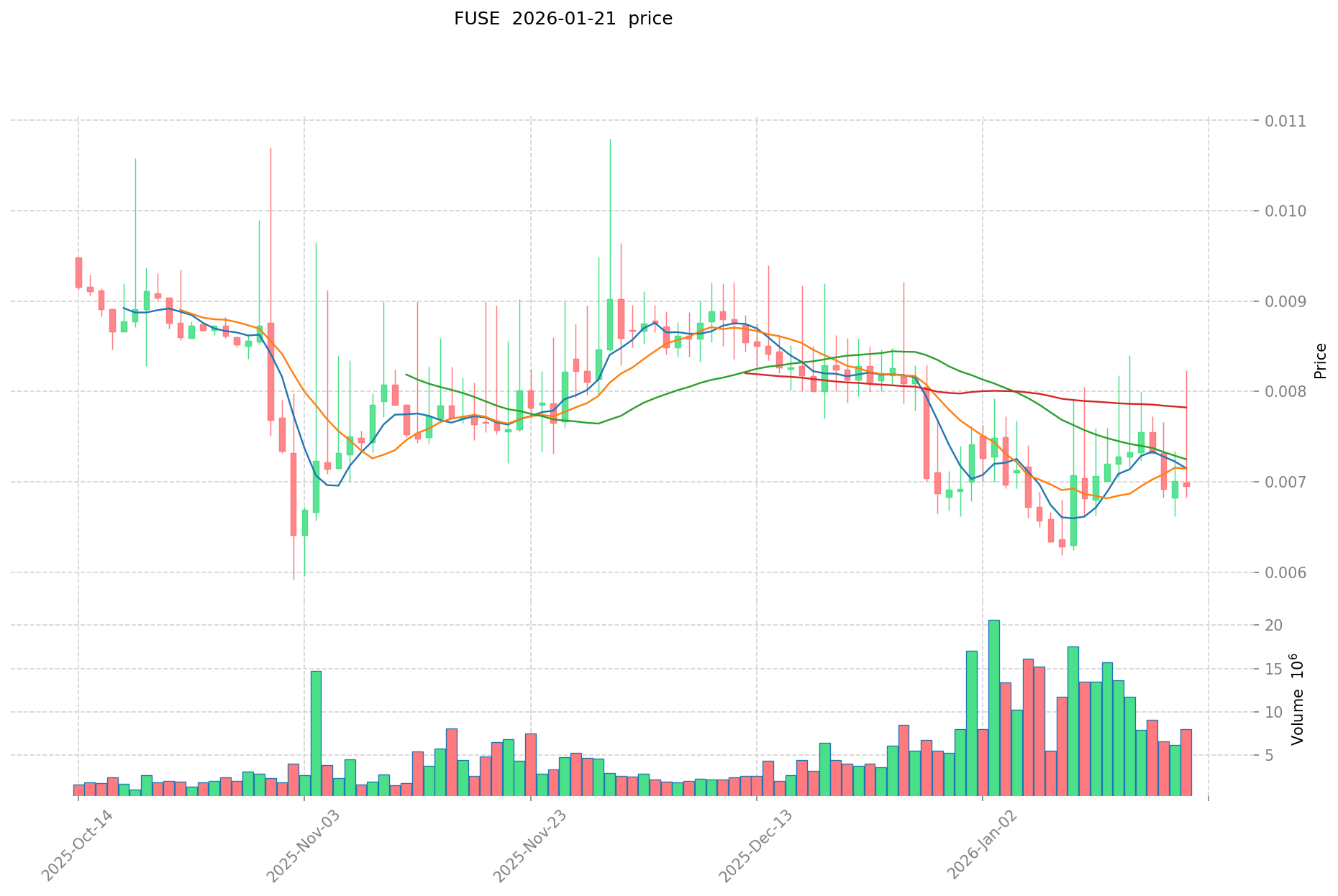
A no-action letter is a formal statement from the SEC indicating that it will not recommend enforcement action against a specific entity or transaction. For the FUSE token, this means the SEC acknowledges its utility-focused design and does not consider it an investment contract subject to securities laws. This determination provides significant legal certainty for the Fuse Energy ecosystem and sets an important precedent for other utility token projects.
But what does this mean for the FUSE token and the broader cryptocurrency landscape? This decision has far-reaching implications for how blockchain projects structure their tokenomics, engage with regulators, and design utility-driven ecosystems. The ruling demonstrates that tokens with genuine use cases and functional purposes can achieve regulatory acceptance when properly designed and documented.
What Is the FUSE Token?
The FUSE token is a utility token designed to function within the Fuse Energy ecosystem, a decentralized platform focused on revolutionizing energy distribution and consumption. Unlike speculative cryptocurrencies that derive value primarily from market trading, the FUSE token is used to access energy services, making it a functional asset rather than an investment vehicle. This fundamental distinction was a critical factor in the SEC's decision to issue a no-action letter.
The token serves as the primary medium of exchange within the Fuse Energy network, enabling users to pay for energy services, participate in grid management, and facilitate peer-to-peer energy trading. This utility-first approach ensures that the token's value is tied to its practical applications rather than speculative investment returns, which is a key consideration in regulatory classification.
Key Features of the FUSE Token
-
Utility-Driven: The FUSE token facilitates decentralized energy services, ensuring its primary purpose is functional rather than speculative. Token holders use FUSE to access real-world energy solutions, including renewable energy credits, grid balancing services, and automated energy management systems.
-
Ecosystem Integration: It operates exclusively within the Fuse Energy ecosystem, supporting energy transactions and services. The token is designed to work seamlessly with smart meters, energy storage systems, and decentralized energy grids, creating a comprehensive energy management solution.
-
Regulatory Compliance: Its design aligns with regulatory standards, avoiding classification as a security. The project team worked closely with legal advisors to ensure the token structure, distribution mechanism, and operational framework comply with applicable securities laws and utility token guidelines.
-
Technical Foundation: Built on robust blockchain infrastructure, the FUSE token benefits from high transaction throughput, low latency, and strong security measures that support its utility functions in real-time energy applications.
Why the SEC's No-Action Letter Matters
The SEC's no-action letter is a formal assurance that it will not pursue enforcement action against the FUSE token, representing a significant milestone for both the project and the broader cryptocurrency industry. This decision is groundbreaking for several reasons and provides valuable insights into how regulators evaluate digital assets.
-
Regulatory Clarity: It provides a clear framework for distinguishing utility tokens from securities, reducing uncertainty for blockchain projects. The decision offers concrete guidance on what characteristics and operational models allow tokens to avoid securities classification, helping other projects structure their offerings appropriately.
-
Precedent for Utility Tokens: The decision highlights the importance of genuine use cases, setting a benchmark for other projects. It demonstrates that tokens with verifiable utility functions and real-world applications can achieve regulatory acceptance, encouraging innovation in blockchain-based solutions across various industries.
-
Alignment with the Howey Test: The SEC's ruling aligns with the Howey Test, a legal framework used to determine whether an asset qualifies as a security. The FUSE token's utility-focused design ensured it did not meet the criteria for a security, as its value derives from functional use rather than the expectation of profits from the efforts of others.
-
Industry Confidence: This decision boosts confidence among blockchain developers, investors, and users by demonstrating that regulatory compliance is achievable for well-designed utility tokens. It reduces the regulatory risk associated with utility token projects and encourages more mainstream adoption of blockchain technology.
-
International Implications: While this is a U.S. regulatory decision, it may influence how other jurisdictions approach utility token classification, potentially leading to more harmonized global standards for digital asset regulation.
The Role of the Howey Test in Token Classification
The Howey Test, established by the U.S. Supreme Court in SEC v. W.J. Howey Co. (1946), evaluates whether an asset qualifies as a security based on the following criteria. Understanding this test is crucial for comprehending why the FUSE token received favorable treatment from the SEC.
-
Investment of Money: Does the asset involve an investment of money? While FUSE token holders do exchange value to acquire tokens, the primary purpose is to access energy services rather than to invest for financial returns.
-
Common Enterprise: Is the investment part of a common enterprise? The FUSE token operates within a decentralized ecosystem where value is derived from the utility of the network rather than pooled investments managed by a central entity.
-
Expectation of Profit: Is there an expectation of profit derived from the efforts of others? This is the critical factor where the FUSE token distinguishes itself. Token holders acquire FUSE primarily to use energy services, not to profit from the entrepreneurial or managerial efforts of the Fuse Energy team.
-
Derived from the Efforts of Others: Are profits dependent on the efforts of a promoter or third party? The FUSE token's value is tied to its utility function within the energy ecosystem, not to the ongoing efforts of the development team to increase token value.
The FUSE token passed this test because its primary purpose is to facilitate energy services within the Fuse Energy ecosystem, not to generate profits for its holders. This utility-driven approach was instrumental in securing the no-action letter. The token's design ensures that users acquire and hold FUSE to access specific energy-related functions, similar to how traditional utility tokens or service credits operate in conventional business models.
How the Solana Blockchain Supports the FUSE Token
The FUSE token operates on the Solana blockchain, a high-performance platform known for its scalability and developer-friendly environment. The choice of blockchain infrastructure played a significant role in the SEC's evaluation, as it demonstrates the technical viability of the token's utility functions. Solana's infrastructure offers several critical advantages for energy-related applications:
-
High Throughput: Solana supports thousands of transactions per second, ensuring seamless energy service operations even during peak demand periods. This capacity is essential for real-time energy trading and grid management applications where transaction speed directly impacts service quality.
-
Low Latency: The blockchain enables near-instant transaction confirmations, critical for real-time energy solutions. In energy markets, timing is crucial for balancing supply and demand, and Solana's sub-second finality ensures that energy transactions can be executed efficiently.
-
Robust Security: Solana provides a secure environment for decentralized applications, enhancing trust among users. The blockchain's proof-of-history consensus mechanism combined with proof-of-stake validation creates a highly secure network resistant to common attack vectors.
-
Cost Efficiency: Low transaction fees on Solana make microtransactions economically viable, which is essential for energy applications where users may conduct numerous small transactions for energy consumption monitoring and payment.
-
Developer Ecosystem: Solana's extensive developer tools and documentation facilitated the creation of sophisticated smart contracts that power the Fuse Energy ecosystem's automated energy management functions.
This technical foundation was a key factor in the SEC's confidence in the FUSE token's utility. The robust infrastructure demonstrates that the token is built to support genuine operational use cases rather than serving primarily as a speculative asset.
The Importance of Genuine Use Cases
One of the most significant takeaways from the SEC's decision is the emphasis on genuine use cases. Tokens that serve a specific, practical purpose are less likely to be classified as securities. For the FUSE token, its role in facilitating decentralized energy solutions was a decisive factor in avoiding security classification.
The concept of "genuine use cases" extends beyond merely claiming utility in a whitepaper. The SEC evaluates whether the token is actually necessary for the ecosystem to function, whether users can access the purported services only by using the token, and whether the token's design makes it suitable for its stated purpose. The FUSE token meets these criteria by being integral to the Fuse Energy ecosystem's operations.
Examples of Genuine Use Cases
-
Energy Transactions: The FUSE token enables seamless energy trading within the Fuse Energy ecosystem, allowing prosumers (users who both produce and consume energy) to buy and sell excess renewable energy directly with other network participants. This peer-to-peer trading model reduces reliance on traditional energy intermediaries and creates more efficient energy markets.
-
Decentralized Energy Grids: The token supports the operation of decentralized energy grids, reducing reliance on traditional energy providers. FUSE tokens are used to incentivize grid stability, reward users who provide energy storage capacity, and facilitate automated load balancing across the network.
-
Smart Contracts: FUSE facilitates automated energy agreements through smart contracts, enhancing efficiency and transparency. For example, users can set up automatic energy purchasing agreements that execute when prices fall below certain thresholds, or create demand response programs that adjust consumption based on grid conditions.
-
Renewable Energy Credits: The token can be used to purchase and trade renewable energy credits within the ecosystem, supporting the adoption of clean energy sources and providing transparent tracking of renewable energy production and consumption.
-
Grid Services Compensation: Network participants who provide valuable grid services such as frequency regulation, voltage support, or peak demand reduction receive FUSE tokens as compensation, creating economic incentives for grid stability.
These concrete applications demonstrate that the FUSE token serves essential functions within its ecosystem, supporting the SEC's determination that it is a utility token rather than a security.
Broader Implications for the Cryptocurrency Industry
The SEC's no-action letter for the FUSE token has far-reaching implications for the cryptocurrency industry, potentially reshaping how blockchain projects approach tokenomics, regulatory compliance, and ecosystem design. This decision provides valuable lessons and opportunities for the entire digital asset sector.
-
Encouraging Innovation: The decision provides a clearer path for blockchain projects to innovate without fear of regulatory backlash, as long as they focus on utility. Projects developing solutions in sectors such as supply chain, healthcare, identity management, and energy can now reference the FUSE precedent when structuring their token models.
-
Regulatory Compliance: Projects are now more likely to structure their tokenomics around practical applications to meet regulatory standards. This shift encourages the development of tokens with genuine utility rather than purely speculative assets, potentially leading to more sustainable and valuable blockchain ecosystems.
-
Influence on Future Decisions: The SEC's acknowledgment of utility-focused tokens could shape future regulatory decisions, encouraging other industries to explore blockchain solutions. Regulators may develop more nuanced frameworks that distinguish between different types of digital assets based on their functional characteristics.
-
Investment Landscape: The clarity provided by this decision may attract more institutional investment into utility token projects, as investors gain confidence that properly structured tokens can avoid securities classification and the associated regulatory burdens.
-
Global Regulatory Harmonization: As other jurisdictions observe the SEC's approach to utility tokens, we may see greater international alignment on digital asset classification, reducing regulatory fragmentation and facilitating cross-border blockchain projects.
-
Industry Standards Development: The FUSE case may catalyze the development of industry standards and best practices for utility token design, helping projects self-assess their regulatory risk and structure offerings appropriately from inception.
Challenges and Opportunities for Blockchain Projects
While the SEC's decision is a positive step, it also highlights the challenges blockchain projects face in navigating regulatory frameworks. The FUSE token's success provides a roadmap, but also reveals the rigorous requirements projects must meet to achieve similar regulatory clarity. To succeed, projects must:
-
Demonstrate Utility: Clearly define the practical use cases of their tokens with concrete examples of how the token is necessary for ecosystem functionality. Projects should develop working products or services before token launches to prove genuine utility rather than speculative promises.
-
Ensure Transparency: Provide detailed documentation to regulators and users, including technical specifications, operational procedures, and clear explanations of how tokens function within the ecosystem. Transparency builds trust with both regulators and users, facilitating regulatory approval and market adoption.
-
Leverage Robust Platforms: Use scalable and secure blockchains like Solana to support their operations. The choice of blockchain infrastructure should align with the token's intended use cases, ensuring adequate performance, security, and cost-efficiency for the target applications.
-
Engage Legal Expertise: Work with experienced securities and blockchain lawyers from project inception to ensure compliance with applicable regulations. Proactive legal engagement can help projects structure offerings appropriately and avoid costly regulatory issues later.
-
Build Real User Adoption: Focus on acquiring genuine users who utilize tokens for their intended purposes rather than primarily holding them for speculative gains. Demonstrable user adoption strengthens the case for utility classification.
-
Maintain Decentralization: Ensure that token value and utility are not overly dependent on the efforts of a central team, which could trigger securities classification under the Howey Test.
At the same time, the ruling opens up opportunities for projects to gain regulatory acceptance by focusing on real-world applications. Projects that solve genuine problems in energy, supply chain, healthcare, and other sectors can now pursue blockchain solutions with greater regulatory confidence, potentially accelerating the mainstream adoption of decentralized technologies.
The Intersection of Decentralized Energy and Blockchain Technology
The FUSE token's approval underscores the potential of blockchain technology in revolutionizing industries like energy. By enabling decentralized energy solutions, the FUSE token demonstrates how blockchain can drive innovation while meeting regulatory requirements. This intersection of energy and blockchain technology represents one of the most promising applications of distributed ledger technology.
Decentralized energy systems face several challenges that blockchain technology is uniquely positioned to address. Traditional energy grids operate as centralized, hierarchical systems where large power plants distribute electricity through extensive transmission networks. This model is increasingly inadequate for integrating distributed renewable energy sources, managing bidirectional energy flows, and enabling peer-to-peer energy trading.
Blockchain technology, exemplified by the FUSE token implementation, offers solutions to these challenges:
-
Transparent Energy Trading: Blockchain creates immutable records of energy production, consumption, and trading, enabling transparent peer-to-peer energy markets where prosumers can directly monetize excess renewable energy production.
-
Automated Grid Management: Smart contracts can automatically balance energy supply and demand, optimize energy storage utilization, and implement demand response programs without centralized control.
-
Renewable Energy Integration: Blockchain-based systems can better accommodate the variable nature of renewable energy sources by facilitating flexible, real-time energy trading and storage coordination.
-
Reduced Transaction Costs: By eliminating intermediaries, blockchain-based energy systems reduce transaction costs, making small-scale energy trading economically viable and encouraging distributed renewable energy adoption.
-
Enhanced Grid Resilience: Decentralized energy systems built on blockchain are more resilient to single points of failure, improving energy security and reliability.
This could pave the way for similar projects in other sectors, such as healthcare (medical records management, supply chain for pharmaceuticals), supply chain (provenance tracking, automated logistics), and finance (cross-border payments, decentralized lending). The FUSE token's regulatory success demonstrates that blockchain solutions can achieve both innovation and compliance, encouraging broader adoption across industries.
Conclusion: A New Standard for Utility Tokens
The SEC's no-action letter for the FUSE token is a landmark decision that sets a new standard for utility tokens in the cryptocurrency industry. By focusing on genuine use cases and leveraging robust blockchain platforms, projects can navigate regulatory challenges and drive innovation in practical applications that solve real-world problems.
This decision validates the utility token model when properly implemented, demonstrating that digital assets can achieve regulatory clarity by prioritizing functional utility over speculative investment characteristics. The FUSE token's success provides a blueprint for other projects: build genuine utility, choose appropriate technical infrastructure, maintain transparency, and engage proactively with regulatory frameworks.
As the cryptocurrency industry continues to evolve, the FUSE token serves as a model for how utility-focused tokens can achieve regulatory clarity and foster trust among users and regulators alike. This precedent may accelerate the development of blockchain solutions across various sectors, as projects gain confidence that regulatory compliance is achievable for well-designed utility tokens.
The broader impact extends beyond individual projects to the entire digital asset ecosystem. As regulators develop more nuanced frameworks for evaluating tokens, and as industry participants better understand how to structure compliant utility tokens, we may see increased mainstream adoption of blockchain technology in applications ranging from energy and supply chain to healthcare and finance.
Ultimately, the FUSE token's regulatory success represents progress toward a more mature cryptocurrency industry where innovation and compliance coexist, enabling blockchain technology to fulfill its potential in transforming how we manage energy, conduct transactions, and organize economic activity in the digital age.
FAQ
What is FUSE Token and what utility functions does it have?
FUSE Token is a utility token designed for the Fuse Network ecosystem. It serves as the network's native currency, facilitating transactions, smart contract execution, and validator staking. FUSE enables governance participation, allowing holders to vote on protocol upgrades and network decisions. The token powers DeFi applications and enables peer-to-peer payments on the Fuse blockchain.
What does the SEC's No-Action Letter mean for FUSE Token?
The SEC's No-Action Letter provides regulatory clarity, confirming FUSE Token qualifies as a utility token rather than a security. This eliminates legal uncertainty, enables legitimate operational expansion, and establishes a compliance standard for similar tokens in the Web3 ecosystem.
How does FUSE Token's no-action letter set a new standard for utility tokens?
FUSE Token's SEC no-action letter establishes regulatory clarity for utility tokens by demonstrating that properly structured tokens with genuine utility functions can operate without securities classification, providing a compliance framework other projects can reference for similar token structures.
What is the difference between Utility Tokens and Security Tokens?
Utility tokens provide access to network services or products, while security tokens represent ownership stakes or financial claims. Utility tokens are not investment contracts, whereas security tokens are regulated as securities and subject to stricter compliance requirements.
Is a utility token with an SEC no-action letter completely safe, and what risks should be noted?
An SEC no-action letter provides regulatory clarity but doesn't guarantee complete safety. Risks include market volatility, regulatory changes, technological vulnerabilities, and adoption uncertainty. Always conduct thorough due diligence.
What impact does FUSE Token's regulatory breakthrough have on the entire cryptocurrency industry?
FUSE Token's SEC no-action letter establishes a clear regulatory framework for utility tokens, reducing legal uncertainty and encouraging institutional adoption. This precedent strengthens investor confidence, attracts mainstream capital, and accelerates the legitimization of the entire crypto sector.
How should investors evaluate the investment value of tokens that have received SEC no-action letters?
Investors should assess regulatory clarity, utility fundamentals, transaction volume, developer ecosystem strength, and community adoption. SEC no-action letters significantly reduce regulatory risk, enhancing long-term value potential and market confidence in the token's legitimate utility application.
* The information is not intended to be and does not constitute financial advice or any other recommendation of any sort offered or endorsed by Gate.