Bitcoin aims for $100,000 as Mike Novogratz, CEO of Galaxy Digital, maintains his bullish outlook despite current market volatility and selling pressure. This comprehensive analysis examines the fundamental drivers supporting Bitcoin's value proposition, including fixed supply scarcity and expanding blockchain adoption. The article addresses key market challenges such as profit-taking and regulatory uncertainty while emphasizing how regulatory clarity accelerates institutional adoption. It explores traditional financial institutions' pivotal role in providing liquidity and infrastructure stability through platforms like Gate. The piece analyzes market maturation through token differentiation, distinguishing projects with genuine utility from speculative ventures. Despite short-term corrections, the convergence of regulatory frameworks, institutional capital influx, technological advancement, and mainstream awareness creates favorable conditions for Bitcoin's long-term appreciation. The analysis positions curr
Mike Novogratz's Bitcoin Price Prediction
Mike Novogratz, CEO of Galaxy Digital, has reiterated his bullish stance on Bitcoin, maintaining his forecast that the cryptocurrency could reach $100,000 in the coming period. Speaking on a recent podcast, Novogratz emphasized that despite the current market volatility and significant selling pressure, the fundamental factors supporting Bitcoin's long-term value proposition remain intact.
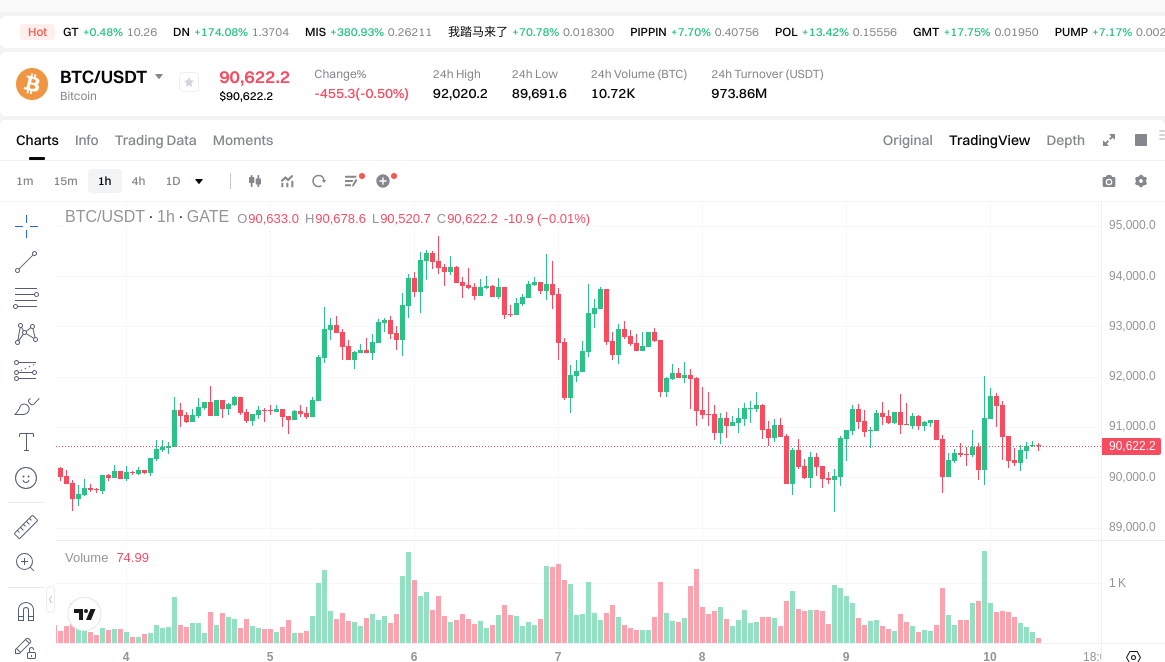 His prediction reflects a broader confidence in the cryptocurrency's resilience and its growing acceptance as a legitimate asset class among both retail and institutional investors.
Novogratz's forecast is grounded in several key factors, including the increasing scarcity of Bitcoin due to its fixed supply cap of 21 million coins, the growing adoption of blockchain technology across various industries, and the expanding infrastructure supporting cryptocurrency trading and custody. He believes that as these elements continue to mature, Bitcoin will solidify its position as a store of value and a hedge against traditional financial market uncertainties.
Understanding the Current Sell Pressure
The cryptocurrency market has experienced considerable selling pressure in recent periods, largely attributed to a combination of macroeconomic factors and market-specific events. Novogratz acknowledged the psychological impact of what he referred to as the "1011 crash," a significant market downturn that shook investor confidence in the medium term. This event highlighted the inherent volatility of the cryptocurrency market and the challenges that come with navigating rapid price fluctuations.
The sell pressure can be attributed to multiple factors, including profit-taking by early investors, concerns about regulatory developments in major markets, and broader economic uncertainties affecting risk assets globally. Additionally, the cryptocurrency market remains susceptible to sentiment-driven movements, where negative news or technical breakdowns can trigger cascading selling as traders rush to protect their positions. Despite these challenges, Novogratz maintains that such corrections are natural parts of the market cycle and often create opportunities for long-term accumulation.
The Role of Regulatory Clarity
One of the central themes in Novogratz's analysis is the critical importance of regulatory clarity for the cryptocurrency industry's continued growth and maturation. He emphasized that clear, consistent regulatory frameworks are essential for building trust among institutional investors and traditional financial institutions that have historically been cautious about entering the cryptocurrency space. Regulatory uncertainty has long been cited as one of the primary barriers preventing mainstream adoption of digital assets.
Novogratz believes that as governments and regulatory bodies around the world develop more comprehensive and coherent policies regarding cryptocurrencies, the market will experience increased stability and legitimacy. This regulatory evolution will likely involve establishing clear guidelines for cryptocurrency exchanges, custody solutions, taxation, and consumer protection measures. The development of such frameworks will not only protect investors but also provide the legal certainty that large financial institutions require before committing significant capital to the cryptocurrency market.
Traditional Financial Institutions Entering the Market
The entry of traditional financial institutions into the cryptocurrency market represents a pivotal development that Novogratz views as a major catalyst for Bitcoin's future price appreciation. Major banks, asset management firms, and insurance companies have begun exploring ways to offer cryptocurrency-related services to their clients, ranging from custody solutions to investment products and trading platforms. This institutional adoption signals a fundamental shift in how the financial industry perceives digital assets.
Novogratz predicts that as more established financial institutions integrate cryptocurrency services into their offerings, the market will benefit from increased liquidity, improved infrastructure, and enhanced credibility. These institutions bring with them sophisticated risk management practices, robust compliance frameworks, and deep pools of capital that can help stabilize the market and reduce volatility over time. Furthermore, their participation will likely accelerate the development of new financial products, such as cryptocurrency-backed loans, derivatives, and structured products that cater to diverse investor needs.
Market Segmentation and Token Value Differentiation
Looking ahead, Novogratz anticipates that the cryptocurrency industry will become increasingly segmented, with a clear distinction emerging between tokens that offer genuine utility and value versus those that lack fundamental support. This maturation process will likely result in a more efficient market where projects with real-world applications, strong development teams, and sustainable business models attract the majority of investment capital and user adoption.
He emphasizes that tokens providing tangible value—whether through solving specific problems, enabling new forms of economic activity, or offering innovative technological solutions—will gain prominence and command premium valuations. Conversely, projects lacking clear use cases or those perceived as purely speculative ventures may struggle to maintain relevance as the market matures and investors become more discerning. This evolution toward value-based differentiation represents a natural progression for the cryptocurrency ecosystem as it transitions from its early speculative phase to a more mature and sustainable industry.
Long-Term Outlook for Bitcoin and Cryptocurrencies
Despite the short-term challenges and volatility facing the cryptocurrency market, Novogratz remains fundamentally optimistic about Bitcoin's long-term prospects and the broader digital asset ecosystem. He views the current period of consolidation and correction as a necessary phase that will ultimately strengthen the market by weeding out weak projects and reinforcing the value proposition of established cryptocurrencies like Bitcoin.
The convergence of several positive trends—including regulatory clarity, institutional adoption, technological advancement, and growing mainstream awareness—creates a favorable environment for Bitcoin to achieve significant price appreciation over the coming years. Novogratz's $100,000 price target reflects his belief that Bitcoin will continue to capture an increasing share of global investment portfolios as it demonstrates its utility as both a store of value and a medium of exchange. As the cryptocurrency industry continues to evolve and mature, those projects and tokens that deliver real value and solve genuine problems will emerge as the leaders in this transformative financial landscape.
FAQ
Why does Galaxy Digital CEO forecast Bitcoin will reach $100,000?
Galaxy Digital CEO Mike Novogratz predicts Bitcoin reaching $100,000 driven by increasing institutional adoption, growing mainstream acceptance, and long-term bullish market fundamentals strengthening crypto's position in the global financial system.
What are the main sources of sell pressure on Bitcoin currently?
Bitcoin faces sell pressure from profit-taking on trading platforms, ETF fund outflows, and government asset disposals. These factors combine to create downward pressure on price levels.
Galaxy Digital as an institutional investor, how much reference value does its Bitcoin price forecast have?
Galaxy Digital's Bitcoin forecasts carry significant reference value due to its professional institutional background and deep industry expertise. As a major digital asset manager, its predictions based on institutional adoption trends and market analysis are widely regarded as credible indicators for market sentiment and long-term price direction.
How long will it take to reach $100,000? Did Galaxy Digital provide a specific timeframe?
Galaxy Digital did not specify an exact timeline for Bitcoin reaching $100,000. They adjusted their 2025 target to $120,000, indicating potential achievement within 2025-2026 based on current market dynamics.
What are the key risk factors for Bitcoin price forecasts in the current sell-off environment?
Key risks include monetary policy shifts maintaining higher-for-longer rates, institutional conflicts of interest in forecasting, and outdated cycle models failing amid unprecedented macroeconomic conditions.
How does Galaxy Digital CEO's forecast differ from other institutional investors' views?
Galaxy Digital CEO predicts 2026 will be a 'boring' year for Bitcoin with lower volatility similar to mature assets like gold, contrasting sharply with other institutions' bullish price targets. While Bitcoin may reach new highs, its behavior will stabilize unlike the high-growth expectations from competitors like Standard Chartered predicting $150,000 or higher.
* The information is not intended to be and does not constitute financial advice or any other recommendation of any sort offered or endorsed by Gate.