This comprehensive guide explores grid trading, an automated cryptocurrency strategy that systematically captures profits from price volatility. Grid trading works by establishing upper and lower price boundaries and executing multiple buy and sell orders at predetermined levels, making it ideal for sideways markets where prices fluctuate within defined ranges. Key benefits include automation for 24/7 trading without emotional decision-making, profitability in consolidation periods, and customizable grid density to balance risk and opportunity. The guide covers essential parameters like take-profit, stop-loss, upper/lower limits, and grid count, along with practical setup examples for BTC/USDT trading. Success requires proper risk management, appropriate parameter configuration based on market volatility, and platform selection with competitive fees like Gate. Whether you're seeking consistent returns or exploring advanced trading strategies, this article provides actionable insights for implementing profitab
What is Grid Trading?
Grid Trading is a sophisticated trading strategy that capitalizes on the price movements of cryptocurrencies by placing strategic limit buy and sell orders. Grid traders establish lower and upper boundaries within a grid framework, where they execute buy and sell orders systematically. When the price falls below the lower boundary, a buy order is triggered. Conversely, when the price rises above the upper boundary, a sell order is executed.
This automated approach allows traders to take advantage of market volatility without constantly monitoring price movements. The strategy is particularly effective in sideways markets where prices fluctuate within a defined range rather than showing clear directional trends. By setting up multiple orders at predetermined price levels, traders can capture small profits from frequent price oscillations.
What is an Example of Grid Trading?
To illustrate how Grid Trading works in practice, consider this scenario: If the price of Bitcoin is currently at $60,000, a trader might set a lower boundary at $59,000 and an upper boundary at $61,000. The range between these two boundaries constitutes their "grid."
 Once the price drops to $59,000, a buy order is automatically executed, and when it rises to $61,000, a sell order is triggered.
Traders can establish multiple buy and sell orders at different points within their grid, creating a network of automated trading opportunities. For each grid trade, a trader must manually set a lower and upper boundary. These orders are then automatically executed by the trading bot at specific price intervals. Within the grid, they maintain at least one buy and one sell order, but can configure as many additional orders as desired.
The larger the gap between the lower and upper boundaries, the higher the profit potential. For instance, if a buy order is placed at $60,000, the trader will profit more by setting a sell order at $65,000 rather than $61,000. However, wider grids also come with increased risk, as larger price movements are required to trigger profitable trades.
What are the Benefits of Grid Trading?
Grid Trading has gained significant popularity in the cryptocurrency trading community due to its automation capabilities and ability to generate profits in sideways markets. The notable advantages of Grid Trading include:
Automation: After manually setting boundaries including grid buy/sell orders, trading bots execute trades on your behalf. Trading bots operate around the clock, and traders can generate profits without having to monitor price movements themselves. This automation eliminates emotional decision-making and ensures consistent execution of the trading strategy.
Profitability in Sideways Markets: Grid Trading enables traders to generate profits when the market shows no clear trend. Cryptocurrency prices often move sideways for months, and this strategy exploits these conditions effectively. Unlike trend-following strategies that require clear directional movements, Grid Trading thrives in range-bound markets.
Grid Density Options: A trader can set dozens or even hundreds of automatic buy/sell limit orders. This flexibility allows them to minimize risk and maximize profit opportunities. By adjusting the number of grid levels, traders can fine-tune their strategy to match their risk tolerance and market conditions.
The core principle behind Grid Trading is to buy low and sell high in the short term. Hundreds of different trading strategies can be implemented in Grid Trading, based on the number of grids, time charts, and cryptocurrency trends. The most common grids feature six buy and sell limit orders, providing a balanced approach between complexity and manageability.
How Does Grid Trading Work?
Grid Trading is conducted on short time charts such as minute or hour charts, which differ significantly from daily charts in terms of price volatility. Specifically, Grid Trading is most commonly performed on 1-minute, 5-minute, 15-minute, and 1-hour charts. These shorter timeframes reveal price fluctuations that are not visible on longer-term charts.
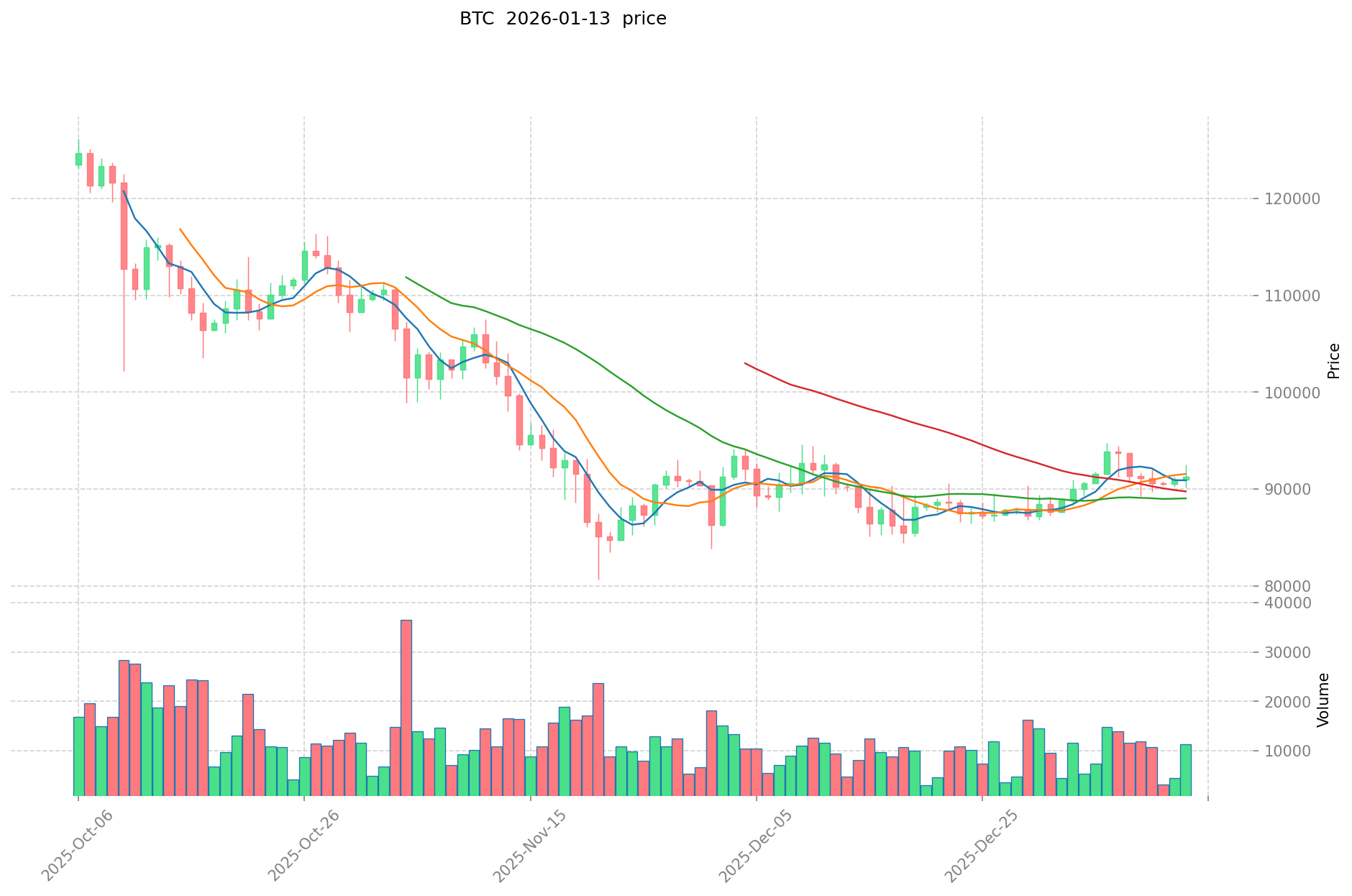
While the price of cryptocurrency may appear stable on the long chart, the abundant volatility in short-term charts can be exploited. For example, Bitcoin may appear very bullish on the weekly chart, rising from a low of $40,000 USDT to $60,000 USDT within just 3 weeks. The chart shows a clear upward trend. However, the hourly and minute charts tell a different story.
Bitcoin appears very volatile on shorter charts, with the price frequently fluctuating between $60,200 USDT and $61,400 USDT over the past 12 hours. A grid trader could set up a grid with a lower boundary of $60,000 USDT and an upper boundary of $62,000 USDT to exploit this short-term volatility.
The trading bot could trigger multiple buy orders at low price ranges, thereby growing a trader's position. This could increase their profit margin at the end of the trade. If the price continues to move in their direction, they are more likely to profit. The key is identifying the right price range and grid density to match the asset's volatility patterns.
The 5 Key Parameters for Grid Trading
Some Grid Trading bots are downloaded as software and others are integrated into exchanges, but they all require similar parameters. Traders manually input these parameters into their bot. These are the most important parameters to understand when Grid Trading:
Take-Profit: The maximum cryptocurrency price you set for your trade. When the cryptocurrency price reaches this value, the grid automatically sells all positions and the profit is deposited in USDT or other stablecoins to your account. This parameter defines your profit target and helps lock in gains.
Stop-Loss: The lowest price for your trade at which you automatically exit. If the price falls below this price level, the stop-loss is triggered and you exit your position at a loss. This crucial risk management tool prevents catastrophic losses during unexpected market downturns.
Upper Limit: The upper limit is the upper price boundary of your grid. The bot will not place sell orders above this limit. The higher your upper limit, the greater your profit potential. However, setting it too high may result in orders never being filled.
Lower Limit: The lower limit is the lower price boundary of your grid. The bot will not place buy orders below this limit. The lower limit is often slightly higher than the stop-loss to provide a safety buffer.
Grid Count: The grid count specifies the maximum number of buy and sell orders you can set for your grid. The orders are evenly distributed, so if you set a grid count of 10, you have 5 buy orders and 5 sell orders. Higher grid counts provide more trading opportunities but require more capital.
Example Grid Trading Setup
Here are example parameters for a grid trade based on the 5-minute chart for the BTC/USDT pair:
- Upper Limit: $62,000 USDT
- Lower Limit: $60,000 USDT
- Grid Count: 8
- Total Investment: $10,000 USDT
- Current BTC Price: $60,998.54 USDT
All positions are opened at the current price. We now need to decide on eight automatic buy and sell limit orders (four of each type), since we chose a grid count of eight. Since the price will fluctuate between $60,000 USDT and $62,000 USDT, we can adjust our grid accordingly.
Where Should Buy/Sell Orders Be Placed?
Buy orders are placed at:
- $59,500 USDT
- $60,000 USDT
- $60,500 USDT
- $61,000 USDT
Sell orders are placed at:
- $60,500 USDT
- $61,000 USDT
- $61,500 USDT
- $62,000 USDT
This trade could open four buy orders and four sell orders for this grid, since we set the grid count to eight. However, the price might not fall below our buy orders, and we could end up with only two open orders at the end of the trade. It all depends on Bitcoin's performance during the trading period.
This example trade is optimized for Bitcoin's price fluctuations on a single day. Traders must adjust their trading bots daily to match the performance of the involved cryptocurrency. Market conditions change constantly, requiring active management and parameter adjustments.
When Should Grid Trades Be Closed?
A smart trader must know when to close their trade and take profits. Realizing profits is important to minimize the risk of liquidation if markets shift against your position. The best time to close is when you are satisfied with the profits you have made across the entire grid.
Is Grid Trading Profitable?
Consider the grid as a whole, rather than focusing on each individual trade within the grid. Set profitability targets for your grid, such as 5% or 10%, and close your trade once you have achieved them. This holistic approach prevents premature exits on individual losing trades while the overall grid remains profitable.
The cumulative effect of multiple small profits can result in significant returns over time. However, profitability depends heavily on market conditions, parameter settings, and proper risk management. Traders should backtest their strategies and start with smaller investments to validate their approach.
Timing the Markets
The best time for Grid Trading is when there are small daily price fluctuations under 2-3%. If the price of a cryptocurrency rises exponentially, the bots take profits early. If the price drops quickly, the stop-losses are triggered, limiting potential losses.
Sideways price movement is why Grid Trading is popular in forex trading. In forex currency trading, prices tend to move sideways for years. For example, the value of the US dollar remained at 85% of the Euro value for over a decade. Grid Trading is an optimal approach for such sideways movements.
In cryptocurrency markets, identifying periods of consolidation and range-bound trading is crucial for Grid Trading success. These periods often occur after major price movements when the market is digesting new information or waiting for the next catalyst.
Risk Management in Grid Trading
Risk-averse cryptocurrency traders want to know that their positions are hedged. The good news is that Grid Trading is inherently hedged, as it involves multiple trades and good trades can offset bad trades. You can further minimize risk by monitoring the bots and carefully setting stop-losses and take-profits.
Additionally, a trader must stay current with trends and news in the cryptocurrency industry. The price of a cryptocurrency can rise or fall quickly based on media coverage. Optimistic announcements such as new exchange listings tend to drive prices up. Bad news, such as government regulations or software bugs, tend to drive prices down.
Grid traders must also wisely choose a cryptocurrency exchange to avoid paying high commissions for the hundreds of trades they make. Transaction fees can significantly erode profits, especially with high-frequency trading strategies like Grid Trading. Selecting exchanges with competitive fee structures and volume discounts is essential for long-term profitability.
Proper position sizing is another critical aspect of risk management. Never allocate your entire trading capital to a single grid. Diversifying across multiple grids and assets can help spread risk and improve overall portfolio stability.
Conclusion
Grid Trading is an automated trading strategy where the trader sets upper and lower trading boundaries. This strategy exploits volatility on short-term charts such as 1-minute, 5-minute, or 15-minute charts. Once the price reaches the boundaries set in the grid, a buy or sell order is automatically triggered.
The technique is best implemented in a sideways market without massive price swings. If a trader follows the latest news and reconfigures their grid daily, this strategy can indeed be profitable. Success with Grid Trading requires discipline, proper parameter selection, and continuous monitoring of market conditions. While automation handles trade execution, human oversight remains essential for adapting to changing market dynamics and managing overall risk exposure.
FAQ
What is Grid Trading and how does it work?
Grid Trading is a quantitative strategy that sets buy and sell orders at different price levels to capture market fluctuations. It profits from price oscillations within a defined range by automatically executing trades across multiple grid points.
What are the advantages and risks of grid trading strategy?
Grid trading offers stable profits in ranging markets through systematic buy-sell orders. Advantages include consistent returns and reduced emotion-driven decisions. Risks include potential losses during strong trends and capital lock-up in sideways movements.
How to set grid trading parameters (grid quantity, price range, etc.)?
Set grid quantity first, then define price range with upper and lower bounds. Upper bound is the predicted highest price, lower bound is the predicted lowest price. Distribute grids evenly across this range to optimize trading volume and capture price fluctuations.
What market conditions is grid trading suitable for? Is it effective in trending markets?
Grid trading works best in oscillating markets with wide price fluctuations. In trending markets, its effectiveness is limited, as it performs better when prices move sideways rather than in one direction.
What is the difference between grid trading and DCA (Dollar Cost Averaging) and other trading strategies?
Grid trading automatically buys low and sells high within a price range, while DCA invests fixed amounts at regular intervals regardless of price. Grid trading capitalizes on volatility for frequent profits, whereas DCA focuses on long-term accumulation with lower trading frequency.
How much initial capital is needed for grid trading?
Grid trading typically requires a minimum starting capital of 10,000 USDT or equivalent to ensure operational feasibility. Smaller amounts may limit effective trading execution. Adjust your base position according to market conditions.
Which trading platforms or tools support grid trading functionality?
Multiple advanced trading platforms offer grid trading features, including professional trading software and cryptocurrency exchanges. Many brokers provide automated grid trading strategies through their trading terminals and mobile applications to help traders execute systematic trading plans efficiently.
What is the expected return rate of grid trading? How to evaluate returns?
Grid trading typically generates 10%-30% returns. Evaluate returns by analyzing market volatility, entry/exit points, and price fluctuations. Returns derive from price swings and volatility capture across multiple trading levels.
* The information is not intended to be and does not constitute financial advice or any other recommendation of any sort offered or endorsed by Gate.